



Confession, we’ve lived in Maine and don’t often crave a lobster roll. But when we want a taste of the New England coast, it better be damned good. And these are as close as we could get to the famous seafood shack before you leave Wiscasset and head back down Route 1. Cold lobster salad is a must: a toasted brioche bun, split-top because we’re not messing around, and a hit of fresh tarragon, an herb we love to surprise people with, make this lobstah roll as good as they get.
The failure mode with these is watering down the filling. Lobster tails hold more moisture than you expect, and if you skip drying them well with a paper towel after the ice bath, all of that liquid bleeds into the mayo. You end up with soggy, mushy filling – and that is a serious no-go for good seafood recipes. Pat the lobster meat dry before you chop it. Be aggressive about it. It takes 45 extra seconds, and it’s the difference between a lobster roll worth making and one you apologize for.
If you can’t be downeast for fresh lobster, this is the next best thing. If you happen to be traveling through the Boston area, check out our friend (and the best lobster roll you’ll get from a food truck) at Lobsta Love.
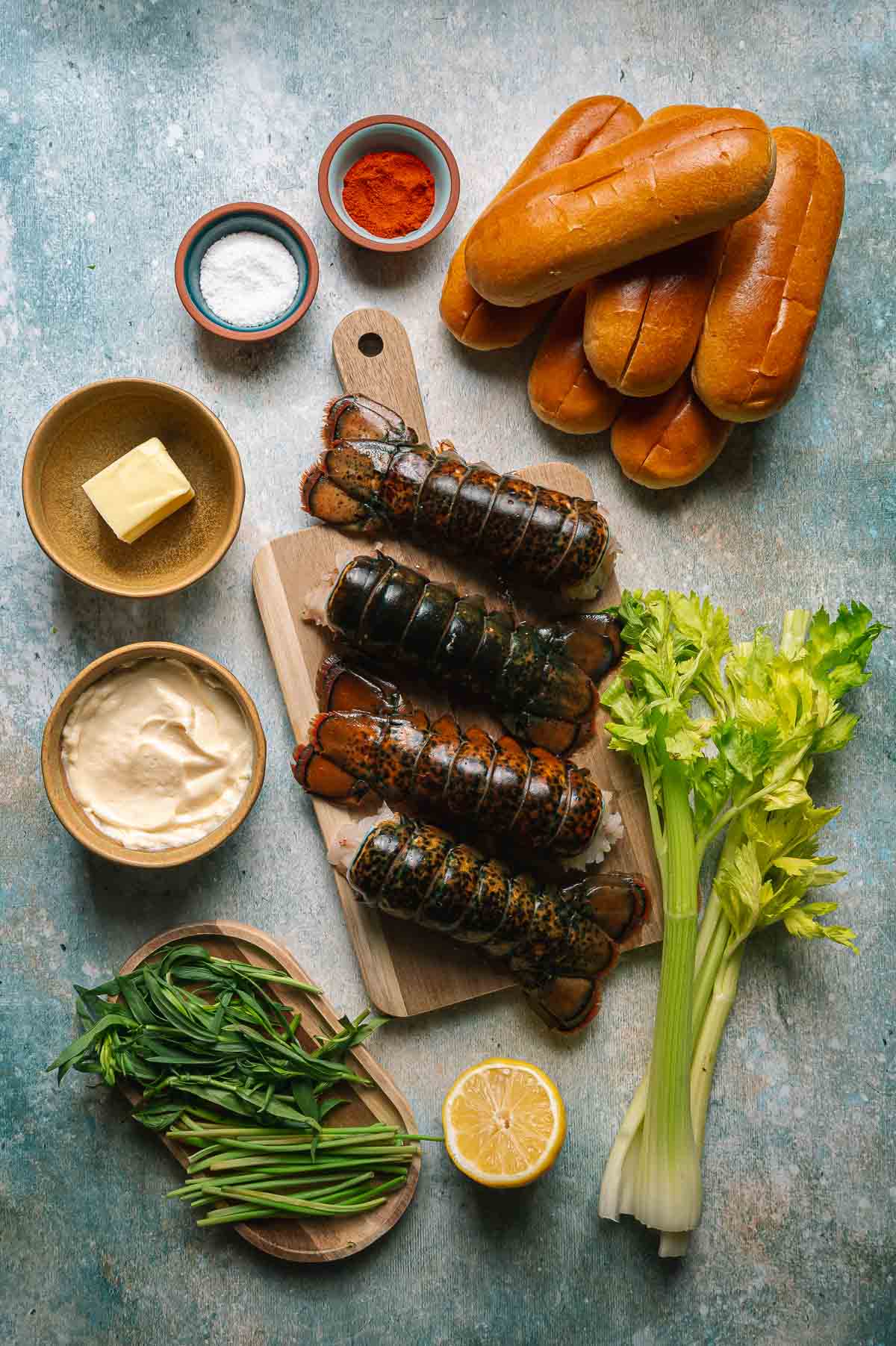
Ingredients for Maine Lobster Rolls
The ingredient list is short. What matters is the quality of each one.
- Lobster tails: fresh Maine lobster is ideal, but frozen-and-thawed tails work well here. Look for tails in the 4 to 6 oz range so you get substantial chunks when you chop. Three to four tails will give you about 12 oz of cooked meat total.
- Mayonnaise
- Celery: one stalk, finely diced. The crunch that keeps the filling from going flat.
- Fresh chives
- Fresh tarragon: the flavor anchor of this whole recipe. If you’ve never cooked with tarragon before, this is a good place to start.
- Lemon juice: fresh-squeezed only.
- Salt and cayenne: the heat from the cayenne is subtle at this amount, but it cuts through the richness of the mayo in a way black pepper doesn’t.
- Top-split brioche hot dog buns: the flat outer sides are what make a properly toasted lobster roll possible. Side-split buns won’t give you the same golden crust.
- Butter: softened so it spreads evenly onto the bun sides without tearing the bread – this is one of the few times we use salted butter
Equipment
- Kitchen shears: the cleanest way to split the lobster tail shells before steaming. A sharp knife works, but shears are faster and more controlled.
- Steamer basket: set over a pot with about 2 inches of water. You don’t need to submerge the tails.
- Large bowl of ice water: Have it ready before the lobster comes off the heat. An immediate ice bath is what stops the tails from overcooking.
How to Make Maine Lobster Rolls
- Split the shells. Use kitchen shears to cut lengthwise through the top of each lobster tail shell from the wide end down to the base of the fin. This makes the meat easier to extract cleanly after cooking.
- Set up your steamer. Fill a pot with about 2 inches of water and bring to a boil over high heat. Set a steamer basket over the boiling water.
- Steam the tails. Place the lobster tails in the basket, cover, and steam for 5 to 7 minutes, until the shells are fully red and the meat is opaque all the way through. Pull at 5 minutes for smaller tails. The lobster keeps cooking in the ice bath, so don’t push it.
- Ice bath immediately. Transfer the cooked tails directly to a bowl of ice water and cool for 3 to 5 minutes until no longer warm to the touch.
- Extract and dry the meat. Pull the lobster meat from the shells. Pat dry aggressively with paper towels. Lobster holds a surprising amount of moisture, and any excess will water down the mayo. Roughly chop the dried meat into bite-sized pieces.
- Build the salad. Combine the lobster, celery, chives, tarragon, lemon juice, salt, and cayenne in a bowl. Toss gently to distribute. Add the mayo and fold it in, stirring just until everything is lightly coated. You want distinct chunks, not a paste.
- Chill the salad. Cover and refrigerate for at least 15 minutes while you prep the buns. Cold filling going into a hot toasted bun is the whole point of a Maine lobster roll.
- Toast the buns. Spread softened butter evenly onto the flat outer sides of the brioche buns. Toast in a dry nonstick skillet over medium heat for 1 to 2 minutes per side, until deep golden brown. The flat cut on top-split buns is what gives you maximum surface contact with the pan.
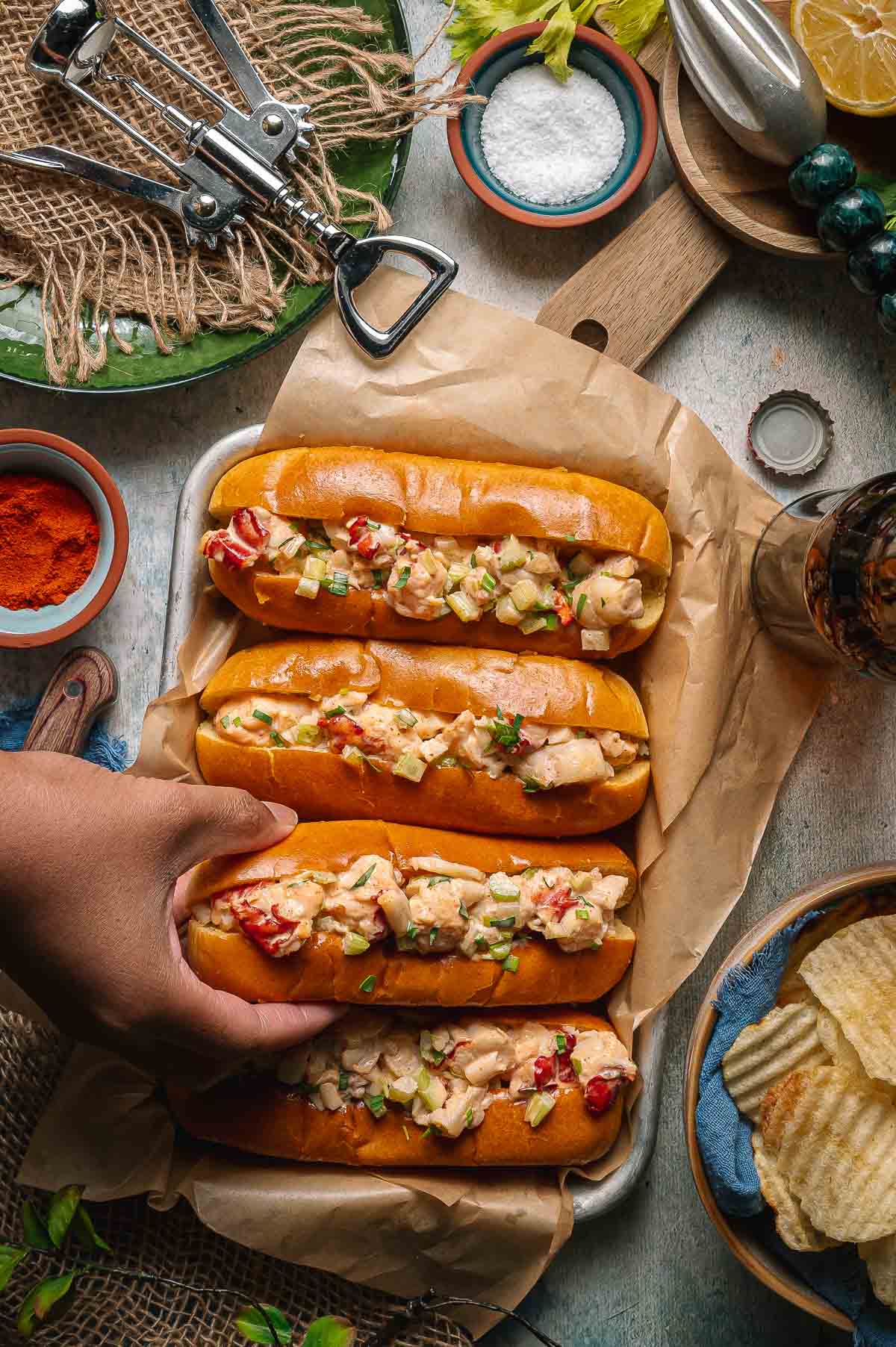
- Fill and serve. Pile the cold lobster salad generously into each toasted bun. Garnish with extra tarragon or chives. Serve immediately.
Substitutions
- Lobster tails for whole lobster: use meat from a whole steamed or boiled lobster. Claw and knuckle meat is especially rich and tender. Adjust the amount to reach about 12 oz cooked weight total.
- Tarragon for fresh dill: works, and it gives the roll a cleaner, more familiar flavor. The tarragon version has more complexity. Dill is simpler and brighter. Either is a finished roll worth eating.
- Brioche buns for New England-style hot dog buns: if you can find top-split hot dog buns, they’ll toast the same way. Standard side-split buns won’t produce the flat toasted crust that makes the bite right.
- For Connecticut style: skip the mayo entirely. Toss warm lobster meat with melted butter and a squeeze of lemon and serve immediately. It’s a completely different roll but if you love lobster you should try our Connecticut-style lobster roll recipe.
- Light or vegan mayo: doesn’t work. Low-fat versions break down and go watery, and the filling loses its cohesion. Use full-fat.
Meat Nerd Tips
- The ice bath matters more than most people think. Lobster keeps cooking from residual heat for a minute or two after you pull it from the steam. An immediate plunge stops it. Skip the bath, and you risk rubbery, overcooked meat even if your steam time was technically correct.
- Add mayo last and fold, don’t stir. Overmixing ruins the lobster chunks and breaks the texture down from chunky and distinct to something closer to a spread. Gently fold until just coated and stop there.
- Make the salad ahead, toast the buns to order. The lobster salad actually improves after 20 to 30 minutes of chill time as the flavors settle. The buns go from skillet to table immediately to build your roll. Toasted brioche goes soft within minutes of sitting out, so work quickly for the most authentic textures.
- The cayenne is doing something at this level. A quarter teaspoon sounds like it would disappear into the filling, but it adds a low background warmth that cuts through the richness of the mayo without calling attention to itself. Don’t swap it for black pepper. The heat profile is different in a way that matters in a cold preparation.
What to Serve with Maine Lobster Rolls
- Classic potato chips or kettle chips for crunch alongside the roll
- A simple green salad or lemon vinaigrette slaw to cut through the richness of the mayo filling
- Corn on the cob, grilled or boiled, for a full summer cookout spread
- If you’re looking for more incredible seafood recipes, try our Hot Honey Salmon Caesar Salad or our Homemade Lobster Bisque if you want to lean all the way in
Leftovers and Storage
- Store lobster salad separately from the buns in an airtight container in the fridge for up to 2 days
- Do not assemble rolls in advance. The bun goes soggy within 30 minutes of filling
- Lobster salad does not freeze well. Mayo separates, and the texture suffers. Make only what you’ll eat within two days
- For leftover meat: skip the mayo and serve the lobster warm with melted butter for a quick Connecticut-style meal
Have you tried this recipe? Do us a favor and rate the recipe card with the ⭐ ⭐ ⭐ ⭐ ⭐ and drop a comment to help out the next reader.
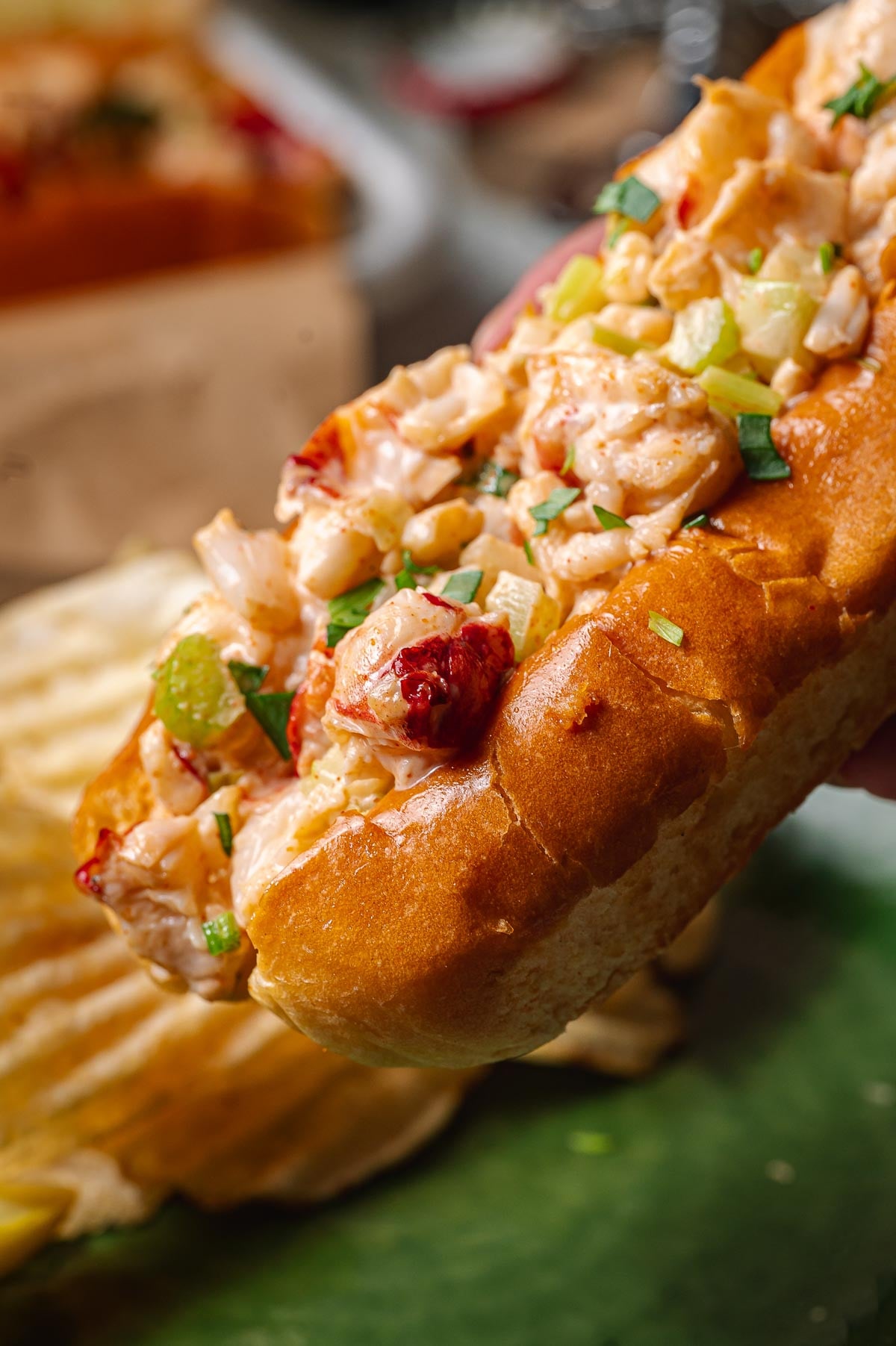
If you can’t get a fresh lobster roll along the coast of New England, this is the next best thing – packed with real lobster chunks in a creamy herb dressing overflowing from a buttery split top bun.
Prevent your screen from going to sleep
Steam the Tails
-
Fill a pot with 2 inches of water and bring to a boil. Place tails in a steamer basket over the water, cover, and steam 5 to 7 minutes until shells are fully red and meat is opaque throughout.
Build the Salad
-
Combine lobster, celery, chives, tarragon, lemon juice, salt, and cayenne in a bowl. Toss gently. Add mayo and fold in until just coated. Cover and refrigerate at least 15 minutes.
Store lobster salad separately from buns in an airtight container for up to 2 days. Do not assemble in advance.
Lobster salad does not freeze. Make only what you’ll eat within 2 days.
For Connecticut style: skip the mayo and herbs, toss warm lobster in melted garlic herb butter, serve immediately.

Quick Summary
Maine lobster rolls are cold, creamy, and herb-forward: steamed lobster tails, chopped and folded into a light mayo dressing with celery, chives, and tarragon, served in a butter-toasted brioche bun. The two things to get right are not overcooking the tails and drying the meat completely before you dress it. Get those right and the rest of the recipe takes care of itself.
FAQs
Maine-style is served cold with a mayo-based dressing. Connecticut style is served warm, tossed in melted butter. This recipe is Maine style. If you want the butter version, we have a Connecticut-style lobster roll recipe with a tarragon butter sauce.
About 3 oz of cooked lobster meat per roll is a generous serving. For four rolls, you’ll need roughly 12 oz of cooked meat total, which comes from three to four medium lobster tails.
You can make a cold seafood roll, but it won’t be a lobster roll. The flavor and texture are completely different. If budget is the concern, real crab or langostino makes a much closer substitute than imitation crab or try our shrimp roll.
The shells will be fully red, and the meat will be opaque all the way through with no translucency. For medium tails in the 4 to 6 oz range, that’s typically 5 to 7 minutes over a full boil. Check at 5 minutes if you’re unsure and pull them the moment the meat turns opaque.