



The famous jollof rice has to be the most popular West African dish. Bursting with flavor from tomatoes, onions, red bell pepper, garlic, and thyme, it’s not your average fare.
Jollof rice is a legendary side dish ubiquitous in West Africa. This recipe works great anywhere in the world because the ingredients are easy to find. As with most African food, each country, region, and even household has put its own imprint on the recipe, from mixed vegetables to various choices of meat, chicken, and even vegetarian options.
Cameroon, Ghana, and Nigeria all have their unique twist to this deliciousness. And as one reader kindly reminded me, Senegal (where Wikipedia says it originated) and Gambia also have their versions. You may know it by the name thieboudienne, one of the foods that UNESCO awarded the Intangible Cultural Heritage status.
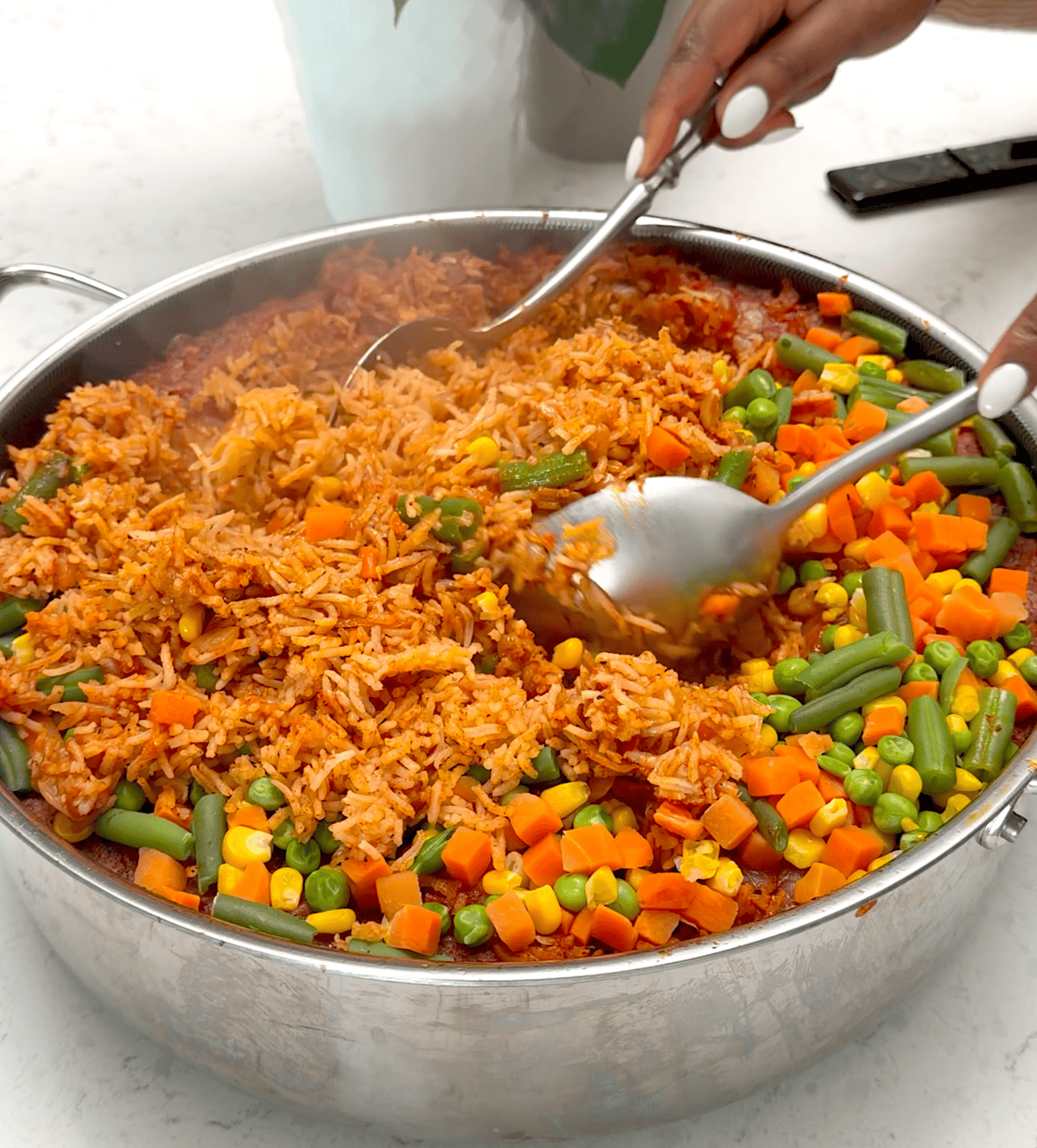
What Is Jollof Rice?
The Wolof or Jolof people, who ruled over much of West Africa, are credited with inventing this incredible rice dish centuries ago. As far back as the mid-1400s, the Portuguese introduced a New World vegetable, the lowly tomato. And the local people didn’t waste any time using it to flavor an already great rice dish.
Some people say you can use any long-grain rice, while others insist that only basmati or jasmine will do. The friendly Jollof Wars let us know there are endless variations, so there’s no reason to fight about it because they’re all fabulous.
Ingredients held in common include long-grain rice, tomatoes, red peppers, onions, and garlic. Additional spices (paprika, ginger, thyme, bay leaves, anise, nutmeg, and curry powder) vary according to the cook’s preference, and you can add meat, chicken, fish, and vegetables, or not.
How Different Cooking Methods Change the Flavor
Rice Choice Matters
Different types of rice have different flavor profiles. Basmati has a nuttier taste and holds together well, while jasmine is softer and more aromatic. Many swear by parboiled rice, especially Uncle Ben’s. Short-grain and medium-grain rice aren’t ideal because they can get mushy fast.
Tomato and Pepper Balance
Tomatoes and peppers are a classic pairing in many cultures. The tomatoes are a little sweet, acidic, and loaded with umami. Peppers are a bit bitter and earthy, enhancing the tomato’s umaminess. You might never know they’re actually related-maybe that’s why they get along so well.
One-Pot Cooking Methods (Stovetop vs. Oven)
This dish doesn’t just have different flavor variations; you can cook it on the stovetop or in the oven. However you choose to cook it, it will be great.
- Stovetop: Traditionally, jollof rice was cooked over a wood fire, giving it a smoky flavor. The stovetop method also tends to cook the rice a little more unevenly, slightly burning what’s on the bottom. There has been quite a dispute about what makes jellof rice unique. Some say it tastes burnt, while others fiercely disagree, saying it’s the smoky taste that makes it great.
- Baked: Oven baking is hands-off, making it a great time-saver. Plus, you don’t have to worry about the bottom of the pot burning. The rice is usually drier and fluffier, but lacking that smoky flavor (smoked paprika will add smokiness).
- Combination: I prefer making jollof rice partly on the stove, then finishing it in the oven. Although it takes a bit longer, I find the even heat turns out a better product and minimizes the burnt taste.
How to Make Jollof Rice
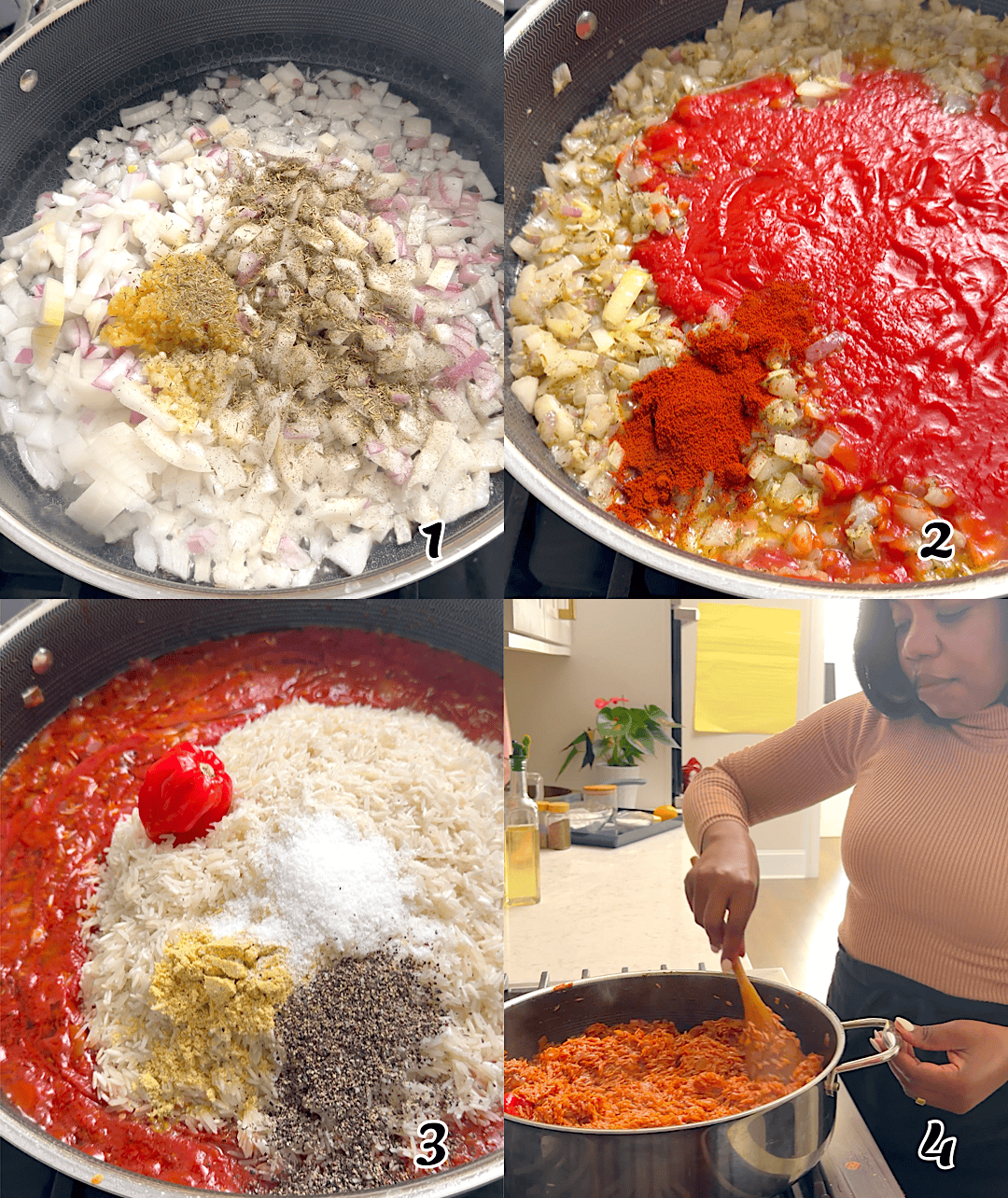
- Sauté the aromatics, add the tomato puree and spices, along with the rice, and stir well.
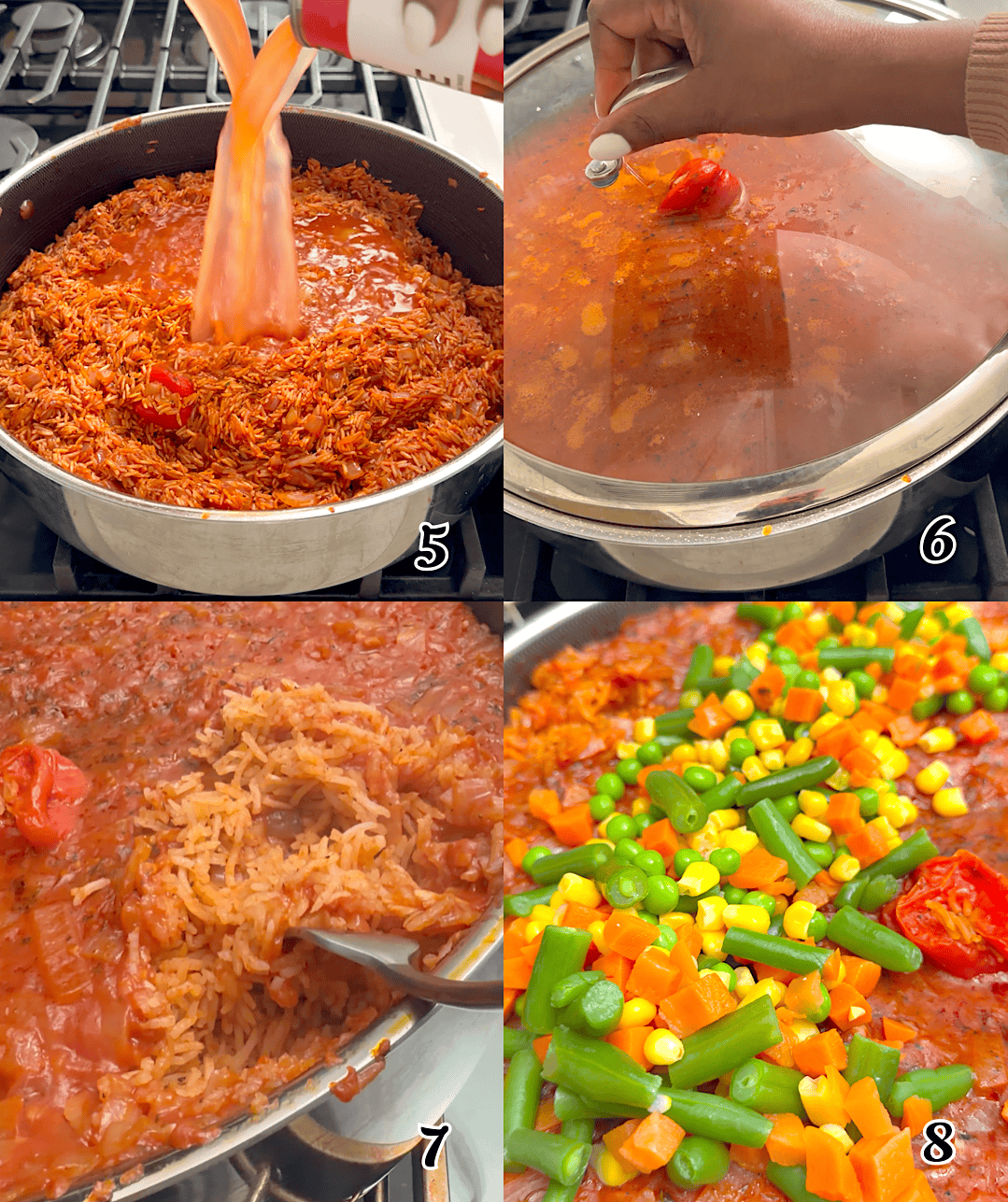
- Add the liquid, cover, and cook until the rice is tender. Optionally, finish it in the oven. Then add vegetables, cook a little longer, fluff, and enjoy.
Recipe Notes
- For a more intense flavor, add more ginger, increase the spices, add curry powder, toss in a bay leaf, and chop an extra bell pepper to the sauté. Sometimes, people put a dash of anise, cloves, and allspice in a tiny amount.
- I’m always looking for ways to get my son to eat more vegetables, so I add a bag of pre-chopped frozen vegetables at the end for more nutrition. Totally optional.
- Meal prep always includes chopping enough onion and garlic for the week, then storing them in an airtight container or Ziploc bag in the fridge. Then, I grab what I need for the meal and keep cooking. Diced onions and garlic also freeze well in cubes for faster meal prep.
- Sometimes, I drizzle a little oil over the garlic and store it in a glass jar to keep it fresher, but I always get it in the fridge as fast as possible so it doesn’t lose potency.
Make-Ahead, Storage, and Leftovers
You can make it the day before and reheat it. It will last for 3-4 days in the fridge or 3-4 months in the freezer as long as it has been tightly sealed in a food-safe container.
Add a splash of chicken broth to keep it from drying out when reheating it. Heat it in the oven at 350℉ (180℃) or on the stovetop for about 20 minutes.
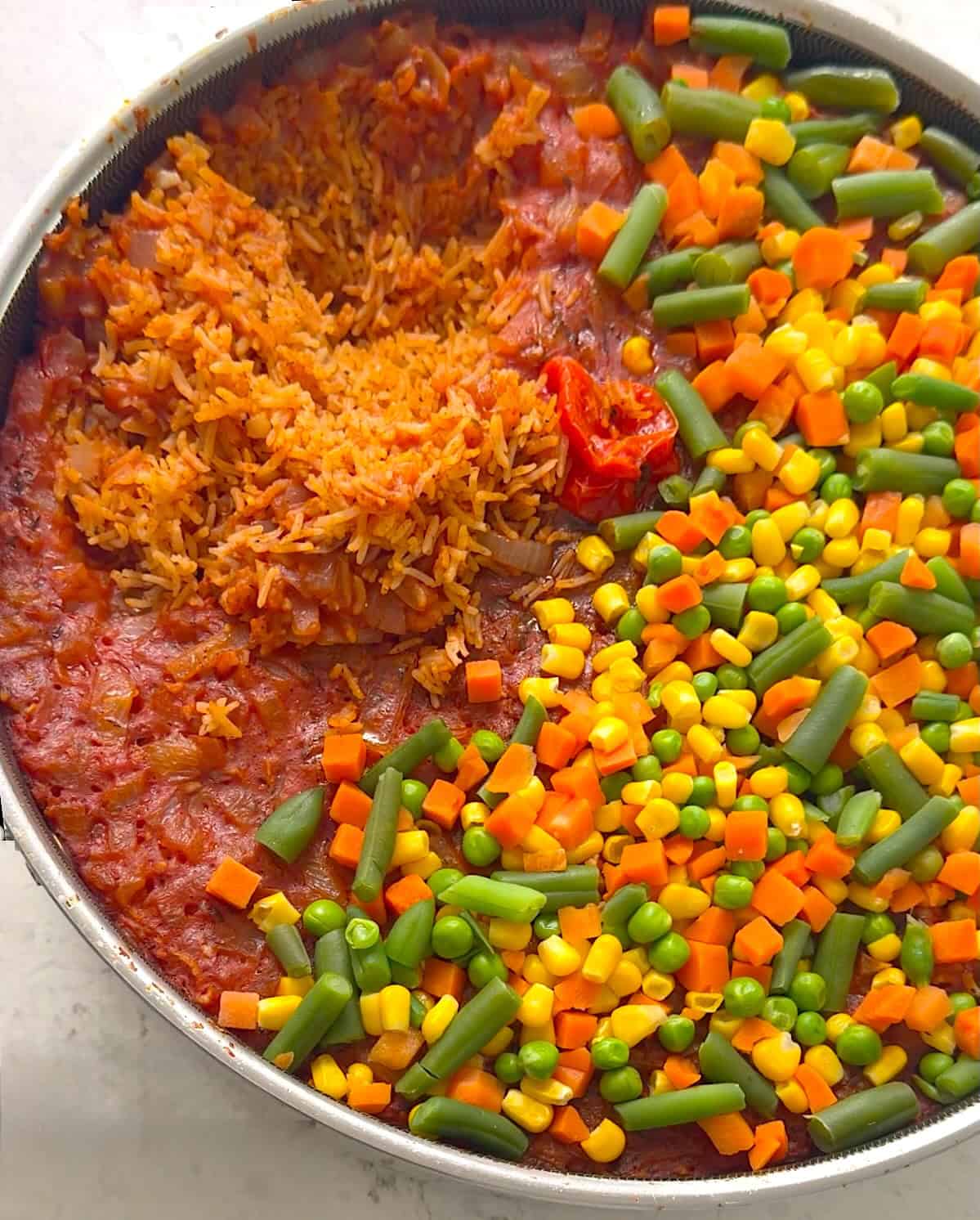
More Types of Jollof Rice (Choose Your Style)
- Jollof Rice and Chicken: One of my favorite one-pot meals has chicken and vegetables included. The red bell pepper and tomato give it a vivid red, while a touch of ginger and curry powder season it well.
- Coconut Jollof Rice:
- Cameroon Beef Jellof: Red pepper comes in the form of paprika, so the color isn’t as intense as other West African versions. I may be biased, but this one is the easiest one to make. The instructions are included below.
- Ghana Jollof: Similar to Nigerian jollof, but with beef to ramp up the protein. The ginger adds a nice touch, and the optional rosemary, along with the bay leaves, is typical. It’s not usually as spicy as its Nigerian counterpart. They also tend toward a more aromatic rice, like jasmine.
- Nigerian Jollof: Probably the most popular of all the jollofs, this one lays on the heat and uses parboiled rice for faster cooking.
- Charleston Red Rice: The African-influenced red rice popular in the South, USA. Andouille sausage and bacon give it the smoky flavor, and it only packs heat if you want it.
- Oven-Baked Jollof Rice: The easiest of all jollof recipes, set it and forget it while the oven does the work. Feel free to use your chosen spices using the same cooking method. Just remember to cover it tightly so the steam can’t escape.
- Thieboudienne: The Senegalese version with fish just may be the OG jollof recipe. One huge difference is the rice. Short-grain or broken rice is the base, and smoked fish gives it that iconic smoked flavor.
Common Jollof Rice Mistakes (And How to Fix Them)
- The wrong rice will get you in trouble. Short and medium grains can’t keep it together and turn to mush. A sturdy long-grain rice is the way to go, and basmati is especially forgiving.
- Not cooking your tomato sauce long enough will make it acidic (10-15 minutes is the sweet spot). If you forgot, a pinch of sugar or baking soda (just a pinch) will eliminate some of the acid.
- Too much or not enough water will also cause a disaster. If you’re not sure, have a pot of boiling water on the stove and use less water in the rice. You can always add more (as long as it’s boiling), but you can’t take it back out.
- Overstirring will make mushy rice. Stir it well when you add it, then leave it alone and let it steam.
- Cover your pot tightly. If you have a lid, put it on and wrap it with aluminum foil so no steam can escape. If you don’t have a lid, double wrap it with aluminum foil.
- If the rice is undercooked, stop stirring, pat the rice down, put the lid back on, and let it simmer another 5 minutes.
By Imma
Traditional Cameroon Beef Jellof Rice
I grew up eating another delicious version of jollof. Here are the ingredients and instructions for an amazing twist.
½ pound beef, salt and pepper to taste, 1 medium onion, 1 tablespoon chicken bouillon, 1 tablespoon garlic salt, 1 teaspoon paprika, 2 tablespoons of tomato paste, 1 18-ounce can of tomato sauce, 3 cups stock, 3 cups long-grain rice, and a 1-pound bag of peas and carrots.
- Simmer the meat with salt, pepper, and some chopped onion in a medium pot until tender. It takes 30-40 minutes, depending on the cut of meat (chuck, round, shank). Reserve the stock for later.
- Sauté the onions until soft but not golden in an oven-proof pan, about 5 minutes. Include some bouillon if desired.
- Then, add the meat and continue frying for 3 minutes.
- Next, add tomato paste and sauce. Frequently stir to prevent the sauce from sticking to the bottom of the pot.
- Add salt, paprika, and bouillon to taste with about 2 cups of stock. Stir occasionally.
- Bring to a boil and let it simmer to blend all the flavors and reduce the acidity of the tomato sauce, about 20 minutes.
- Rinse the rice with cold water in a large bowl, using your hands to swish the grains. Tip the water out, then repeat twice or until the water runs clear.
- Add the rice to the pan with about one cup of stock. Simmer for 5 minutes with the lid on.
- Add remaining peas and carrots. Place the pot of rice in the oven, and bake for 10-15 minutes or until the rice is tender. Serve warm.
This blog post was originally published in November 2012 and has been updated with a new recipe, additional tips, and new photos.