



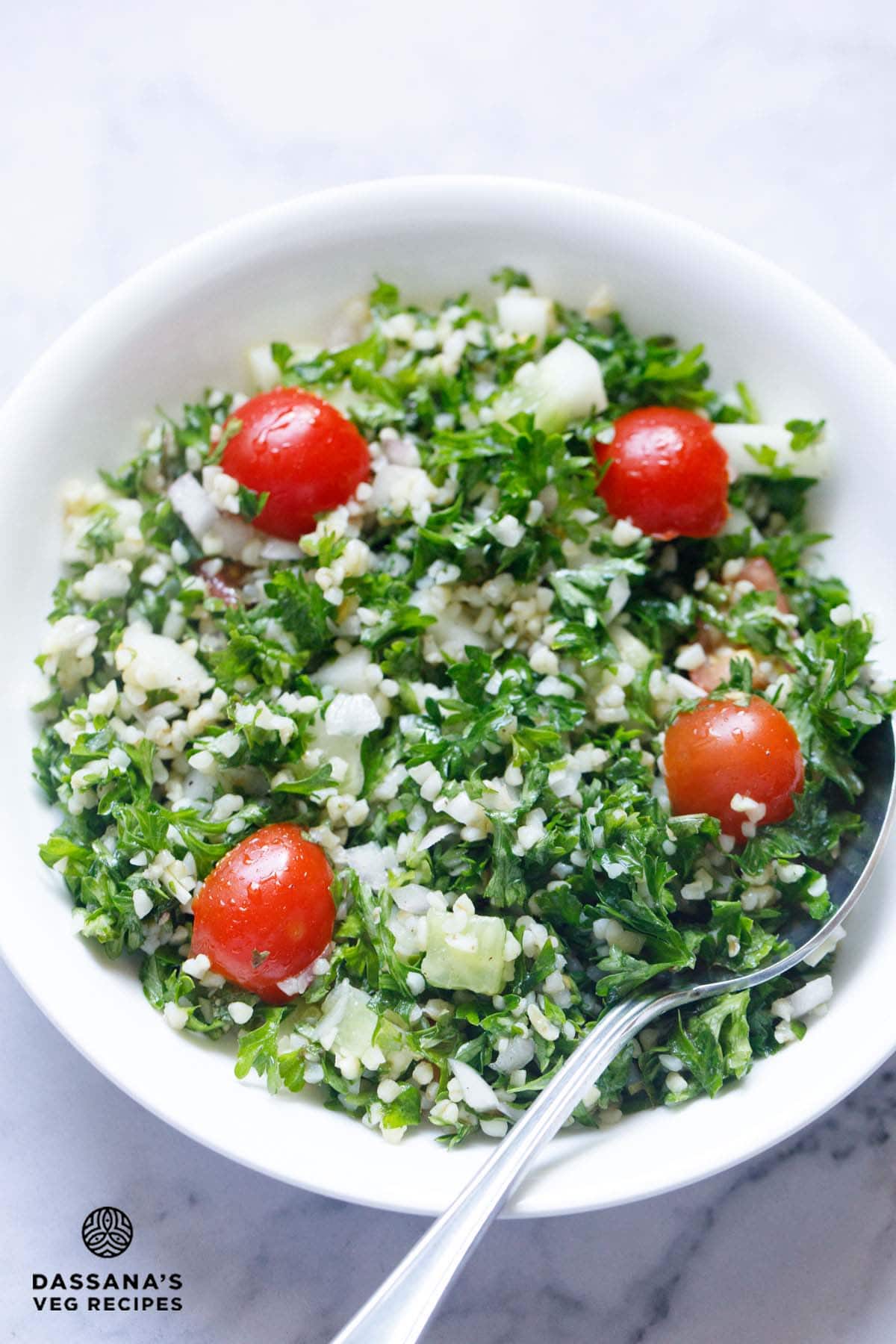
Tabbouleh (also spelled tabouli or tabbouli) is a fresh Middle Eastern parsley salad made with chopped herbs, bulgur wheat, tomatoes, onions, mint, olive oil and lemon juice. Traditionally, tabbouleh is more herb-heavy than bulgur-heavy, with bulgur added mainly for texture. This Lebanese salad is light, tangy, refreshing and works well as a side dish, mezze or healthy lunch.
About Tabbouleh Recipe
Tabbouleh comes from the Middle Eastern region and is especially popular in Lebanese cuisine. It is commonly served as part of a mezze spread along with Hummus, Falafel, Baba Ganoush and Pita Bread.
This salad has bright fresh flavors from parsley and mint along with tanginess from lemon juice. Tomatoes add freshness and juiciness while onions and cucumber bring crunch.
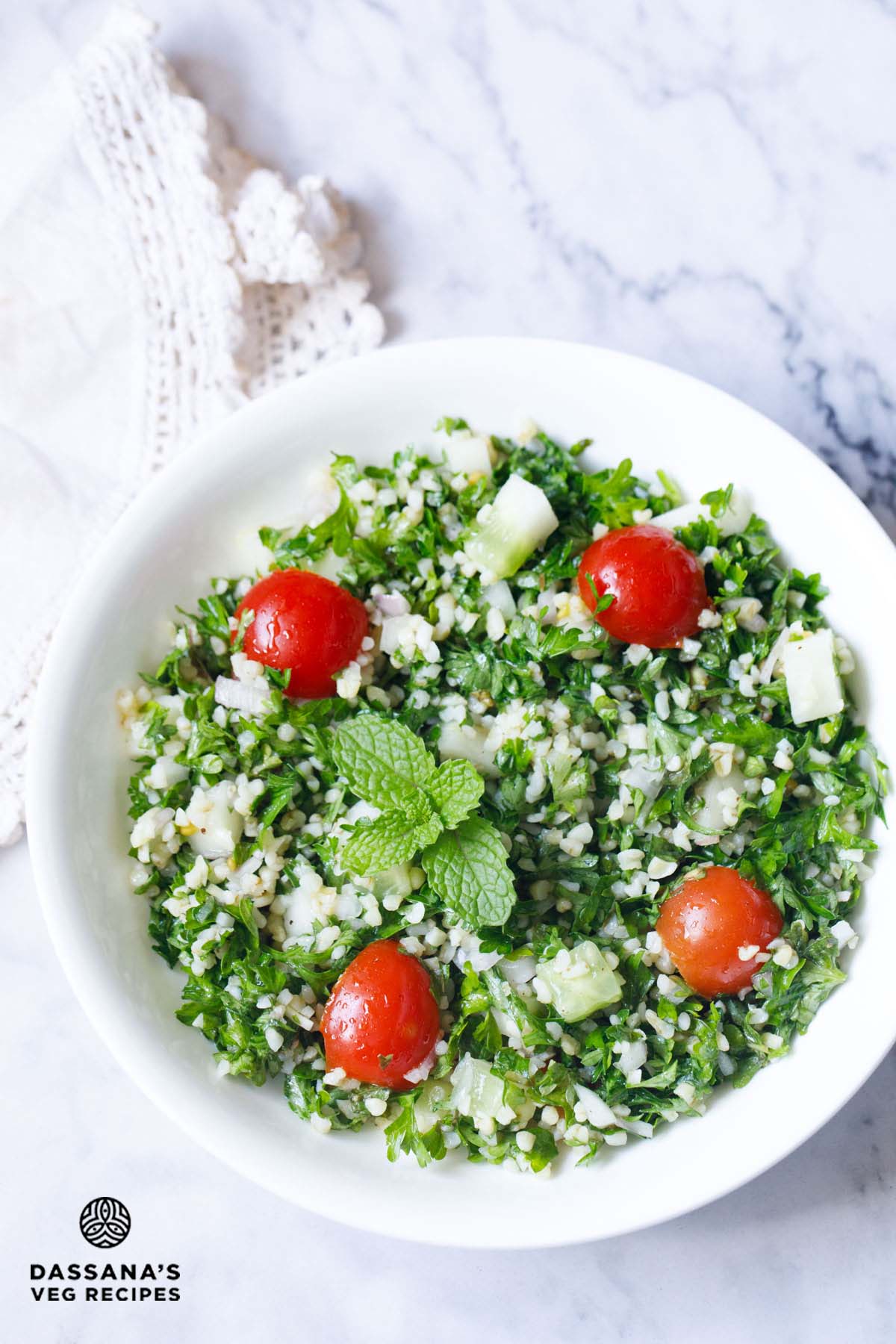
The dressing is simple and minimal. Extra virgin olive oil, lemon juice, salt and pepper are enough to bring all the ingredients together.
You can make tabbouleh throughout the year, but it tastes especially good during warmer months because it is light, cooling and refreshing.
Parsley and Bulgur in Tabbouli
Traditionally, tabbouleh is a parsley-heavy salad with only a small amount of bulgur added for texture. My recipe keeps the salad herb-forward while adding enough bulgur for some chewiness and balance.
Bulgur is cracked whole wheat that is partially cooked and dried. It cooks quickly and has a light chewy texture, making it popular in many Middle Eastern dishes.
Fine or super fine bulgur is traditionally used because it softens quickly after soaking in hot water. It also blends better with the chopped herbs.
In Indian kitchens, parsley may not always be commonly used, but it is now easily available in many supermarkets and online grocery stores. Flat parsley has a deeper flavor, while curly parsley is lighter and milder.
While flat parsley is traditionally preferred in tabbouleh, curly parsley also works well and gives the salad a fresh light texture. I have used curly parsley in this recipe.
This salad is naturally vegan and can also be adapted easily. Some people add feta cheese, pomegranate arils or a Middle Eastern 7 spice blend for variation.
Tabbouleh pairs well with grilled vegetables, falafel, soups, wraps and mezze platters. It can also be served as a fresh side salad with roasted or baked dishes.
You can also try these Middle Eastern & Mediterranean recipes
How to Make Tabbouleh (Stepwise)
Prep Bulgur
1. Rinse ½ cup fine or super fine bulgur wheat a couple of times in water using a fine mesh strainer.
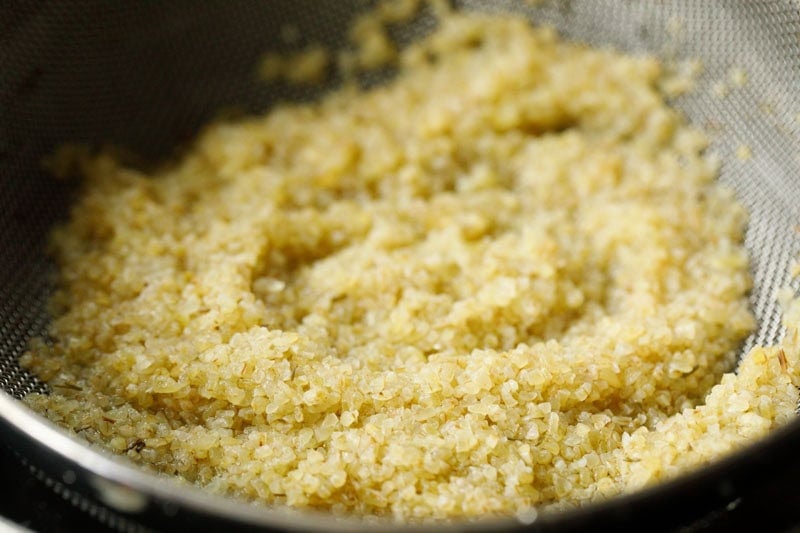
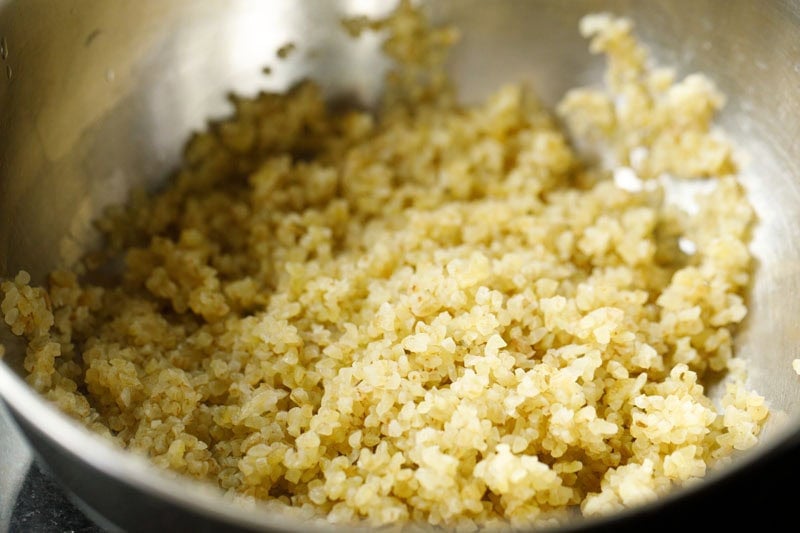
2. Place the rinsed bulgur in a bowl.
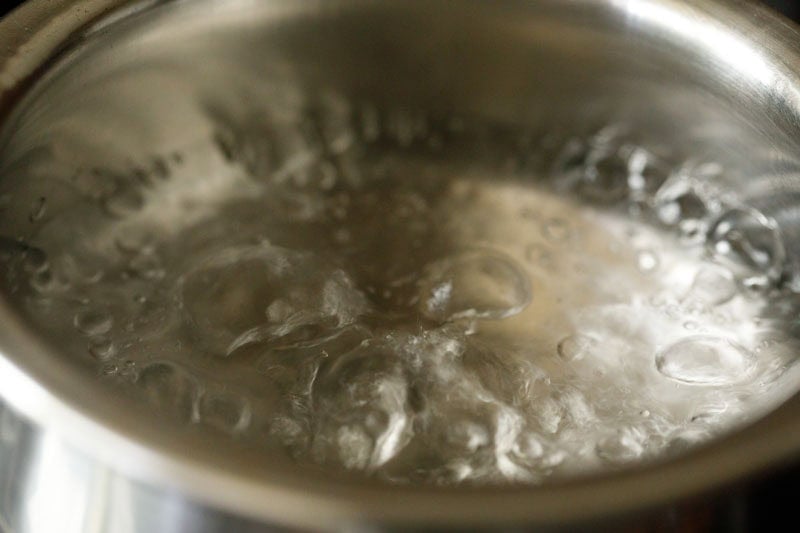
3. Heat 1 cup water in a pan until it comes to a rolling boil.
4. Pour the hot boiling water over the bulgur so that it is fully covered.
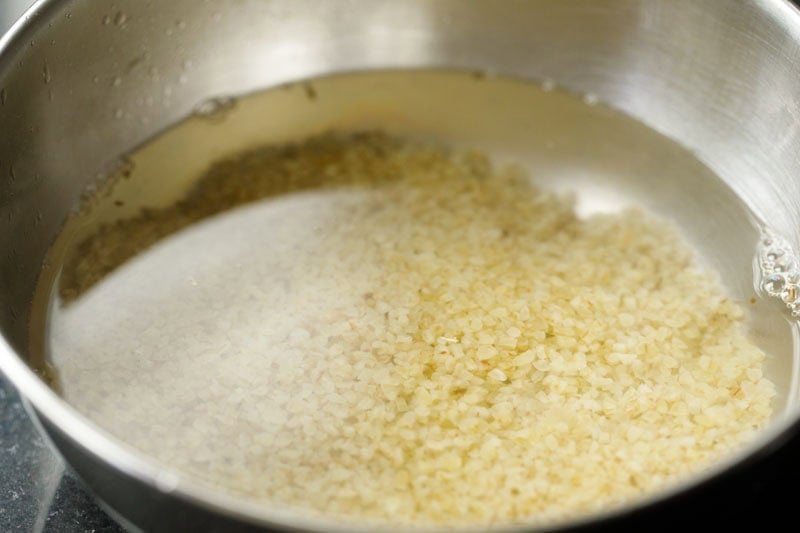
5. Cover the bowl with a lid and let the bulgur soak for 15 to 20 minutes. The grains should soften well while still having a slight chewy bite.
If the bulgur feels hard in the center, soak for a few more minutes. Do read the package instructions as soaking and cooking time can vary with the type and size of bulgur used.
Transfer the soaked bulgur along with the remaining water to a mesh strainer. Drain very well. You can gently press with a spoon to remove extra water if needed.
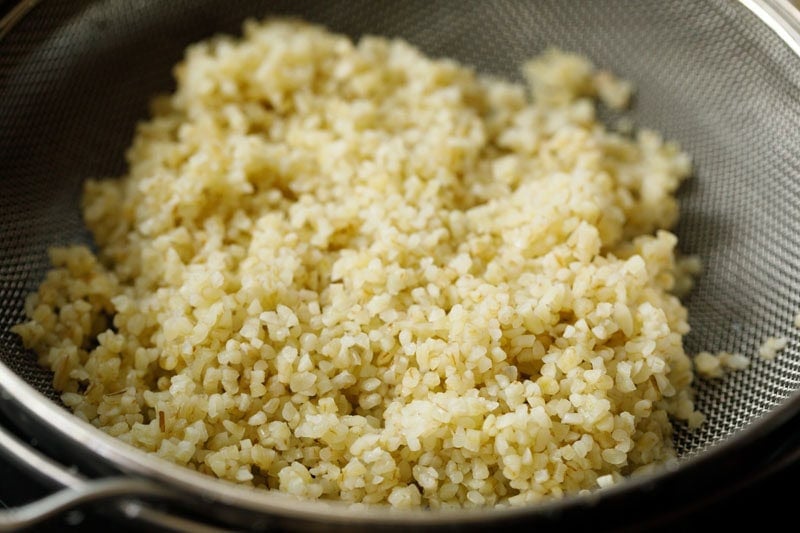
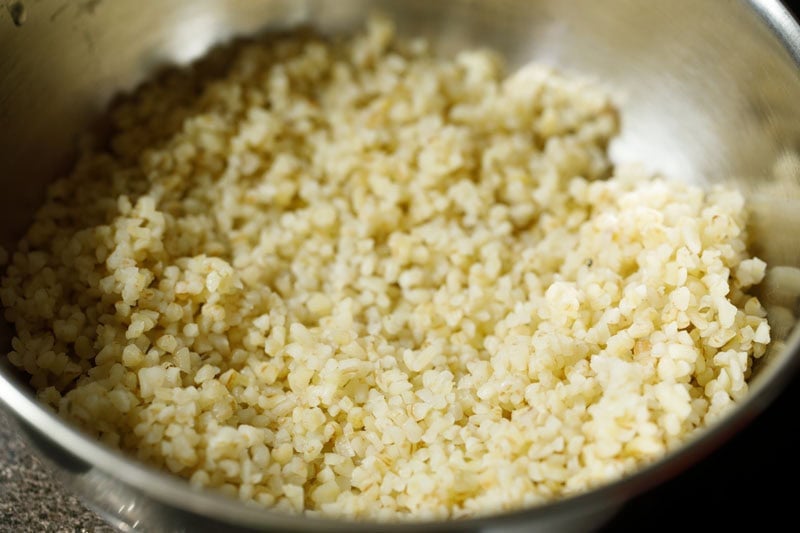
6. Place the drained bulgur in a mixing bowl and let it cool slightly.
Prepare Vegetables & Herbs
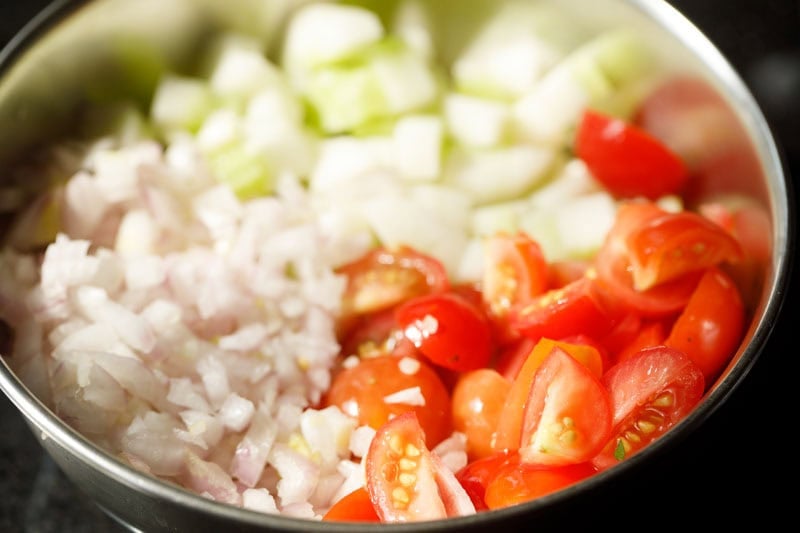
7. Rinse a small to medium cucumber well. Peel if preferred and chop into small 0.5 cm cubes. You will need ½ cup chopped cucumber.
Finely chop 1 medium red onion. You will need ½ cup chopped onions. You can also use ½ cup scallions (spring onions) instead of red onions.
Rinse and halve ⅔ cup cherry tomatoes. If they are slightly larger, quarter them.
8. Rinse 3½ to 4 cups loosely packed parsley leaves (100 grams) thoroughly a few times in water to remove any dirt or grit.
Note: You can use either flat-leaf parsley or curly parsley in this recipe. Flat parsley has a deeper flavor, while curly parsley gives a lighter texture and more volume to the salad.
Tip: If using curly parsley, chop it finely with a knife so the texture blends well into the salad.
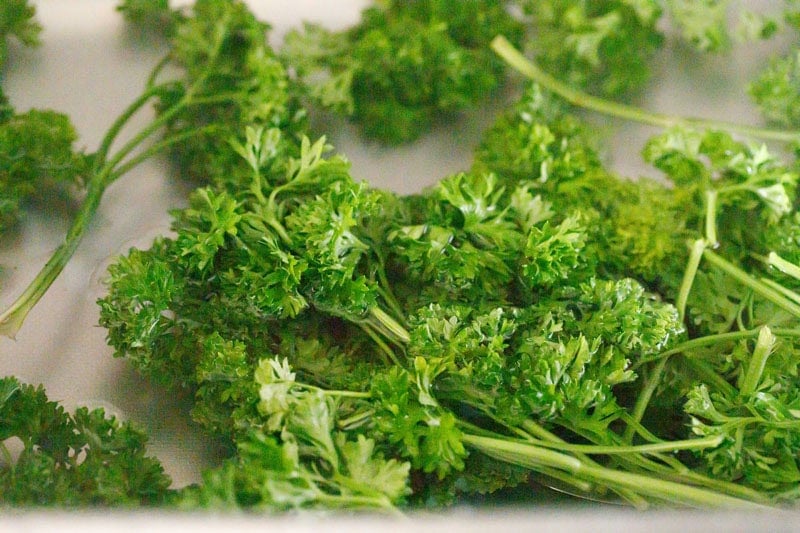
9. Drain very well.
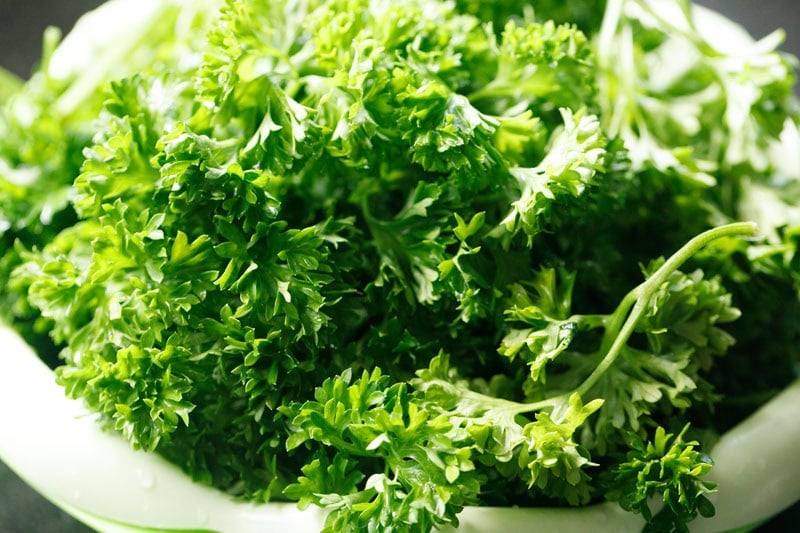
10. Rinse ¼ cup mint leaves and drain well.
Spread the herbs on a kitchen towel or use a salad spinner to remove excess moisture. This step is important because wet herbs can make the salad watery.
Remove the thicker stems from the parsley and use the leaves and tender stems. Chop the parsley and mint finely with a knife, but avoid crushing or mincing them too much. The leaves soften naturally once mixed with lemon juice and salt.
Note: Do not use a food chopper or food processor to chop the herbs. They can bruise the parsley and mint, release too much moisture and make the salad look dull or wet. Chop the herbs with a knife so they stay fresh and leafy.
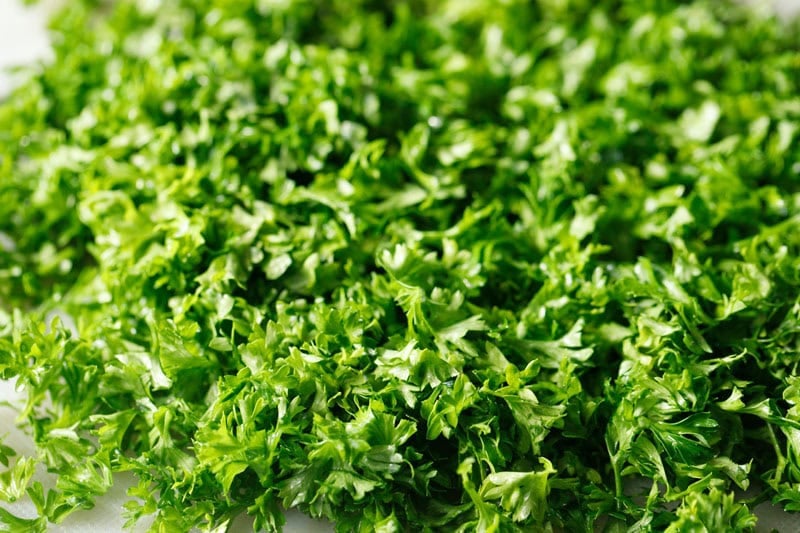
Assemble & Make Tabbouleh
11. To the bowl containing bulgur, add the chopped onions, tomatoes, cucumber, mint, and parsley.
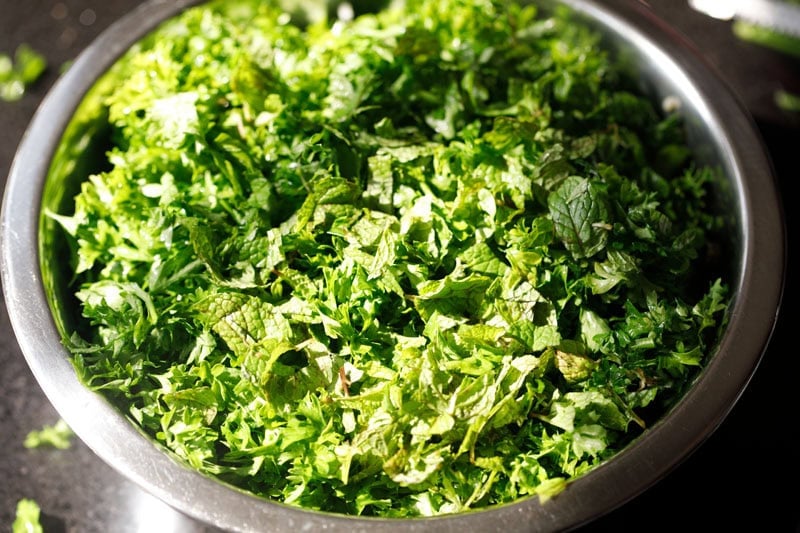
12. Add 2 tablespoons lemon juice.
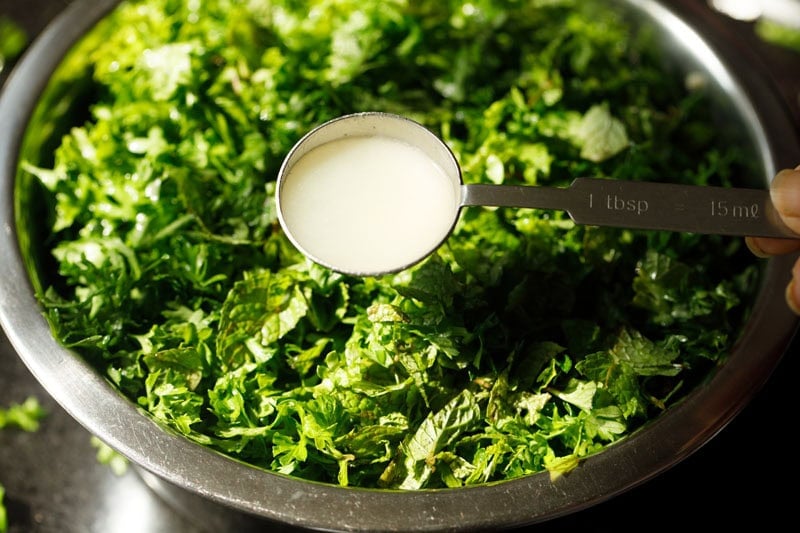
13. Add 3 tablespoons extra virgin olive oil.
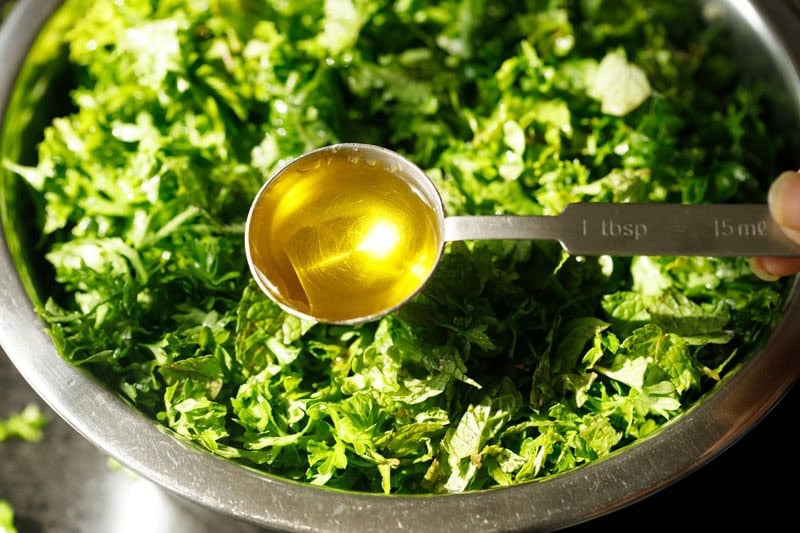
14. Season with salt as required and add ½ teaspoon ground black pepper or white pepper.
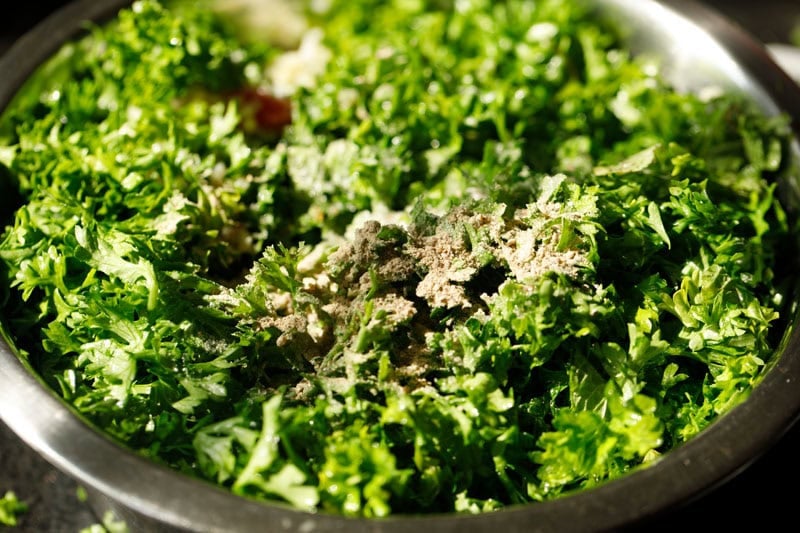
15. Mix thoroughly until everything is evenly combined.
Let the salad rest for 15 minutes before serving so the flavors blend properly. You can also refrigerate it for 15 to 30 minutes to serve it lightly chilled.
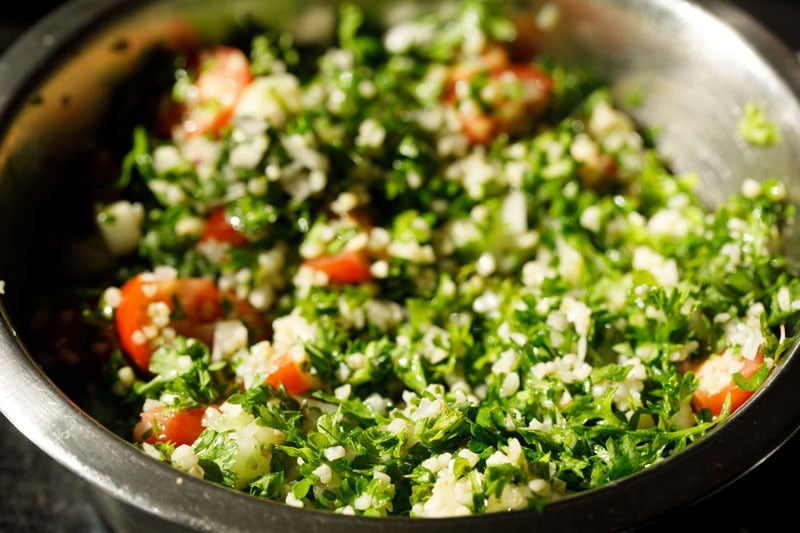
16. Serve tabbouleh with lemon wedges or lime wedges. You can also garnish with pomegranate arils, mint sprigs or a little crumbled feta cheese if preferred.
Serving Suggestions & Storage
Serve tabbouleh salad chilled or at room temperature.
It pairs well with pita bread, hummus, falafel, grilled vegetables, Muhammara or Roasted Potatoes. You can also serve it alongside soups, wraps like Shawarma or mezze platters.
Store leftovers in an airtight container in the refrigerator for up to a few hours. The herbs release moisture as the salad sits, so tabbouleh tastes best fresh.
If making ahead, keep the chopped herbs and soaked bulgur separate and mix them shortly before serving.
Helpful Tips
- Use Fine Bulgur: Fine or super fine bulgur gives the best texture and is traditionally used in Lebanese tabbouleh. Coarse bulgur needs cooking and changes the texture of the salad. Check the package instructions for cooking details.
- Dry The Herbs Well: Always dry parsley and mint properly after rinsing. Excess moisture can make the salad soggy.
- Do Not Over Chop: Finely chop the herbs but avoid turning them into a paste. The salad should still look fresh and leafy.
- Balance The Bulgur: Tabbouleh is mainly a parsley salad. Do not add too much bulgur.
- Use Fresh Lemon Juice: Freshly squeezed lemon juice gives the cleanest flavor and brightness.
- Choose Good Olive Oil: Since the dressing is simple, a good quality extra virgin olive oil makes a noticeable difference.
- Tomato Options: Cherry tomatoes work well because they release less water, but regular tomatoes can also be used.
- Parsley Choice: Flat parsley has a deeper and slightly stronger flavor, while curly parsley tastes lighter and milder. You can use either.
- Variation Tip: Instead of bulgur wheat, you can also use cooked quinoa. You can optionally add a little 7 spice blend, a ground spice mix commonly used in Lebanese and Middle Eastern cooking.
-
Rinse the bulgur a few times. Place it in a bowl and pour boiling hot water over it.
-
Cover and soak for 15 to 20 minutes or until softened and slightly chewy. Drain very well and set aside.
-
Prepare the vegetables by finely chopping the onions and chopping the cucumber into 0.5 cm cubes. Halve the cherry tomatoes or quarter them if they are larger.
-
Rinse and dry the parsley and mint thoroughly. Chop them finely without crushing the leaves.
-
Combine the soaked bulgur, chopped vegetables and herbs in a mixing bowl.
-
Add lemon juice, extra virgin olive oil, salt and pepper. Mix thoroughly until evenly combined.
-
Let the salad rest for 15 minutes at room temperature so the flavors blend well. You can also chill it in the refrigerator for 15 to 30 minutes before serving.
-
Serve fresh with lemon wedges or garnish with mint sprigs, pomegranate arils or feta if preferred.
- Use fine or super fine bulgur for a more traditional tabbouleh texture. Coarse bulgur can also be used, but it needs to be cooked in water like rice or pasta. Check the package instructions for cooking details.
- Dry parsley and mint thoroughly before chopping.
- Finely chop the herbs with a knife and avoid using a food processor or food chopper as they can bruise the herbs and make the salad watery.
- Do not add too much bulgur.
- Fresh lemon juice tastes best in this salad.
- Cherry tomatoes make the salad less watery, but regular tomatoes can also be used.
- Flat parsley gives a deeper flavor, while curly parsley tastes lighter and milder. You can use either.
- The salad tastes best fresh and lightly chilled.
Calories: 233kcal | Carbohydrates: 24g | Protein: 5g | Fat: 15g | Saturated Fat: 2g | Polyunsaturated Fat: 2g | Monounsaturated Fat: 10g | Sodium: 420mg | Potassium: 440mg | Fiber: 6g | Sugar: 3g | Vitamin A: 3063IU | Vitamin B1 (Thiamine): 0.1mg | Vitamin B2 (Riboflavin): 0.1mg | Vitamin B3 (Niacin): 2mg | Vitamin B6: 0.2mg | Vitamin C: 59mg | Vitamin E: 3mg | Vitamin K: 559µg | Calcium: 75mg | Vitamin B9 (Folate): 73µg | Iron: 3mg | Magnesium: 64mg | Phosphorus: 109mg | Zinc: 1mg