



I have wanted to create a pasta salad that is more than 50% vegetables for a long time. Not the kind that is mostly pasta with a few token vegetables scattered through and laden with mayo, but a salad where the vegetables are the star and the pasta is there to give it body and substance. This Mediterranean pasta salad is exactly that. It has 10 plant points, no mayo, very little oil, and it is so useful if you are keeping an eye on calories, want to increase your fibre and add plant diversity.
As much as I love my BLT pasta salad and my green goddess pasta salad, both of which are crowd-pleasing favourites on this site, this version is lighter and more nourishing. It is built on Mediterranean flavours: cherry tomatoes, kalamata olives, capers, artichoke hearts, and peppers, brought together with a red wine vinegar dressing and a small amount of basil pesto in place of extra olive oil. The result is bright, punchy, and so delicious.
Why this pasta salad works so well for meal prep
Meal prep pasta salads live or die by one thing: whether the ingredients still hold up on day four. I have designed this one with that in mind. Every vegetable in the base is chosen for its ability to stay crunchy and fresh in the fridge: cherry tomatoes rather than large chopped tomatoes which go mushy, diced peppers, cucumber, celery, and olives. Nothing that wilts, softens, or bleeds into the dressing over time.
The other advantage of building a sturdy base like this is versatility. If you are eating this salad for lunch three or four days running, you need it to work with different proteins, otherwise the repetition becomes tedious quickly. This one pairs well with tuna, rotisserie chicken, grilled salmon, steak slices, mozzarella, or grilled halloumi. The base stays the same and the protein changes each day, which means you are essentially getting four different lunches from one Sunday prep session.

Why I use pesto instead of extra olive oil
I wanted to keep the oil in this salad low, not just slightly reduced. To get the brightness of basil without either adding fresh basil (which browns quickly in a meal prep situation) or adding more olive oil, I used two tablespoons of basil pesto in the dressing. It adds the herby, green flavour of basil along with a small amount of additional fat and body, without the oil quantity you would typically need to coat a whole pasta salad properly. Combined with red wine vinegar and Dijon mustard, the dressing is punchy enough to coat everything thoroughly without being heavy.
If you are eating this salad immediately rather than storing it, go ahead and add fresh basil if you have it. It is lovely and the browning does not matter when you are serving the salad straight away.

The resistant starch benefit you might not know about
One of the less obvious benefits of a cold pasta salad is what happens to the pasta when it cooks and cools. When you cook pasta and then cool it down, the starch structure changes and forms what is known as resistant starch. Cooling high-carbohydrate foods like pasta increases the level of resistant starches, making them behave more like high-fibre foods.
Resistant starch passes through the small intestine undigested and reaches the colon, where it acts as a prebiotic, feeding the beneficial bacteria in your gut microbiome. When resistant starch ferments in the colon, it contributes to the production of beneficial volatile fatty acids such as butyrate, acetate, and propionate, which play vital roles in maintaining gut barrier integrity and modulating inflammation. Research has also shown that resistant starch supplementation can help with weight loss and improve insulin resistance, with these benefits associated with changes in gut microbiota composition.
In practical terms, this means your pasta salad is doing more gut health work than a bowl of hot pasta would. The cooling step is not just about making it palatable as a cold dish. It is changing the pasta’s nutritional profile in a way that benefits your microbiome.
It is also worth noting that pasta itself contains more protein than most people realise: a 100-gram serving of dried pasta provides around 13 grams of protein, which contributes to the overall nutritional value of the salad even before you add any additional protein on top.

10 plant points in one bowl
The concept of plant points, popularised by gut health researcher Tim Spector, is simple: the greater the diversity of plant foods you eat across a week, the more diverse and healthy your gut microbiome tends to be. The target is 30 different plant foods per week. This pasta salad alone gives you 10: fusilli (wheat), shallot, red pepper, green pepper, celery, cucumber, parsley, cherry tomatoes, kalamata olives, capers, and artichoke hearts. Add a protein like lentils or chickpeas, and you are at 12 from a single lunch.
Choosing the right pasta shape
Not all pasta shapes work equally well in a cold pasta salad. I find penne too hard and dense when cold, and macaroni too small to properly carry chunky vegetables. Fusilli is my preference. The corkscrew shape catches the dressing and holds the small flavour elements, the capers and diced vegetables, in its grooves. It is also simply easier to eat than penne and looks the most interesting in a bowl. Other good options are farfalle, rotini, or casarecce.
The most important rule regardless of shape: do not undercook the pasta. You want it fully cooked, not al dente. Pasta firms up significantly as it cools, and undercooked pasta in a cold salad is unpleasant in a way that overcooked pasta in a cold salad is not. Cook it the full time, drain it, rinse it under cold water, and allow it to cool completely before dressing it.

Protein options to serve with this pasta salad
The base recipe is vegetarian and is not quite a complete meal. Here are the proteins that work best alongside the Mediterranean flavour profile:
Tuna in brine (or olive oil if you are not watching calories) is the most natural pairing. Drain it and flake it through the salad just before eating. Line-caught yellowfin tuna in a good olive oil works particularly well.
Rotisserie chicken pulled into chunks is the most convenient option and works with everything.
Grilled or baked salmon adds richness that pairs well with the capers and lemon in the dressing.
Sliced steak, particularly a medium-rare rump, fillet, or sirloin sliced thin.
Mozzarella torn into pieces or grilled halloumi sliced and laid on top keeps it vegetarian while adding enough protein and richness to make it satisfying.
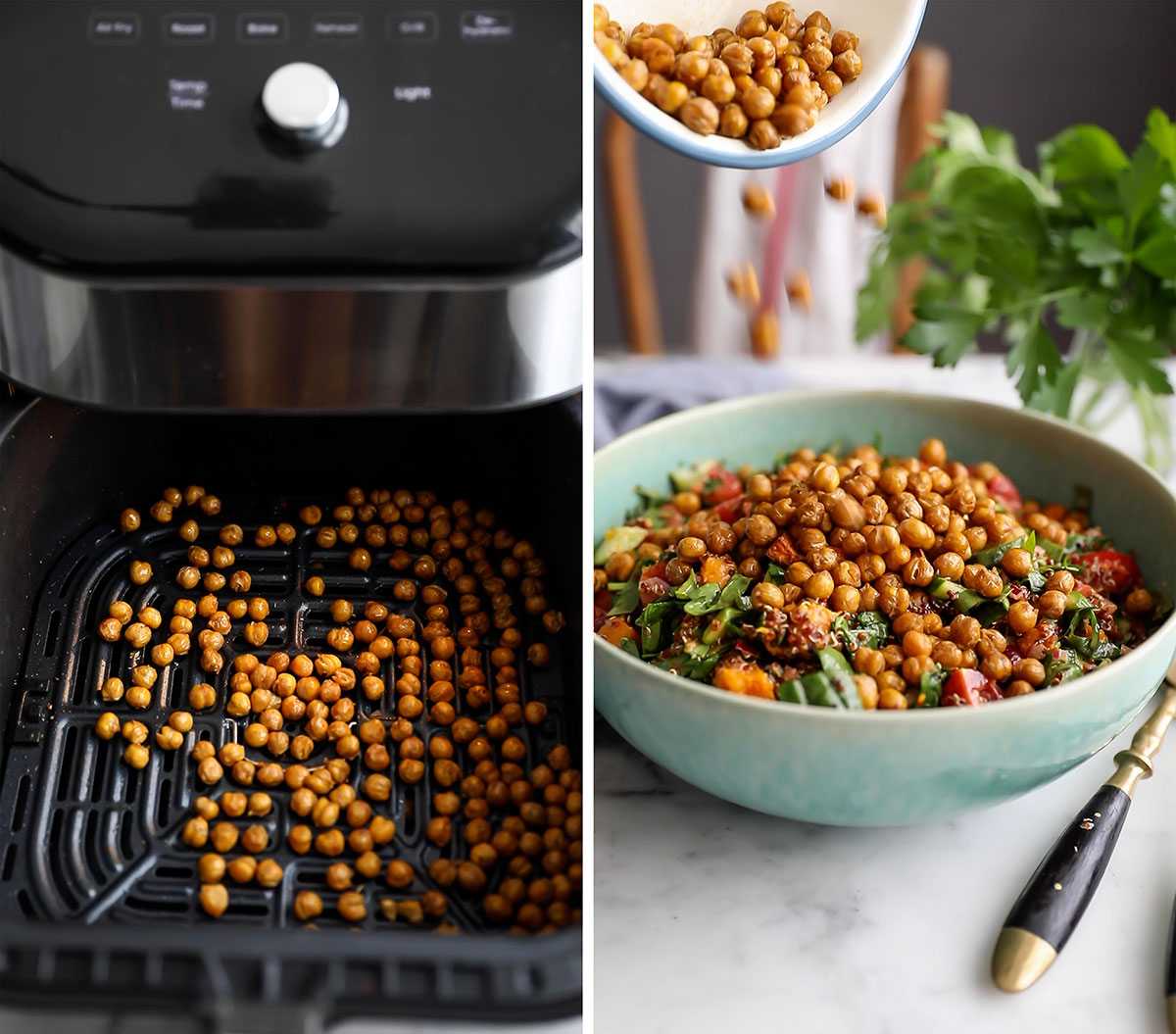
Chickpeas, roasted until crispy in the air fryer, add both protein and crunch and keep everything plant-based.
Variations and additions
A few things I would add, depending on what I am in the mood for: a handful of pickled currants or sultanas for a pop of sweetness that plays well against the salty olives and capers. Sun-dried tomatoes in place of or alongside the cherry tomatoes when fresh tomatoes are not at their best. A handful of rocket stirred through just before serving for a peppery note. Blanched asparagus would also work.
For more make-ahead salads worth bookmarking, visit my best braai salad recipes.
FAQs for veggie packed pasta salad
Why make pasta salad without mayo?
Mayo-based pasta salads are heavy, high in fat, and do not travel well in the heat. A vinaigrette-based pasta salad like this one is lighter, more flavourful, and actually improves slightly as it sits in the fridge because the dressing continues to absorb into the pasta and vegetables. It also holds up much better in warm weather, which makes it a better option for a braai, picnic, or packed lunch.
Can you make pasta salad the day before?
Yes, and it is often better the next day. The dressing absorbs into the pasta overnight and the flavours deepen. If you are making it ahead, hold back a small amount of dressing to add just before serving to refresh the salad, since the pasta absorbs it as it sits.
What is the best pasta for pasta salad?
Fusilli is my preference because the corkscrew shape holds dressing and small ingredients in its grooves. Farfalle and rotini also work well. Penne tends to be too hard and dense when cold and is my least favourite choice for a pasta salad. Whatever shape you choose, make sure it is fully cooked rather than al dente before cooling it down.
How long does pasta salad last in the fridge?
This pasta salad lasts up to four days in the fridge in a sealed container. The vegetables stay crunchy and the dressing holds well. Add any soft garnishes like fresh basil or avocado just before eating rather than storing them in the salad.
Is cold pasta healthier than hot pasta?
From a gut health perspective, yes. Cooling cooked pasta converts some of its starch into resistant starch, which behaves like dietary fibre in the body. It passes through the small intestine undigested and feeds the beneficial bacteria in your gut microbiome, producing short-chain fatty acids that support gut barrier integrity. This means a cold pasta salad has a lower glycaemic impact than the same pasta served hot.
Can you add protein to this pasta salad?
Yes, and it is designed for it. The base is neutral enough to work with tuna, rotisserie chicken, grilled salmon, sliced steak, mozzarella, halloumi, or crispy chickpeas. Vary the protein each day if you are using this for meal prep across the week.
How many plant points does this pasta salad have?
This recipe contains 10 plant foods: wheat pasta, shallot, red pepper, green pepper, celery, cucumber, parsley, cherry tomatoes, kalamata olives, and capers. Add artichoke hearts, and you have 11. Adding a plant-based protein like chickpeas takes it to 12 from a single meal.
- 300 grams / roughly 3 cups fusilli pasta or other short pasta, cooked and cooled
- 1 large shallot or small red onion very finely chopped
- 4 Tbsp / ¼ cup red wine vinegar
- 2 tsp Dijon mustard
- 2 Tbsp baby capers plus 1 tsp caper brine
- 4 artichoke hearts drained and chopped (about half a 400-gram / 14 oz tin, optional)
- 1 small red pepper finely diced
- ½ green pepper finely diced
- 1 celery stalk finely chopped
- 130 grams / ⅓ English cucumber chopped
- 2½ to 3 Tbsp Italian parsley finely chopped
- 200 grams / 7 oz cherry tomatoes mixed colours if possible, halved or quartered
- 60 grams / 2 oz kalamata olives pitted and roughly chopped
- 2 Tbsp extra virgin olive oil
- 2 Tbsp basil pesto
- Salt and pepper to taste
-
Add the shallot or onion to a large bowl. Add the Dijon mustard and red wine vinegar with a good pinch of salt and whisk together. Leave for 5 to 10 minutes to allow the vinegar to soften the sharpness of the onion.
-
Add the cooked and cooled pasta and all remaining ingredients. Toss well to combine, making sure the dressing coats everything thoroughly.
-
Taste and adjust the seasoning. The salad should be bright and punchy. Add a little more vinegar, salt, or pesto if needed.
-
Serve immediately or refrigerate in a sealed container for up to 4 days. Add your chosen protein just before eating rather than storing it in the salad.
If you are making this to eat immediately, fresh basil is a lovely addition. For meal prep, the pesto provides the basil flavour without the browning.
The artichoke hearts are optional, but they add a lovely savoury note and an extra plant point.
For a fully plant-based protein option, add crispy air-fryer chickpeas just before serving.
Protein pairings: tuna in olive oil, rotisserie chicken, grilled salmon, sliced steak, mozzarella, grilled halloumi, or crispy chickpeas.
Storage: Sealed container in the fridge for up to 4 days. The dressing absorbs further as it sits, which deepens the flavour. Add a small splash of extra vinegar or olive oil to refresh before serving if needed.
Freezing: Not suitable for freezing.
A few recipes you might like:
BLT pasta salad
Green goddess pasta salad
The Best Braai Salads | Easy, Crowd-Pleasing Recipes For Any BBQ
Healthy Green Goddess Caesar Salad Dressing
BUY MY eBOOK COMFORT
Find me on Instagram & Pinterest