



Lemongrass tea is a light herbal drink made by simmering fresh lemongrass in water. It has a clean citrus note without using lemon juice. This tea is common in Indian homes as well as in many Asian cuisines. You can enjoy it plain or with simple add-ins like ginger or lemon. It is easy to make and works well both hot and chilled.
About Lemongrass Tea
Lemongrass tea is made from fresh stalks or leaves of lemongrass. The stalk gives a stronger flavor, while the leaves are lighter.
In many homes, it is made as a simple herbal drink. It is also popular as a caffeine-free tea or tisane in other parts of the world. The flavor is mild, slightly sweet, and citrusy. It is not sharp like lemon juice.
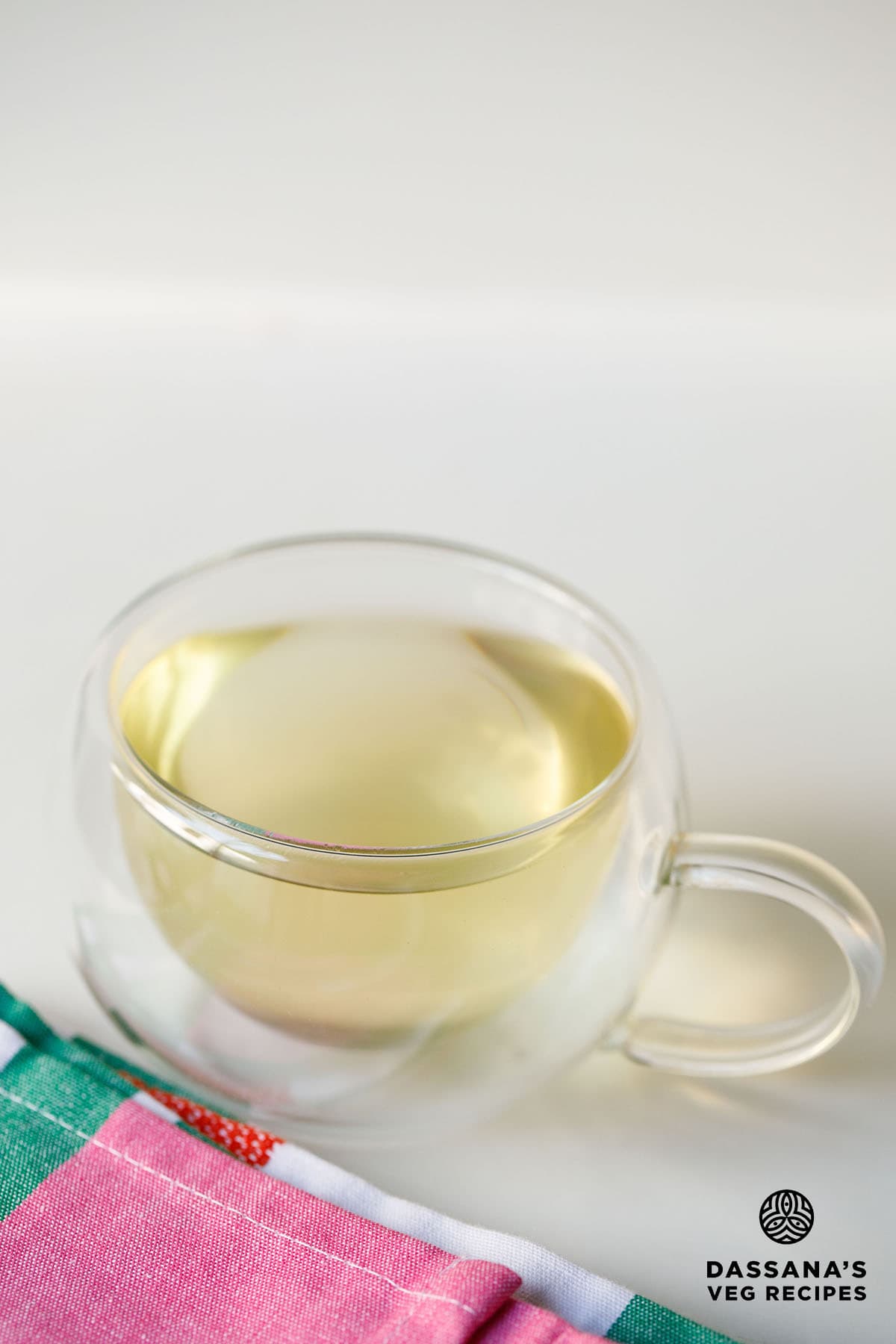
You can keep the lemongrass tea plain or add spices like ginger, fennel seeds, or cumin seeds. Each variation gives a slightly different taste.
This recipe uses fresh lemongrass. You can use only the stalks if that’s what you have. You can also use just the leaves if those are available.
Leaves are slightly milder but still give a good flavor. In this recipe, I have added a few leaves along with the stalks, but they are optional.
Dried lemongrass or ready mixes can be used, but the taste is lighter and less fresh compared to fresh lemongrass.
The proportion of lemongrass and water in this lemongrass tea recipe give a balanced flavor. Not too strong and not too light.
The method is simple. Simmer chopped or crushed lemongrass in water for some minutes until the flavor infuses, then strain and serve.
Ways to Serve & Variations
You can sweeten it with sugar, honey, or any preferred sweetener. Or skip sweetener completely.
Lemongrass tea can be served hot like tea or cooled and served as a refreshing drink.
You can also make lemongrass chai. Boil the lemongrass in water first, then add tea leaves and let it steep. Add hot milk, sugar and then serve.
If you love herbal teas, you can also try these drinks from the blog:
Iced Tea | Turmeric Tea | Kahwa Tea | Green Tea | Sulaimani Tea
How to Make Lemongrass Tea (Stepwise)
1. Rinse 1 lemongrass stalk well. Remove the hard outer layers and trim the base. Rinse again if needed.
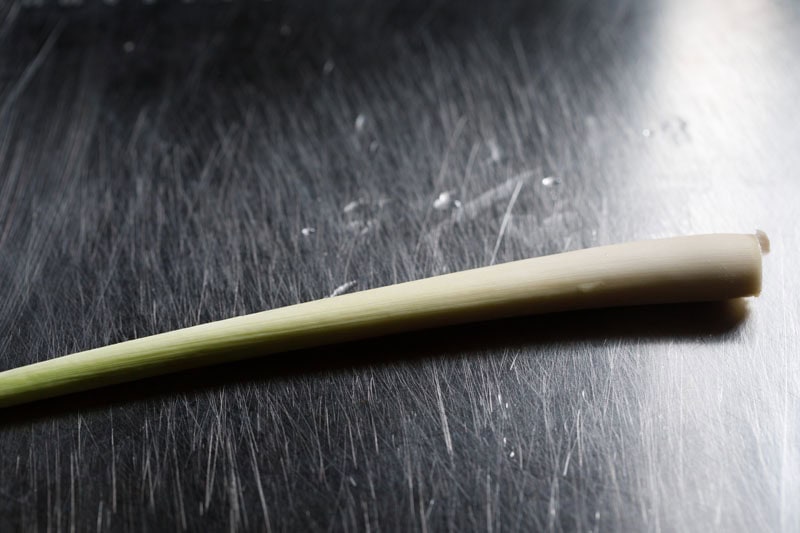
2. Lightly crush the stalk using a pestle. This helps release the fragrant oils and flavor.
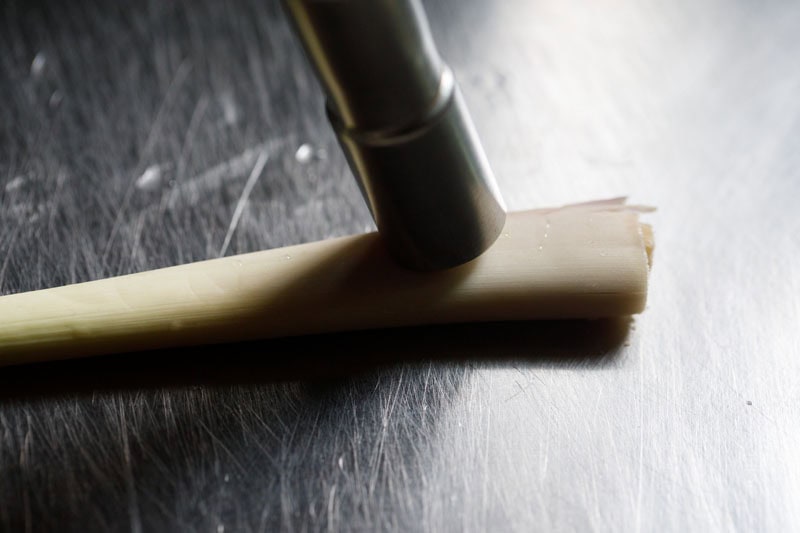
3. Chop the stalk into small pieces. You will need ¼ cup chopped lemongrass stalks.
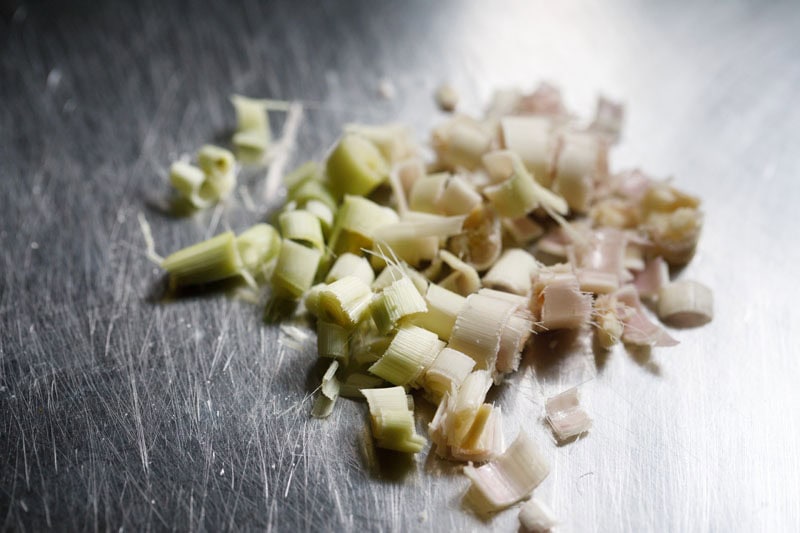
4. If using leaves, take 1 leaf. Rinse well and cut into smaller pieces.
You will need about 2 tablespoons chopped leaves for this recipe. Note that adding leaves is optional.
Using only leaves: If you only have leaves, use about 6 tablespoons of the chopped leaves. Rinse them well and cut with a knife or kitchen scissors. Be careful while handling, as the edges of the blades can be sharp. You can also tie the leaves in a bundle.
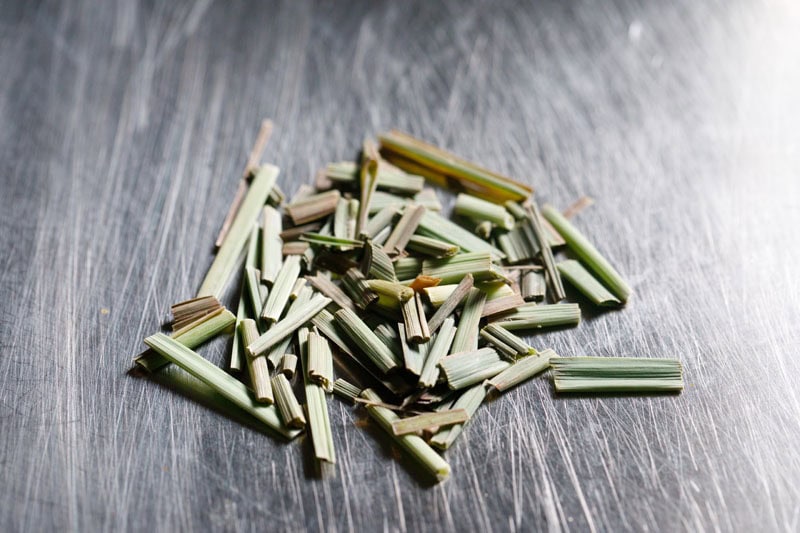
5. In a saucepan, add 4 cups water and the chopped lemongrass stalks as well as leaves.
Place the pan on medium heat. Bring the water to a boil. This takes about 5 to 6 minutes.
If using optional add-ins, add them once the water has come to a boil. For example, ½ inch ginger, ½ teaspoon fennel seeds or cumin seeds.
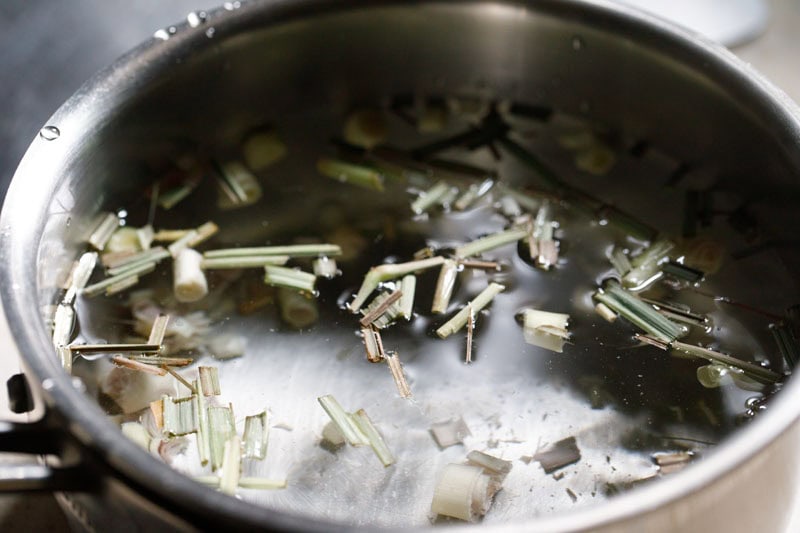
6. Once the water comes to a boil, let it simmer for 5 minutes for a light flavor, or up to 10 minutes if you prefer a stronger infusion.
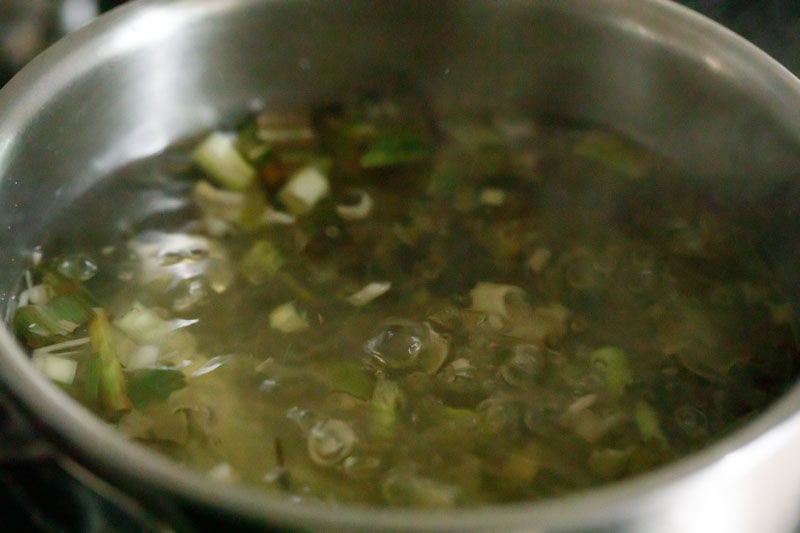
7. Turn off the heat. Cover and let it steep for 2 to 3 minutes.
Strain into cups or a jar. Add sugar or your preferred sweetener as needed. You can also add a little lemon juice if you want a slight tang.
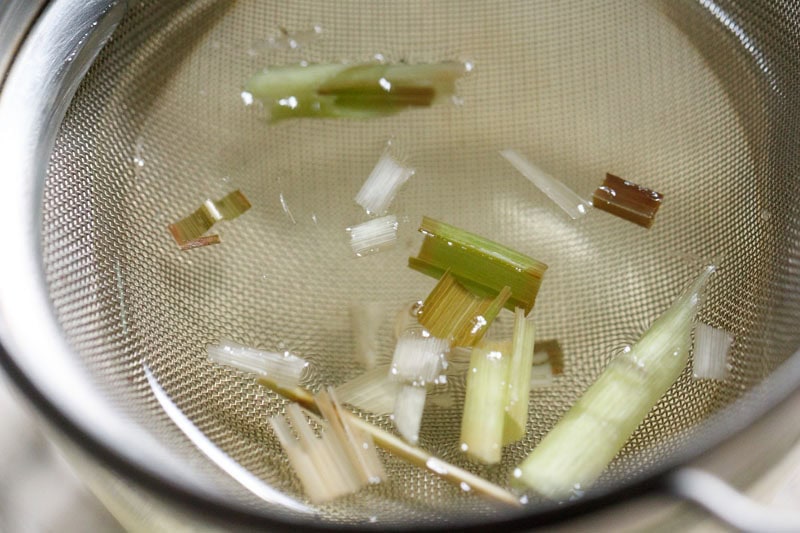
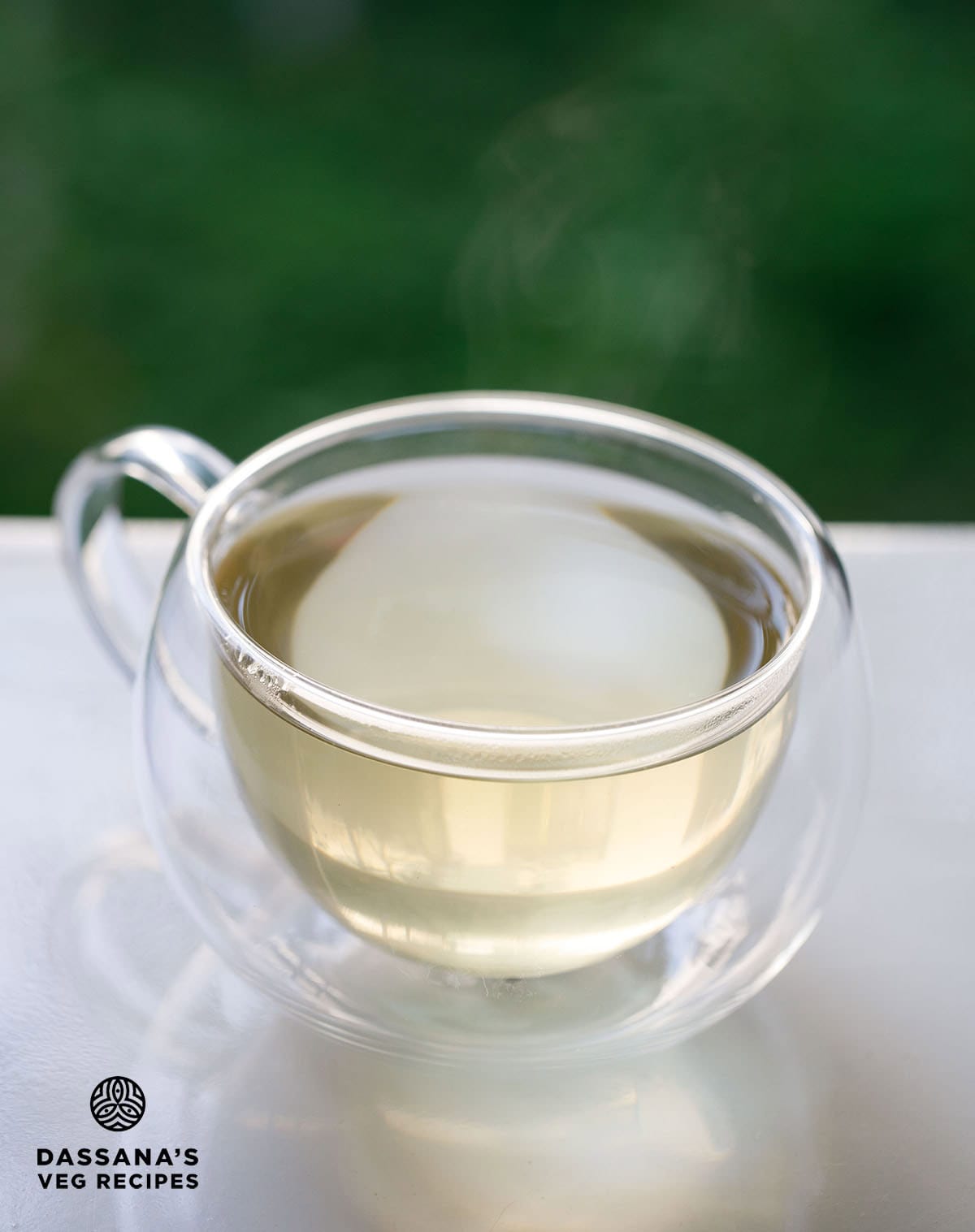
8. Serve lemongrass tea hot or warm. For cold tea, cool completely, pour into a pitcher, and refrigerate.
Serving Suggestions & Storage
Serve lemongrass tea hot in cups, especially in the morning or evening.
For a refreshing drink, chill it and serve cold with a slice of lemon.
You can also serve it without sweetener as a light herbal drink.
Store any leftover tea in the refrigerator for up to 1 day. Reheat before serving or enjoy chilled.
Helpful Tips
- Choosing lemongrass: Use fresh stalks that are firm and slightly pale green. Avoid woody stalks. You can also use fresh or dried lemongrass leaves.
- Crushing the stalks: Always crush the stalks before boiling. This step improves flavor extraction.
- Simmering time: Do not over-boil for too long. 5 to 10 minutes simmering is enough.
- Using leaves: Leaves are milder in taste. You can combine the leaves with stalks for better flavor.
- Sweetener options: You can use sugar, jaggery, honey, or skip it completely.
- Flavor balance: Adjust water and lemongrass based on your taste. More stalks give a stronger tea.
- Cold version: Chill well before serving. Add lemon juice just before serving for freshness.
Common Doubts
Can I use dried lemongrass?
Yes, but fresh gives better flavor. Use a little less if using dried.
Can I make this tea without sweetener?
Yes, it tastes good even without any sweetener.
Can I add milk?
No, this tea is usually made without milk.
How long should I boil lemongrass?
Boil first, then simmer for 5 to 10 minutes.
Can I drink it daily?
Yes, you can have it regularly as a light herbal tea.
-
Rinse and prep the lemongrass stalk by removing outer hard layers and trimming the base. Lightly crush the stalk.
-
Chop the stalk.
-
Add the chopped lemongrass stalks to water in a saucepan and heat on medium until it comes to a boil.Note: Add any optional spices if using at this point, when the water comes to a boil.
-
Once the water comes to a boil, simmer for 5 minutes for a light flavor or up to 10 minutes for a stronger infusion.
-
Turn off the heat.
-
Strain the tea into cups or a jar. Sweeten as needed and serve hot, warm, or chilled.
- If using only lemongrass leaves, use 6 tablespoons chopped lemongrass leaves.
- Crush lemongrass stalk lightly for better flavor.
- Do not over simmer to avoid bitterness.
- Use fresh stalks for best taste.
- Add lemon juice only at the end if using.
- Adjust strength by changing water or lemongrass quantity.
Calories: 4kcal | Carbohydrates: 1g | Protein: 0.1g | Fat: 0.02g | Saturated Fat: 0.01g | Polyunsaturated Fat: 0.01g | Monounsaturated Fat: 0.003g | Sodium: 12mg | Potassium: 29mg | Vitamin A: 0.2IU | Vitamin B1 (Thiamine): 0.003mg | Vitamin B2 (Riboflavin): 0.01mg | Vitamin B3 (Niacin): 0.04mg | Vitamin B6: 0.003mg | Vitamin C: 0.1mg | Calcium: 10mg | Vitamin B9 (Folate): 3µg | Iron: 0.3mg | Magnesium: 5mg | Phosphorus: 4mg | Zinc: 0.1mg