



Going to a new place and learning about public transportation can be daunting, especially if it’s your first time travelling to the new place. Good news: getting around the city is probably going to be one of the easiest parts of your trip.
While tourists may have a different way of using the transportation from those who live here, it is also for those who are new to town. You can gauge how much you need to spend on each mode of transportation, making it easier for you to travel.
This guide will help you understand the best way to travel in Singapore without splurging a lot of money. Here’s everything you need to know about using Singapore’s MRT trains, public buses, transport passes and fares like a local.
| Name | Best for | Key highlight |
|---|---|---|
| MRT | Travelling quickly between major attractions and districts | Fastest and most efficient way to travel around the island |
| LRT | Reaching residential neighbourhoods outside the city centre | Connects residential estates to nearby MRT stations |
| Bus | Getting closer to destinations not directly served by MRT | Wider coverage and a more scenic journey around Singapore |
| Taxi | Late-night travel, heavy luggage, or less accessible locations | Door-to-door convenience with ride-hailing and metered options available |
Different transportation to use
1. MRT
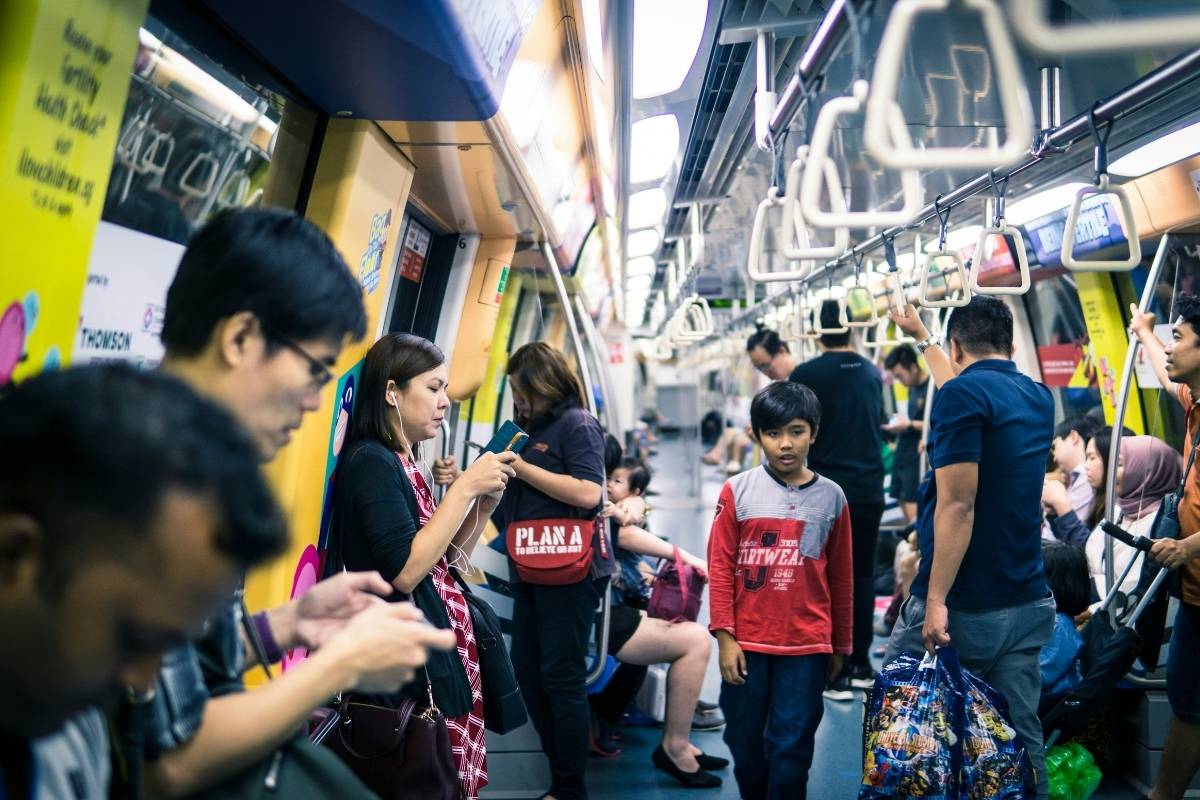
Singapore’s Mass Rapid Transit (MRT) is the fastest and most efficient way to travel around the island. At first glance, Singapore’s MRT map may look overwhelming if you are new or a tourist, but it’s actually quite simple to understand.
There are 6 MRT lines, each identified by a colour and a name. Each stations is also assigned a unique number code, making transfers easier to follow.
Before travelling, visitors can use Google Maps or a transport app to check the best route to take. Most apps will tell you exactly which line to travel on, where to transfer and how long the journey will take. It is one of the most cost-effective public transportation systems in Singapore.
For tourists or those new in town, some stations are used more than the rest, as many attractions are near these stations. Some of these stations are Bayfront, Orchard, Chinatown, HarbourFront, Marina Bay, Bugis & more.
| MRT Line (Colour) | Stations |
|---|---|
| North-South Line (Red) | Jurong East, Bukit Batok, Bukit Gombak, Choa Chu Kang, Yew Tee, Kranji, Marsiling, Woodlands, Admiralty, Sembawang, Canberra, Yishun, Khatib, Yio Chu Kang, Ang Mo Kio, Bishan, Braddell, Toa Payoh, Novena, Newton, Orchard, Somerset, Dhoby Ghaut, City Hall, Raffles Place, Marina Bay, Marina South Pier |
| East-West Line (Green) | Pasir Ris, Tampines, Simei, Tanah Merah, Bedok, Kembangan, Eunos, Paya Lebar, Aljunied, Kallang, Lavender, Bugis, City Hall, Raffles Place, Tanjong Pagar, Outram Park, Tiong Bahru, Redhill, Queenstown, Commonwealth, Buona Vista, Dover, Clementi, Jurong East, Chinese Garden, Lakeside, Boon Lay, Pioneer, Joo Koon, Gul Circle, Tuas Crescent, Tuas West Road, Tuas Link, Expo, Changi Airport |
| North East Line (Purple) | HarbourFront, Outram Park, Chinatown, Clarke Quay, Dhoby Ghaut, Little India, Farrer Park, Boon Keng, Potong Pasir, Woodleigh, Serangoon, Kovan, Hougang, Buangkok, Sengkang, Punggol, Punggol Coast |
| Circle Line (Orange) | HarbourFront, Telok Blangah, Labrador Park, Pasir Panjang, Haw Par Villa, Kent Ridge, one-north, Buona Vista, Holland Village, Farrer Road, Botanic Gardens, Caldecott, Marymount, Bishan, Lorong Chuan, Serangoon, Bartley, Tai Seng, MacPherson, Paya Lebar, Dakota, Mountbatten, Stadium, Nicoll Highway, Promenade, Esplanade, Bras Basah, Dhoby Ghaut, Bayfront, Marina Bay |
| Downtown Line (Blue) | Bukit Panjang, Cashew, Hillview, Beauty World, King Albert Park, Sixth Avenue, Tan Kah Kee, Botanic Gardens, Stevens, Newton, Little India, Rochor, Bugis, Promenade, Bayfront, Downtown, Telok Ayer, Chinatown, Fort Canning, Bencoolen, Jalan Besar, Bendemeer, Geylang Bahru, Mattar, MacPherson, Ubi, Kaki Bukit, Bedok North, Bedok Reservoir, Tampines West, Tampines, Tampines East, Upper Changi, Expo |
| Thomson–East Coast Line (Brown) | Woodlands North, Woodlands, Woodlands South, Springleaf, Lentor, Mayflower, Bright Hill, Upper Thomson, Caldecott, Mount Pleasant, Stevens, Napier, Orchard Boulevard, Orchard, Great World, Havelock, Outram Park, Maxwell, Shenton Way, Marina Bay, Marina South, Gardens by the Bay, Tanjong Rhu, Katong Park, Tanjong Katong, Marine Parade, Marine Terrace, Siglap, Bayshore |
 Tips:
Tips:
- Follow colour-coded lines. Interchanges are clearly marked and well-signposted.
- MRTs usually run from 5.30am to 12.30am. For more details on timing, refer here.
- Pay attention to the direction of the terminal station, not just the line name.
- Look at the Rail Travel Information System (RATIS) screen at the station, which displays the arrival time in minutes for the next approaching trains.
- Google Maps and Citymapper are reliable for step-by-step routing.
- Avoid peak hours (7.30am – 9am, 6pm – 8pm) if you prefer less crowded trains.
- Early mornings before 7.45am are slightly cheaper for fares.
- If you are in a wheelchair or using prams & strollers for your kid, then always look for the priority sticker (blue colour sticker) that’s on the MRT platform door so it’s easier to know which cabin is most convenient.
Common mistakes:
- Many stations have more than 2 platforms as they serve more than 1 coloured line, e.g., City Hall, Dhoby Ghaut.
- Newton & Tampines stations require you to tap out and walk to the other line.
- Missing the correct exit. Exits matter a lot and can lead to completely different streets.
- Standing on the wrong side of the escalator. The left side of the escalators is for standing, the right side is for walking.
- First-timers can forget to tap out properly, which results in higher charges on the next visit.
2. LRT
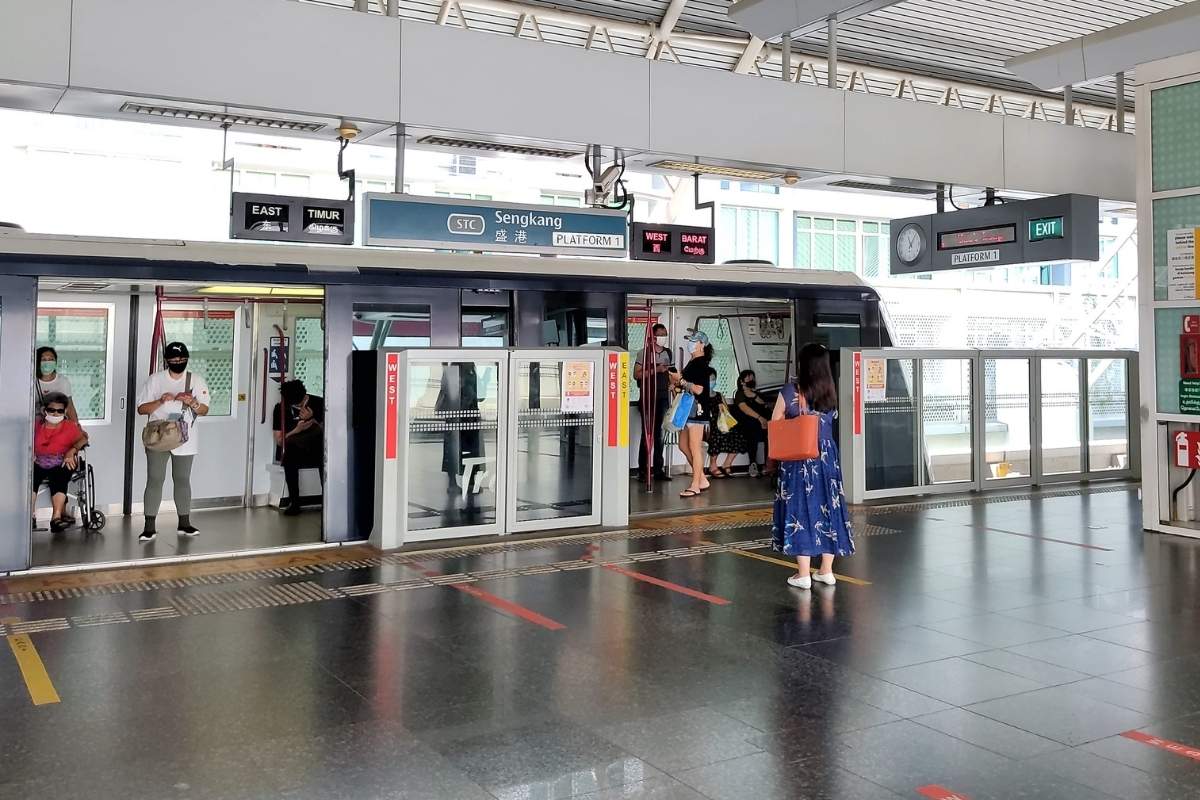
Unlike the MRT, Singapore’s Light Rail Transit (LRT) system primarily serves residential neighbourhoods and acts as a feeder service to nearby MRT stations & locations.
For most tourists, you are unlikely to use the LRT during your visit as major attractions are well-connected by MRT lines and buses. However, it can be useful if you’re staying in residential areas outside the city centre. And for those who are new to town, if you are staying in residential areas outside of the Central Business District (CBD), then this might be useful for you.
With that being said, there are 3 LRT lines that are each coloured grey inside the map. Unlike MRTs, LRTs are smaller trains that carry fewer people.
| LRT Line | Area Served | Connects To |
| Bukit Panjang LRT (BPLRT) | Bukit Panjang | Downtown Line |
| Sengkang LRT (SKLRT) | Sengkang | North-East Line |
| Punggol LRT (PGLRT) | Punggol | North-East Line |
Tips:
- Check the direction carefully: LRTs run in loops, so direction matters.
- Trains are frequent, but the wait times can feel longer than the MRT.
- Doors are smaller & trains are compact, so it’s important to let the passengers exit before you board.
Common mistakes:
- Getting on the wrong loop direction and ending up back where you started.
- Getting off earlier than you’re supposed to, since stops are very close compared to MRTs.
3. Bus
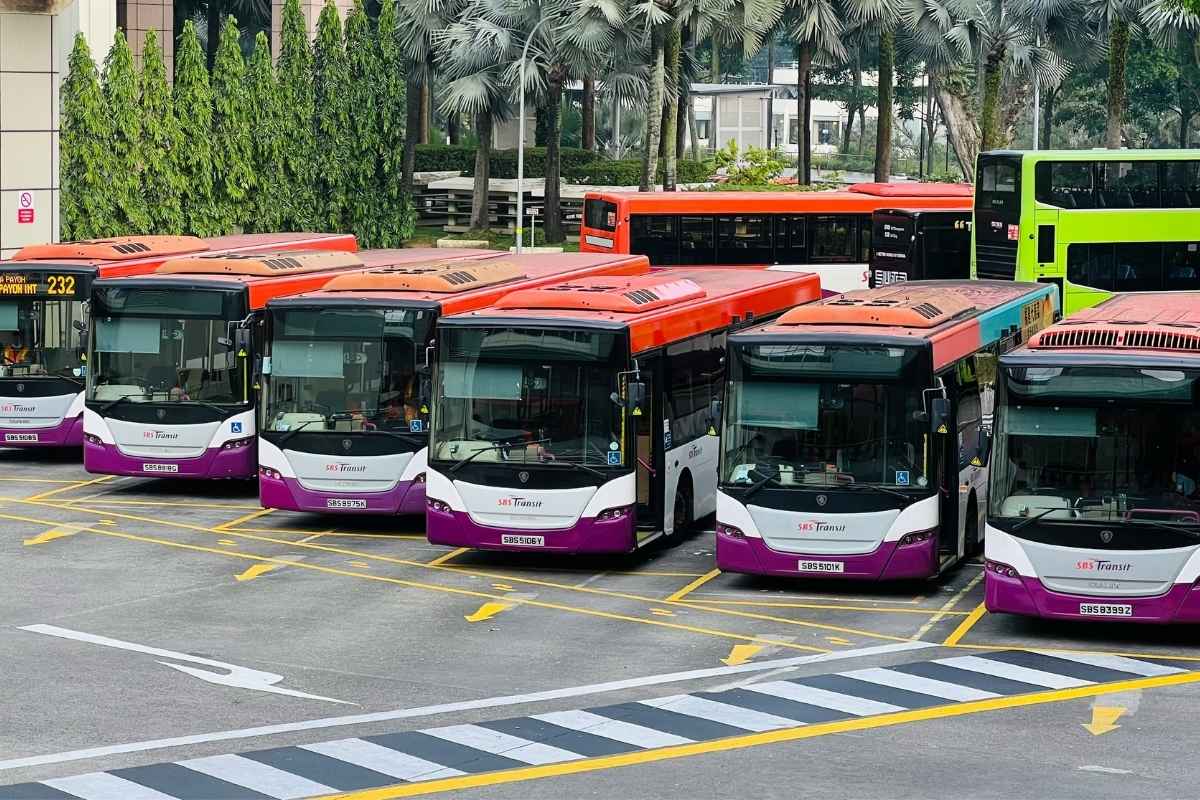
While the MRT is excellent for covering longer distances, buses can sometimes get you closer to your destinations. Buses are usually more comfortable than MRTs; however, trips can take longer due to traffic.
That said, Singapore’s bus network does have a wider reach into residential neighbourhoods, attractions and other areas that are not close to an MRT station. They can also offer a more scenic way to see the city compared to travelling underground.
Using a bus is straightforward:
- Entry through the front door is preferred, except if you ae on a mobility device, or pushing a pram.
- Tap your card when boarding.
- Press the stop button before your destination.
- Tap out when exiting through the rear door (preferred).
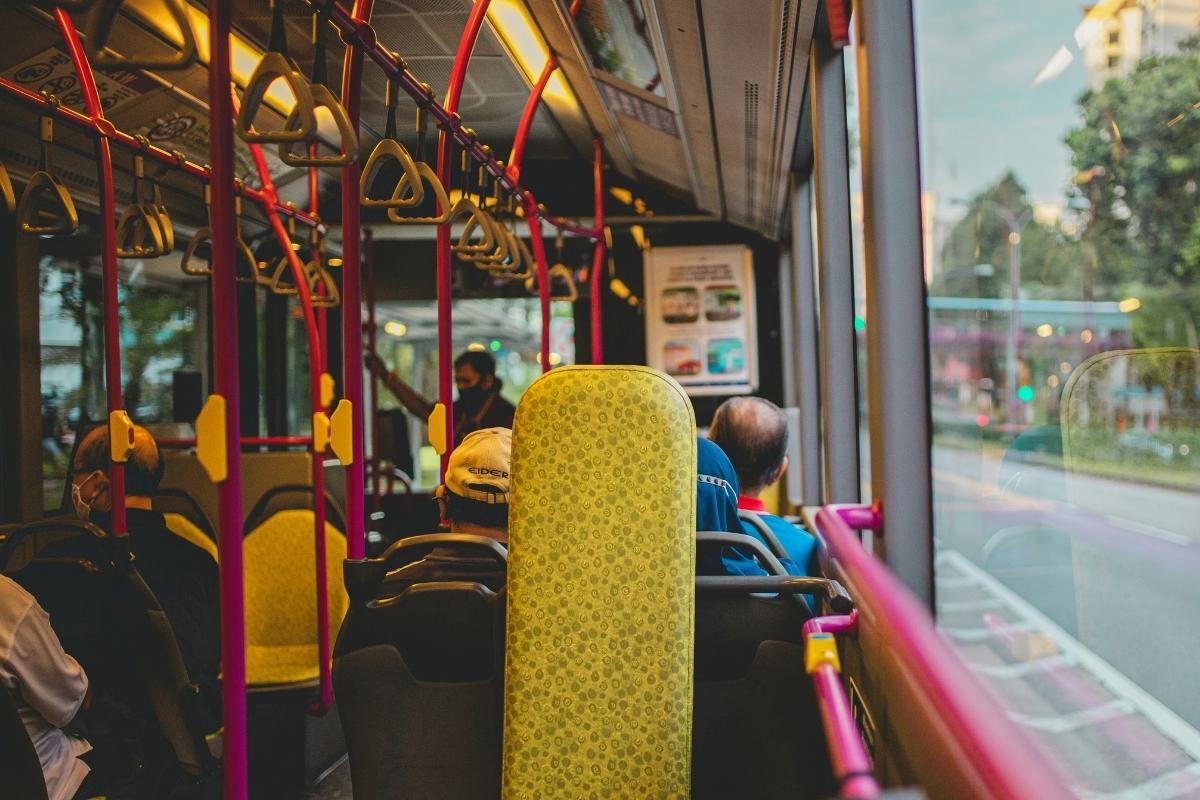
It is important to know how many stops it takes to get to the location, as it’s easy to miss a stop, especially if you’re a tourist or new to town. That’s why most buses display upcoming stops on digital screens, while Google Maps or other transportation apps can help track your journey in real time.
Tips:
- Buses are numbered, not named like MRT stations, so always check the number before boarding.
- Use apps like SG Buses to track arrival times.
- Press the stop bell early, as buses may not stop otherwise.
Common mistakes:
- Forgetting to tap in or tap out can result in the system charging the maximum fare & sometimes there are ticket inspectors who randomly check people to ensure everyone paid the correct fare.
- Tapping in via the back door instead of the front. Only in certain situations does the bus captain allow it.
For more details on buses, refer here.
12 best hotels for a staycation in Singapore
4. Taxi
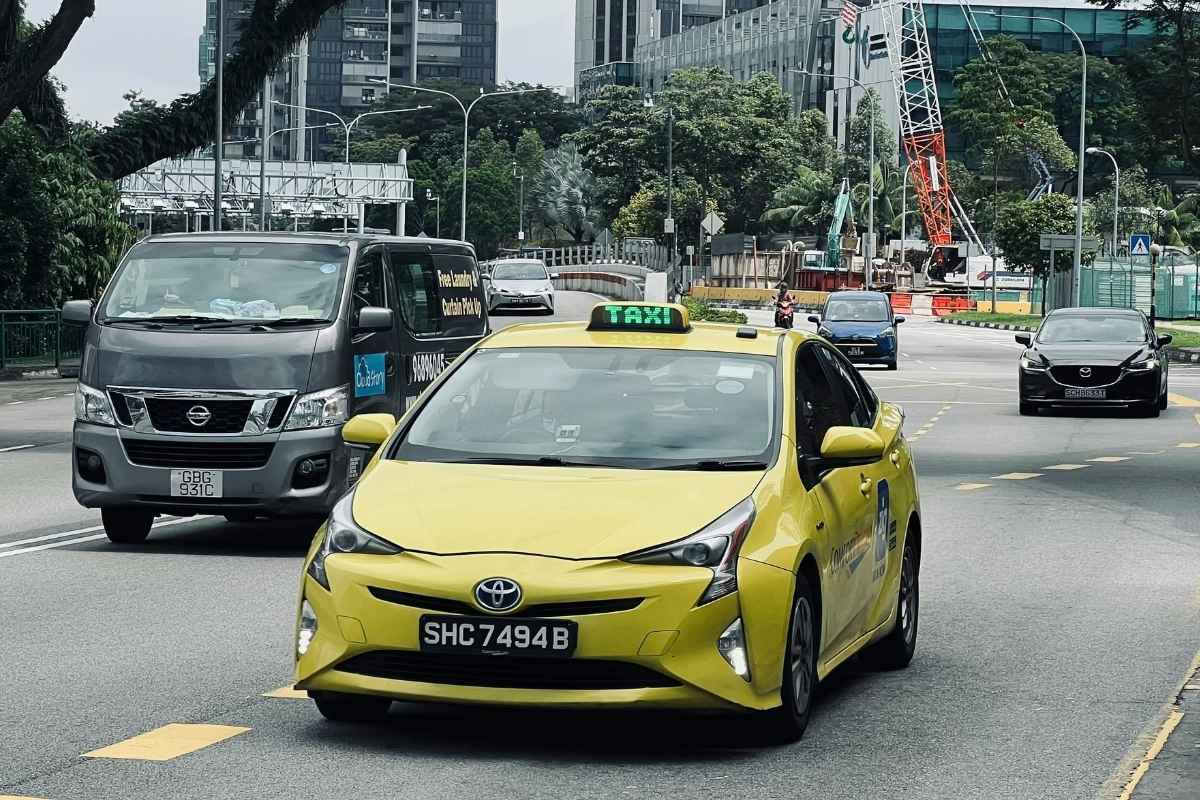
Public transport will cover most of your needs, but there are times when a taxi or ride-hailing service makes sense. This is especially true if you’re travelling late at night, carrying heavy shopping bags or heading somewhere less accessible.
Grab is Singapore’s most widely used taxi platform and is generally easy to use for tourists. However, there are also other apps such as Ryde, TADA, Gojek and CDG Zig.
Keep in mind that fares can increase during peak periods (weekdays at 6am to 9.29am & 5pm to 11.59pm and weekends & public holidays at 10am to 1.59pm & 5pm to 11.59pm) with a 25% surcharge on top of your fare. Rainy weather, busy areas, and rides after after 10pm also increase the price of a taxi ride.
Tips:
- All taxis accept cards, cash, and mobile payment such as PayNow or PayLah.
- Expect extra charges during peak hours, late night, and certain locations like airports or CBD.
- Be specific with pickup points, as some areas have multiple pickup zones.
- Always check different apps as fares may be different in each app.
Common mistakes:
- Not accounting for surcharges, the base fare might look cheap, but peak-hour or location surcharges can add up.
- Assuming all taxis cost the same. Metered fares for companies such as Comfort can vary, depending on time and conditions.
- Giving unclear pickup instructions for large malls, hotels, and MRT exits as they often have multiple entrances.
- Not checking ERP routes (road tolls). Some routes include electronic road pricing charges that are added to your fare after the trip is over.
How do public transport fares work in Singapore?
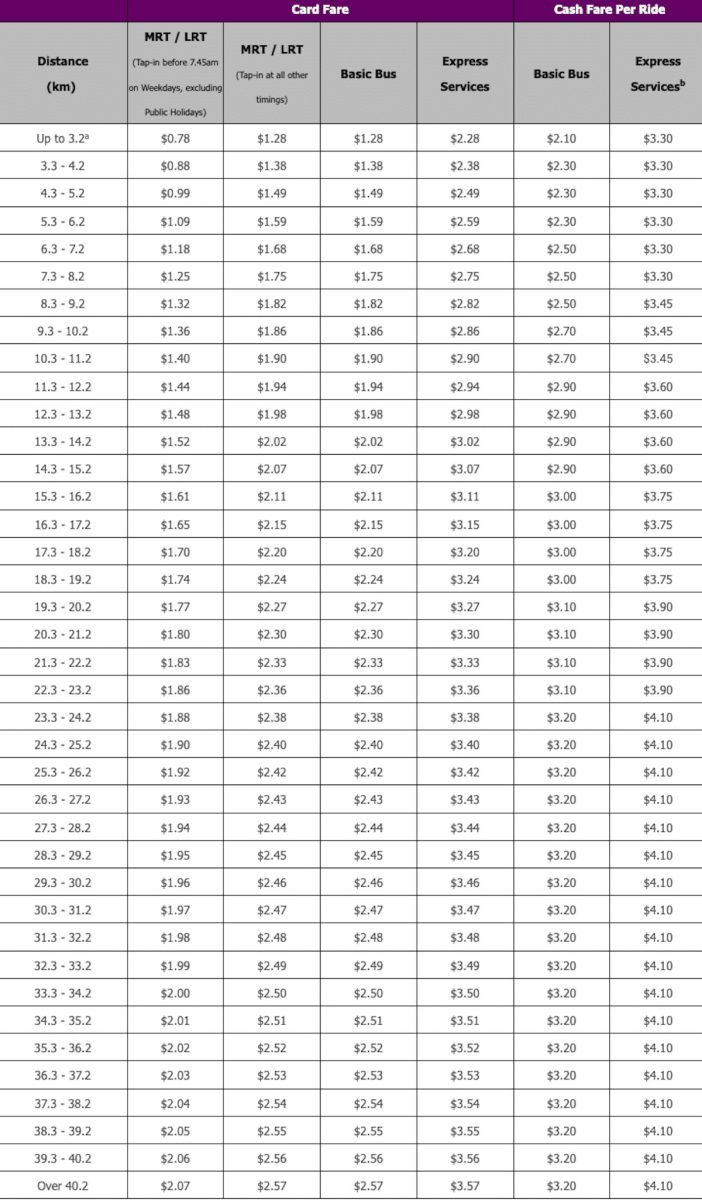
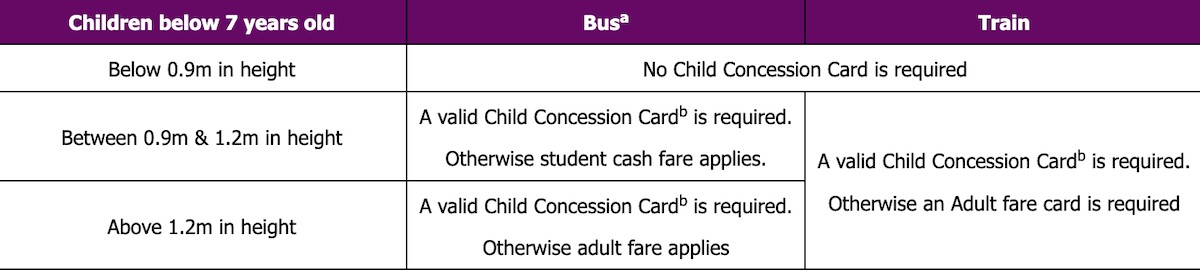
For everyone, including locals or tourists, public transport fares are charged based on the distance travelled. Simply tap your card or mobile wallet when entering and exiting MRT stations or boarding and alighting buses, and the correct fare will be deducted automatically.
Visitors can use international Visa and Mastercard credit or debit cards, mobile payment services such as Apple Pay and Google Pay, or purchase a local EZ-Link card for convenience. For tourists, you can simply buy a standard EZ-Link card or the Singapore Tourist Pass to use for public transportation.
For more details on the fare, refer here.
Singapore Tourist Pass
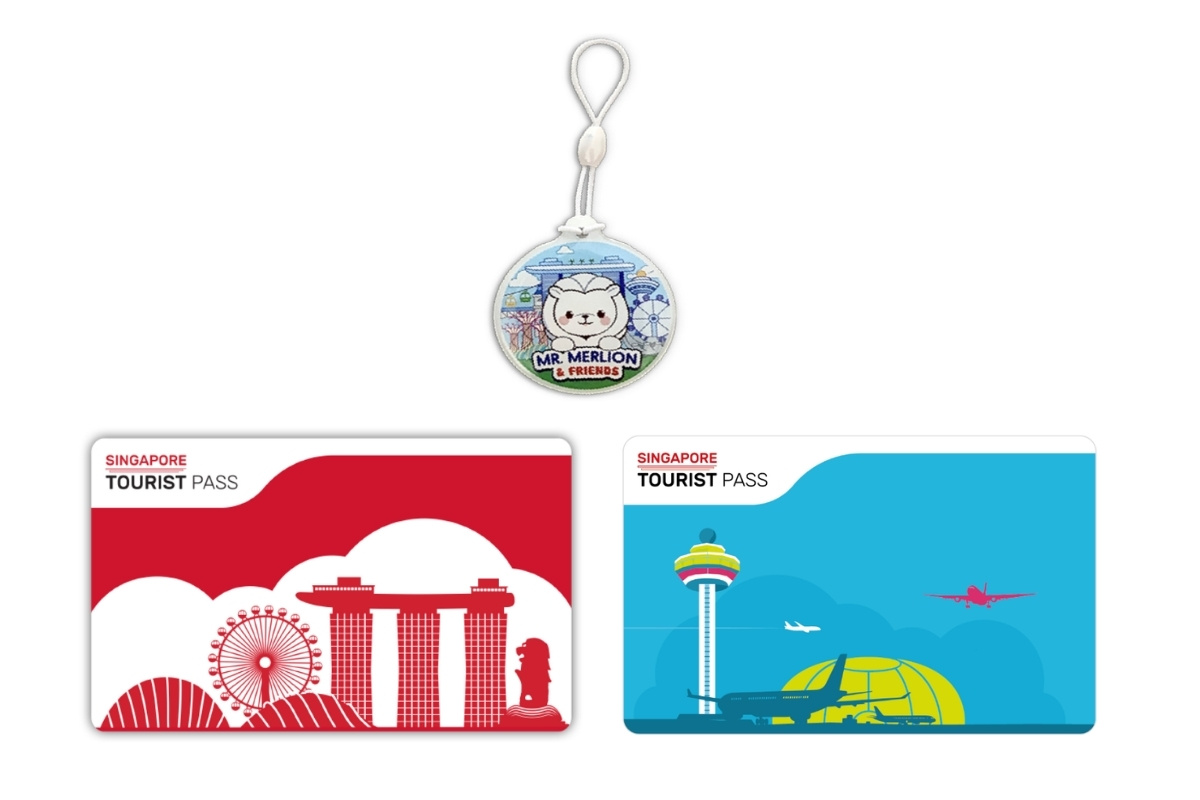
The Singapore Tourist Pass (STP) is a curated package created for tourists who visit Singapore for a short period. The package makes sure that the tourists buy the ticket once and enjoy travelling via public transport without having to calculate fares or check their remaining balance.
According to the tourist package chosen, you can get up to 5 consecutive days’ unlimited travel in Singapore’s MRT and public bus system. There are 3 main STPs for tourists to use, and tourists can get perks & discounts from retail shops to attractions & more if the visitors purchase one of the passes.
| Name | Price | Best when | Key highlight |
|---|---|---|---|
| Singapore Tourist Pass | 1-Day: S$17,
2-Day: S$24, 3-Day: S$29, 4-Day: S$37, 5-Day: S$45 |
You only need unlimited public transport travel | Unlimited rides on basic bus services, MRT and LRT trains |
| Singapore Tourist Pass Charm + Sentosa Express Bundle | 1-Day: S$22,
3-Day: S$34 |
You want a transport pass and a souvenir | Includes a collectible Merlion charm with unlimited public transport travel |
| Singapore Tourist Pass + Changi Recommends Bundle | 1-Day: S$19,
2-Day: S$28, 3-Day: S$48, 4-Day: S$52, 5-Day: S$60 |
You want transport plus bundled travel perks and discounts | Includes unlimited public transport travel and Changi Recommends bundle benefits (insurance included for 3-, 4- and 5-day passes) |
The main distinction between a STP pass and regular fare payment is flexibility versus cost control. With a STP, every MRT ride and bus journey is already covered during the validity period. It doesn’t matter if you take 3 trips or 10, the cost remains the same. This is ideal for tourists who want to visit a lot of places via public transportation.
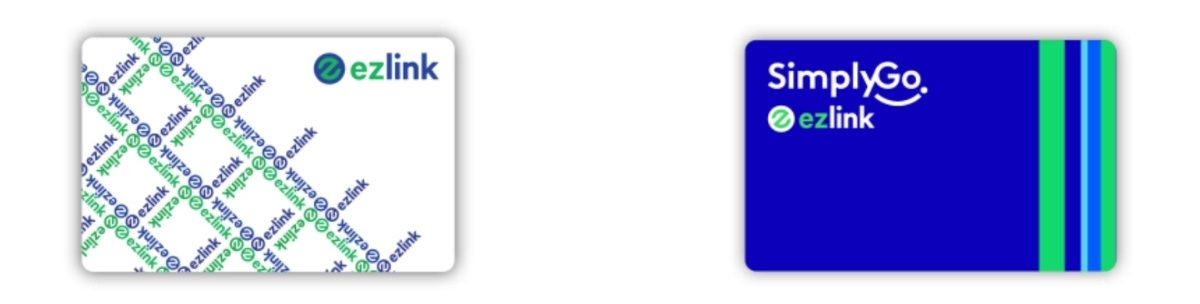
However, not every tourist will benefit from an unlimited travel pass. Tourists who are staying in Singapore for a short period, visiting fewer places or mainly using taxis, it might be better to take the standard EZ-Link card. Instead of paying for an unlimited travel pass, you get to choose how much you want to spend on the card, as every journey is based on distance travelled.
People who are new in town can also benefit from the STP passes. They can use these passes to learn how to use the public transport, plus you get the chance to visit places around Singapore without worrying about your card balance.
Visitors can buy the standard EZ-Link card or use contactless payments for future trips. This solution is ideal for people who have just relocated to Singapore.
For more details on EZ-Link card, refer here.
How to choose between an EZ-Link card and a Singapore Tourist Pass?
If you expect to spend most of your trip using the MRT and public buses, a Singapore Tourist Pass is usually the more convenient option. The standard Singapore Tourist Pass suits visitors who simply want unlimited travel without worrying about fares or topping up, but is more expensive per trip.
The Singapore Tourist Pass Charm + Sentosa Express Bundle makes more sense if you would like a keepsake alongside your transport pass, while the Singapore Tourist Pass + Changi Recommends Bundle is geared towards travellers who plan to make use of additional discounts and bundled perks during their stay.
On the other hand, an EZ-Link card or contactless payment may be the better choice if you are staying longer, making only a few journeys each day, or relying heavily on taxis. The right option ultimately depends on how frequently you expect to use Singapore’s public transport network during your visit.
People also read:
What’s new for tourists in Singapore this year?
What are the best things for tourists to do in Singapore?
The post Everything you need to know about public transport in Singapore appeared first on SETHLUI.com.