



Withal, not all shrimp is created equal, nor do all varieties cook the same on the grill. Here’s what you need to know to grill the perfect shrimp every time. And while we’re at it, we’ll give you some pointers on grilling shrimp’s big brother: lobster.
What You Need to Know About Shrimp
What’s the Difference Between Shrimp and Prawns?
A simple question with a complicated answer. In the U.S. we tend to call these crustaceans “shrimp.” In the UK, people call the same shellfish “prawns.” (In Italy, prawns are called “scampi.”) There are also anatomical, zoomorphic, and biological differences too complicated to get into. Don’t let that interfere with the pleasure of grilling them.
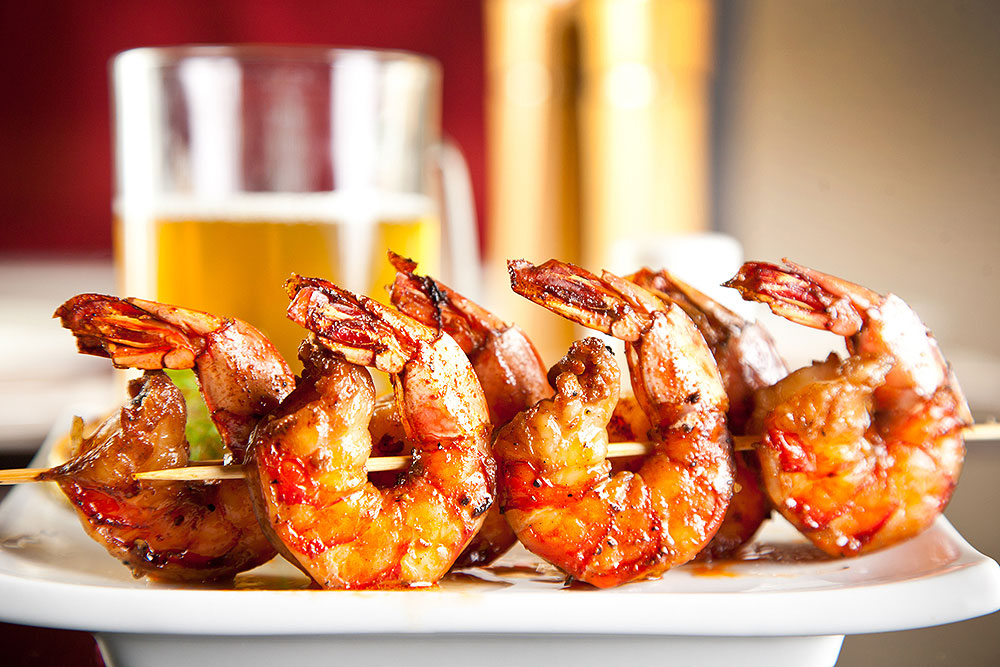
What Size Shrimp Is Best for Grilling?
Shrimp range in size from Quebec’s diminutive crevettes Nordiques (so tiny you can fit a dozen in a tablespoon) to Africa’s black tiger prawn, which can grow up to a foot in length. Shrimp in the U.S. are sold by the “U” size—for example, U-16 means fewer than 16 headless shrimp to a pound. That’s what I use when making shrimp kebabs. When grilling individual shrimp, I buy U-8s or U-10s—also sold as “colossal.”

Should You Grill Shrimp With the Heads On?
In much of the world, people grill shrimp with the heads on. There’s lots of flavor in the head (don’t be embarrassed to suck it out), and it looks cool as all get out. Never underestimate the power of looking cool at the grill.
Should You Grill Shrimp With the Shells On?
I like grilling shrimp in the shell. Fire-charred shells add flavor and keep the meat moist. I like grilling peeled shrimp because they’re quicker and easier to eat (and easier to marinate). There’s a place for both in my barbecue world.
Should You Leave the Tails On?
A lot of restaurants leave the tails on—to remind you that the creature you’re about to eat once swam in the ocean. Or maybe to give you a handle when eating shrimp with your fingers. The fire-charred tail adds a bit of flavor. But it also adds another step come time to eat the shrimp, so omit it if you prefer.
How to Devein Shrimp
A visible black vein in a cooked shrimp is off-tasting and unsightly. Here are three ways to remove it.
- Use a shrimp peeler and deveiner. Insert the deveiner in the fat end of the shrimp and push. The shell and vein will come off easily.
- Butterfly the shrimp—that is, make a V-shaped cut along the back of the shrimp to cut out the vein and the flesh immediately surrounding it. The advantage of this method: The shrimp curls into an attractive butterfly shape as it cooks.
- Insert the tine of a fork in the rounded part of the back under the vein and gently lift. Most of the time, the vein will pull right out.
How to Grill Shrimp
In a nutshell, directly over high heat. Grill small shrimp kebab-style (threaded on bamboo or metal skewers). The skewer should pass through the head end and tail end so each shrimp lies flat on the grate. It’s a lot easier to turn 4 kebabs than 20 individual shrimp.

For the really big guys, like African black tiger prawns, cut them almost in half through the back (cut lengthwise), butterfly them open, and grill as you would a lobster tail. And don’t overlook smoking: Smoked shrimp make an awesome shrimp cocktail.
Figure on 1/2 pound of headless shrimp per person.
Which Shrimp Should You Grill?
Shrimp remain mercifully regional, and each variety has its own distinct texture and taste. If you live on the southeastern seaboard, you eat delicate Carolina shrimp. If you come from Down East, sweet white Maine shrimp are your ticket. Down my way, in south Florida, we grill succulent Key West pinks. Californians and Hawaiians savor spot prawns—so named for the black eye-like mark on the side of the shell. Wild-caught shrimp are my personal favorite—buy them whenever you can.
Otherwise, you’ll use farmed shrimp, which are mercifully affordable and available everywhere. If you’re worried about the provenance, look for the Marine Stewardship Council label on wild-caught shrimp. For farmed shrimp, look for certification from the Aquaculture Stewardship Council or Best Aquaculture Practices.
When buying shrimp, use the sniff test. They should smell briny and fresh, like the seashore, not a fish store. Avoid shrimp that smell ammoniated or like bleach.
A Word About Grilling Lobster
Here in North America, we have two basic varieties to choose from. Down my way, in Miami, we get spiny lobster, also known as Florida lobster (or langosta among our many Spanish speakers). Its lack of claws and wide meaty tail makes it ideal for grilling. Up in Martha’s Vineyard, where I spend my summers, we have Homarus americanus, Maine lobster, distinguished by its large front claws. Spiny is easier to split and grill (and it’s my wife’s favorite), so that’s the recipe featured here.

Here are five of our favorite shrimp and lobster recipes, starting with a New Orleans classic: Emeril Lagasse’s Barbecued Shrimp.
Shrimp and Lobster Recipes to Try
Shrimp Spiedini with Salmoriglio
These colorful Sicilian-inspired kebabs alternate shrimp with sweet onion, bell peppers, padrón or shishito peppers, sage, and bay leaves. As they grill, the spiedini are basted with salmoriglio—a lively Italian sauce made with fresh herbs, capers, olives, lemon, and olive oil.

Get The Recipe »
Greek Grilled Shrimp
This simple recipe proves that shrimp don’t need much embellishment. Greek-inspired herbs, extra-virgin olive oil, and fresh lemon give the shrimp plenty of flavor before they’re quickly grilled over medium-high heat.

Get The Recipe »
Wildfire Outdoor Living is an Arizona-based company specializing in high-performance gas grills and premium outdoor kitchen solutions. Wildfire brings a commitment to cutting-edge technology and industry-leading innovation. Their 304 stainless steel design and illuminated LED knobs, cast stainless steel burners, and laser-cut stainless steel cooking grates create products that will provide peak performance. They also allow you to customize your outdoor kitchen with designer finish knobs and handles to meet the growing demand for designer outdoor kitchens.
Looking for more recipes like this? Browse our Recipe Index for grilled, smoked, and live-fire favorites.
Get Steven’s weekly grilling tips, seasonal recipes, and live-fire ideas in your inbox. Join our Up in Smoke newsletter. Sign up and get a FREE PDF of Steven Raichlen’s Best Ribs Recipes Ebook.
Preorder Man On Fire — A Steven Raichlen Memoir. And get some really cool rewards!
Looking for more summer grilling inspiration? Check out our Summer Grilling Guide.