



Wondering what blade tenderized means, why it gets used, and how to spot it? We got you. You can’t spot it by eye, though. USDA’s food safety agency says these steaks look no different from steaks that never met a blade, so the answer is printed on the package, and once you find it there, the way you cook that steak changes.
🔪 The short answer
Read the label. Since May 17, 2016, federal rules have required raw beef that was pierced by needles or blades to say mechanically tenderized, blade tenderized or needle tenderized in its product name, with validated cooking instructions. USDA advises cooking it to 145°F and resting it 3 minutes, checked with a thermometer.
⚙️ What blade tenderizing does to a steak
A tenderizer runs rows of thin needles or blades through the meat, cutting muscle fibers and connective tissue so the steak eats more tender. According to the Beef Checkoff’s fact sheet on mechanical tenderization, essentially any beef cut can be needled, and the tougher cuts gain the most. Research it cites found tenderness gains in outside round, top sirloin, strip loin, inside round, and chuck tender.
It happens in more places than people expect. FSIS lists the processing plant, the butcher or grocery store, the restaurant kitchen and the home kitchen, where a handheld tenderizer does the same job. It’s common, too. A 2012 expert estimate cited in the 2015 federal rule put mechanically tenderized beef at about 10.5 percent of the beef sold, roughly 2.6 billion pounds, based on 2010 production. That count left out tenderized beef that was also injected with a solution.
On a whole, untouched steak, any bacteria sit on the outside, and cooking takes care of the surface. Push needles through that steak and whatever was on the surface can travel into the center, which is why the labeling rules below exist and why the cooking temperature goes up.
🏷️ Where the label tells you
FSIS puts it plainly: “Mechanically tenderized products look no different from products that are not mechanically tenderized. The only way to tell if meat has been mechanically tenderized is by checking the label.”
The 2015 rule spells out where to look and what you will find:
- The words mechanically tenderized, blade tenderized or needle tenderized, sitting right above, below or beside the product name on the front of the package, in one easy to read type style on a contrasting background.
- Cooking instructions that can appear anywhere on the label. They have to name the cooking method, a minimum internal temperature, whether the steak needs to be held at that temperature for a set time, and a reminder to check with a thermometer.
- Coverage that includes beef injected with a marinade or solution, so read the label on enhanced and marinated steaks too.
- The same wording on store repacks. If a grocery store repackages tenderized beef, its label has to carry the descriptive wording and the cooking instructions from the plant that made it.
Two things fall outside the rule. Cubed and pounded steaks are exempt, because cubing and pounding visibly change the meat. And nobody labels the steak a restaurant tenderizes in its own kitchen, or the one you run through a handheld tenderizer at home. For those, the temperature call is yours.

🌡️ How to cook it: 145°F and a 3 minute rest
USDA’s guidance, word for word from FSIS: “The best way to ensure it’s safe to eat is to thoroughly cook all mechanically tenderized meat to an internal temperature of 145°F with a 3-minute rest time.“
FSIS says the internal temperature holds steady or climbs a little while the steak rests off the heat, and that keeps killing bacteria. That 145°F reading belongs in the center of the steak, so a thermometer is the only test that counts. Color and feel can’t tell you the middle got there.
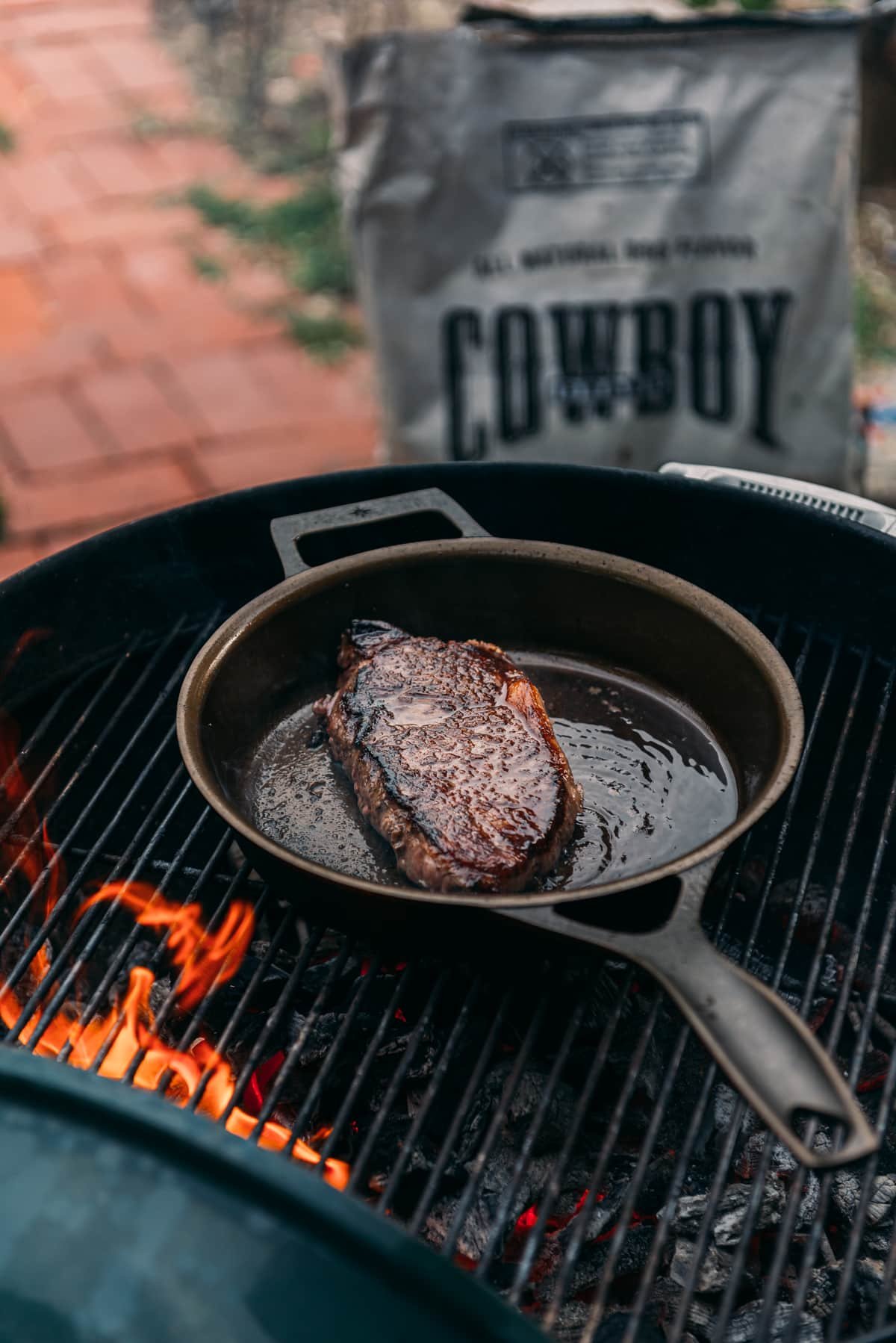
If the package prints its own cooking instructions, follow them. They were validated for that product. For thick steaks, we like a reverse sear, because the low oven brings the center up to temperature evenly before the steak ever hits the hot pan.
Want your steak rare? Buy one without the tenderized wording on the label, and save the tenderized steaks for nights when you’re cooking to 145°F anyway.
🤝 What processors are required to do
Plants that make tenderized beef operate under federal inspection. According to the Beef Checkoff, required processors producing mechanically tenderized beef reassessed their HACCP food safety plans for E. coli O157:H7 in May 2005, years before the labeling rule.
The cooking instructions on the package aren’t guesses. Under the 2015 rule, a plant has to back them with scientific support plus its own in plant data showing the cook reaches the temperature and time on the label, the same validation standard used for its HACCP plan. The Beef Industry Food Safety Council has written best practice guidelines too, and the Checkoff names raw material control, sanitation, cold chain management and packaging as the key points for this kind of beef.
Tenderizing earns its place on the line. In research the Checkoff cites, needle tenderizing cut the share of inside round samples rated tough from 52 percent to 20 percent. We’ll take that win for this otherwise hard to use cut.
🥩 Meat Nerd Tips
- Read the front before it hits the cart. The tenderized wording has to sit next to the product name on the front of the package, so you can sort steaks by doneness plan right at the case.
- Ask at the full service counter. When a butcher cuts steaks to order, ask whether the piece was needled before it was cut, since the answer decides how you cook it.
- Your handheld tenderizer counts. Once you run a steak through one at home, it is mechanically tenderized, and FSIS’s 145°F with a 3-minute rest applies to it too.
- Trust the package over a chart. The printed instructions were validated for that product, so they beat any general guide, ours included.
⚡ Lightning round
Not by default. The Beef Checkoff reports that needle tenderizing causes very few quality problems, with any extra purge under 1 percent. It can’t turn an eye of round into a tenderloin, though, and taste panels still rate the tenderloin higher.
A lot of it goes there. A 2012 expert estimate cited in the 2015 federal rule put about 52 percent of mechanically tenderized beef in food service, where you never see the package. The Food Code most states have adopted for restaurants calls for 145°F for 3 minutes, but most states let a restaurant serve it less cooked with a menu warning, so ask your server.
It keeps killing bacteria after the steak leaves the heat. FSIS says the internal temperature holds steady or rises slightly during the rest, and it treats 145°F with a 3 minute hold as equivalent to cooking to 160°F with no hold.
Cube steak is mechanically tenderized, but by a different machine. Cubing rollers chew up the whole surface, and the 2015 labeling rule doesn’t cover cubed or pounded steaks because you can see what was done to them. Cubed steak is what goes into chicken fried steak and Swiss steak.
Quick Summary
Blade tenderized steak has been pierced by needles or blades to make it more tender, and it looks just like a steak that wasn’t. Federal rules require the package to say mechanically, blade or needle tenderized and to print validated cooking instructions. Cook it to 145°F in the center and rest it 3 minutes, checked with a thermometer.
Hungry for more? Subscribe to our newsletter and become part of the world’s best meat community! From grilling tips to smoky secrets, we send you the best recipes, guides, and expert advice to master every cut.