



Freezer Meals Series
· What Freezes Well
You’ve got the Lego meal prep system down: proteins, starches, and vegetables portioned into Souper Cubes and stacked flat in the freezer like bricks. This is the guide for going off script: building your own combinations and swapping in a sauce or a side that isn’t part of the system yet.
Here’s the short version. Fat and starch protect food in the freezer. Water and dairy betray it. A quick blanch, a swap from cornstarch to tapioca, citrus added after reheating instead of before: small moves like these separate a portion that tastes like it just came off the stove from one that turns to soup in the microwave. Know the six rules below, and you can freeze almost anything with confidence, not just the recipes already in this system.
What Freezes Well
- Braised and sauced proteins. Chicken thighs, pork shoulder, ground beef, anything cooked low and slow in a sauce actually improves in the freezer. The sauce keeps working into the meat, which is why Bourbon Chicken and Pork Adobo hold up so well.
- Rice and grains. Cooked rice freezes clean, especially with fat mixed through it the way Stick of Butter Rice does. The fat coats the grains so they don’t clump into a solid brick on thaw.
- Mashed or riced potatoes, done right. Whole boiled cubes go grainy. Potatoes mashed smooth with real fat, like the cream cheese in Boursin Mashed Potatoes, freeze and reheat with almost no texture loss.
- Blanched vegetables. A quick blanch before freezing stops the enzyme activity that turns vegetables to mush in storage. It’s why Lemon Garlic Broccolini still has bite after a hard freeze.
- Sauces thickened with tapioca starch. Tapioca holds its thickening power through a freeze and thaw cycle, the reason none of the sauces in this system break or turn watery.
- Beans and legumes. Cooked beans, scratch or canned, freeze and reheat with almost no change in texture.
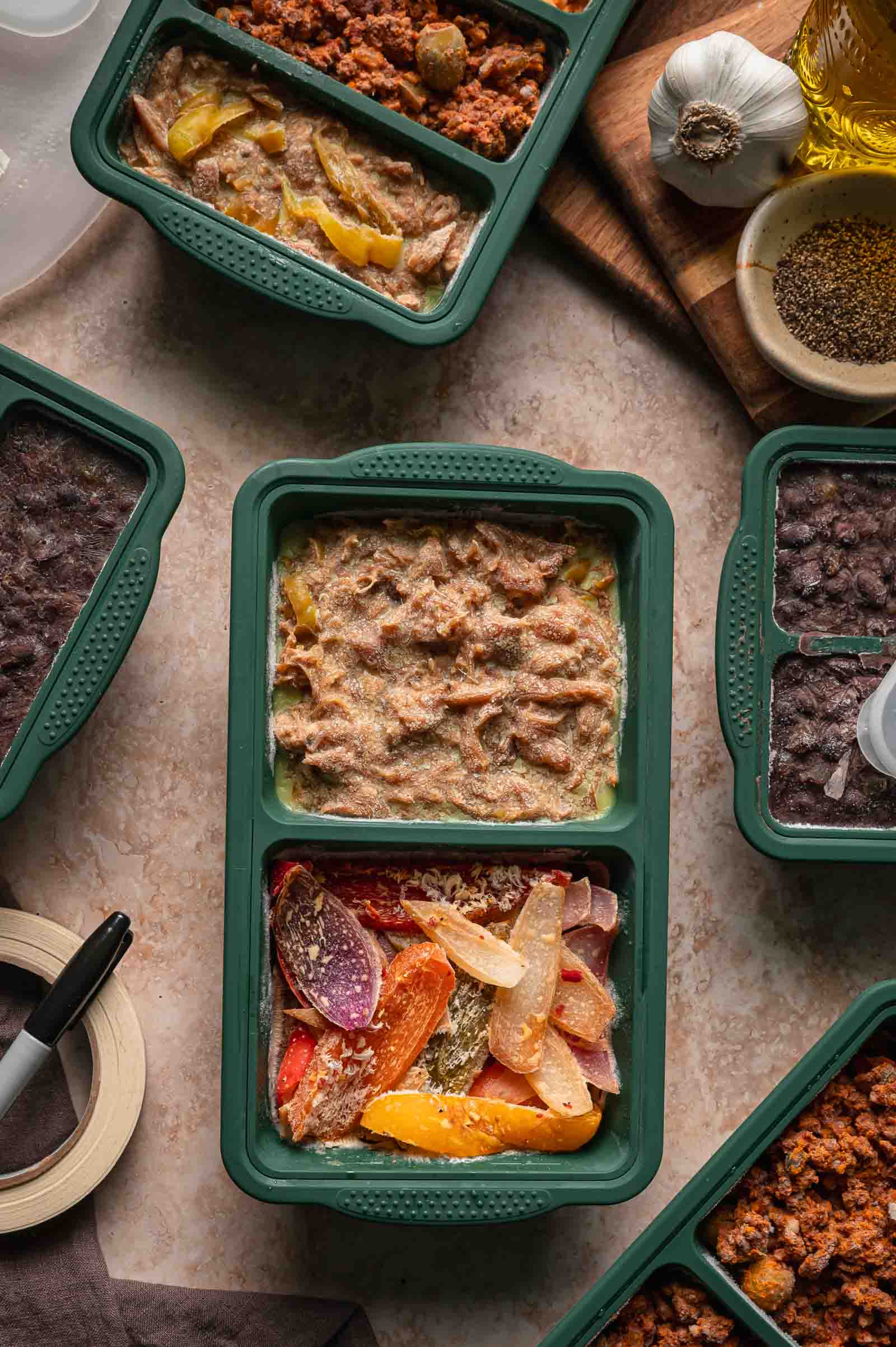
What Doesn’t Freeze Well (and the Fix)
- Straight cream or sour cream sauces. Dairy on its own splits into a grainy mess on thaw. Fix: build the sauce on cream cheese, a roux, or tapioca starch instead of cream alone.
- Raw, high-water vegetables. Lettuce, cucumber, celery, and raw tomato are mostly water, and freezing ruptures the cell walls. Fix: none, really. Keep these on the fresh side of the plate.
- Anything fried or crispy. A crispy coating goes soft the second it hits freezer moisture, and reheating won’t bring the crunch back. Fix: fry or crisp after thawing, never before freezing.
- Sauces thickened with cornstarch. Cornstarch breaks down through a freeze and thaw cycle and weeps liquid. Fix: swap to tapioca starch, the thickener every sauce in this system runs on.
- Mayo-based sauces and whole eggs. Mayo splits the same way cream does, and whole eggs in the shell crack. Fix: hold mayo dressings for after reheating, and skip whole eggs in the freezer entirely.
- Fully cooked pasta. Goes soft and mushy on reheat. Fix: cook it a minute under al dente before it hits the freezer.
- Citrus juice. Turns bitter and muddies a sauce over a long freeze. Fix: add lemon or lime juice fresh, after reheating, never before.
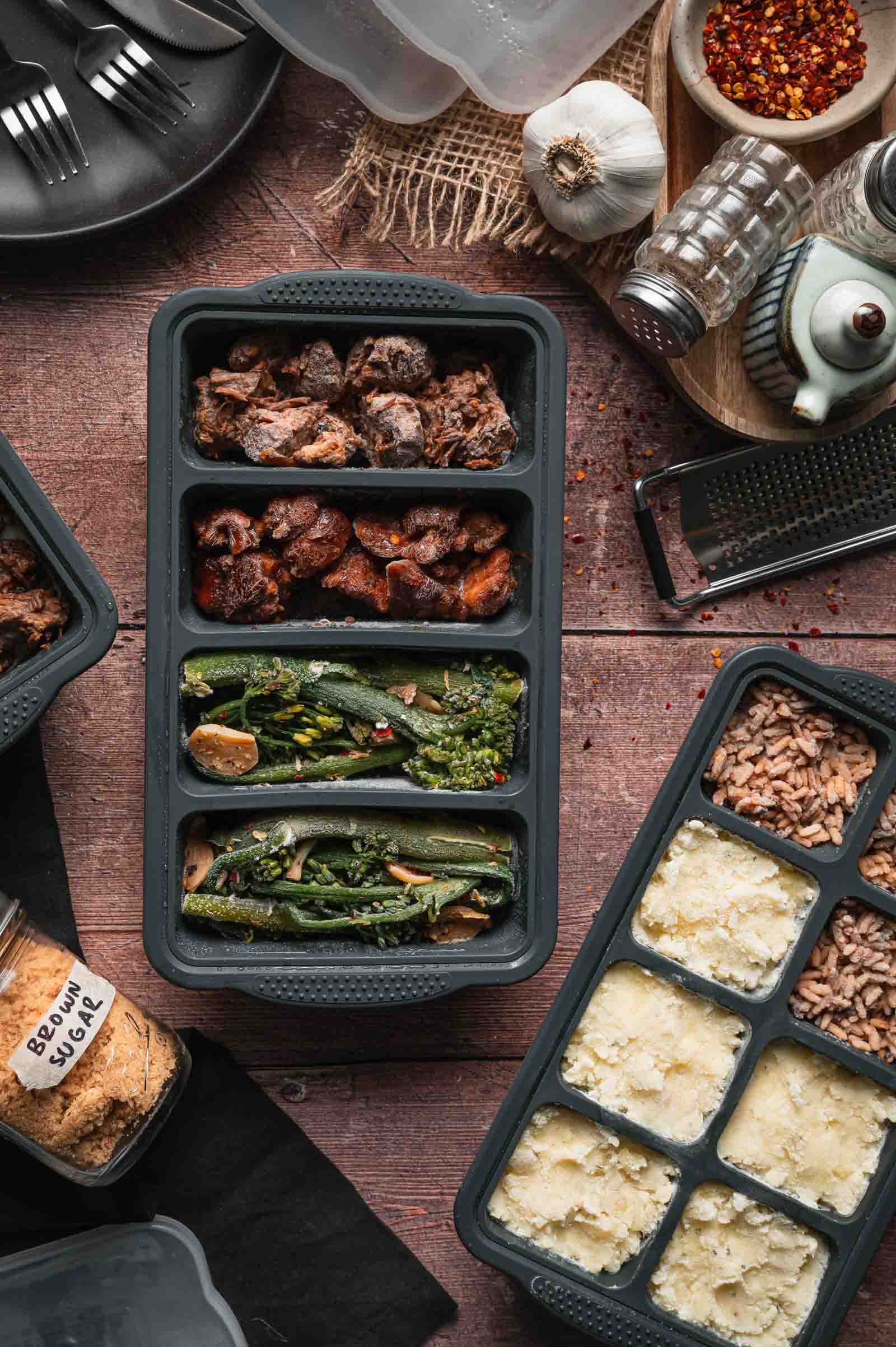
📋 Quick Reference Chart
| Ingredient | Freezes? | Note |
|---|---|---|
| Braised or sauced protein | Yes | Improves with time in the sauce |
| Cooked rice with fat | Yes | Fat keeps grains from clumping |
| Mashed potatoes (with fat) | Yes | Must be smooth, not cubed |
| Blanched vegetables | Yes | Blanch first or texture suffers |
| Tapioca-thickened sauce | Yes | Holds up through freeze and thaw |
| Beans and legumes | Yes | Little to no texture change |
| Cream sauce (unstabilized) | No | Splits and turns grainy |
| Raw lettuce, cucumber, tomato | No | Too much water, thaws limp |
| Fried or crispy coatings | No | Goes soft, won’t re-crisp |
| Cornstarch-thickened sauce | No | Weeps liquid, turns gummy |
| Mayo sauces, whole eggs | No | Splits or cracks |
| Fully cooked pasta | No | Goes mushy, cook under next time |
Unlock the Full System
Sign up and get every new Cook Set the moment it drops, plus the full Freezer Meal Prep System, tested recipes portioned to mix and match. All FREE.
📋 Shopping Lists
📅 Sunday Cook Order
🔄 Mix & Match Cheat Sheet
Guides Worth Bookmarking
The Gear Behind our Lego Lunch Recipes
Every step above assumes you have got the right sealer and the right molds. See the exact FoodSaver sealer and Souper Cubes mold set GC runs this whole system on, plus the budget-friendly swap, in one place.
See the Full Equipment Guide →
Quick Summary
Fat and starch survive the freezer. Water and straight dairy don’t. Blanch your vegetables, mash your starches smooth with real fat, and thicken any sauce with tapioca instead of cornstarch, and you can build your own Lego meal prep combinations with the same confidence as any recipe in this system. For the molds and containers to portion them in, see the Freezer Meal Prep Equipment Guide.
❓ FAQs
It’s almost always the thickener. Cornstarch breaks down over a freeze and thaw cycle and releases liquid. Switch to tapioca starch, which holds its thickening power in the freezer.
Straight cream or sour cream will split. Build the sauce on cream cheese, a roux, or a starch instead, and it holds together through the freeze.
Yes, for most vegetables. Blanching stops the enzyme activity that turns them mushy in storage. Skipping this step is the most common reason a homemade freezer vegetable turns to mush.
Citrus juice turns bitter over a long freeze. Adding it fresh after reheating keeps the bright flavor intact instead of muddying it.
Yes, but only mashed or riced smooth with fat mixed through, like Boursin Mashed Potatoes. Whole or cubed boiled potatoes turn grainy no matter how carefully you freeze them.