



Every pot and pan has its strengths, so I match the pots and pans to the job instead of forcing one pan to do everything. People ask me all the time what cookware to buy, and the short answer is that no single pan does it all. In my kitchen, I rely on three: stainless steel for everyday cooking, enamelled cast iron for low-and-slow cooking, and ceramic non-stick for eggs and quick jobs. I’ve also stopped using Teflon and other PFAS coatings, and I’ll explain why. This guide covers what each pan does best, where it falls short, and the recipes I cook in it.
Choosing the Right Pots and Pans for Your Kitchen
Before you buy anything, think about how you cook. The right pots and pans depend on what you make most often, how many people you feed and how much time you spend at the stove.
Start with how many people you cook for. If it’s just one or two of you, you don’t need a huge casserole or a stockpot big enough to boil a whole chicken. A 24 cm frying pan, a small and a medium saucepan and one mid-sized casserole will cover most meals. If you cook for a family of four or more, that changes. You’ll want a 28 cm frying pan, so you’re not cooking in batches, a large saucepan for pasta and a casserole of around 5 litres for stews that stretch to leftovers.
Then think about your cooking style. If you cook quickly on weeknights, a good ceramic non-stick pan and a stainless steel saucepan will do most of the work. If you love a slow Sunday braise, a heavy enamelled cast iron pot is worth the space. Bake bread? That same pot doubles as your Dutch oven. And if you mostly roast in the oven or lean on an air fryer, you need far less than any boxed set suggests.

Check your hob too. Induction only works with magnetic bases, so cast iron and most stainless steel are fine. Aluminium and copper pans won’t heat on induction unless they have a magnetic base, so check before you buy.
This guide is based on how I cook. I cook for work as well as at home, so I switch between quick pans and long braises and use a bit of everything. Your kitchen might need half of what’s in mine. Read it with your own cooking in mind and buy for the meals you actually make. Start with two or three pieces you’ll use every week, then add more over time. Skip the big boxed set. It looks cheaper per piece, but you’ll end up with pans you never touch.

Why I’m Removing Teflon and PFAS From My Kitchen
After clearing a lot of plastic from my kitchen, non-stick pans were the obvious next step.
Most non-stick pans are coated in PTFE, better known as Teflon. PTFE is a PFAS, one of the “forever chemicals” that don’t break down and build up in soil, water and our bodies. You’ve probably seen pans labelled PFOA-free. PFOA was used to make Teflon until it was phased out by 2015, but PTFE itself is still a PFAS. So a PFOA-free pan isn’t necessarily PFAS-free.
My concerns come down to three things. Above about 260°C (500°F), the coating starts to break down and release fumes, and an empty pan on high heat gets there fast. Scratched coatings also flake into food. Most experts say the flakes pass straight through you, but research into what tiny plastic particles do in the body is still early. Then there’s pollution. Making and throwing away PFAS contaminates water and soil for decades.
For me, the choice is simple. If other pans cook just as well without the question marks, I’d rather use them. They also last for decades instead of a few years.
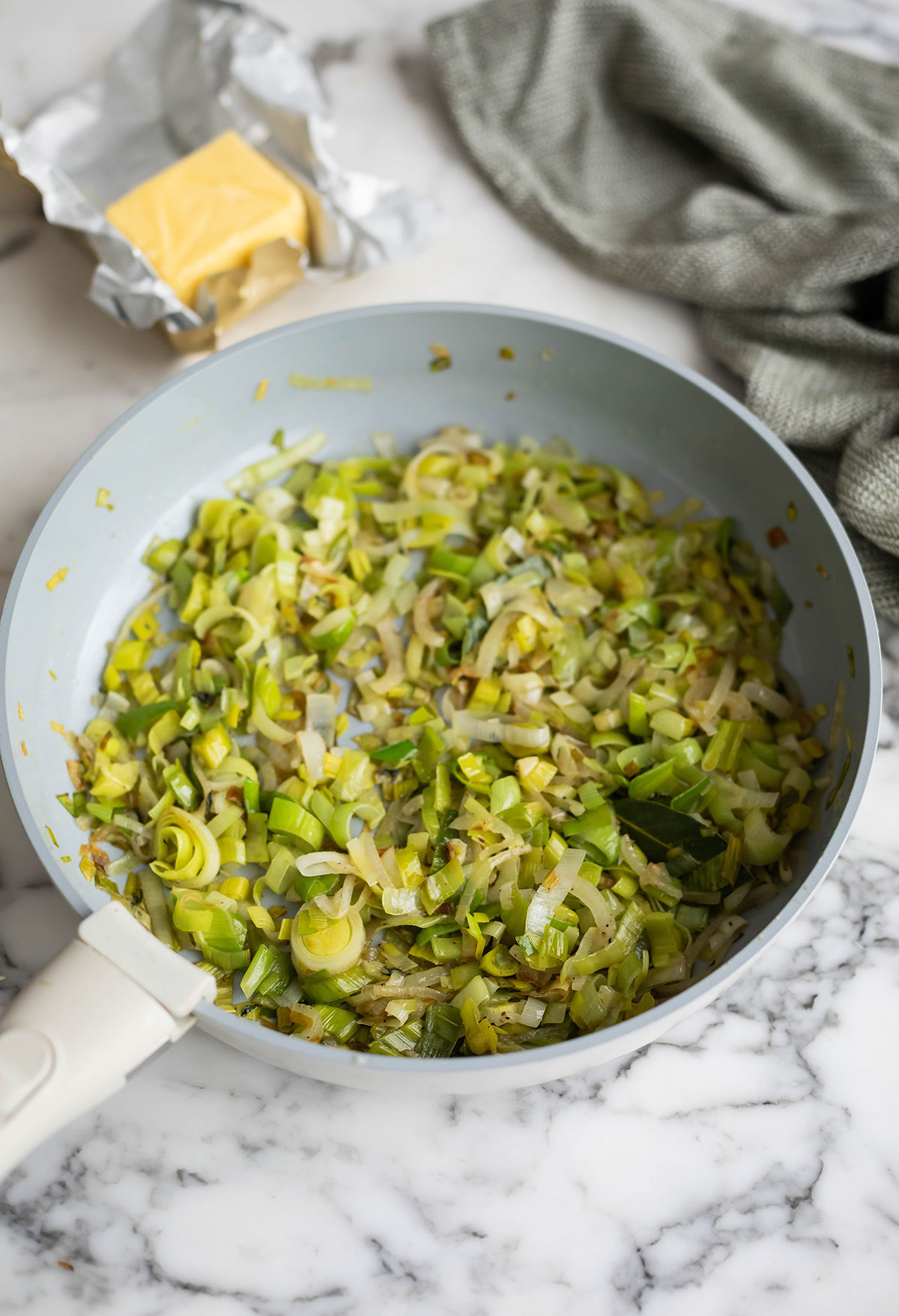
Stainless Steel: My Everyday Workhorse
Stainless steel does most of the work in my kitchen. Whether I’m sautéing onions, browning chicken, making a tomato sauce or reducing a pan sauce, it’s in a stainless pan.
The upside is that it’s tough. No coating can scratch or wear off, so a good pan lasts decades. You can use metal utensils, put it in the oven and the dishwasher, and cook acidic ingredients like tomatoes, wine and lemon without any metallic taste. It also gives you the best browning. Those sticky bits left after searing meat are pure flavour, and a splash of wine or stock turns them into a sauce.
The downside is that food sticks if you don’t treat it right. Thin, cheap stainless also heats unevenly, creating hot spots that scorch. Over time, it can develop a rainbow sheen, but that’s only cosmetic.
My workhorse is a large stainless steel frying pan with a heavy base and deep sides. I bought it from Woolworths. The heavy base spreads heat evenly, and the high sides let me brown meat, add liquid, and simmer a whole meal in one pan. It also takes a lid, which helps trap steam. I also use Cuisinart stainless steel saucepans and a stockpot for pasta, potatoes, rice, stock, and soup.

To stop food sticking, heat the empty pan over medium heat first. Then flick in a drop of water. If it skitters across the surface in a ball, the pan is ready. Add your oil, let it heat for a few seconds, then add the food and leave it alone. Meat sticks at first, then releases once it’s browned, so resist the urge to move it.
To look after it, let it cool before washing. For stuck-on bits, simmer a little water in the pan for a few minutes, and they’ll lift off. For rainbow stains or white marks, wipe it with a splash of vinegar.
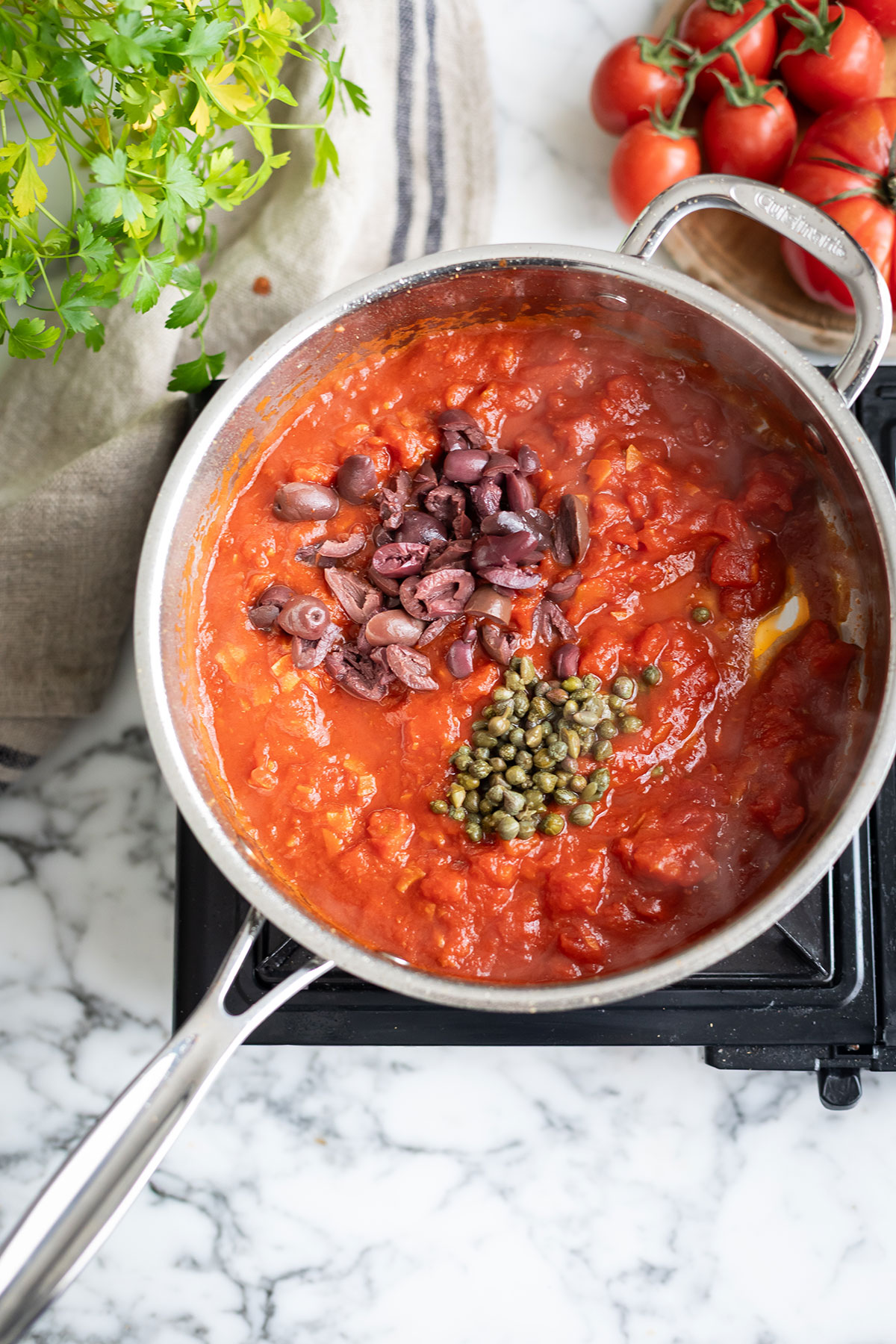
Recipes I cook in stainless steel:
Viral Blanket Pork Dumplings
Easy Spaghetti Puttanesca
Creamy Pasta With Artichokes & Spinach
Spicy Maple Candied Almonds

Cast Iron and Enamelled Cast Iron: For Low and Slow
When something needs hours in the oven, it goes into cast iron. Mine is mostly Le Creuset, which is cast iron coated in enamel. That coating is the main difference between the two kinds.
Plain cast iron is bare metal. It needs seasoning, a baked-on layer of oil that builds up with use and makes it naturally non-stick. It rusts if you leave it wet, and it doesn’t love long-simmered acidic food. Enamelled cast iron has a glassy coating fused to the iron, so there’s no seasoning and no rust, and tomatoes and wine are no problem.

The upside of both is heat. Cast iron takes a while to warm up, but once it’s hot it stays hot and spreads that heat evenly. That makes it ideal for slow braises, stews, soups and baking bread in a lidded pot. It goes from hob to oven to table, and a good pot lasts generations. If you own a cast iron skillet, it’s also the best pan there is for searing steak, because it holds its heat when the cold meat goes in.
The downside is weight. A large casserole full of stew is heavy to lift. Good enamelled cast iron is also expensive, and the enamel can chip if you knock it, or crack if you shock a hot pot with cold water.
My Le Creuset casseroles do all the heavy lifting: braises, oxtail, lamb shanks, ragù, curries and soups. Anything that cooks for hours goes in one, usually with the lid on in a low oven.
To look after it, remember that cast iron holds heat so well you rarely need more than medium heat on the hob. Never heat an empty enamelled pot on high. Use wooden or silicone utensils to protect the enamel, let the pot cool before washing, and soak stubborn bits rather than scouring them.

Recipes I cook in cast iron:
Greek Lamb Yvetsi
Creamy Chicken With Braised Leeks & Carrots
Chicken & Rice Pilaf With Orange & Spices
Dutch Baby Pancake With Blueberries & Lemon

Jamie Oliver’s Famous Chicken Cooked In Milk
Moroccan Spiced Chicken With Rice And Aubergine
Chicken Normandy Recipe With Cider, Apples & Cream

Ceramic Non-Stick: For Eggs and Quick Cooking
This is where my Teflon pans used to sit. I now use the Cuisinart ClickSmart range, which has a ceramic non-stick coating made without PFAS. The handles click off, so the pans stack neatly inside each other, which makes a real difference in a small kitchen. See the link at the end of the post.
Ceramic non-stick is a silica-based coating applied to a light metal pan, usually aluminium. It forms a slick, glassy layer without any fluorine chemistry like Teflon.
The upside is ease. Eggs slide straight out, crumpets and pancakes turn cleanly, and fish holds together. You need very little oil, the pans heat quickly, and they’re light and easy to wipe clean.
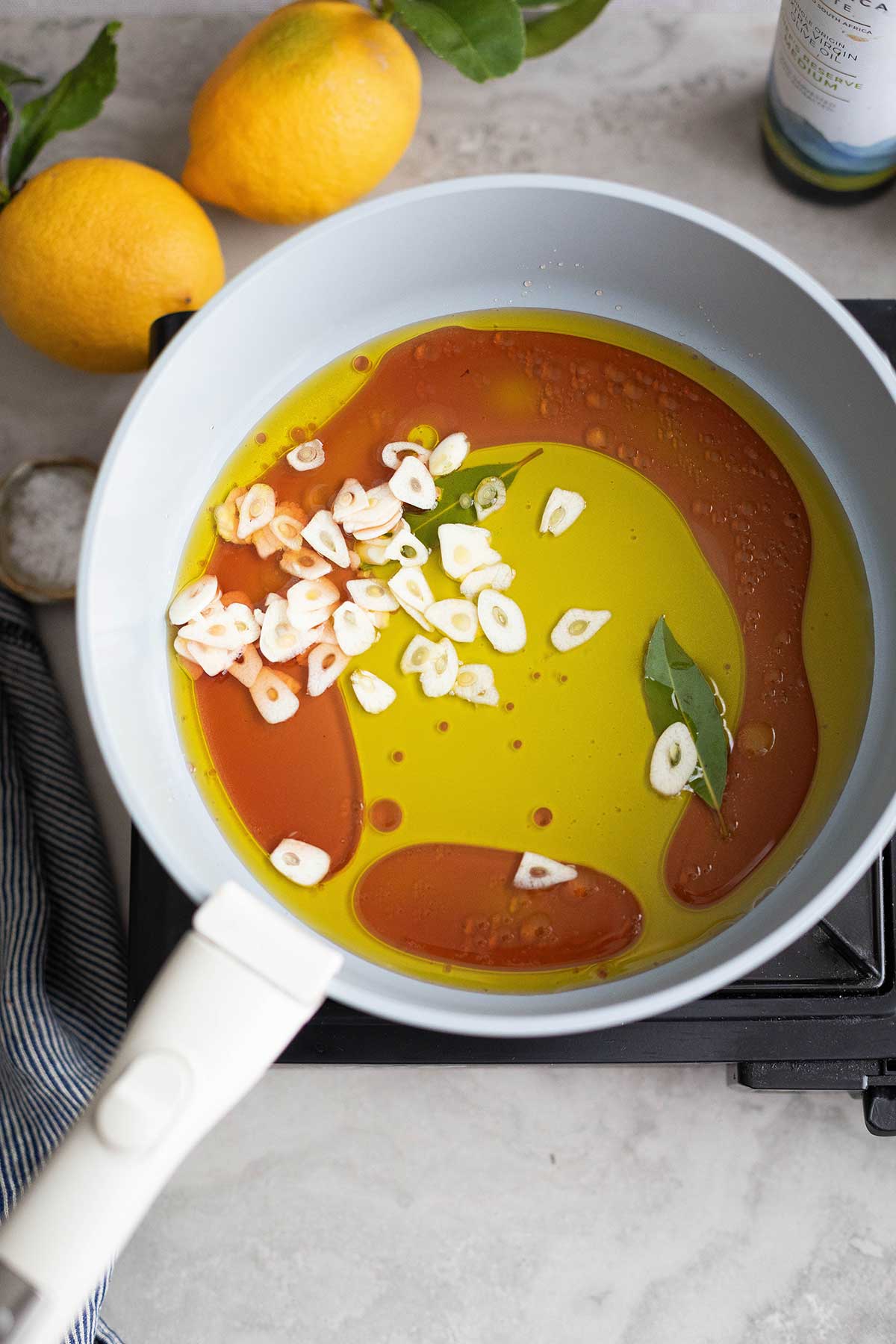
The downside is that the coating doesn’t last forever. Ceramic gradually loses its slip, usually over a few years, and faster if you cook on high heat. The thin, light base also doesn’t hold heat well, so it won’t give you a deep sear. That’s why I’d never use one for heavy cooking, a big batch of mince or anything that needs a hard sear.
I use mine for eggs every way, omelettes, crumpets, pancakes, crêpes, a quick piece of fish, toasting nuts and seeds, and a small stir-fry for one or two
To look after it, cook on low to medium heat. Avoid aerosol cooking sprays, because they leave a sticky residue that ruins the surface. Use wooden or silicone utensils, let the pan cool before washing, and wash it by hand with a soft sponge.

Shop Cuisineart Detachable Handle Non-Stick Cookware. They offer 10-, 13-, and 18-piece sets, and I love mine.
Recipes I cook in ceramic non-stick:
Easy Pickled Mushrooms With Herbs, Garlic And Lemon
Eggs Fried In Feta And Chilli Crisp Oil
Eggs Fried In Cream With Sage & Bay
Pan Con Tomate (Spanish Tomato Bread) With Fried Egg
My Best Egg Recipes
Easy Duck Pancakes With Plum Sauce
Blueberry Pancakes With Ricotta And Orange
Which Pan for Which Job
The pot or pan I reach for, depending on what I’m cooking.
| What you’re cooking | The pan to use |
|---|---|
| Eggs, omelettes and crêpes | Ceramic non-stick |
| Pancakes and crumpets | Ceramic non-stick |
| Searing steak | Cast iron skilletorHeavy stainless steel |
| Browning chicken and pan sauces | Stainless steel |
| Tomato sauces | Stainless steelorEnamelled cast iron |
| Slow braises and stews | Enamelled cast iron |
| Soups | Enamelled cast ironorStainless stockpot |
| Pasta, rice and potatoes | Stainless saucepan or stockpot |
| Bread | Enamelled cast iron with a lid |
| Small, quick stir-fries | Ceramic non-stickorStainless steel |
Stainless steel
Cast iron
Ceramic non-stick
Other Types of Pots and Pans
These are the other materials you’ll come across when you shop.
Carbon steel is like a lighter, thinner cast iron. It needs seasoning and becomes naturally non-stick with use, but heats up much faster. It’s the classic choice for woks, crêpe pans and paella pans. If you stir-fry often, a carbon steel wok is well worth owning.
Copper heats up and cools down faster than anything else, which gives you lots of control. It’s beautiful but expensive; it needs polishing, and it’s usually lined with stainless steel or tin.
Hard-anodised aluminium is light, tough and conducts heat well. The catch is that it’s almost always coated in PTFE, so check the label before you buy.

If You’re Starting From Scratch
When choosing your pots and pans, you don’t need a 13-piece set. Start with four pieces and add as you go. Buy a large, heavy-based stainless steel sauté pan with a lid, about 28 cm wide. Add a medium stainless steel saucepan with a lid for rice, vegetables and sauces. Then add one enamelled cast iron casserole, about 26 cm, for braises, soups, and bread. Finally, add a ceramic non-stick frying pan, about 24 cm, for eggs. Those four cover almost everything you’ll cook.

Types of Pots and Pans FAQs
What are the main types of pots and pans?
The main types are stainless steel, cast iron, enamelled cast iron, non-stick, carbon steel and copper. Most home cooks only need three: stainless steel for everyday cooking, enamelled cast iron for slow cooking, and a non-stick pan for eggs.
Is stainless steel or cast iron better?
Neither is better overall. They do different jobs. Stainless steel heats up faster and suits everyday cooking and pan sauces. Cast iron holds heat longer, which makes it better for searing and slow braises.
Is ceramic non-stick safe?
Ceramic coatings are made without PFAS, which is why many people switch to them. Treat them gently, avoid high heat, and replace the pan once the coating starts to wear.
Is Teflon safe to cook with?
Teflon is a PFAS. Most experts consider an undamaged pan used on moderate heat low risk. Overheating it releases fumes, though, and worn coatings flake into food. Many cooks, me included, prefer to avoid it altogether.
Why does food stick to my stainless steel pan?
Usually the pan isn’t hot enough, or the food gets moved too soon. Preheat the empty pan, add oil, then add your food and leave it until it releases on its own.
Can you use cast iron on an induction hob?
Yes. Cast iron is magnetic, so both plain and enamelled cast iron work on induction.
How long does a non-stick pan last?
Usually a few years. A ceramic coating lasts longer if you cook on low to medium heat, avoid cooking sprays and wash it by hand.
Disclosure
This post isn’t sponsored. Some of these pans were sent to me by the brands over the years, and I use everything here regularly in my kitchen.
I have this stainless steel cookware set from Cuisinart, which has a lifetime guarantee.
Cuisinart Detachable Handle Non-Stick Cookware. They offer 10-, 13-, and 18-piece sets, and I love mine.

BUY MY eBOOK COMFORT
Find me on Instagram & Pinterest
Cooking Conversion Chart & Calculator