



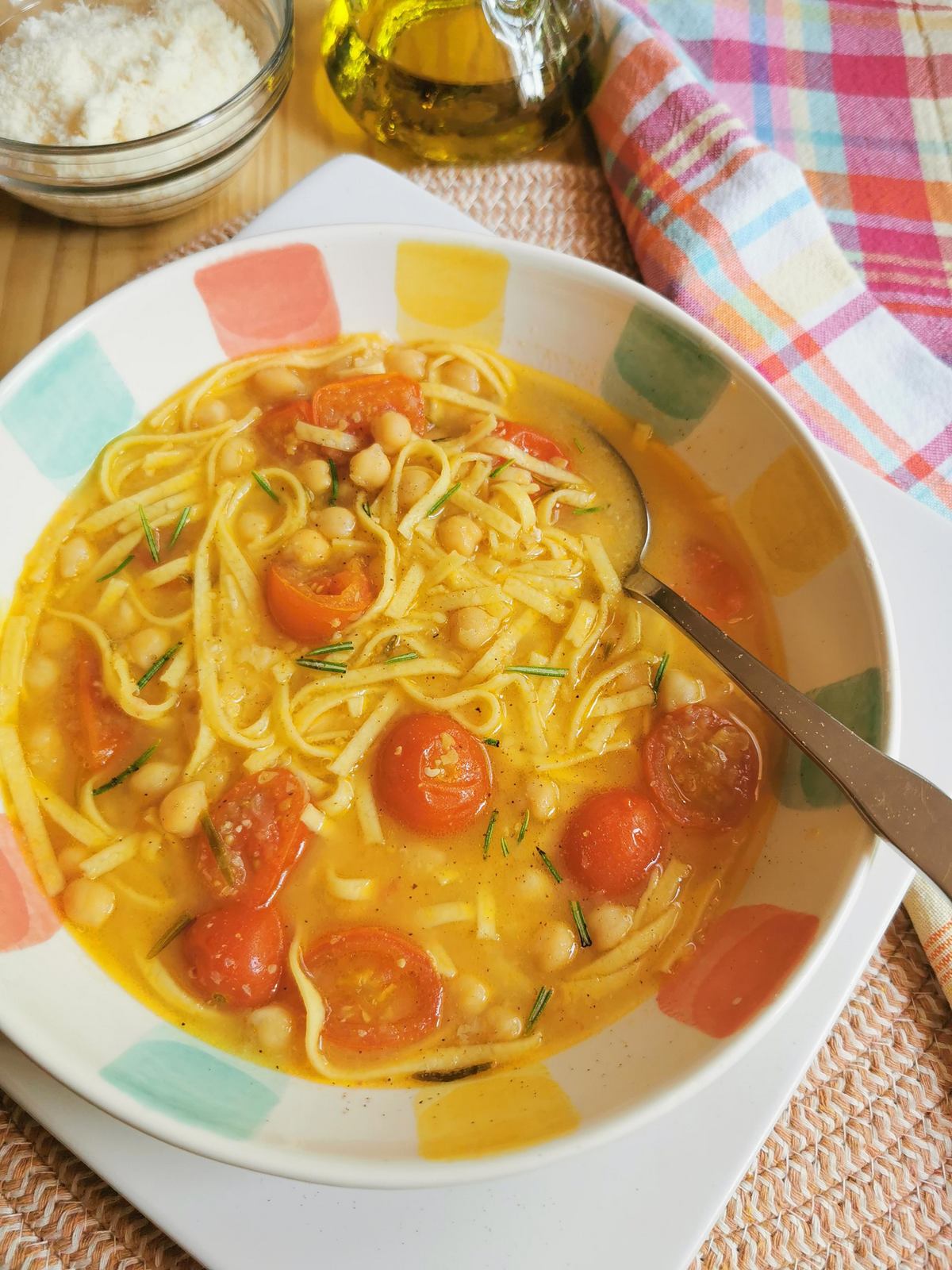
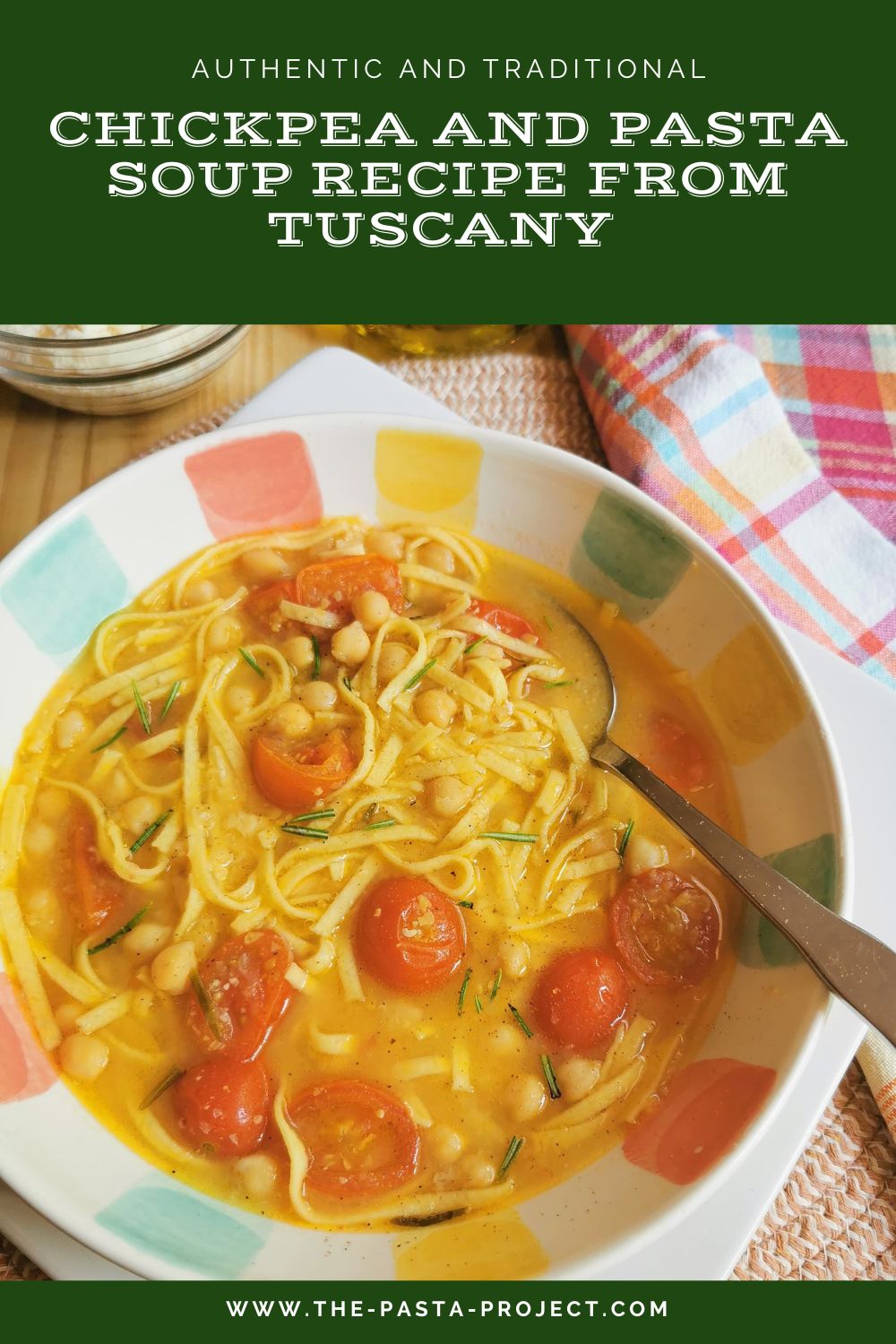
Delicious and nutritious chickpea and pasta soup is a traditional dish in Tuscany and other Central and Southern regions of Italy. However, each region has its own way of making it! This Tuscan chickpea and pasta soup makes a hearty rustic one-pot meal. Also known as ‘striscia coi ceci’ (strips with chickpeas), this soup features chickpeas cooked in a broth of garlic, rosemary, tomatoes and olive oil to which fine egg pasta strands are added before serving.
Minestra di Pasta e Ceci alla Toscana.
Pasta and chickpeas is a traditional pasta recipe in many parts of Central and Southern Italy. Most recipes are more of a soup, but others are ‘dry’. Italians say pasta ‘asciutta’. What this means is the pasta is served with a sauce but isn’t a soup. This Tuscan version is a rather creamy soup or minestra in Italian.
Different kinds of Italian vegetable soup.
Italians actually have six different kinds of vegetable soup; minestra, minestrone, zuppa, passato, vellutata and crema! The word ‘minestra’ comes from the verb minestrare or amministrare, meaning to administer. Apparently because traditionally this soup was served at the table by the head of the family! A minestra usually contains vegetables or legumes along with some kind of cereal such as rice, pasta, farro, barley etc.
Like this Tuscan chickpea and pasta soup, minestrone contains vegetables and pasta and rice. However, I read that minestrone is more modern and includes quite a number of veggies which weren’t widely available or eaten in Italy until the 17th-18th century. Having said that, nowadays, minestra can also contain ingredients that wouldn’t have been used a long time ago, like the tomatoes in this recipe.
Classic minestrone is also usually thicker than a minestra and made using green, red and yellow veggies. Today, it is made with fresh and seasonal vegetables. But, in the past it was a way to use up not exactly fresh vegetables or those that become more easily digestible after a long cooking time.
Zuppa is a soup without pasta or cereal and usually eaten with bread or croutons. Passato is a puree of mixed vegetables, often seasonal, whereas vellutata is a puree of normally only 2 or 3 vegetables to which cream may be added. Finally crema, as you may imagine is a puree too. But, this soup is usually made with one type of vegetable and may include milk or rice flour.
Chickpea and pasta soup is good for you!
Pasta with chickpeas (pasta e ceci) is a classic Italian recipe with very ancient origins some versions of which date back to Ancient Rome! It is also a dish that was popular in the past among the peasant farming population because of its low cost but high nutrient content. In fact, chickpeas, like all other legumes, possess a high quantity of protein.
Today, chickpeas (garbanzo beans) are considered a super food. These legumes are full of protein, fibre, minerals and vitamins. So, the combination of chickpeas with the carbohydrates contained in the pasta, makes pasta and chickpea soup super nutritious and a great source of energy!
This is especially true if you use dried chickpeas not canned. When you boil dried chickpeas some of the nutrients get transferred into the water. This water (aquafaba) is rich in vitamin B, folate, iron, phosphorus, and healthy fats like linoleic and oleic acids giving the soup even more nutritional value.
Different versions of Italian pasta with chickpea soup.
This version of chickpea and pasta soup is from Tuscany. There, the pasta is very often egg pasta like tagliatelle or tagliolini and is cooked in the soup just before serving. The other ingredients apart from the chickpeas are just some garlic, rosemary and tomatoes or tomato concentrate. So very simple.
Other well-known versions for pasta with chickpea soup come from Puglia, Naples and Rome.
In Campania (Naples) the pasta is usually some kind of pasta tube such as broken ziti or even candele. The Neapolitans don’t use rosemary but more often basil or parsley and frequently add peperoncino!
In Lazio, Roman pasta and chickpea soup is enriched with salted anchovies. These are fried separately with a clove of garlic and tomato sauce then added it to rest of the soup. The pasta in Rome is often small tubes like ditalini.
In Puglia, pasta with chickpeas is not so much a soup and the pasta is usually cooked separately. They use short pasta or lagane like in this recipe for lagane pasta and chickpeas from Basilicata.
A very ancient recipe from Tuscany which I would like to try is with the addition of chestnuts to pasta and chickpea soup. These are first chopped and sautéed with red garlic, rosemary and a handful of fine chopped pork fat.
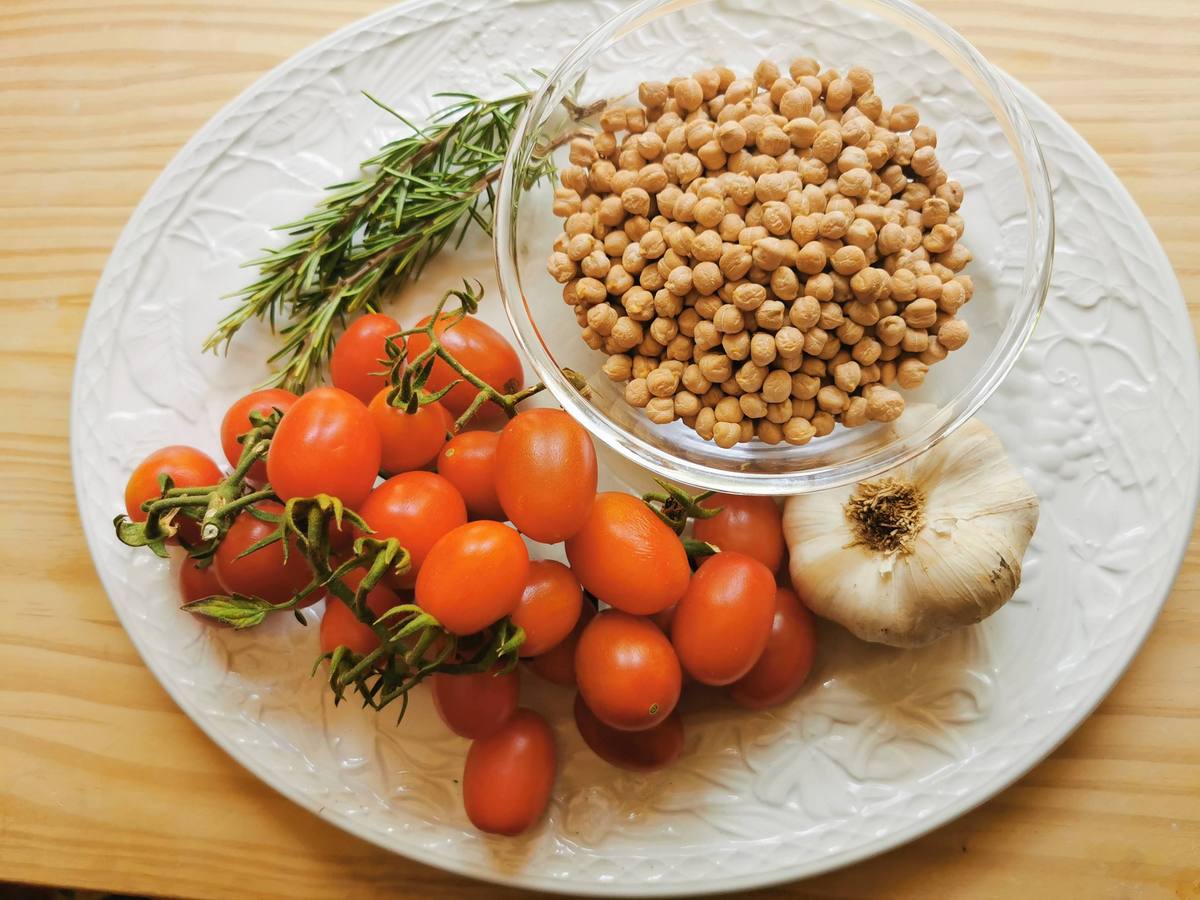
Ingredients for this pasta with chickpea soup.
Although more of a cold weather dish, this Tuscan chickpea and pasta soup can, of course, be eaten year round. In Italy, it is normally made with dried chickpeas which have been soaked overnight. This is because the chickpea cooking water is the soup! Obviously this means it takes a while to make. Chickpeas have to be cooked for up to 3 hours depending on their size!
Soup ingredients
Apart from the chickpeas (garbanzo beans), all you need to make this recipe is..
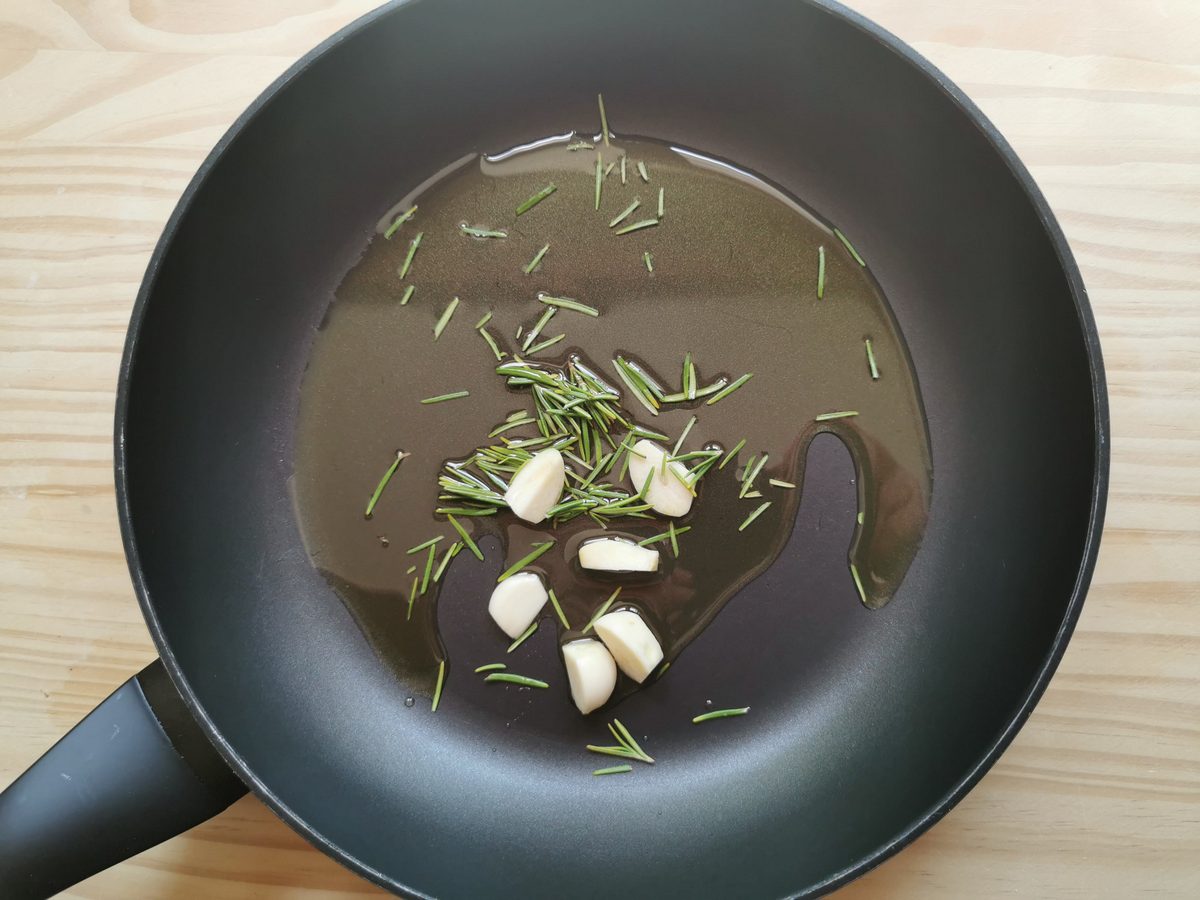
Garlic: I used 3 large garlic cloves which I peeled and cut in half. You can use less garlic if you prefer. The garlic needs to be removed before adding the tomatoes to the soup.
Rosemary: Traditionally this Tuscan chickpea and pasta soup calls for a fresh rosemary sprig. I used fresh rosemary from my garden. Dried rosemary can substitute fresh as the flavor is very similar.
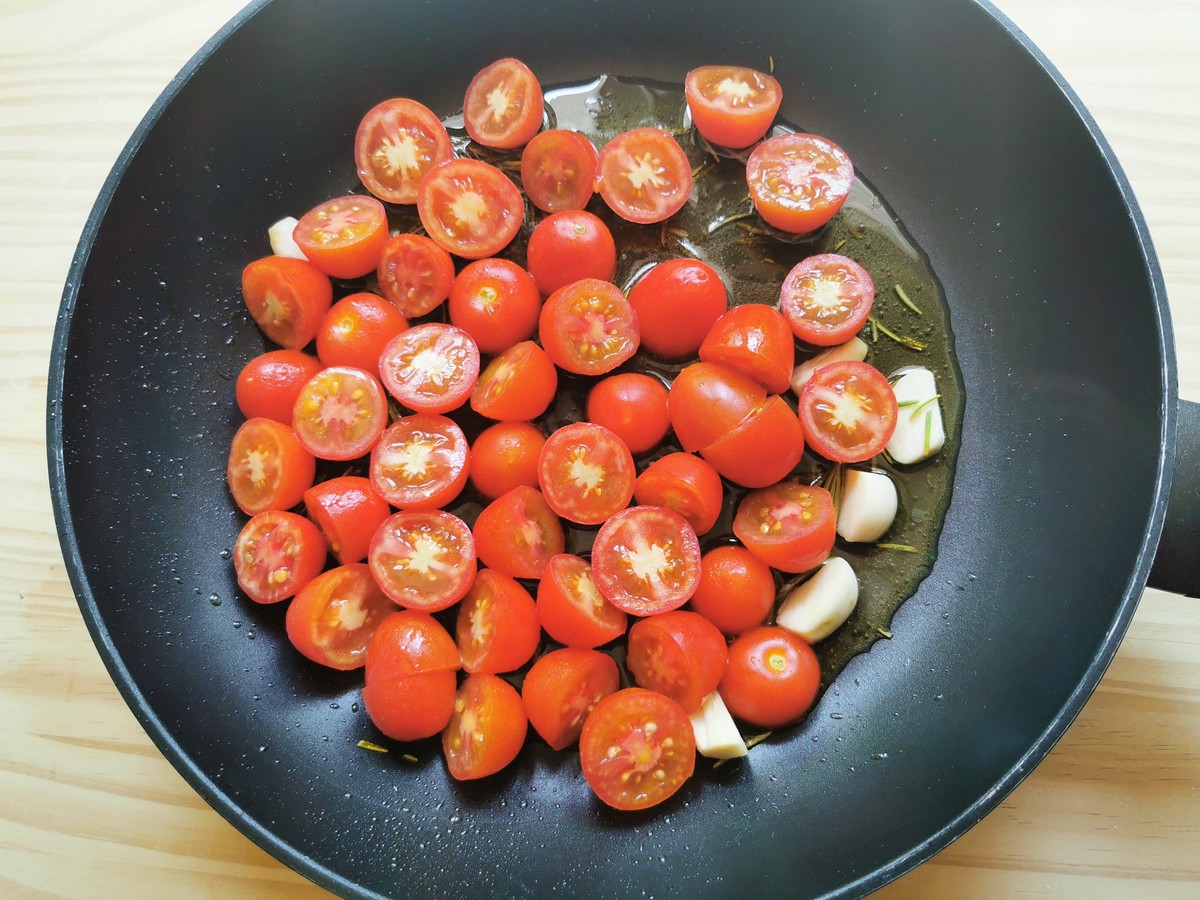
Tomatoes: I used small datterini tomatoes from my garden. Other fresh tomatoes such as cherry tomatoes or vine tomatoes work well too. Bigger tomatoes will need to be cut into quarters. Alternatively, if fresh tomatoes aren’t available, use canned tomatoes or even just tomato paste diluted in a little water.
Olive oil: Extra virgin olive oil is often used in Tuscany for cooking, especially when cooks need only a little oil and the dish has only a few ingredients like this one. Although EVO is expensive it is more flavorful and nutritious, however, you can also use normal olive oil.
Pasta.
In Tuscany, they usually make this hearty soup with egg pasta ribbons such as tagliolini or tagliatelle. Some cooks cut the ribbons into shorter pieces. However, there are other Tuscan chickpea and pasta soup recipes that call for small pasta tubes such as ditalini. You can use either ribbons, tubes, small shells or even pastina if you prefer.
Step by step instructions.
Preparation: Soak the chickpeas in water for 12 hours or overnight.
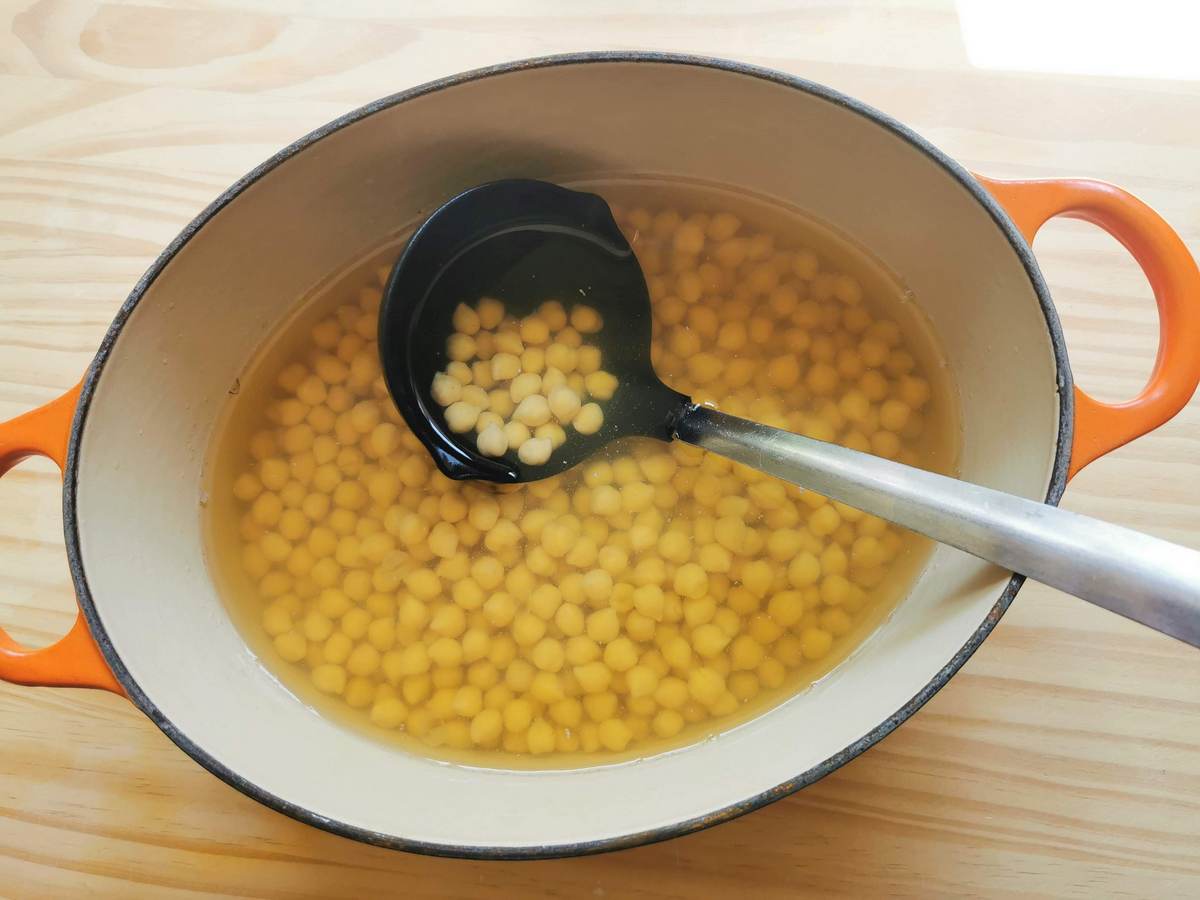
Step 1) Rinse the soaked chickpeas and put them in a large pot with about 2 litres of water (8.5 cups water) and a pinch of salt. Cook over a medium heat until they start to soften. This can take from 1-3 hours depending on the size of your chickpeas. I used small organic chickpeas which took only 1 hour to cook.
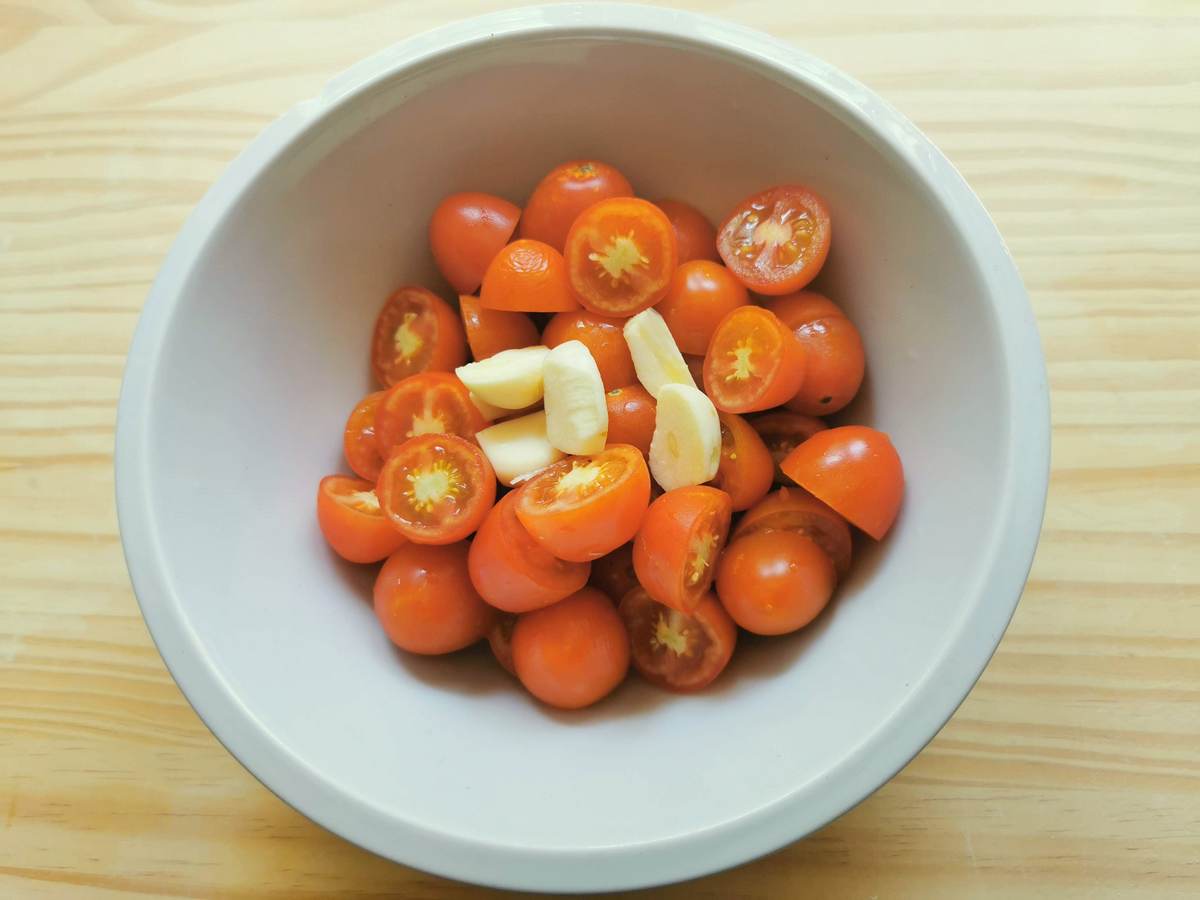
2) Wash the small tomatoes and cut them in half. Peel the garlic cloves and cut them in half too. Wash and chop the rosemary.
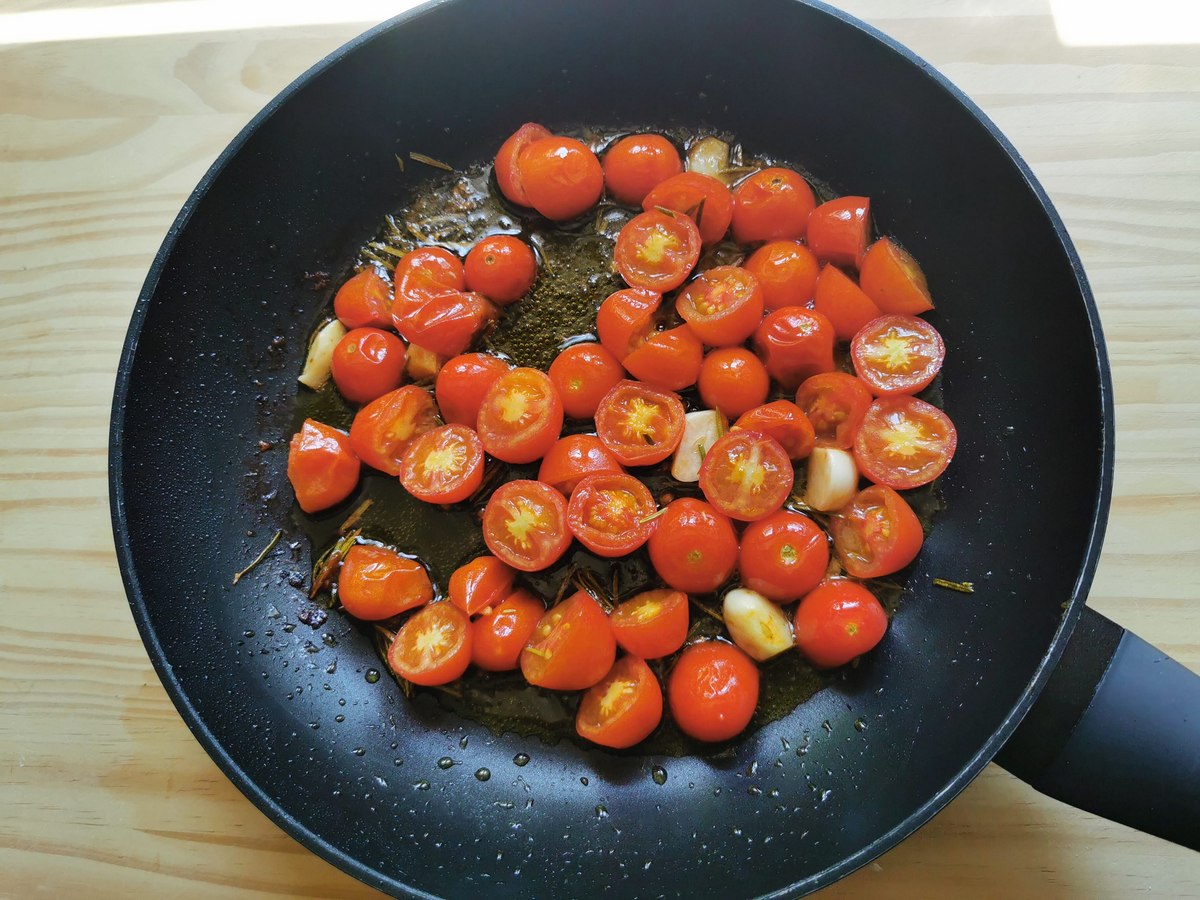
3) Sauté the garlic and rosemary in olive oil until the garlic starts to soften. Add the tomatoes and cook together until the tomatoes soften.
4) When chickpeas are soft, remove 25% and purée with an immersion blender or food processor. Then put the puréed chickpea mixture back into the pot with the rest of the chickpeas. If you want a more creamy chickpea soup, you can purèe more chickpeas.
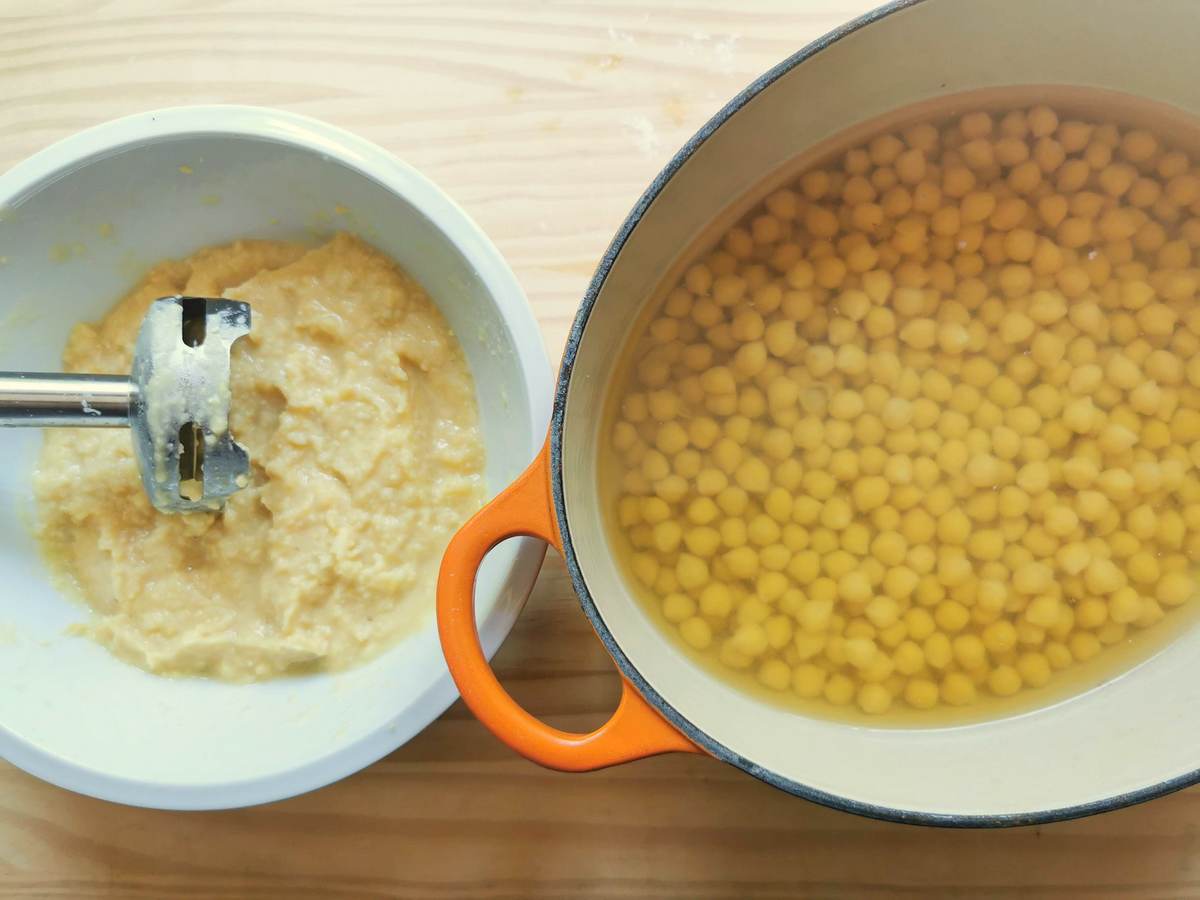
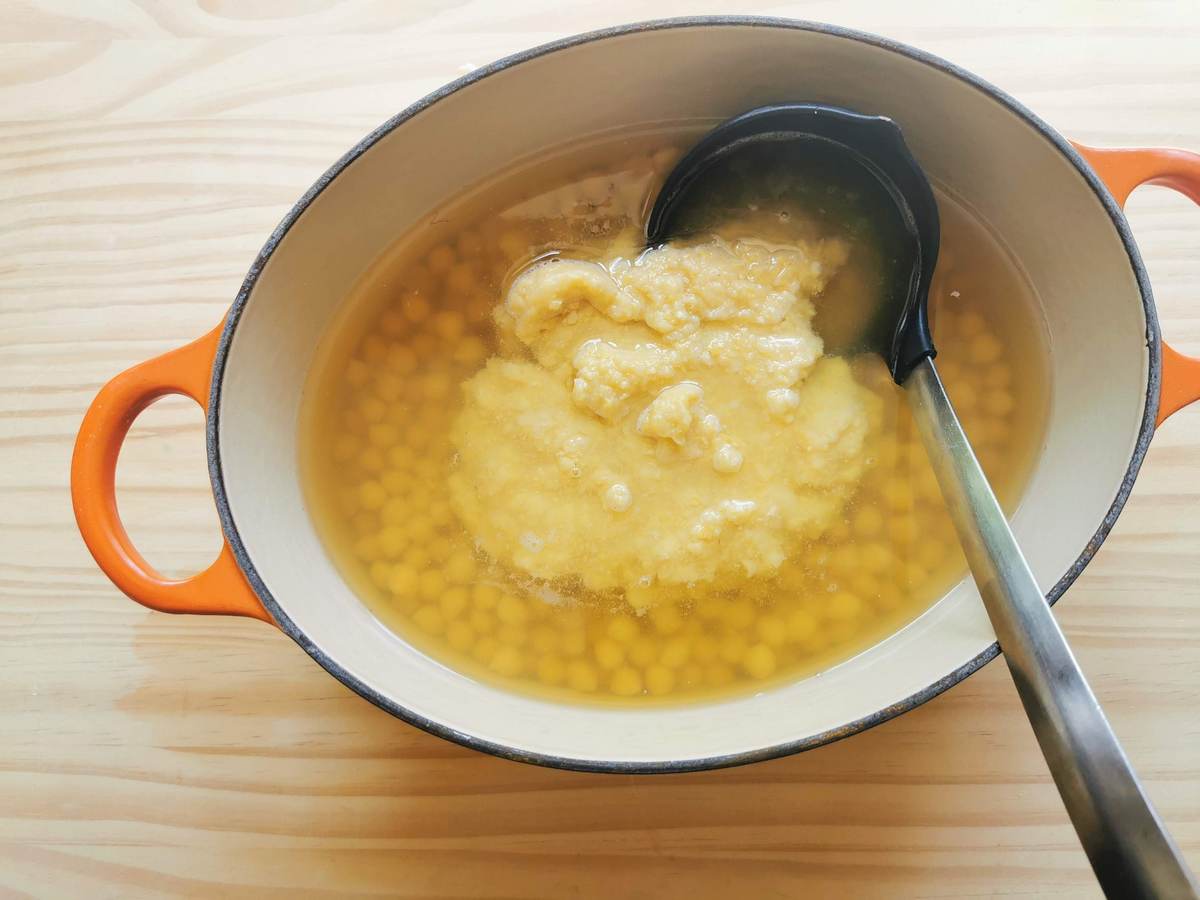
5) Remove the garlic from the tomatoes and pour the cooked tomatoes with cooking liquid into the pot with the chickpeas. cook together for a further 30 minutes.
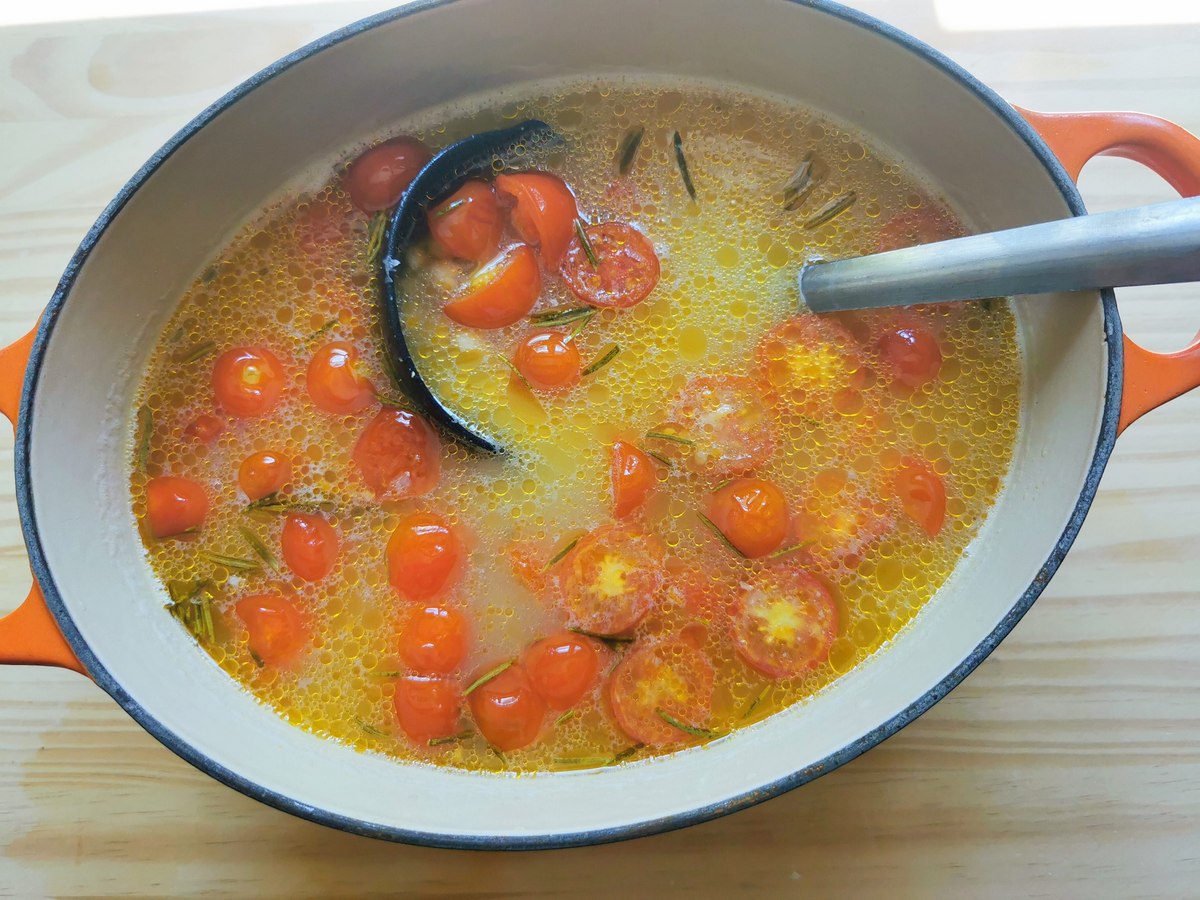
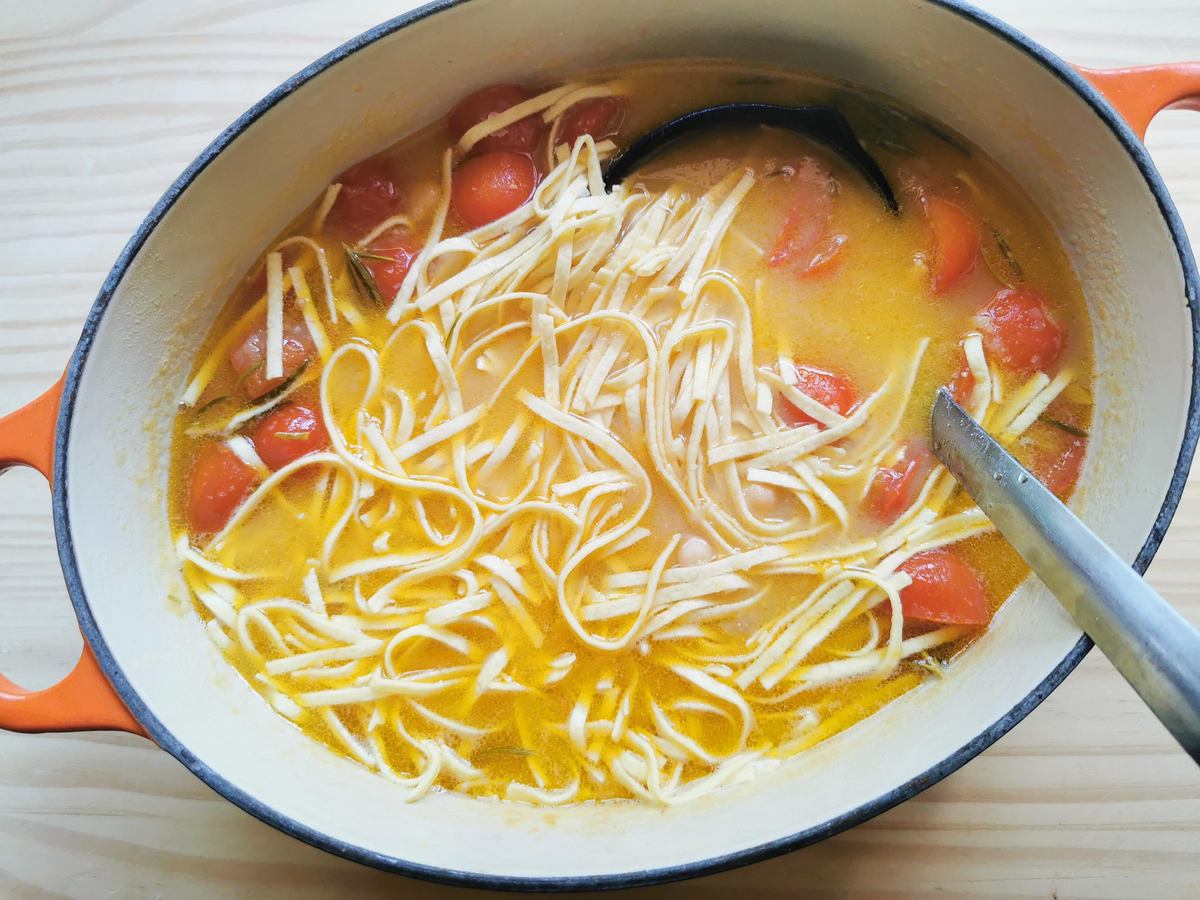
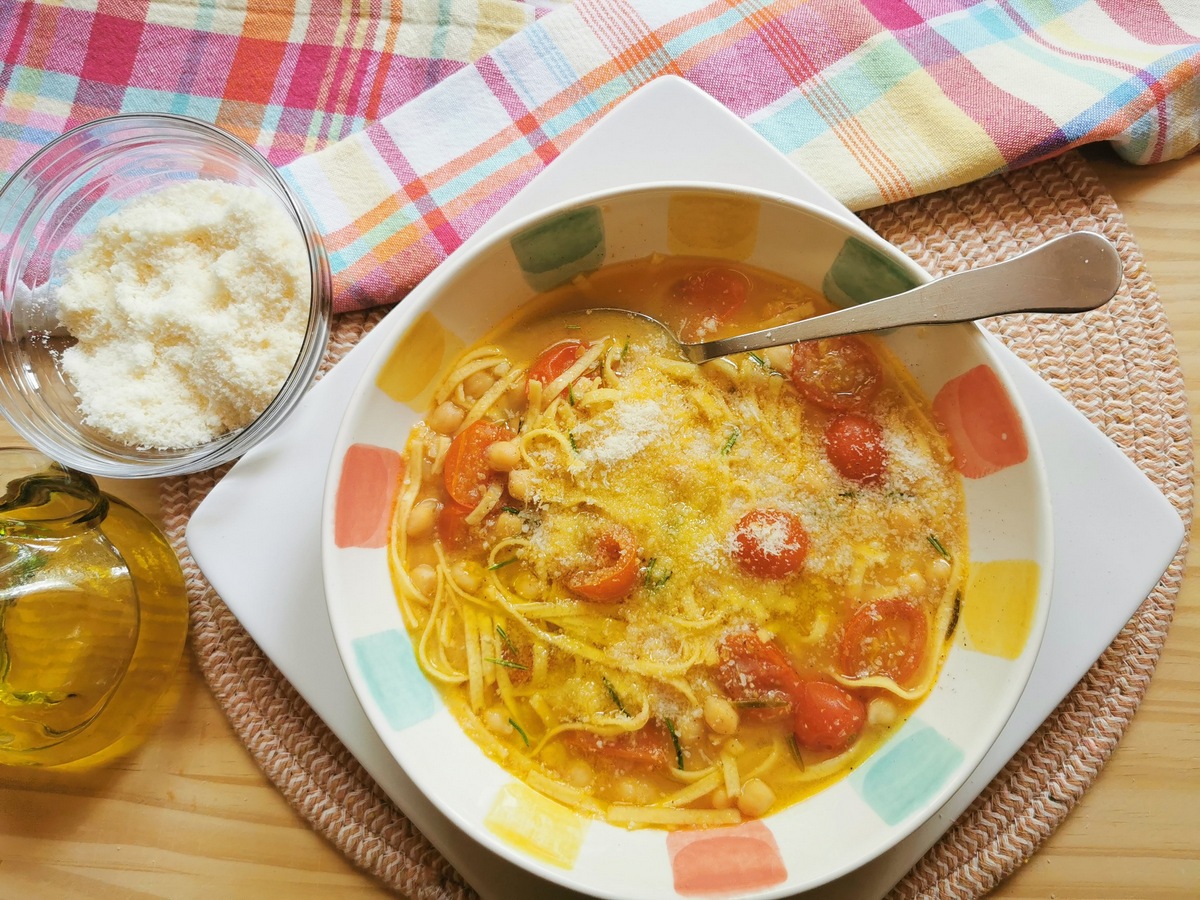
6) Add the fresh tagliolini to the chickpea soup and cook until al dente (1-2 minutes for fresh pasta). Serve the Italian way with a drizzle of olive oil, freshly grated black pepper and grated Parmigiano or Pecorino cheese if required.
Using canned chickpeas.
This Tuscan chickpea and pasta soup can be made with canned chickpeas and vegetable broth instead of the chickpea cooking water. However, I don’t think it tastes the same. Personally, I also don’t like using canned chickpeas because they are higher in sodium and fat and lower in protein, minerals and vitamins per serving compared to dried chickpeas.
I’m sure that if you try this soup, you’ll agree it’s worth the time it takes to make! For added flavour, you can also add some crispy guanciale or pancetta.
What to do with leftovers.
You can keep leftover Tuscan chickpea and pasta soup in the fridge in an airtight container for up to 3 days. However, the pasta will absorb most the liquid and become softer. You can heat the leftovers on the stove top with a little added water or even bake them with cheese sprinkled on top. I actually prefer the latter.
Freezing leftovers with pasta isn’t recommended but you can freeze the soup before adding pasta. Then defrost, reheat and add pasta when ready to serve.
Let me know what you think.
This traditional Tuscan recipe makes a healthy and nutritious family meal. Made from simple ingredients this soup is vegetarian as is, without the addition of grated cheese when serving. Easy to make Italian comfort food that’s worth trying.
If you do try this pasta with chickpea soup recipe, I’d love to hear what you think. Please write a comment here on the blog or post a comment on the Pasta Project Facebook page.
Your feedback means a lot to me!
Buon Appetito!
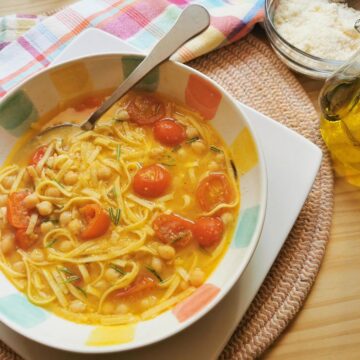
Tradtional Tuscan chickpea and pasta soup.

This classic chickpea and pasta soup from Tuscany is very nutritious and healthy. The ingredients are few and simple. All you need are dried chickpeas, garlic, rosemary, tomatoes, olive oil and pasta. Great Italian comfort food in a bowl!
Ingredients
- 10.5 ounces dried chickpeas
- 7 ounces tagliolini or tagliatelle pasta fresh or dried
- 10.5 ounces cherry tomatoes cut in half or canned peeled tomatoes
- 2-3 garlic cloves peeled and halved
- 1-2 sprig rosemary washed and leaves chopped
- 2-3 tablespoon extra virgin olive oil
- salt to taste
- black pepper to taste
- Parmigiano or grana grated for serving (if required)
Instructions
-
Start preparing the day before by soaking the chickpeas in a large bowl or pot with plenty of warm water. Let them soak for a whole night. Drain them, put them in a deep pot or Dutch oven with about two liters (4 pints) of lightly salted water, bring to a boil and cook covered, on a low heat for about 1-3 hours, until they are tender.
-
About ⅔ of the way through cooking, remove three ladles of chickpeas (about 25%) with a little water, blend them until you have a rough puree and then put the pureed chickpeas back into the pot.
-
Next, heat the olive oil in a pan with the garlic cloves and rosemary, then add the chopped tomatoes once the gralic softens. Cook for about ten minutes, remove the garlic and pour this sauce into the pot with the chickpeas. Add salt, if necessary, and let the cooking continue until the chickpeas are ready.
-
Add the pasta to the chickpea soup and cook for the amount of time stated on the packet. Fresh tagliolini or tagliatelle only takes 1-2 minutes! Some people break the pasta into smaller pieces. I didn’t.
-
Serve immediately with a sprinkling of extra virgin olive oil, grated cheese (if required) and ground black pepper.
Prevent your screen from going dark
Notes
Non vegetarians can add some crispy fried guanciale or pancetta before serving!
This Tuscan chickpea and pasta soup can be made with canned chickpeas and vegetable stock instead of the chickpea cooking water. However, the flavors will differ. Canned chickpeas are higher in sodium and fat and lower in protein, minerals and vitamins per serving compared to dried chickpeas.
When you boil dried chickpeas some of the nutrients get transferred into the water. This water (aquafaba) is rich in vitamin B, folate, iron, phosphorus, and healthy fats like linoleic and oleic acids giving the soup even more nutritional value. However, if you use canned chickpea liquid, it often contains high levels of added salt, so look for no salt added or low-sodium cans if you plan to use a large amount of the liquid.
Nutrition
Calories: 539kcalCarbohydrates: 84gProtein: 22gFat: 14gSaturated Fat: 2gPolyunsaturated Fat: 3gMonounsaturated Fat: 7gTrans Fat: 0.03gCholesterol: 42mgSodium: 37mgPotassium: 941mgFiber: 15gSugar: 11gVitamin A: 445IUVitamin C: 20mgCalcium: 107mgIron: 6mg
Save this Tuscan chickpea and pasta soup recipe for later?
If you want to save this recipe for later, you can print it, bookmark this page or save it to Pinterest. Or, make your own online recipe box by clicking the ❤️ in the lower right corner of your screen & following the quick and easy instructions!
Reader Interactions