



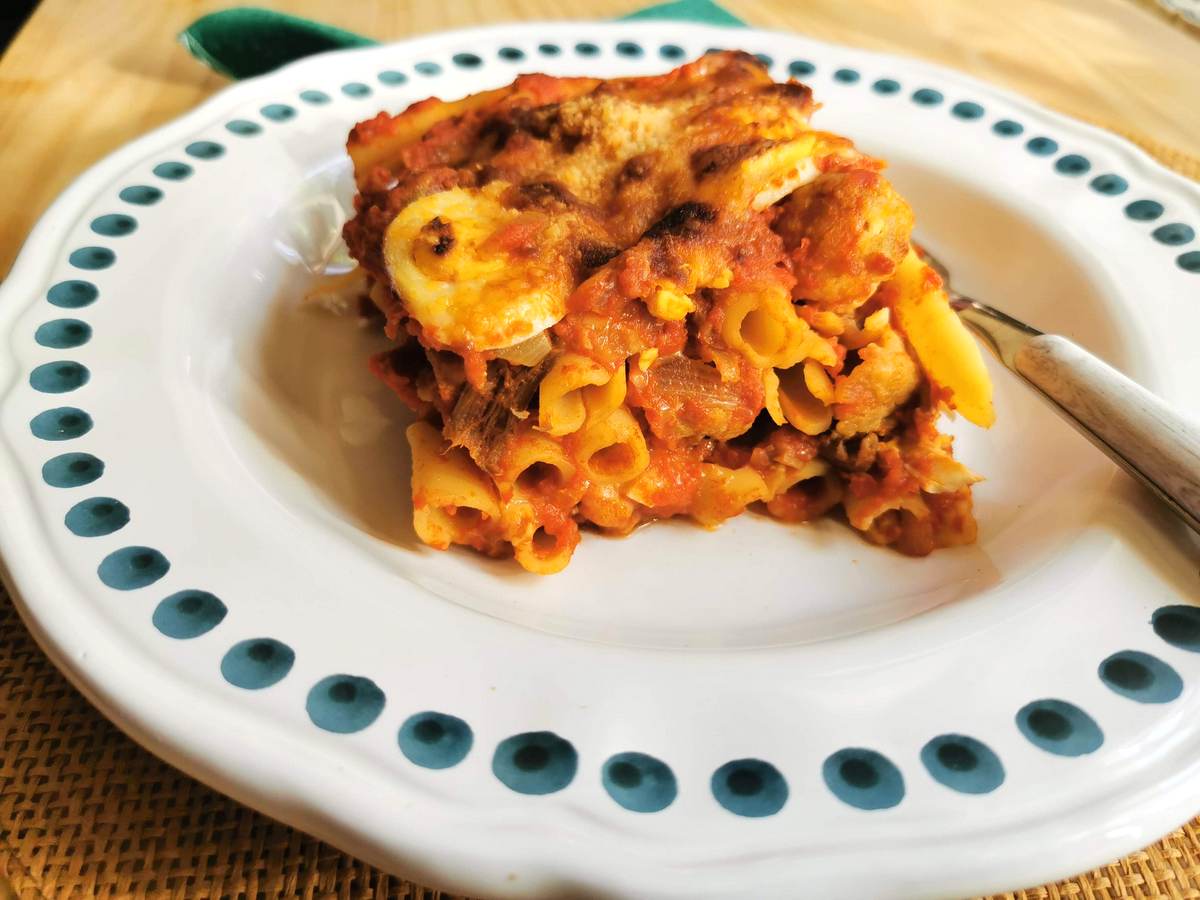
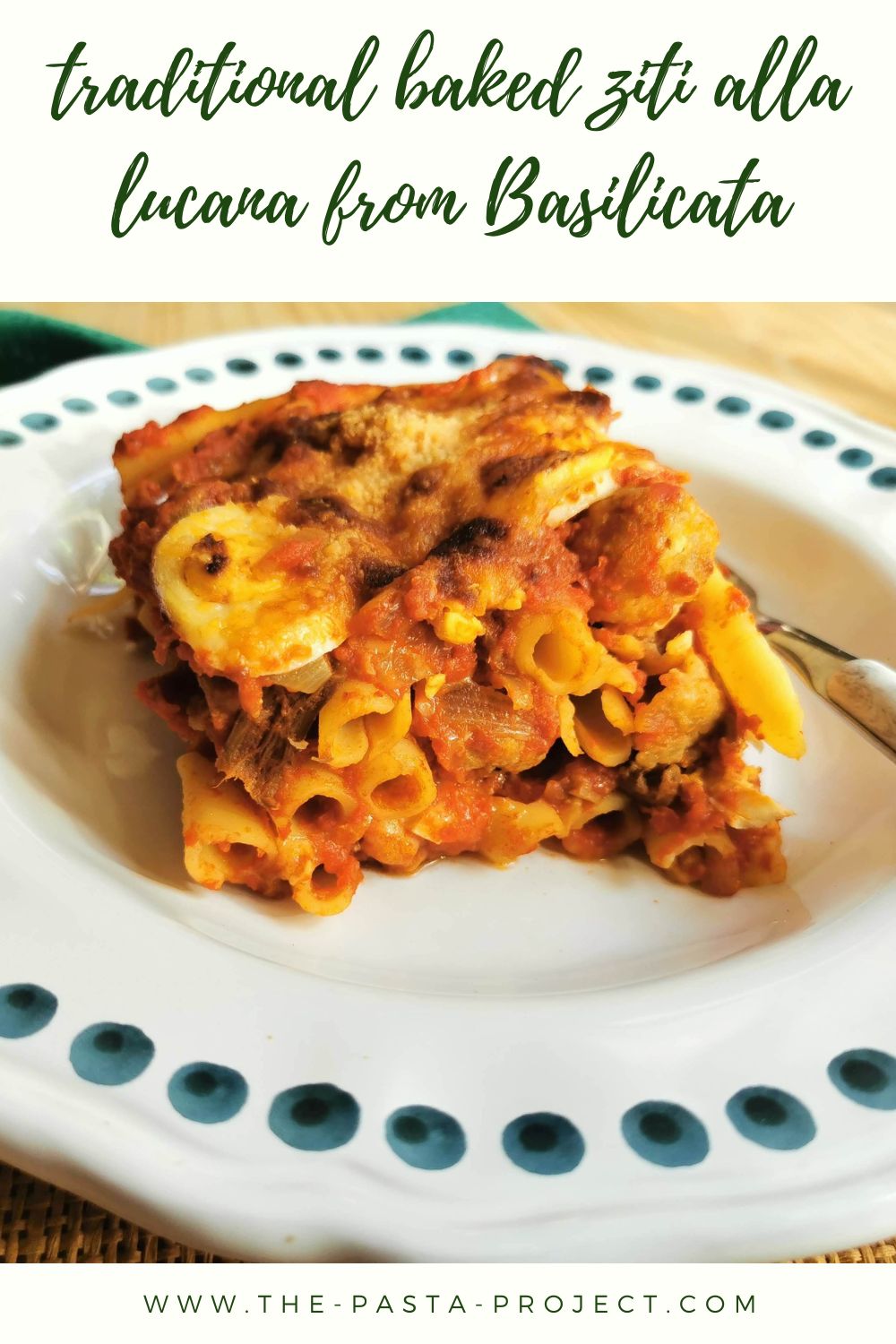
Baked pasta (pasta al forno in Italian) is a staple Sunday and holiday dish throughout Italy. However, it comes in many different forms depending on where in the country they make it, and who makes it! This hearty recipe for traditional baked ziti alla Lucana comes from Basilicata. It’s loaded with ingredients including a tomato and porcini sauce, scamorza cheese, tiny meatballs and hard boiled eggs. An abundant and filling one plate meal that all the family will enjoy.
Where is Basilicata?
Basilicata is a small mountainous Southern Italian region that lies in the instep of the Italian boot between Puglia, Calabria and Campania. The region has two short coastlines, one to the west along the Tyrrhenian Sea and the other to the south on the Ionian Sea. Once ruled by the Ancient Romans, Basilicata was then named Lucania.
What does ‘alla Lucana’ mean?
The name Lucania dates back to the ancient Lucani people and Roman times. So, long before the region was officially named Basilicata during the Byzantine era. The culinary use of lucana (or cucina lucana) has remained as a link to ancient local traditions, hence the use of ‘alla Lucana’ to describe recipes like this baked ziti alla Lucana.
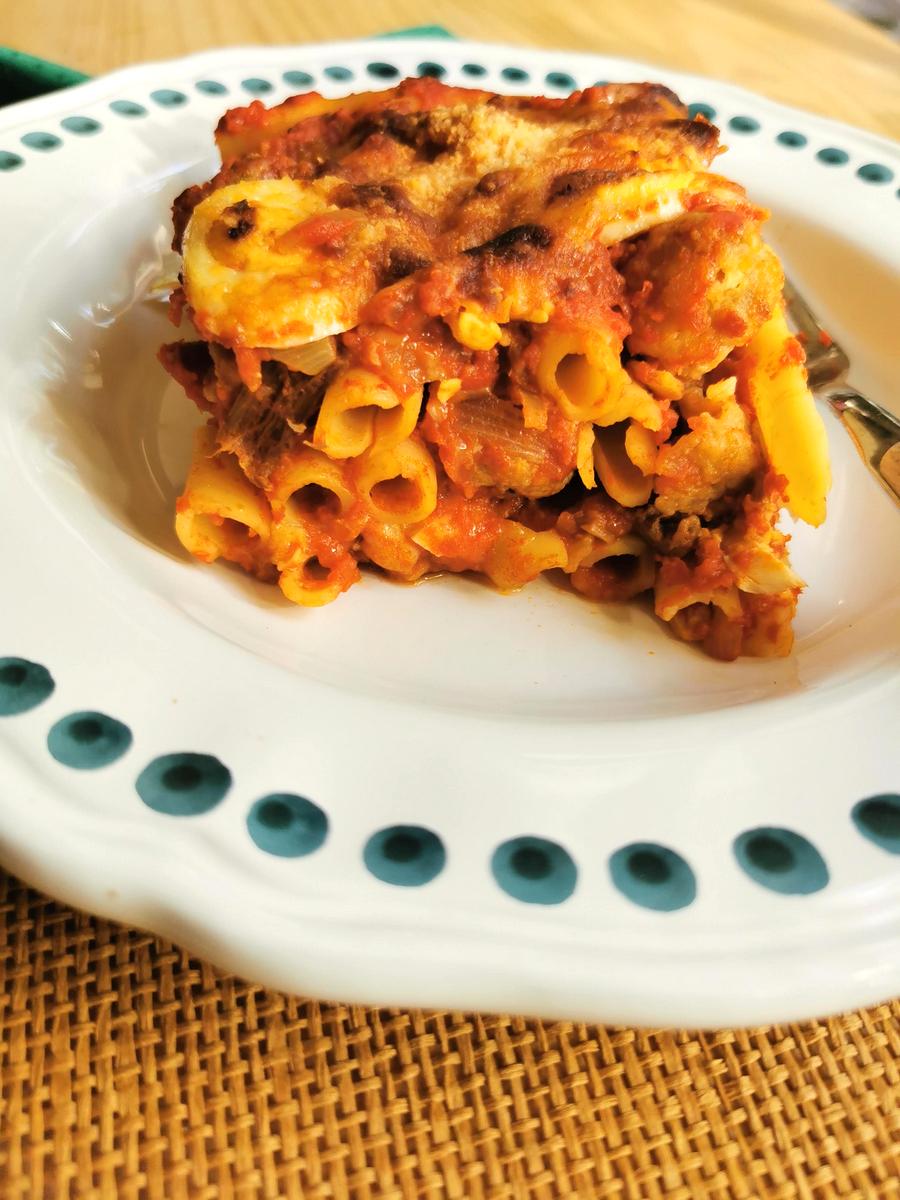
Different versions of baked ziti alla lucana.
You can find this baked ziti alla lucana called different names in Italian cookbooks and recipe sites. Some refer to it as timballo di ziti and others just say pasta al forno alla lucana.
Timballo is an ancient term for baked pasta or rice that usually refers to a dome shaped dish made with many layers and often encased in pastry or breadcrumbs, like anelletti timballo from Sicily. The name comes from the Italian for the French word for kettledrum, timbale.
As much as there are a variety of baked pasta dishes throughout Italy, there are also different versions of ziti alla lucana. The recipe I followed called for a tomato and porcini sauce, small pork and sausage meatballs, scamorza cheese, hardboiled eggs, pecorino or Parmigiano cheese and, of course ziti pasta.
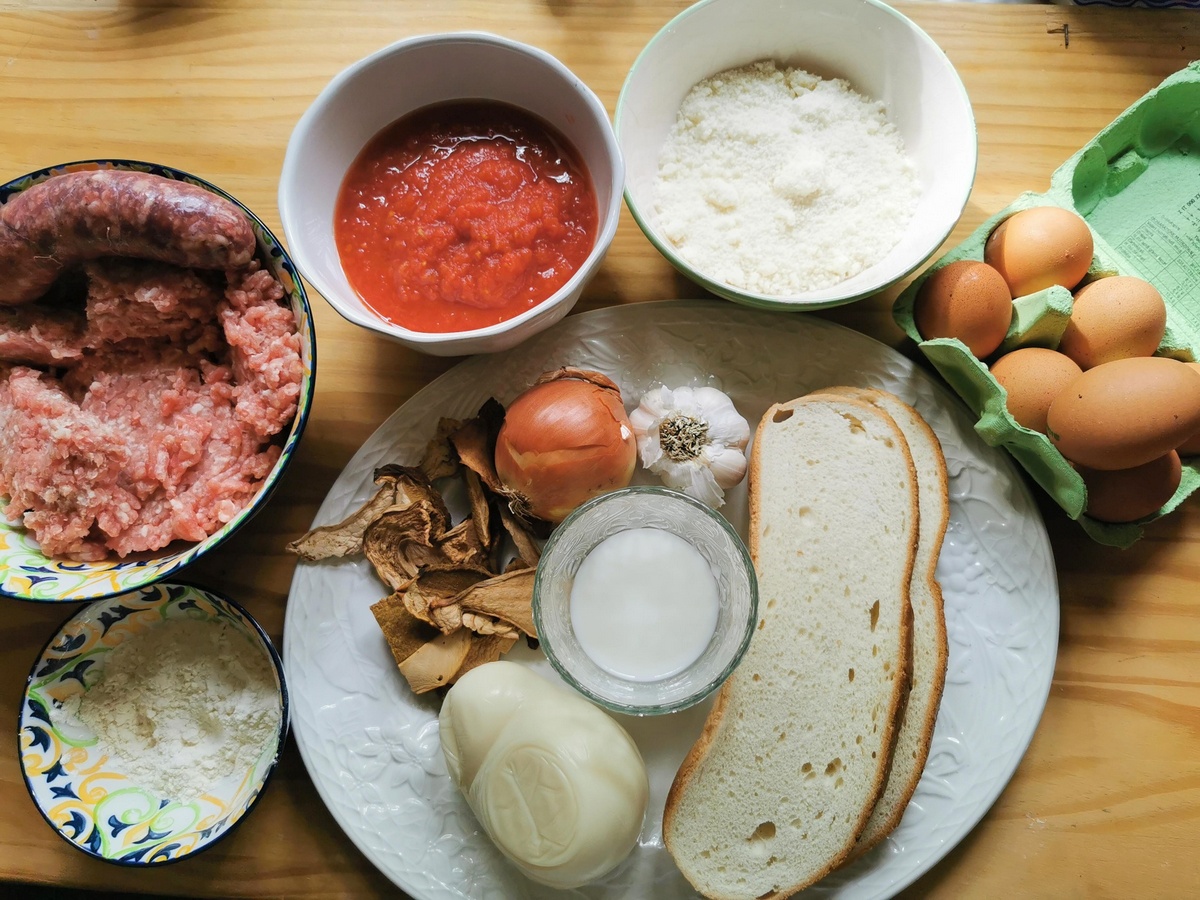
Other versions replace the scamorza with mozzarella and use a ground meat ragu or local sausage ragu or just tomato passata with onions as the sauce. There are also versions that call for the meatballs to be made with ground veal or beef and no sausage. However, the main ingredients are always ziti, meatballs, hard boiled eggs, cheese and a tomato based sauce.
Ingredient notes for this baked ziti alla lucana
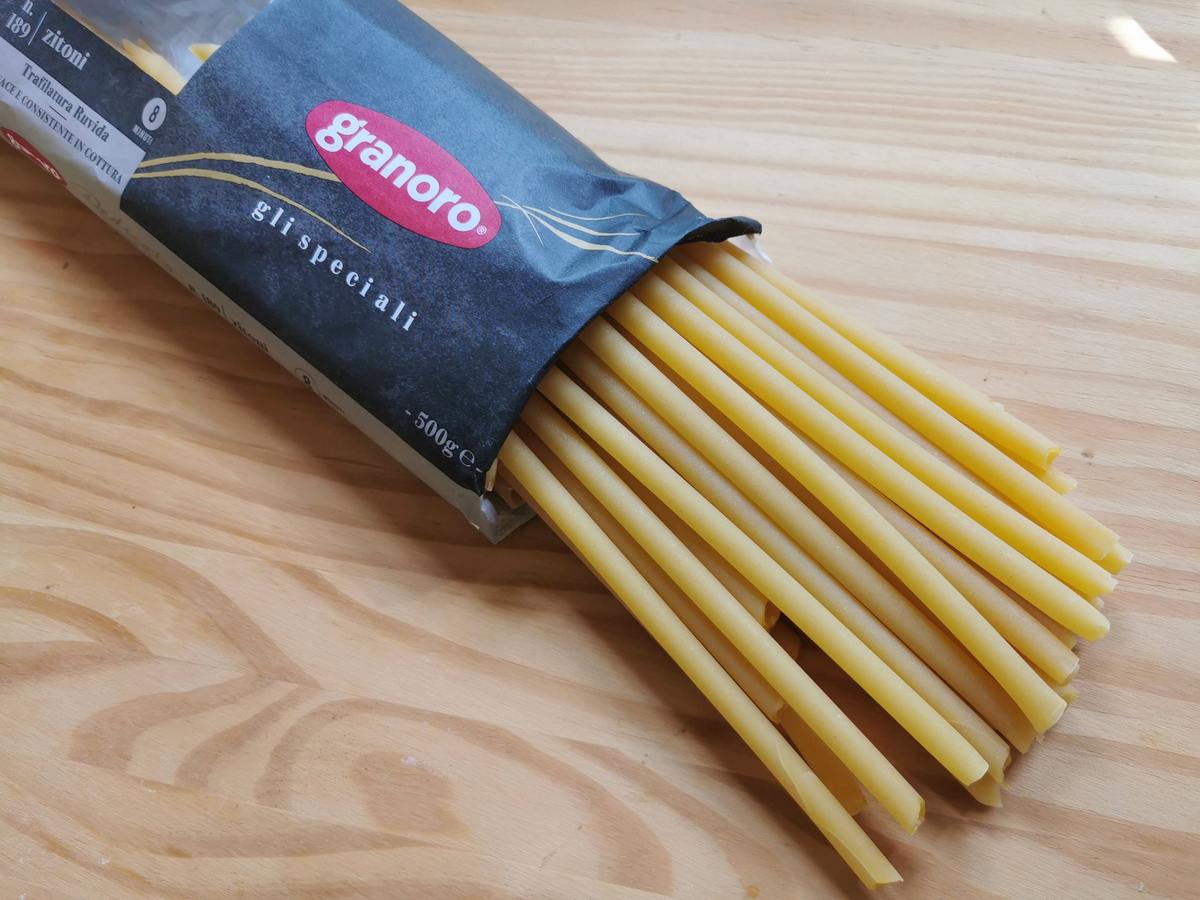
The pasta: Zitoni and ziti are long dried pasta tubes, similar to giant bucatini. Zitoni are wider than ziti but both are 25cms in length. I used zitoni this time, but you can use long or short ziti or even penne. Traditionally the ziti are broken into shorter pieces by hand, which is what I did.
Meat for meatballs: I used ground pork and Italian sausage meat. However, the small meatballs can be made with ground veal or beef instead. You can also leave out the sausage meat if you prefer.
Tomato passata: Tomato passata or polpa (thicker passata) is the basis for the sauce in this recipe. I used polpa from Mutti together with some homemade passata.
The cheese: Traditionally, this baked ziti alla lucana has 2 to 3 different types of cheese. I used scamorza and Pecorino. You can substitute the scamorza with caciocavallo or mozzarella. You can use Parmigiano instead of pecorino.
Porcini mushrooms: Instead of a meat ragu or simple tomato sauce, the recipe I followed called for a tomato, onion and porcini sauce. The porcini are usually dried and need to be soaked in warm water for up to 20 minutes before cooking. Of course, you can use a meat ragu or simple tomato sauce instead. You will need to make the meat ragu a little liquid as the pasta finishes cooking in the sauce.
Onion: Just one yellow onion for the tomato sauce. If you don’t have yellow onions, use white instead.
Meatball filling: apart from the sausage meat and ground pork, the meatballs in this baked ziti alla lucana have stale bread soaked in milk, pecorino, an egg, garlic, salt and pepper. These small meatballs are so tasty. But, if you don’t eat pork, you can used ground beef or veal instead.
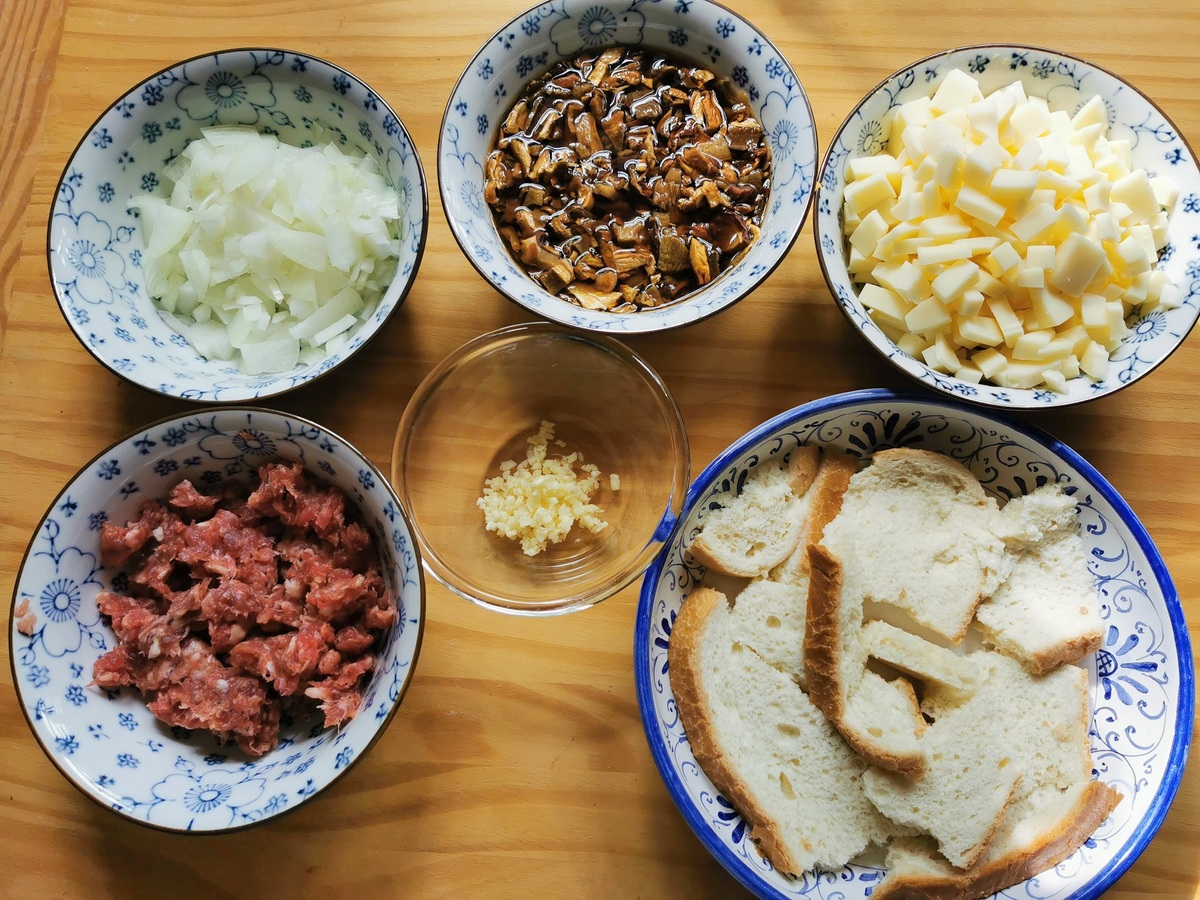
Step by step instructions and notes.
Preparation: Peel and finely chop the onion and garlic. Remove the sausage meat from the casing and crumble with your fingers. Soak the porcini in warm water and the stale bread in milk. Cut the scamorza into small cubes.
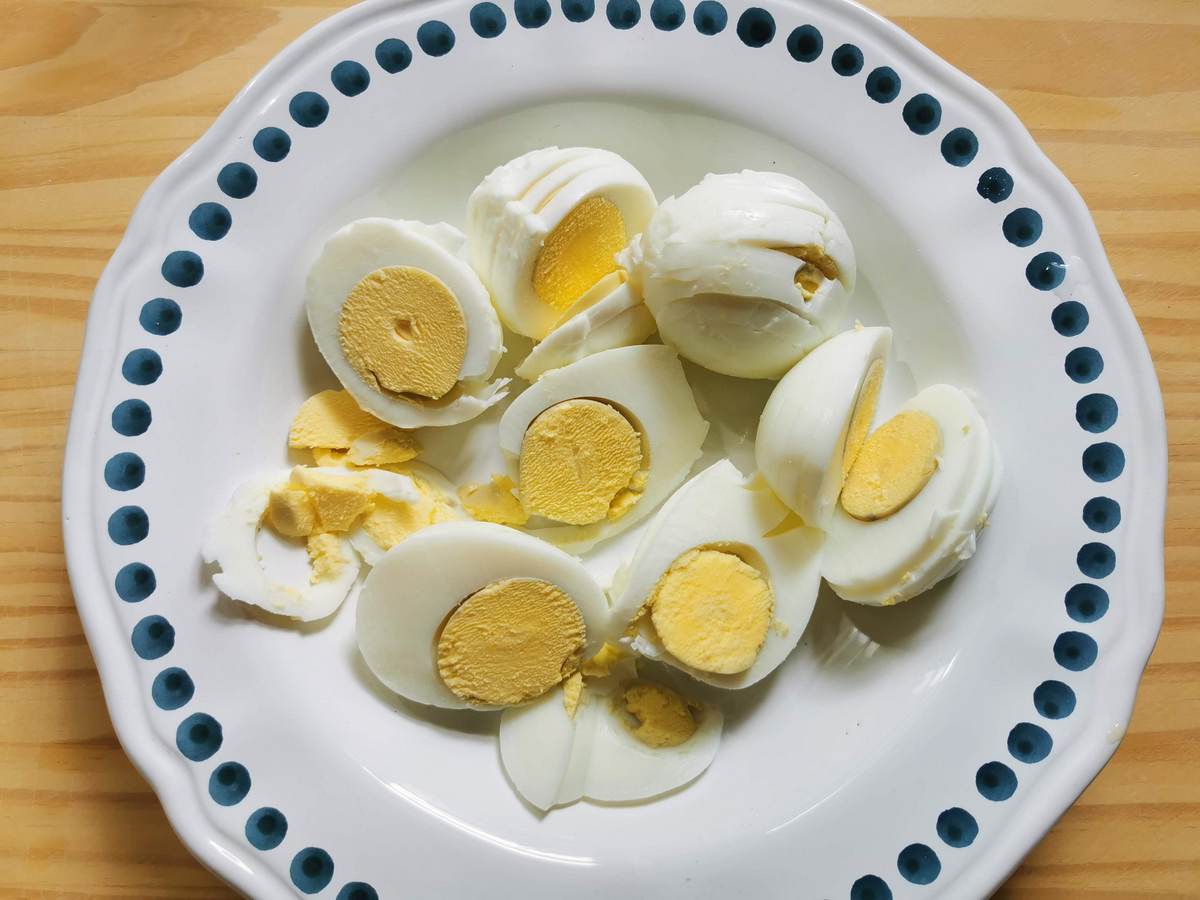
Step 1 Put six eggs onto boil. Boil for 10-12 minutes, then drain and place in cold water to cool. Then peel and slice them.
2) Remove the porcini from the soaking water. Keep the water to use in the sauce. Chop the porcini into small pieces.
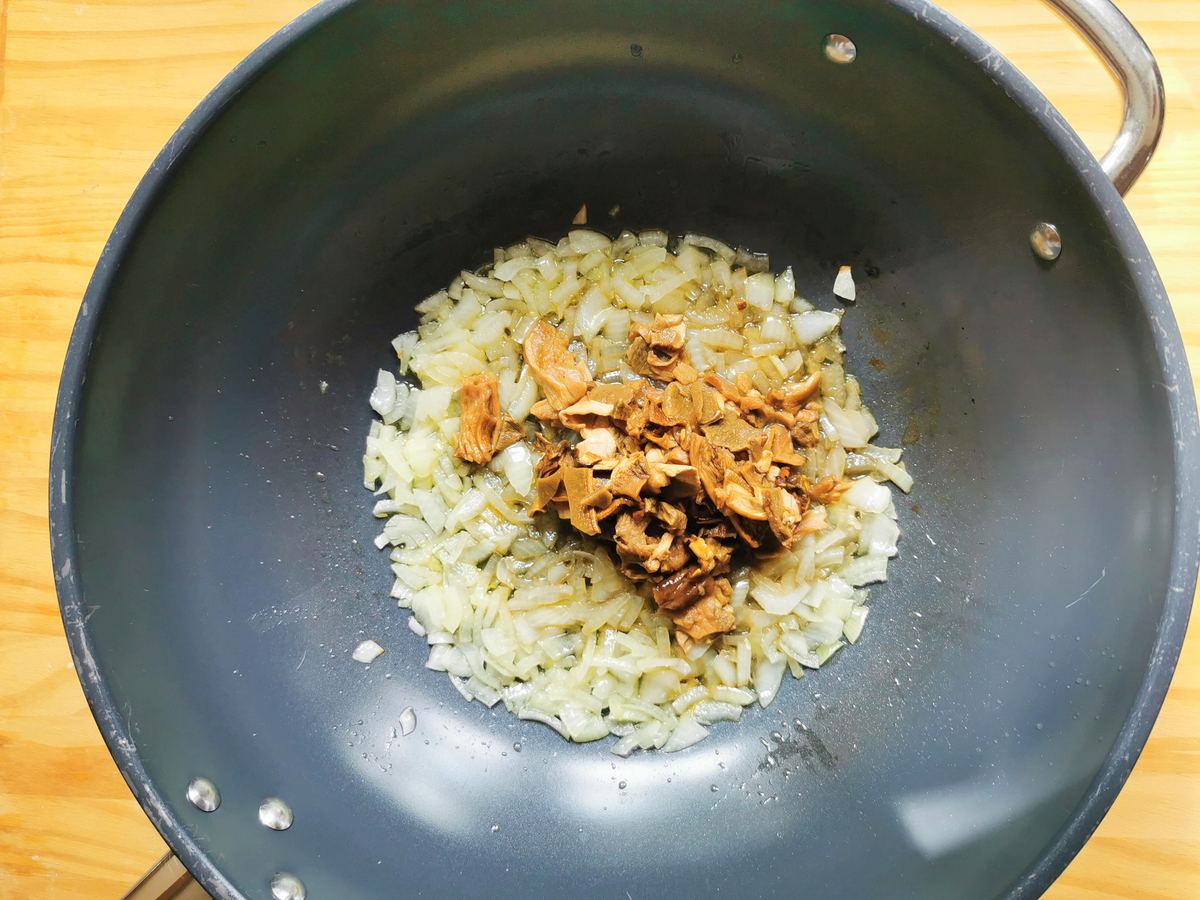
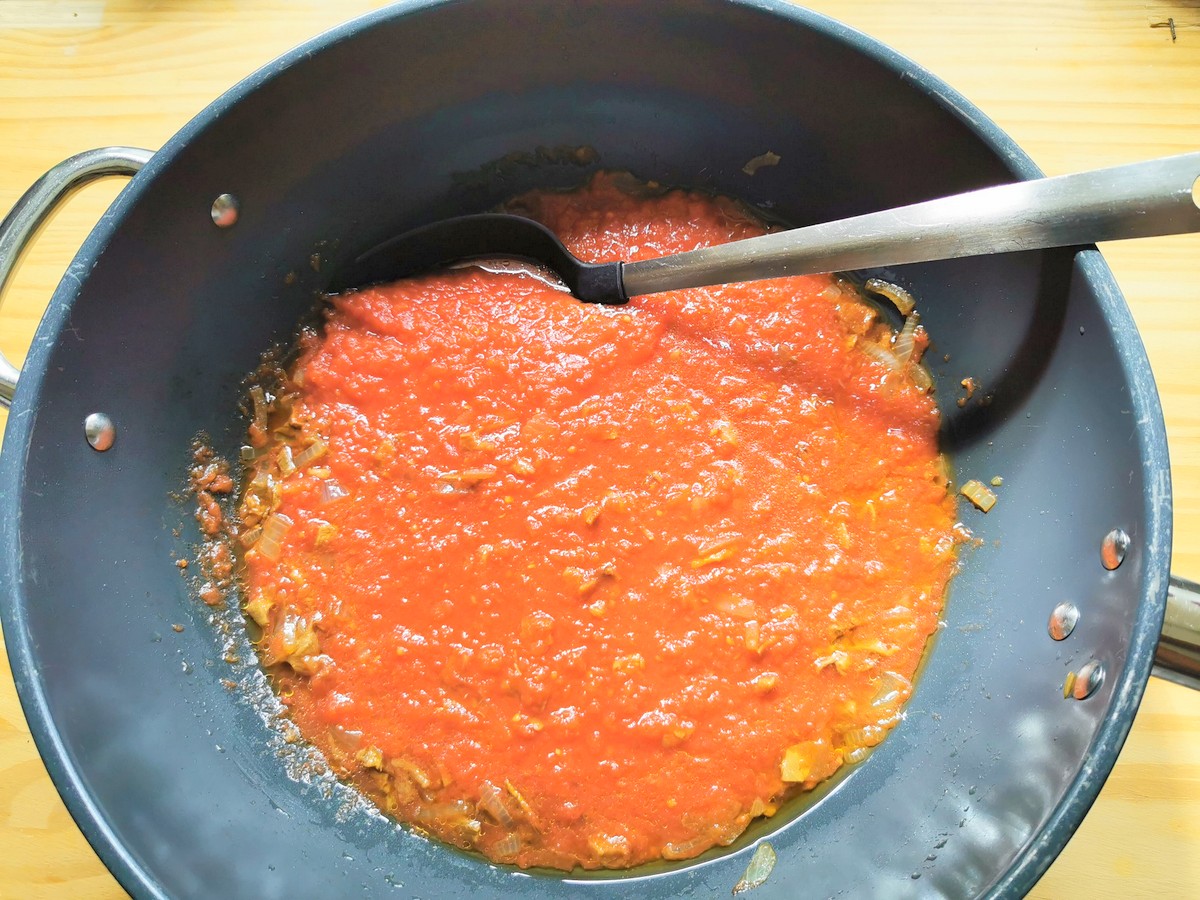
3) Sauté the onion in olive oil until it starts to soften. Then add the porcini and continue cooking for 5 minutes. Next add the tomato passata and some of the porcini soaking water. Simmer on a low heat for about 20-30 minutes, stirring occasionally to prevent sticking. Add salt and pepper to taste.
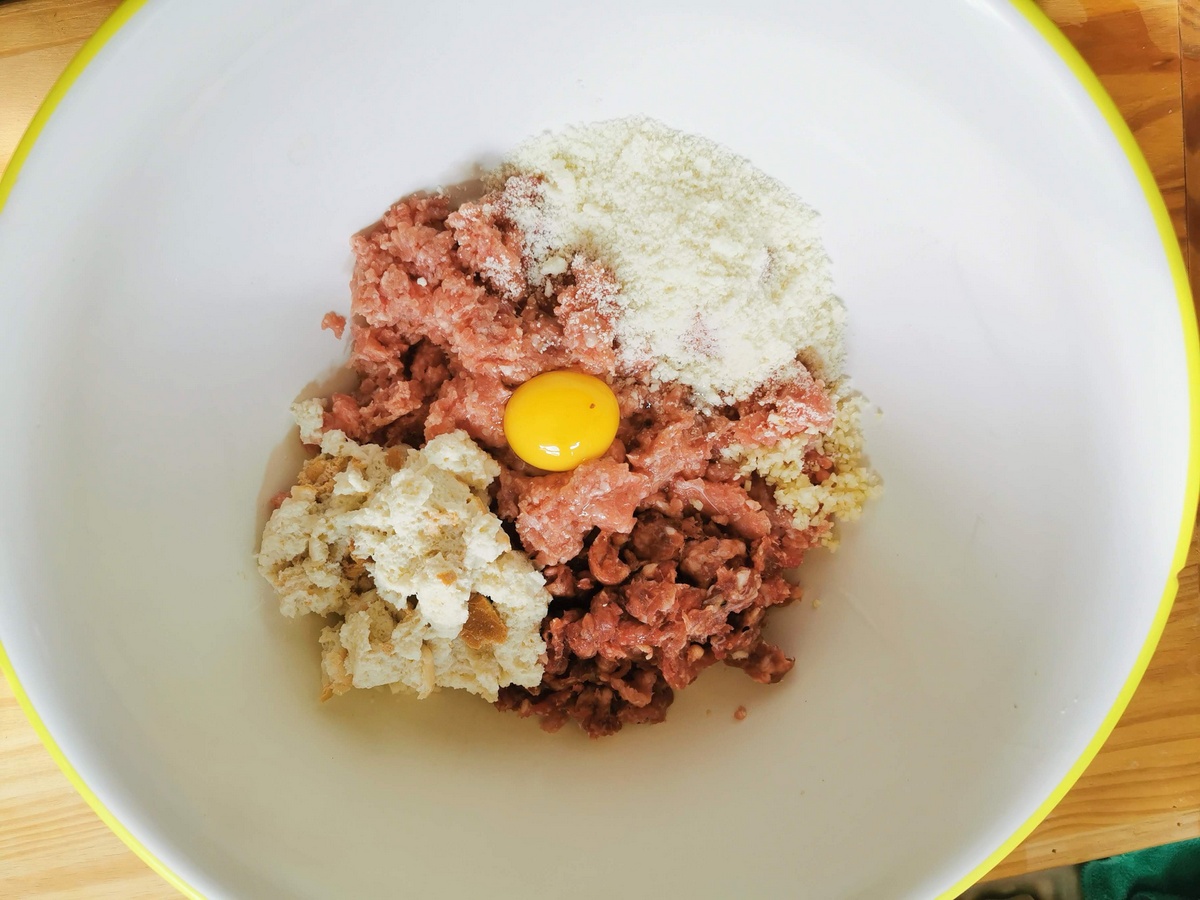
4) Squeeze the bread to remove most of the milk and put it in a large bowl with the ground meat, sausage meat, garlic, an egg and 50g of pecorino or Parmigiano (parmesan cheese). Use your hands to combine all of the ingredients until everything is just incorporated. Don’t over-work the mixture to avoid tough meatballs. Add salt and pepper to taste.
5) Wet your hands and take small amounts of the meatball mixture (about a flat tablespoon or even a teaspoon). Roll the mixture into small meatballs about the size of a walnut. Place the meatballs on a flour dusted piece of parchment paper on a tray until you finish them all. Roll them a little in the flour.
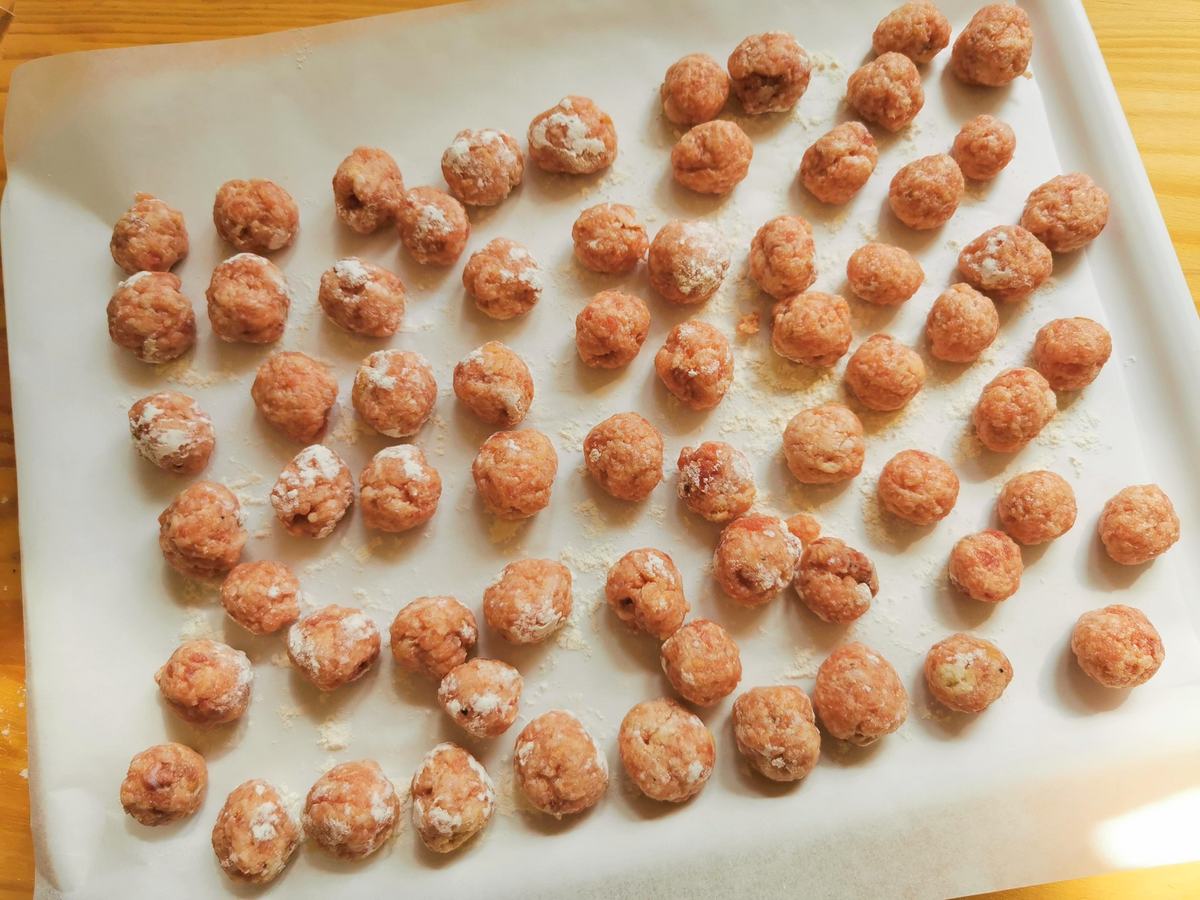
6) Lightly fry the ready meatballs in olive oil. Just brown them. They will finish cooking in the sauce and oven. Put the ready fried meatballs in a bowl lined with kitchen paper to drain any excess oil.
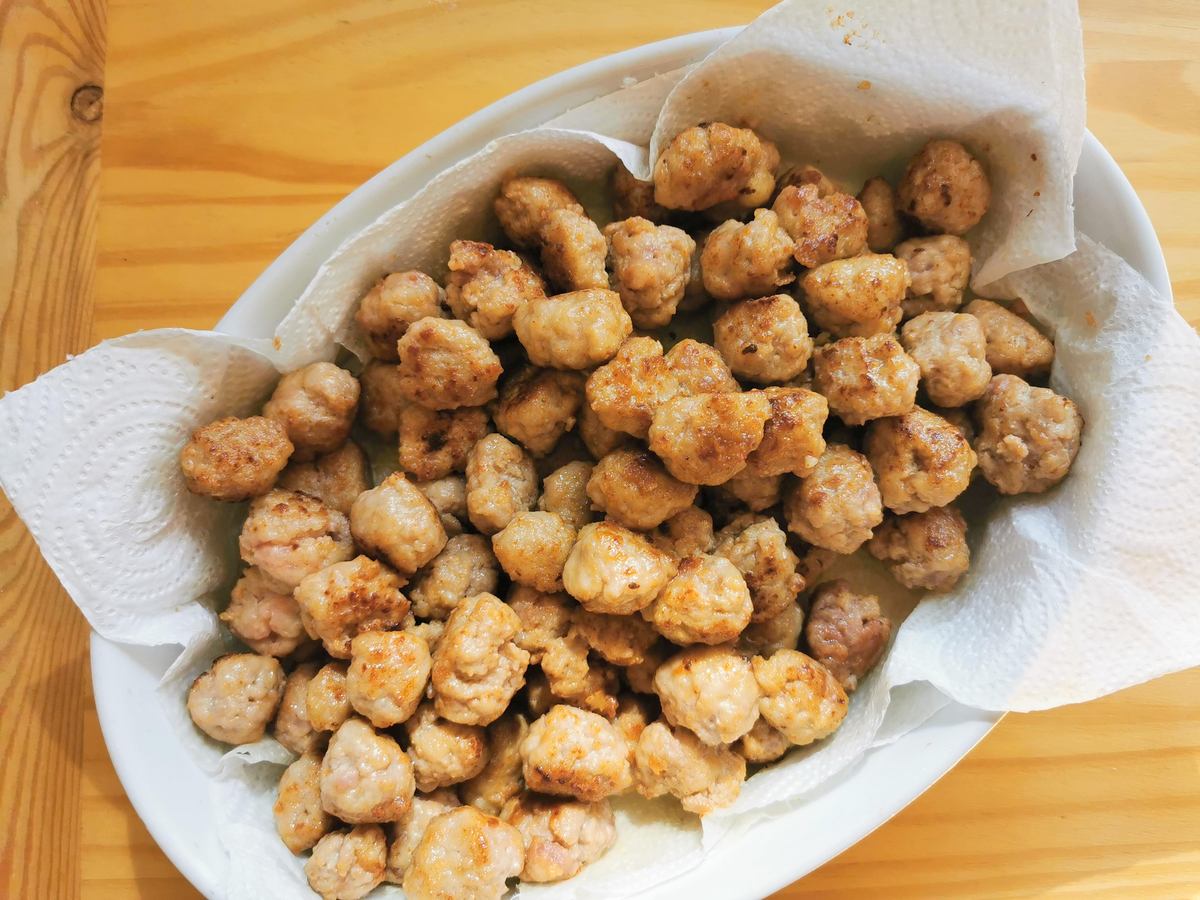
7) Put half the meatballs in the sauce and simmer for a couple of minutes.
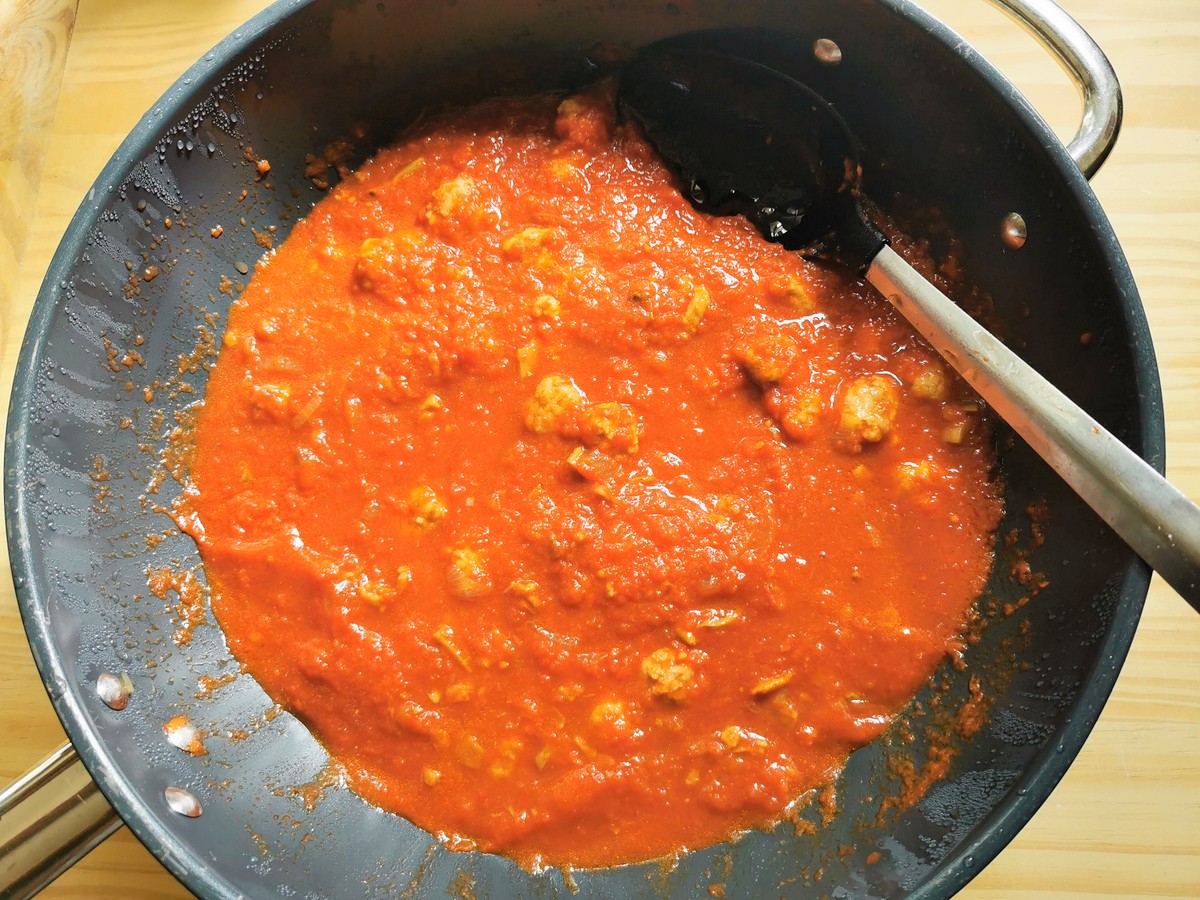
Prepare the pasta.
8) Put a pot of water on to boil for the pasta. Add salt once it starts to boil and bring to a boil again. Break the ziti into halves or thirds and boil it until very al dente.

Assemble your baked ziti alla lucana.
Spread a layer of sauce on the bottom of a rectangular oven dish. Add a layer of cooked ziti. Mix the ziti with the sauce and then spoon over more sauce.
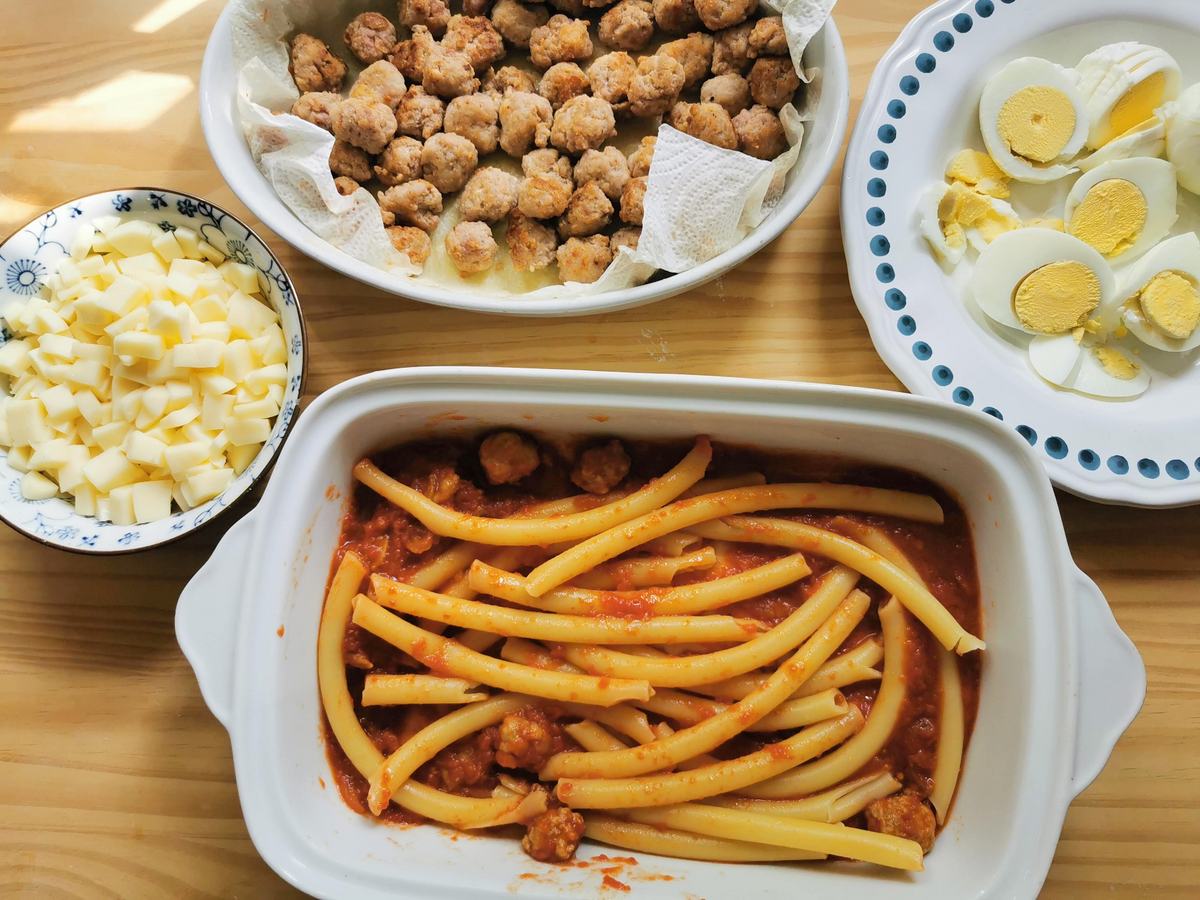
Next add some meatballs, cubed cheese and egg slices. Make a second layer of ziti, cover it with sauce and add the meatballs, cubed cheese and egg.
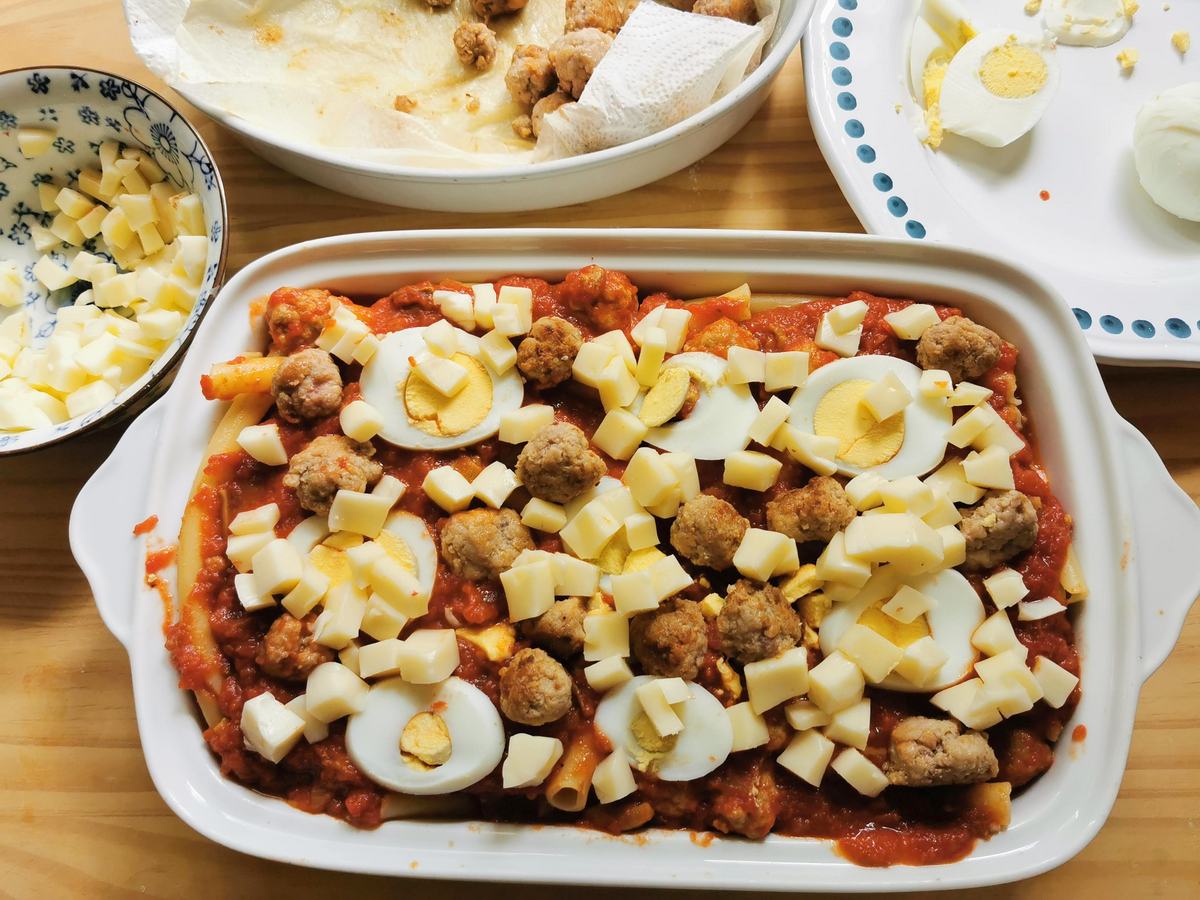
Depending on the depth and size of your oven dish, make another layer, ziti, sauce, cheese, egg and meatballs. Finish with the last of the sauce and sprinkle a generous amount of grated cheese over the top.
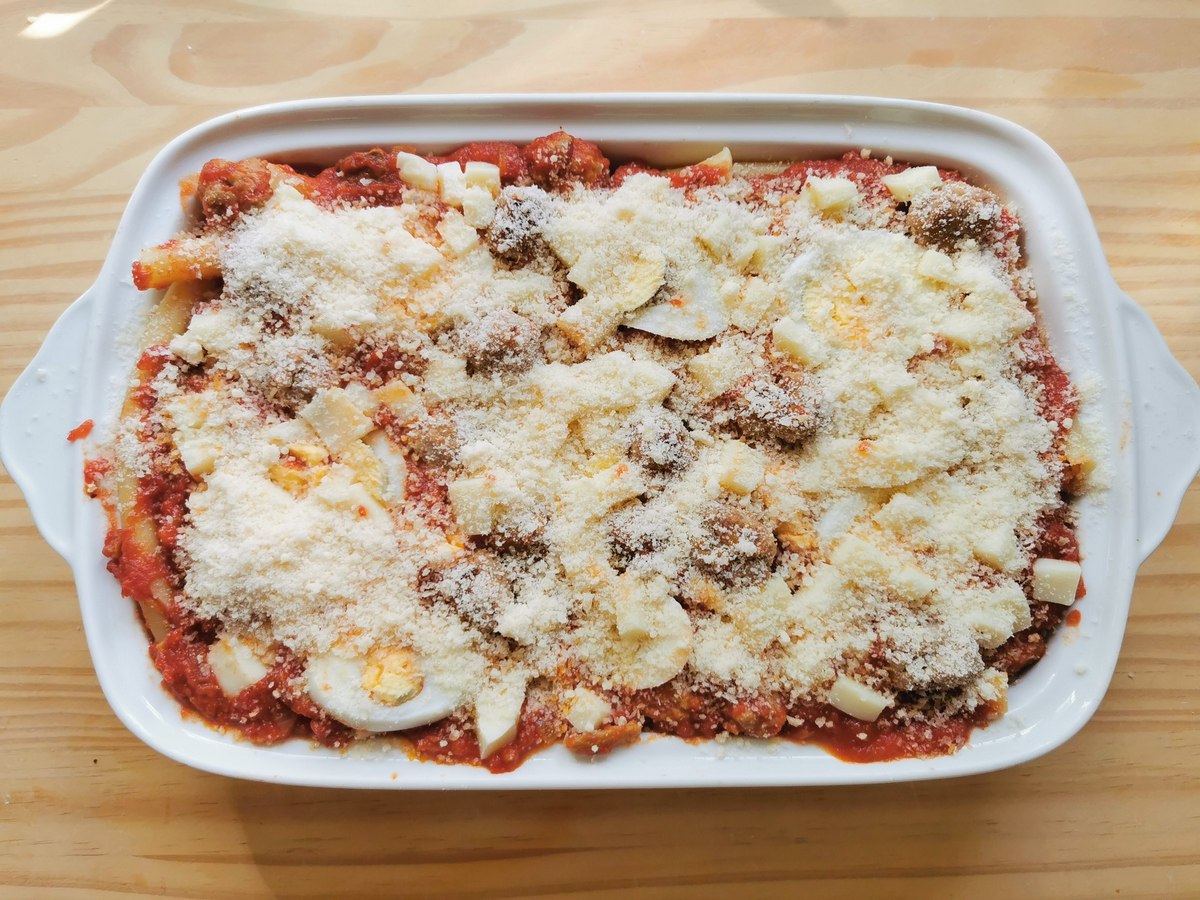
Cook and serve
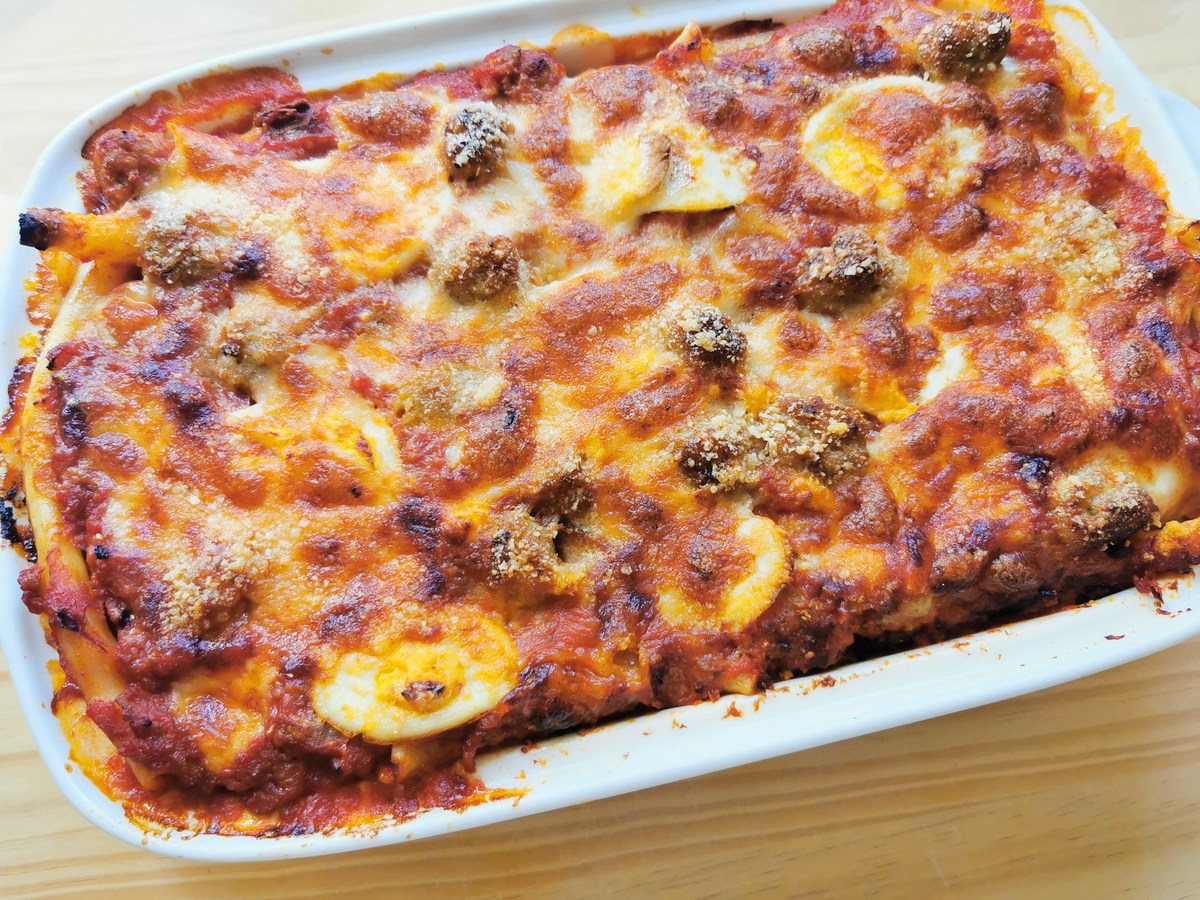
Bake your pasta al forno alla lucana in a heated oven at 180°c (356°F) for 20-30 minutes. Keep an eye that the top doesn’t burn.
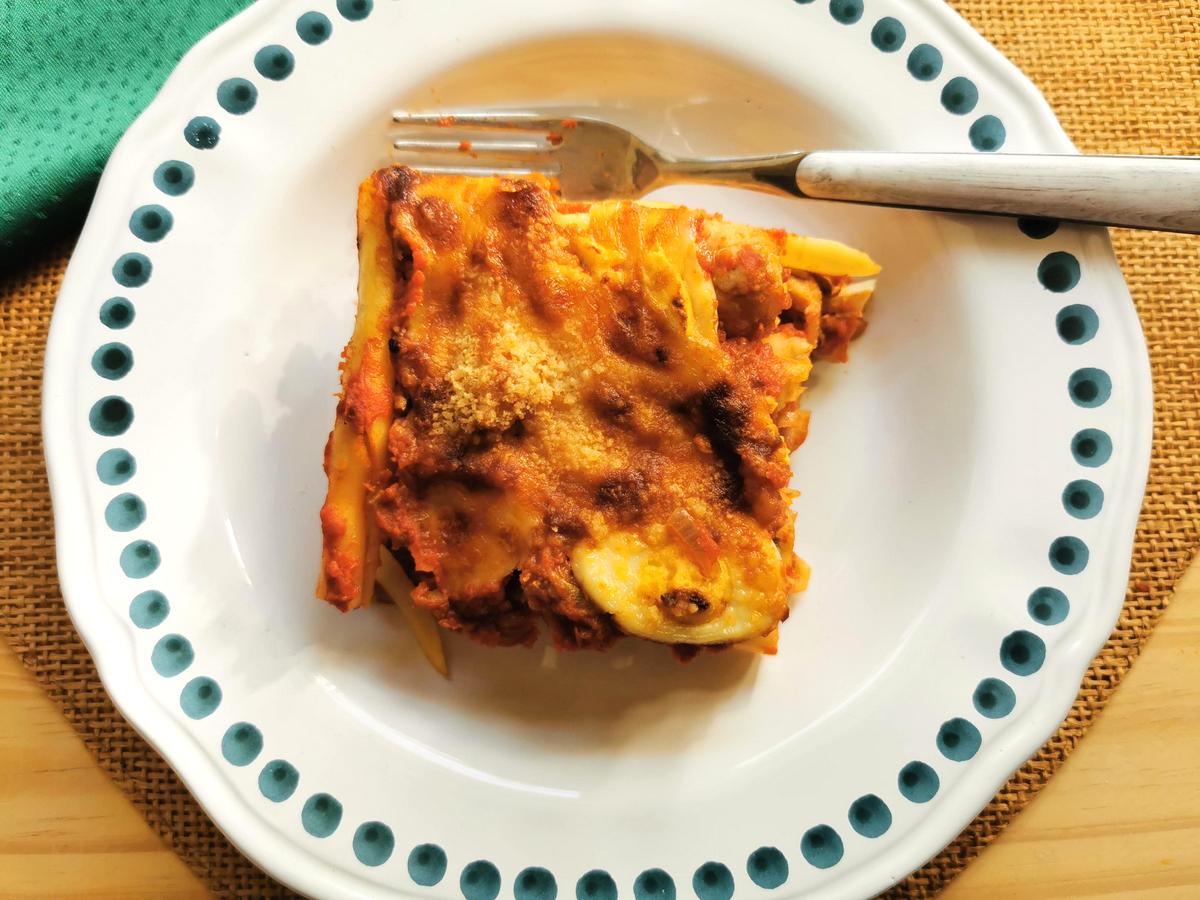
Let the baked ziti rest for 10-15 minutes before cutting into portions. If you serve straight out of the oven it may not hold together.
What to do with leftovers.
This pasta bake actually tastes even better the next day. You can keep it in the fridge for up to 2 days. Reheat in the oven covered with aluminum foil with a drizzle of olive oil over the top and some more grated cheese. Remove the foil for the last 5 minutes.
You can also freeze this baked pasta for 2-3 months. Then defrost and reheat as above. To prevent freezer burn, wrap the dish tightly with a layer of plastic wrap (clingfilm) pressed directly onto the food, followed by a double layer of aluminum foil.
Let me know what you think.
Here in Italy, this baked ziti alla Lucana would most likely be part of a Sunday lunch or holiday meal. Italians serve their pasta as a first course or starter followed by a main course. Consequently, portions are quite small. However, this dish also makes a filling one plate meal.
If you make this traditional pasta al forno from Basilicata, do let me know what you think.
Please leave a comment here on the blog or on The Pasta Project Facebook page.
Looking forward to hearing from you!
Buon appetito!
Save this eggless vegan tagliatelle recipe for later?
If you want to save this recipe for later, you can print it, bookmark this page or save it to Pinterest. Or, make your own online recipe box by clicking the ❤️ in the lower right corner of your screen & following the quick and easy instructions!
Traditional baked ziti alla Lucana recipe from Basilicata.

This hearty recipe for traditional baked ziti alla Lucana comes from Basilicata. It’s loaded with ingredients including a tomato and porcini sauce, scamorza cheese, tiny meatballs and hard boiled eggs. An abundant and filling one plate meal that all the family will enjoy.
Equipment
-
1 large bowl to make meatball mixture
-
1 chopping board
-
1 sharp knife
-
1 frying pan to fry meatballs.
-
1 large skillet for sauce
-
1 large pot to cook ziti
-
1 rectangular ceramic or pyrex oven dish
-
1 tray to keep ready formed meatballs
-
1 sheet parchment paper to keep ready formed meatballs
Ingredients
- 1.10 pounds ziti or zitoni pasta break in half before cooking if long.
For the sauce
- 1 ounce dried porcini mushrooms soak before cooking
- 1 onion peeled and chopped
- 1.75 pounds tomato passata you may need more
For meatballs
- 1 pound ground pork or veal or beef
- 7 ounces Italian pork sausage. removed from casing and crumble
- 1 egg
- 2 garlic cloves peeled and chopped
- 2 slices stale country bread
- 3.5 floz fresh whole milk
- 2.5 ounces Pecorino Romano grated
- 1.75 ounces white flour to roll meatballs in
- 3-4 tablespoons olive oil to fry the meatballs
Other ingredients
- 10.5 ounces scamorza cheese cubed. Or mozzarella
- 2.5 ounces Parmigiano Reggiano grated for the topping
- 6 eggs hard boiled and sliced
- salt for pasta, sauce and meatballs
- freshly ground black pepper. for sauce and meatballs
Instructions
Make the sauce
-
Remove the porcini from the soaking water. Keep the water to use in the sauce. Chop the porcini into small pieces.
-
Sauté the onion in olive oil until it starts to soften. Then add the porcini and continue cooking for 5 minutes. Next add the tomato passata and some of the porcini soaking water. Simmer on a low heat for about 20-30 minutes, stirring occasionally to prevent sticking. Add salt and pepper to taste.
Make the meatballs
-
Squeeze the bread to remove most of the milk and put it in a large bowl with the ground meat, sausage meat, garlic, an egg and 70g of pecorino or Parmigiano (parmesan cheese). Use your hands to combine all of the ingredients until everything is just incorporated. Don’t over-work the mixture to avoid tough meatballs. Add salt and pepper to taste.
-
Wet your hands and take small amounts of the meatball mixture (about a flat tablespoon or even a teaspoon). Roll the mixture into small meatballs about the size of a walnut. Place the meatballs on a flour dusted piece of parchment paper on a tray until you finish them all. Roll them a little in the flour.
-
Lightly fry the ready meatballs in olive oil. Just brown them. They will finish cooking in the sauce and oven. Put the ready fried meatballs in a bowl lined with kitchenpaper to drain any excess oil.
-
Put half the meatballs in the sauce and simmer for a couple of minutes.
Assemble your ziti alla lucana
-
Spread a layer of sauce on the bottom of a rectangular oven dish. Add a layer of cooked ziti. Mix the ziti with the sauce and then spoon over more sauce. Next add some meatballs, cubed cheese and egg slices. Make a second layer of ziti, cover it with sauce and add the meatballs, cubed cheese and egg.
-
Depending on the depth and size of your oven dish, make another layer, ziti, sauce, cheese, egg and meatballs. Finish with the last of the sauce and sprinkle a generous amount of grated Parmigiano cheese over the top.
Cook and serve
-
Bake your pasta al forno alla lucana in a heated oven at 180°c for 20-30 minutes. Keep an eye that the top doesn’t burn.
-
Let the baked ziti rest for 10-15 minutes before cutting into portions. If you serve straight out of the oven it may not hold together.
Prevent your screen from going dark
Notes
- Don’t over-work the meat mixture to avoid tough meatballs.
- Let the baked ziti rest for 10-15 minutes before cutting into portions. If you serve straight out of the oven it may not hold together.
- This pasta bake actually tastes even better the next day. You can keep it in the fridge for up to 2 days. Reheat in the oven covered with aluminum foil with a drizzle of olive oil over the top and some more grated cheese. Remove the foil for the last 5 minutes.
- You can also freeze this baked pasta for 2-3 months. Then defrost and reheat as above. To prevent freezer burn, wrap the dish tightly with a layer of plastic wrap (clingfilm) pressed directly onto the food, followed by a double layer of aluminum foil.
Nutrition
Calories: 1107kcalCarbohydrates: 87gProtein: 58gFat: 58gSaturated Fat: 23gPolyunsaturated Fat: 6gMonounsaturated Fat: 24gTrans Fat: 0.02gCholesterol: 332mgSodium: 1093mgPotassium: 1339mgFiber: 6gSugar: 12gVitamin A: 1462IUVitamin C: 17mgCalcium: 642mgIron: 6mg
More traditional Italian ziti recipes to try
Reader Interactions