



This is one of those recipes that is super simple and packs all those basic flavors that makes everyone at the dinner table happy. And some nights, that’s all we need; quick, so easy we don’t have to think, and a hit with the whole fam.
And what we love about it even more is it pairs so well with something as simple as a pile of rice or you can turn it into a fake-out-take out mix-and-match party with all your favorite Chinese-American recipes.
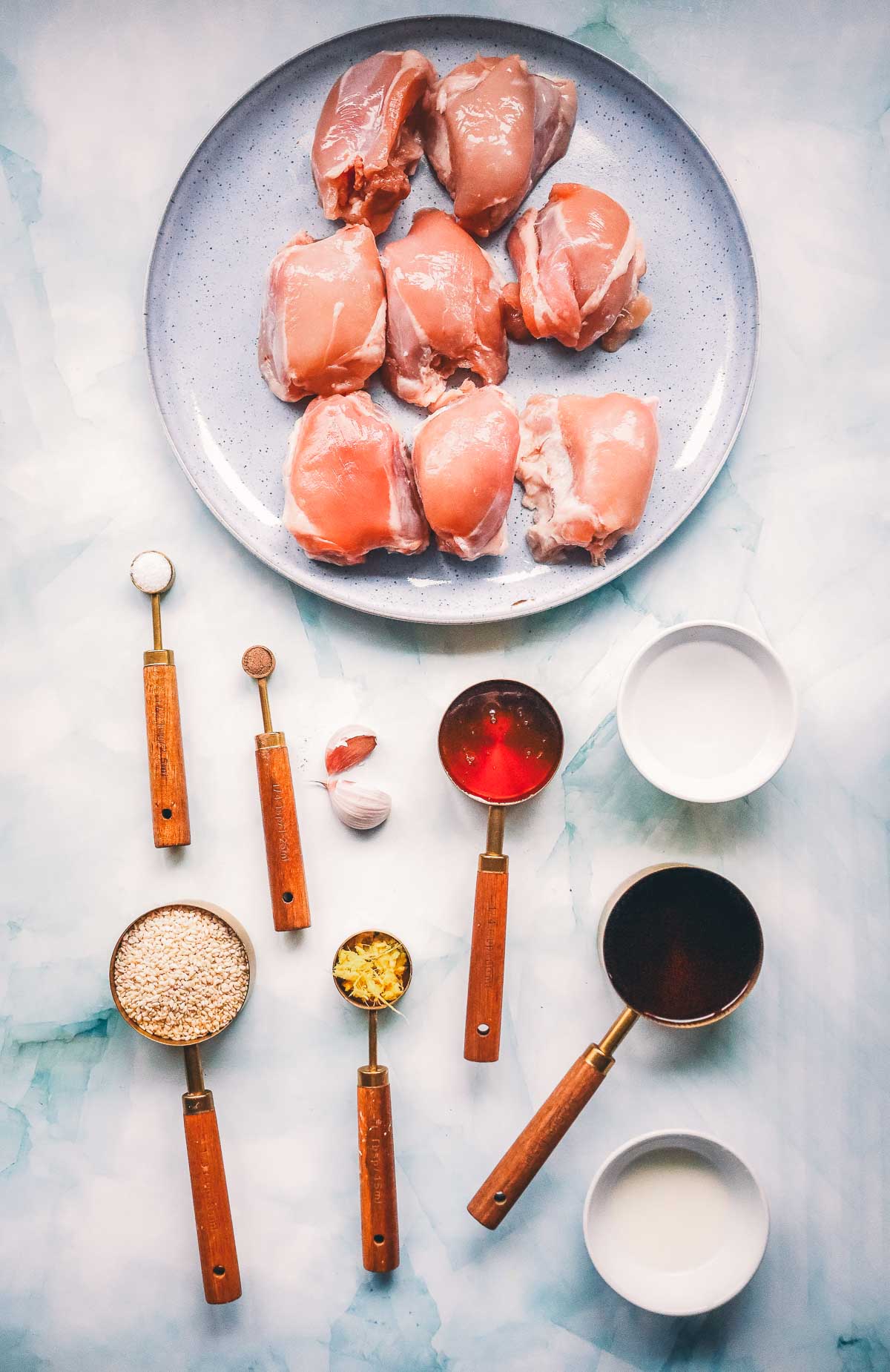
🔪 Ingredients for Teriyaki Chicken Thighs
- Boneless, skinless chicken thighs: buy a two pound pack, about eight thighs, and trim the big fat flaps off the underside so the glaze has somewhere flat to sit. Thighs beat breast here for a reason.
- Soy sauce, Honey, Rice vinegar
- Garlic and fresh ginger: grate both on a microplane so they melt into the glaze instead of catching on the pan and burning.
- Cornstarch: whisked with cold water, this is the difference between a thin sauce and a glaze that clings.
- Toasted sesame seeds
- Scallions or chives
- Short grain rice
Equipment
- Rimmed sheet pan: lined with foil. Honey and soy weld to bare metal and you will be scrubbing all night.
- Microplane
- Thermapen
📝 How to Make Teriyaki Chicken Thighs
- Make the marinade. Whisk the soy sauce, honey, vinegar, grated garlic, grated ginger, and sesame seeds together until the honey fully dissolves and nothing is streaking on the bottom of the bowl, about 30 seconds.
- Split it in half before the chicken goes anywhere near it. Half marinates the meat. The other half goes in a covered jar and becomes your glaze. Doing this now means your glaze never touches raw chicken.
- Marinate. Pat the thighs dry, season lightly with salt and pepper, and put them in a zip-top bag with the first half of the marinade. Refrigerate at least 30 minutes and up to 4 hours. After 4 hours the soy starts curing the surface and the texture goes firm.
- Heat the oven to 425°F with a rack in the upper third. Line a sheet pan with foil and brush it with oil.
- Roast. Shake the excess marinade off each thigh and lay them out with an inch between them so they roast instead of steam. Bake 12 to 15 minutes, flip, then another 6 to 8 minutes.
- Pull at 175°F, checked in the thickest part of the biggest thigh. The meat will look opaque all the way through and the edges will have gone deep brown where they touched the pan.
- Make the glaze while the chicken roasts. Pour the reserved half into a small saucepan over medium heat, whisk in the cornstarch slurry, and simmer 2 to 3 minutes until it coats the back of a spoon and a line drawn through it holds for a second before closing.
- Glaze and broil. Brush the hot thighs with glaze and run them under the broiler for 1 to 2 minutes, until the edges bubble and darken at the tips. Stand there and watch. Honey goes from lacquered to bitter in about 20 seconds.
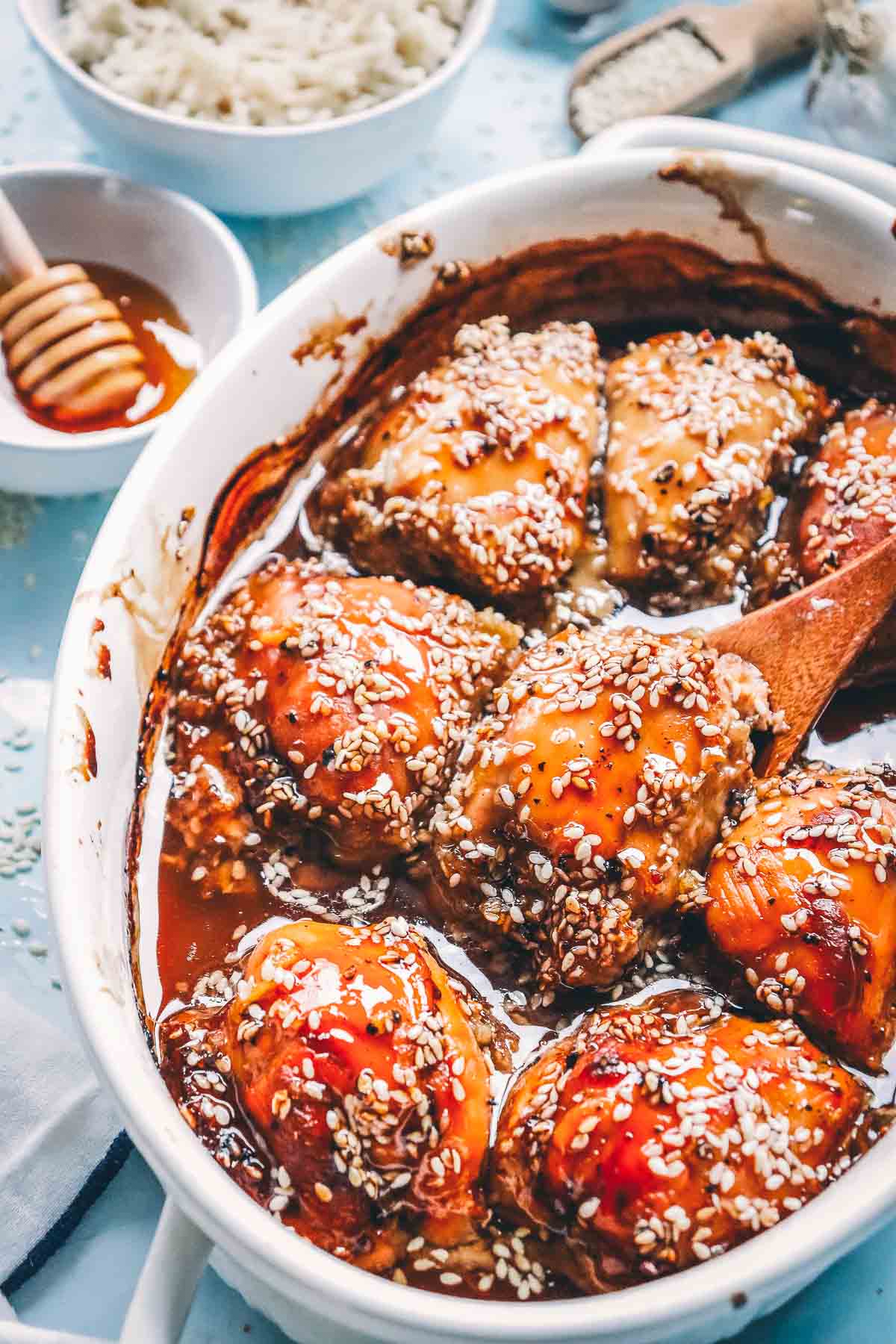
- Serve. Spoon the rest of the glaze over the top, shower with sesame seeds and sliced scallions, and put it down over rice while the glaze is still loose.
Three other ways to cook them:
- Skillet: heat a tablespoon of oil in a large skillet over medium-high. Wipe the excess marinade off the thighs so they brown instead of steam, then cook 5 to 6 minutes on the first side until they release cleanly from the pan, and 4 to 5 on the second. Pour in the reserved glaze half and simmer 2 to 3 minutes, turning to coat, until the sauce clings and the chicken reads 175°F.
- Air fryer: 400°F for 12 to 14 minutes, flipping halfway, until the thighs read 175°F. Brush with glaze in the last 2 minutes so it sets without burning. Same logic as our air fryer chicken thighs.
- Grill: two zone fire, thighs over direct heat 4 to 5 minutes a side for color, then over to the cool side, lid down, until 175°F. Glaze only in the last 2 minutes. Our grilled chicken thighs guide covers the fire setup.
You may be picking between takeout copycats tonight. Teriyaki is the only one of ours that leaves the thigh whole and skips coating entirely, roasting bare and taking the glaze at the end. Bourbon chicken uses the same cut in one-inch pieces, seared and simmered, leaning on bourbon and hoisin for depth. Orange chicken is panko-coated breast crisped in the air fryer then tossed in a citrus and sriracha sauce. Sweet and sour chicken is bite-sized, cornstarch-dredged, and finishes sharp on rice vinegar.
🔄 Substitutions
- Bone-in, skin-on thighs for boneless: same 425°F oven, 30 to 35 minutes, still pulled at 175°F. The skin crisps and the glaze slides off it, so brush twice.
- Brown sugar for honey: one for one. You get more molasses depth and a glaze that thickens a beat slower.
- Apple cider vinegar for rice vinegar: one for one, a little sharper and fruitier on the finish.
- Tamari for soy sauce: straight across, and it makes the whole thing gluten free.
- Coconut aminos for soy sauce: much sweeter and far less salty. Cut the honey in half and salt the thighs harder before they go in the bag.
- Ground ginger for fresh: one teaspoon dried for the tablespoon of fresh. Flatter and warmer, but it holds up in the glaze.
- Mirin and sake, if you keep them: swap 2 tablespoons of each in for the vinegar and half the honey. That puts you on the traditional side of the line.
💡 Meat Nerd Tips
- Cook thighs to 175°F, not 165°F. 165°F is the USDA safe floor and it is the right call for breast meat. Thighs carry connective tissue that only softens up in the 170s, which is exactly why a technically safe thigh can still eat rubbery.
- Split the marinade before the chicken touches it. Anything that soaked raw chicken has to hit a hard boil before it goes back on cooked meat. Splitting it up front means your glaze pan starts clean and the question never comes up.
- Glaze at the end, never at the start. Honey and soy both scorch well below 425°F. Roast the thighs bare, then glaze in the last two minutes so the sugar lacquers instead of burns.
- Wipe the thighs before they hit heat. A wet thigh dripping marinade steams itself. Shake or blot each one, and you get browning on the meat instead of a puddle boiling on the pan.
🍽️ What to Serve with Teriyaki Chicken Thighs
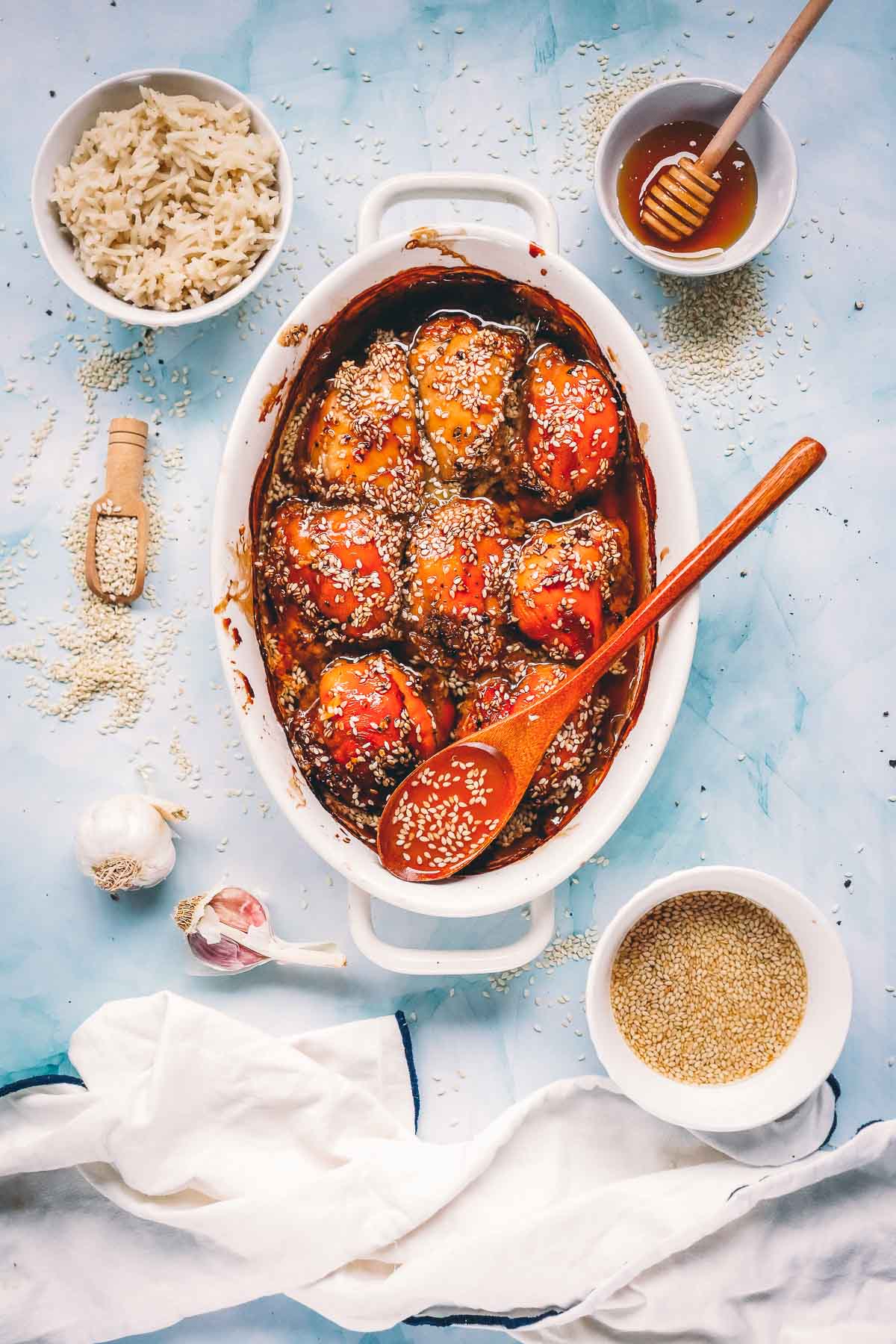
- Short grain rice, cooked a touch wet. It grabs the extra glaze instead of letting it pool on the plate.
- California roll cucumber salad. Cold, sharp, and vinegary against a sweet glaze.
- Blistered green beans or broccoli. Hot dry pan, no sauce on them. The chicken is bringing all the sauce this plate needs.
- Quick pickled red onion. Fifteen minutes in vinegar and it cuts the honey clean.
- Baked lemongrass chicken thighs for the next round. Same cut, same weeknight math, completely different flavor lane.
🧊 Leftovers and Storage
- Fridge: airtight container, up to 4 days. Keep leftover glaze in its own jar so the chicken does not go soggy sitting in it.
- Freezer: slice the thighs, pack them in the glaze, and freeze up to 3 months. The sauce protects the meat from freezer burn.
- Reheat: covered, in a 325°F oven for 10 to 12 minutes. The microwave turns the cornstarch glaze gluey.
- Meal prep: freeze the raw thighs in the marinade in a flat bag. Thaw overnight in the fridge and cook as written, no extra marinating time needed. Same trick we use for bourbon chicken.
You already own every bottle this takes. Whisk soy sauce, honey, garlic and ginger, split it in half, and pull a tray of sticky, lacquered chicken thighs out of your own oven in 25 minutes.
Prevent your screen from going to sleep
For the Marinade and Glaze (makes about 1 cup, split in half)
Make the Marinade
-
Whisk the soy sauce, honey, rice vinegar, grated garlic, grated ginger, and 2 tablespoons sesame seeds together until the honey fully dissolves, about 30 seconds.
Roast
-
Shake the excess marinade off each thigh and arrange them an inch apart on the pan. Bake 12 to 15 minutes, flip, then 6 to 8 minutes more, until the thickest thigh reads 175°F.
Make the Glaze
-
While the chicken roasts, pour the reserved marinade into a small saucepan over medium heat. Whisk the cornstarch and cold water together, whisk it in, and simmer 2 to 3 minutes until it coats the back of a spoon.
Serve
-
Spoon the remaining glaze over the top, finish with the remaining sesame seeds and the sliced scallions, and serve over rice.
- Skillet method: medium-high, oil, wipe the marinade off the thighs. 5 to 6 minutes the first side, 4 to 5 the second, then pour in the glaze half and simmer 2 to 3 minutes to 175°F.
- Air fryer: 400°F, 12 to 14 minutes, flipping halfway, to 175°F. Brush with glaze the last 2 minutes.
- Bone-in, skin-on thighs: same oven, 30 to 35 minutes, still 175°F. Brush the glaze twice, just don’t expect the skin to get as crispy as a pan-seared thigh.
- Storage: Store in the fridge for 4 days. Freeze sliced in the glaze up to 3 months. Reheat covered at 325°F for 10 to 12 minutes, not in the microwave.
- Meal prep: freeze the raw thighs in the marinade in a flat bag, thaw overnight, cook as written.
Serving: 1serving | Calories: 624kcal | Carbohydrates: 23g | Protein: 41g | Fat: 41g | Saturated Fat: 11g | Polyunsaturated Fat: 9g | Monounsaturated Fat: 17g | Trans Fat: 0.2g | Cholesterol: 222mg | Sodium: 2089mg | Potassium: 597mg | Fiber: 1g | Sugar: 18g | Vitamin A: 238IU | Vitamin C: 2mg | Calcium: 92mg | Iron: 3mg
Quick Summary
Teriyaki chicken thighs built from soy sauce, honey, vinegar, garlic, and ginger, with no mirin and no sake required. Split the marinade in half before the chicken touches it so one half seasons the meat and the other simmers with a cornstarch slurry into a glaze. Roast at 425°F, pull at 175°F rather than 165°F, and glaze under the broiler in the last two minutes so the honey lacquers instead of burns.
❓ Teriyaki Chicken Thighs FAQs
No, and it does not pretend to be. Traditional Japanese teriyaki sauce is soy sauce, sake, mirin, and sugar simmered together, usually in a 2:2:2:1 ratio, with no garlic, ginger, honey, or vinegar in the base. This is the Western pantry version most Americans grew up eating: same glossy lacquer, built from bottles you already own. If you keep mirin and sake, swap 2 tablespoons of each in for the vinegar and half the honey.
Thirty minutes is enough to season the surface and 4 hours is the ceiling. Past that, the salt in the soy sauce starts curing the outside of the meat and the texture turns firm and hammy. Marinate in the refrigerator, not on the counter.
Yes, but change the target temperature. Boneless breasts run 18 to 22 minutes at 425°F and come out at 160°F, coasting to 165°F while they rest. The 175°F number in this recipe is a thigh number and it will dry breast meat out.
Two usual causes. Either the cornstarch went in dry and seized into lumps instead of being whisked with cold water first, or the sauce never reached a real simmer, which is what activates the starch. Give it a full 2 to 3 minutes at a steady bubble and it will coat a spoon.
Teriyaki is a soy and sugar glaze brushed onto meat that was cooked plain, so there is no batter and no coating anywhere in it. Orange chicken is coated in cornstarch and panko, crisped, then tossed in a citrus sauce. Teriyaki reads savory with a sweet edge. Orange chicken reads sweet and tangy first, usually with chili heat behind it.
Only if you boil it hard for at least 3 full minutes first. That is exactly why this recipe splits the marinade in half up front, so the glaze half never touches raw chicken and you skip the question entirely.