



You’re going to love how warm and rich these spices smell when you’re cooking. At some point, while this is in the oven, you’re going to stop what you’re doing and just stand there. The spice and yogurt hitting a 425-degree oven fills the kitchen with something warm, smoky, and foreign. It’s the smell of faraway exotic eats that has your mouth watering while you set the table.
But there’s one step that can make or break this recipe – the wire rack. Skip it, and the fish steams from the bottom. No char, no blistering, just a well-cooked fillet that could have been made any other way. A little elevation and you’re suddenly a master chef.
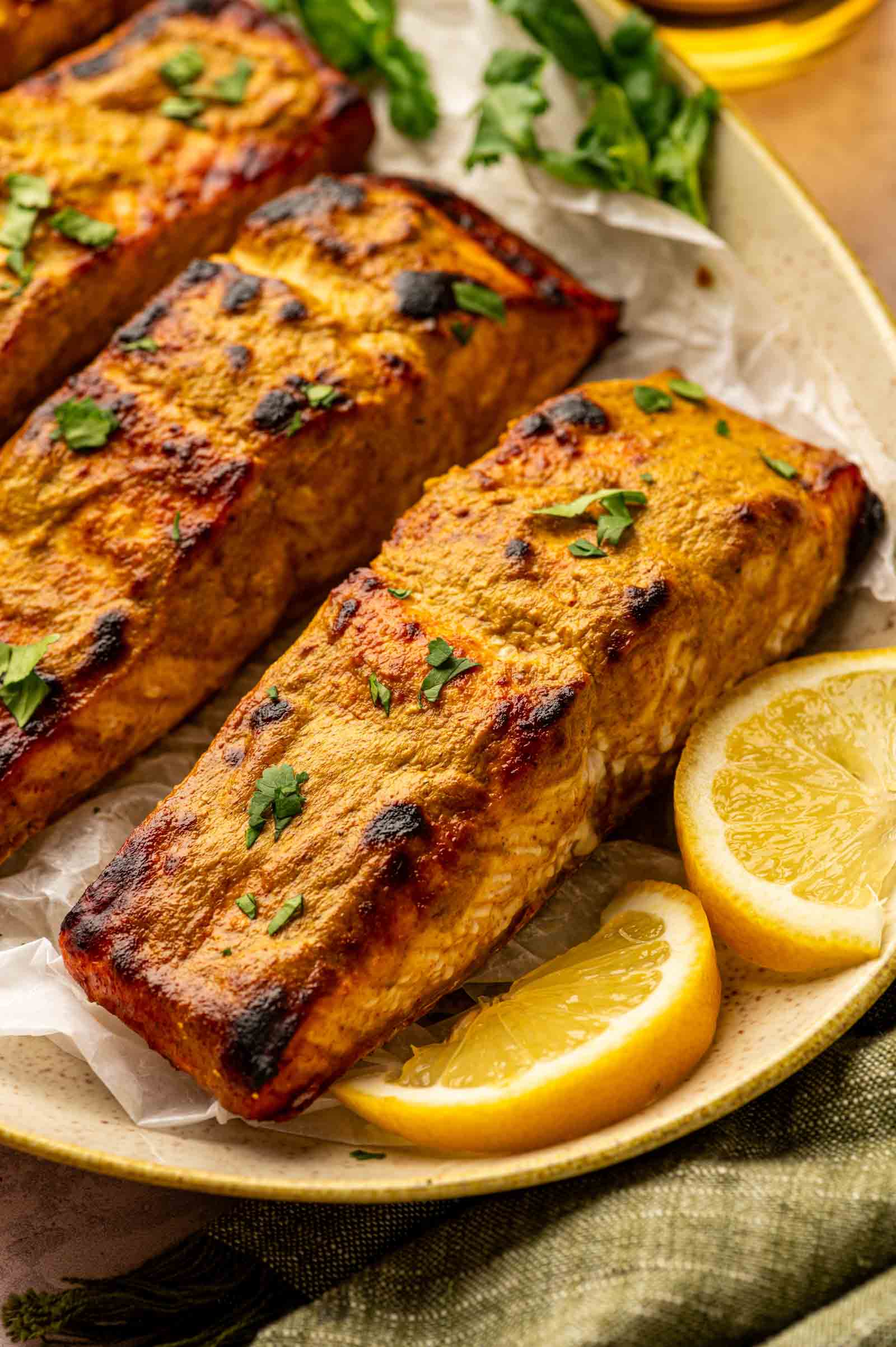
And at the end, the broiler blasts the heat for three to four minutes, but you need to watch it. That’s when the marinade blisters and the edges turn a proper golden brown. All that’s left is to serve this with all your favorite sites and it’s good to go.
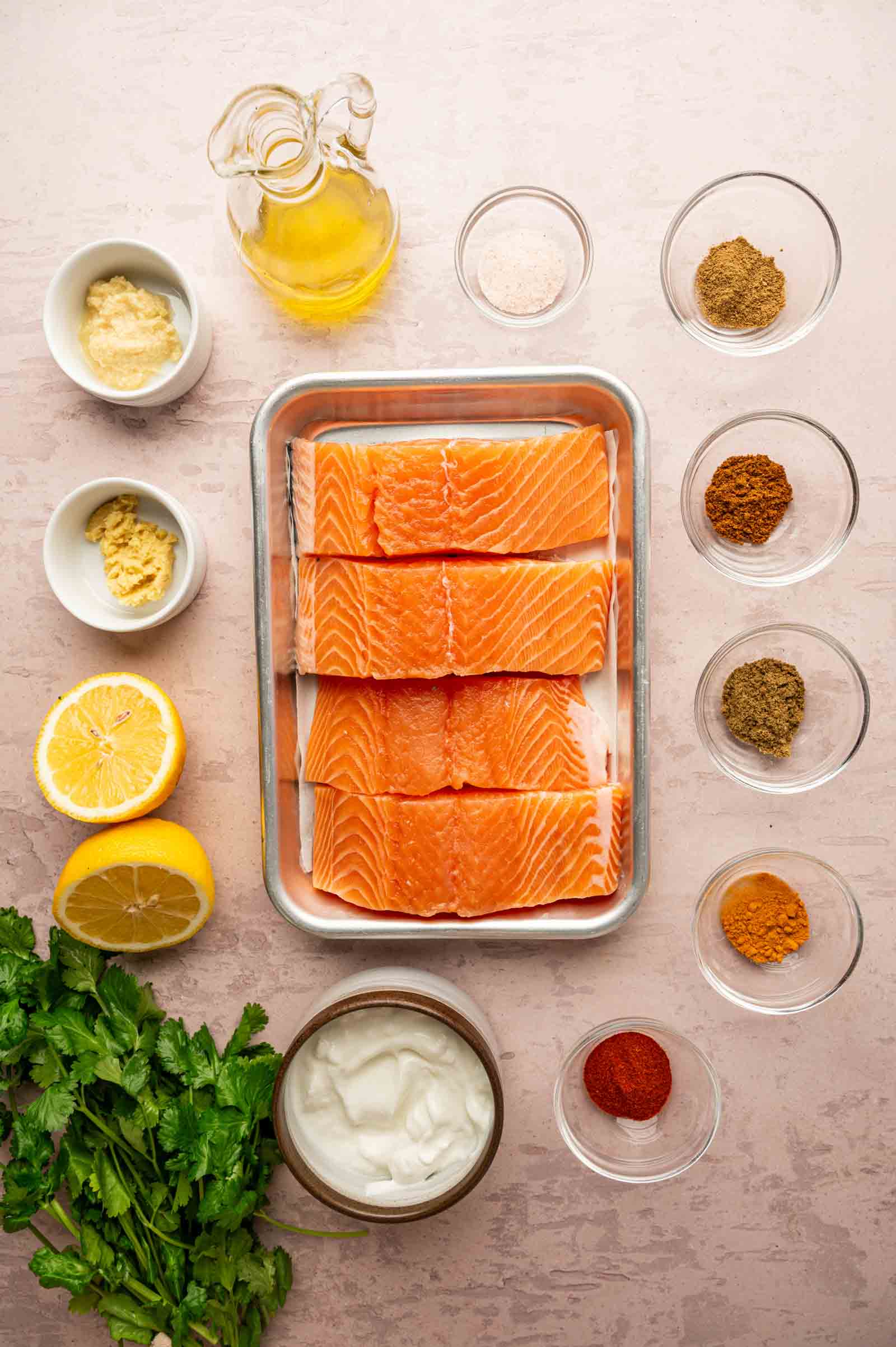
🔪 Ingredients for Tandoori Salmon
For the Marinade:
- Plain Greek yogurt: full-fat works best. The protein sets against the heat and creates the lacquered crust that gives this dish its character.
- Lemon juice: just enough acidity to brighten the marinade without making it overly tart. Fresh-squeezed if you have it.
- Fresh ginger, grated: use a microplane so it integrates into the marinade rather than leaving fibrous bits behind.
- Garlic, grated: same approach. Microplane gives you a paste-like texture that coats evenly.
- Kashmiri chili powder: this is what creates the deep rust-orange color. Milder than cayenne by a significant margin. Smoked paprika is a workable substitute but the visual impact is softer.
- Ground coriander, garam masala, ground cumin, ground turmeric: the classic tandoori spice stack. Store-bought ground spices work fine for a weeknight version; whole spices ground fresh will be noticeably more aromatic if you want to commit.
- Kosher salt
- Vegetable oil: helps the marinade cling to the fish and contributes to the char at the edges.
For the Salmon:
- Skin-on salmon fillets: 5-6 oz each, about 1 inch thick in the thickest part. Skin-on holds together better on the rack and protects the bottom from drying out during the high-heat cook. As always, we buy Copper River Alaskan Salmon every chance we get.
- Lemon wedges and fresh cilantro: to serve.
Equipment
A wire rack set inside a foil-lined baking sheet is the setup that makes this recipe work the way it should. The rack lifts the salmon off the pan surface and allows hot air to circulate under the fish, preventing the steam buildup that kills the char on the bottom edge.
📝 How to Make Tandoori Salmon
- Pat the salmon fillets thoroughly dry with paper towels before doing anything else. Dry fish browns; wet fish steams. Any surface moisture fights the marinade and prevents the char from forming.
- In a large bowl, whisk together the yogurt, lemon juice, grated ginger, grated garlic, Kashmiri chili powder, coriander, garam masala, kosher salt, cumin, turmeric, and vegetable oil until the marinade is smooth and uniformly colored — it should look deep orange-red all the way through, not streaky.
- Add the salmon fillets and turn to coat, pressing the marinade gently into the top and sides of each piece. Avoid loading a thick coating onto the skin side. Marinate for 15-30 minutes at room temperature, or up to 4 hours refrigerated. Beyond 4 hours, the acid begins softening the texture of the fish.
- Heat the oven to 425°F. Line a baking sheet with foil and set a wire rack on top. Lightly grease the rack with cooking spray or a thin wipe of oil.
- Arrange the salmon on the rack skin-side down, leaving space between fillets. Bake on the center rack for 10-12 minutes, depending on thickness, until the flesh is just opaque in the center when checked with a fork. At 1 inch thick, 10 minutes hits medium (125-130°F internal); 12 minutes pushes toward well-done (135-145°F).
- Switch the oven to broil (high) and move the rack to the second-highest position if it isn’t already there. Broil 3-4 minutes, watching closely, until the marinade blisters and develops dark, charred spots at the edges. Pull it the moment spots go from dark brown to black.
- Rest 2 minutes. Finish with a squeeze of fresh lemon and scattered chopped cilantro.
🔄 Substitutions
- Kashmiri chili powder → smoked paprika: same quantity works. The color shifts to brownish-red rather than rust-orange, and the visual impact is softer, but the heat level is comparable.
- Kashmiri chili powder → cayenne: use about half the called-for quantity. Cayenne is significantly hotter, and a 1:1 swap will overpower the other spices.
- Full-fat Greek yogurt → regular plain yogurt: the marinade is thinner and clings less aggressively, so you get a lighter crust.
- Lemon juice → lime juice: works cleanly. The citrus note shifts slightly but actually complements the spice profile well. No timing change needed.
- Salmon fillets → salmon steaks: increase total bake time to 13-15 minutes due to the bone section adding thickness. Broil step stays the same.
- Fresh ginger → ginger paste: same quantity, nearly identical flavor in a marinade. No texture issue here.
💡 Meat Nerd Tips
- The wire rack is not optional. Salmon directly on foil traps steam under the skin. The rack changes the airflow around the fillet enough that the bottom edge actually chars instead of sitting in its own liquid.
- Marinate for 30 minutes if you can spare it. The flavor difference between 15 and 30 minutes is real. The yogurt needs time to carry the spices into the top layer of the fish — 15 minutes is the floor, not the sweet spot.
- Pull at the low end of the temp range. At 125-130°F internal, the fish still has a silky center. Carryover heat brings it up another 3-5°F during the rest. USDA recommends 145°F for fully cooked fish.
- Let the oven fully preheat before the salmon goes in. A 425°F oven that’s been heating for only 5 minutes isn’t at 425°F yet. Give it a full 10 minutes, and the immediate high heat starts forming the crust from the first second the fish hits the rack.
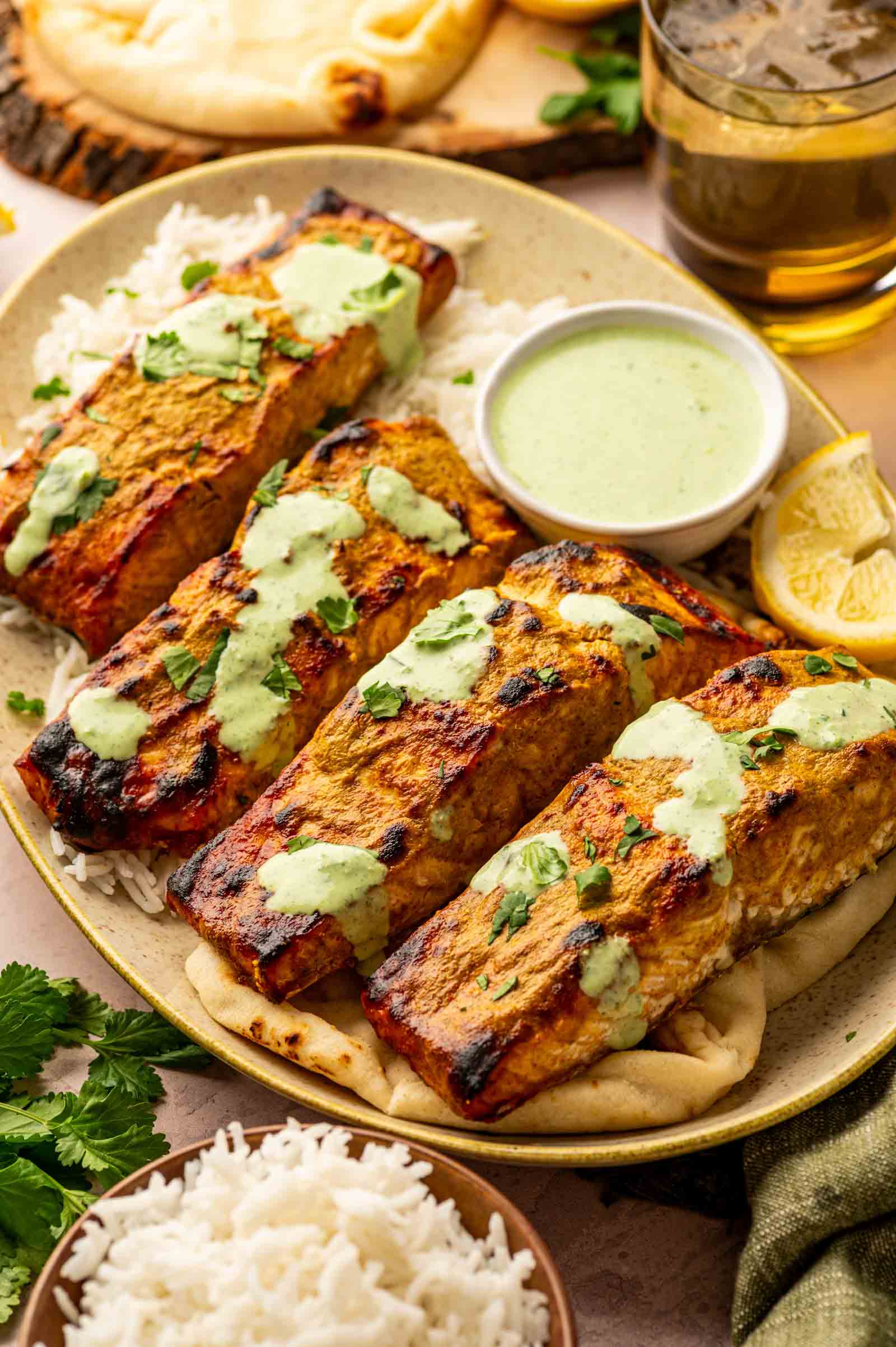
🍽️ What to Serve with Tandoori Salmon
- Cilantro Yogurt Sauce: the cool, garlicky sauce cuts through the charred spice in a way that makes every bite reset — this pairing is why the sauce post exists.
- Basmati rice: the neutral, slightly floral base keeps the focus on the salmon without competing. Plain basmati, nothing added.
- Naan: use it to scoop up the sauce and catch any marinade that drips off the rack. Not optional if you have access to good naan.
- Lamb Kabobs: put both on the table together, and you have a full spread without a lot of extra effort. The spice profiles are perfect to sit side by side.
- Hot Honey Salmon Caesar Salad: if you want to see what else salmon does when you push it toward bold flavors, this one is a sharp contrast in the other direction.
🧊 Leftovers and Storage
- Store cooled salmon in an airtight container in the refrigerator for up to 3 days.
- Reheat gently: 300°F oven for 8-10 minutes, or covered skillet over medium-low for 4-5 minutes with a splash of water. Microwave dries it out fast.
- Cold leftover tandoori salmon flakes well over rice bowls or into tacos the next day. It holds up better than most cooked fish because the yogurt marinade keeps the flesh from drying out completely.
Have you tried this recipe? Do us a favor and rate the recipe card with the ⭐ ⭐ ⭐ ⭐ ⭐ and drop a comment to help out the next reader.
This is the salmon that transports you somewhere far away and exotic. Bold spice, yogurt marinade, and a broiler finish that earns the word tandoori.
Prevent your screen from going to sleep
Make the Marinade
-
Whisk yogurt, lemon juice, ginger, garlic, Kashmiri chili, coriander, garam masala, salt, cumin, turmeric, and oil until smooth and uniformly colored.
- Do not marinate beyond 4 hours: acid softens the fish texture.
- Pull at 125-130°F: carryover brings it up 3-5°F during rest.
- A wire rack is essential for char – don’t skip it.
How to Grill Tandoori Salmon
Gas Grill Preheat all burners to high for 10 minutes, then drop to medium-high. Oil the grates well – the yogurt marinade will stick to anything less than a properly seasoned, screaming-hot grate. Place salmon skin-side down over direct heat, close the lid, and cook 4-5 minutes. Flip once, then cook for 2-3 minutes on the flesh side until it reaches 125-130°F internal. The closed lid creates radiant heat from above and below (that’s your tandoor effect on gas grills). Don’t move the fish until it releases cleanly on its own.
Charcoal Grill Build a two-zone fire with a full chimney of lump charcoal banked to one side. Let it ash over fully before the salmon goes on — you want glowing coals, not flames, or the marinade burns before the fish cooks through. Add a chunk of apple or cherry wood directly on the coals for smoke that the oven version can’t touch. Cook skin-side down over direct heat 4-5 minutes with the lid on, flip, 2-3 minutes. The char will be more aggressive than the broiler version. That’s the point. Pull at 125-130°F.
Kamado (Big Green Egg, Kamado Joe, etc.) Run your grill hot – around 500°F with the direct heat setup and cast iron grates if you have them. The ceramic holds heat so evenly that the cook is faster than it feels: 3-4 minutes skin-side down, flip, 2-3 minutes. Don’t lift the lid to check until the 3-minute mark, or you’ll bleed the heat. The kamado runs moister than a standard charcoal setup, which keeps the interior silky even at high heat. A single chunk of fruitwood on the lump is enough — the spice marinade is doing most of the flavor work and you don’t want smoke competing with Kashmiri chili.
All grill methods: marinate the same way (15-30 min, max 4 hours), pat dry before coating, skip the wire rack. The grates are doing that job. Cilantro yogurt sauce still goes on cold right after the rest – the contrast is even more important when the char is this aggressive.
Serving: 1serving | Calories: 265kcal | Carbohydrates: 2g | Protein: 37g | Fat: 11g | Saturated Fat: 2g | Polyunsaturated Fat: 4g | Monounsaturated Fat: 4g | Trans Fat: 0.003g | Cholesterol: 95mg | Sodium: 667mg | Potassium: 899mg | Fiber: 1g | Sugar: 1g | Vitamin A: 76IU | Vitamin C: 2mg | Calcium: 59mg | Iron: 2mg
Quick Summary
Tandoori salmon is oven-roasted salmon with a yogurt-and-spice marinade that chars under the broiler to replicate the look and flavor of a tandoor finish. The Kashmiri chili is what gives it the color, and the broil step is what separates this from baked salmon. Pull the fish at 125-130°F internal and let it carry over — it continues cooking after it leaves the oven.
❓ FAQs
Kashmiri chili powder is mild by spice standards — the dish reads as warm and complex rather than hot. Heat level is fully in your control. Add a pinch of cayenne to the marinade to push it, or pull back on the Kashmiri chili if you want it milder.
The fish should flake apart easily when pressed with a fork and look opaque through the thickest part. Using a thermometer: 125-130°F is medium and still silky at the center; 135-145°F is fully cooked through. The broil step puts dark spots on the surface, so use internal temp rather than surface color to judge doneness.
Yes — thaw the fillets fully in the refrigerator overnight and pat them very dry before marinating. Frozen salmon tends to release more moisture during cooking, so thorough drying matters more here than it does with fresh fish.