



Swiss steak is the dinner that makes the whole house smell like Sunday, minus the guesswork. A cheap cut of round steak gets seared hard, then braised low and slow in a rich tomato gravy until a fork slides through it clean. No shredding, no dry edges. Just old-school comfort food you’ll want on repeat.
We’ve tested this in the Girl Carnivore kitchen with top and bottom round steak, and the trick that changes everything is pulling it at 195 to 205°F instead of eyeballing tenderness. That’s the range where the collagen in round steak breaks down completely without the meat falling apart on you, so you get clean slices in rich gravy, not a pile of shreds.
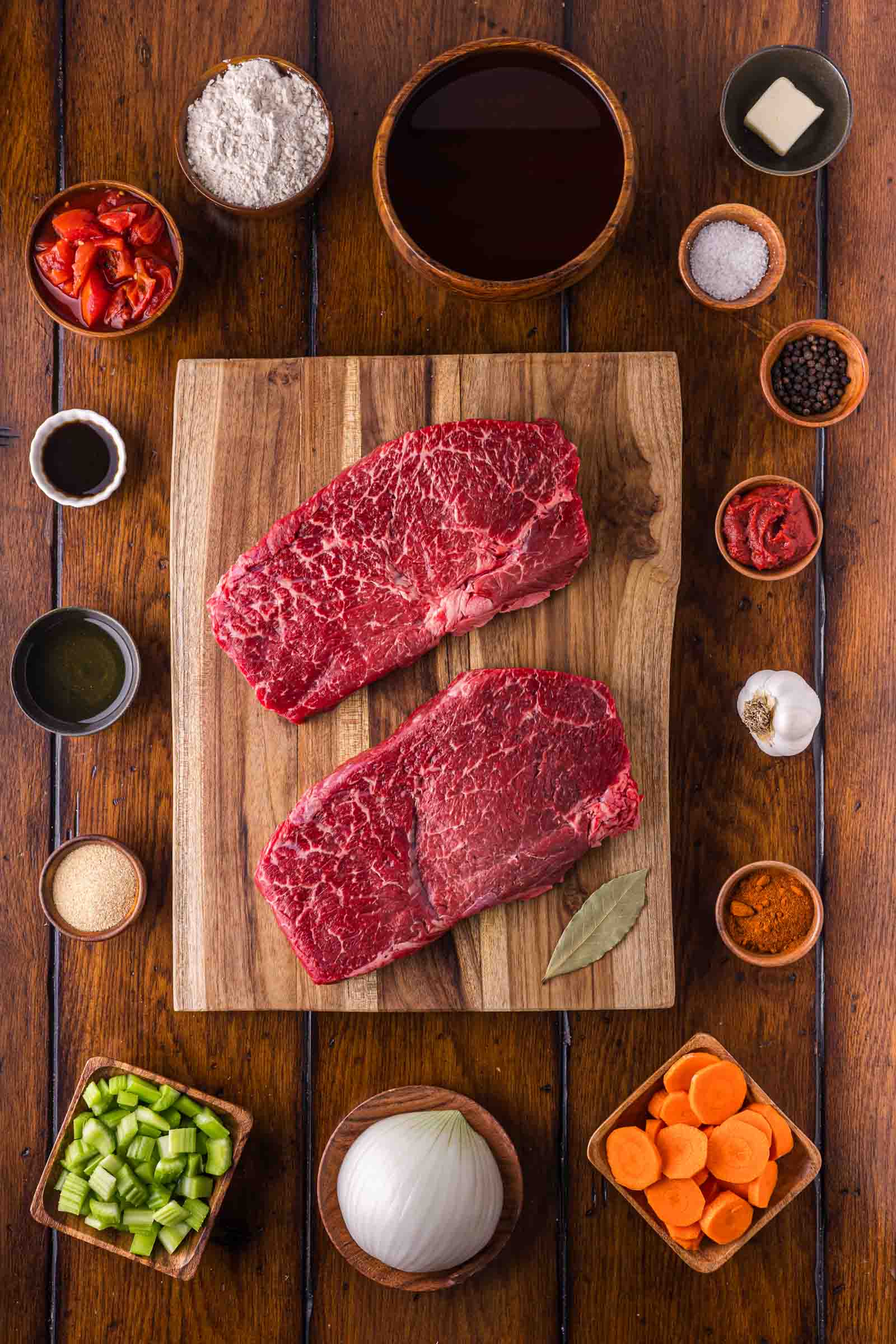
🔪 Ingredients for Swiss Steak
For the Steaks
- Top or bottom round steak, sliced ½ to ¾ inch thick. Ask the butcher counter for round steak, not cube steak, which comes pre-tenderized.
- Kosher salt and freshly ground black pepper
- All-purpose flour
- Paprika
- Garlic powder
For the Braise
- Oil, avocado oil holds up best to a hard sear
- Unsalted butter
- Yellow onion
- Carrots, peeled
- Celery
- Garlic cloves
- Tomato paste
- Fire-roasted crushed tomatoes, the char adds depth plain crushed tomatoes don’t have
- Beef broth
- Worcestershire sauce
- Bay leaf
Garnish
Equipment
You need a Dutch oven or a high-walled cast-iron skillet with a tight-fitting lid, since this goes straight from a stovetop sear into the oven to braise. A meat mallet is worth having too. Pounding the steaks to an even thickness is what keeps them cooking at the same rate, so you don’t end up with one end tough and the other falling apart.
📝 How to Make Swiss Steak
- Prep the steaks. Pat the steaks dry and pound with a meat mallet until an even ½ inch thick. Season all over with salt and pepper. Preheat the oven to 325°F with a rack in the middle-low position.
- Dredge. Whisk together the flour, paprika, and garlic powder. Dredge the steaks in the mixture and shake off the excess.
- Sear the steaks. Heat the oil and butter in the Dutch oven over medium-high heat. Sear the steaks in batches until deep golden brown on both sides, 3 to 4 minutes per side. Set aside.
- Cook the vegetables. Add more oil if the pot looks dry, then add the onion, carrot, and celery. Cook 6 to 8 minutes, until soft and starting to brown. Add the garlic and cook 1 minute, until fragrant.
- Make the tomato base. Stir in the tomato paste and cook about 2 minutes, until it darkens slightly. Slowly pour in the beef broth, scraping up any browned bits stuck to the bottom of the pot.
- Add the tomatoes and seasonings. Stir in the fire-roasted tomatoes, Worcestershire sauce, and bay leaf.
- Return the steaks. Nestle the steaks back into the pot, submerging them about halfway in the sauce.
- Braise in the oven. Cover tightly and bake 1¾ to 2½ hours, until the steaks reach 195 to 205°F internal temperature and a fork slides in and out cleanly, but the meat still holds its shape.
- Finish the gravy. Remove the steaks. Simmer the sauce uncovered over medium heat 5 to 10 minutes if it needs to thicken. Season with salt and pepper to taste.
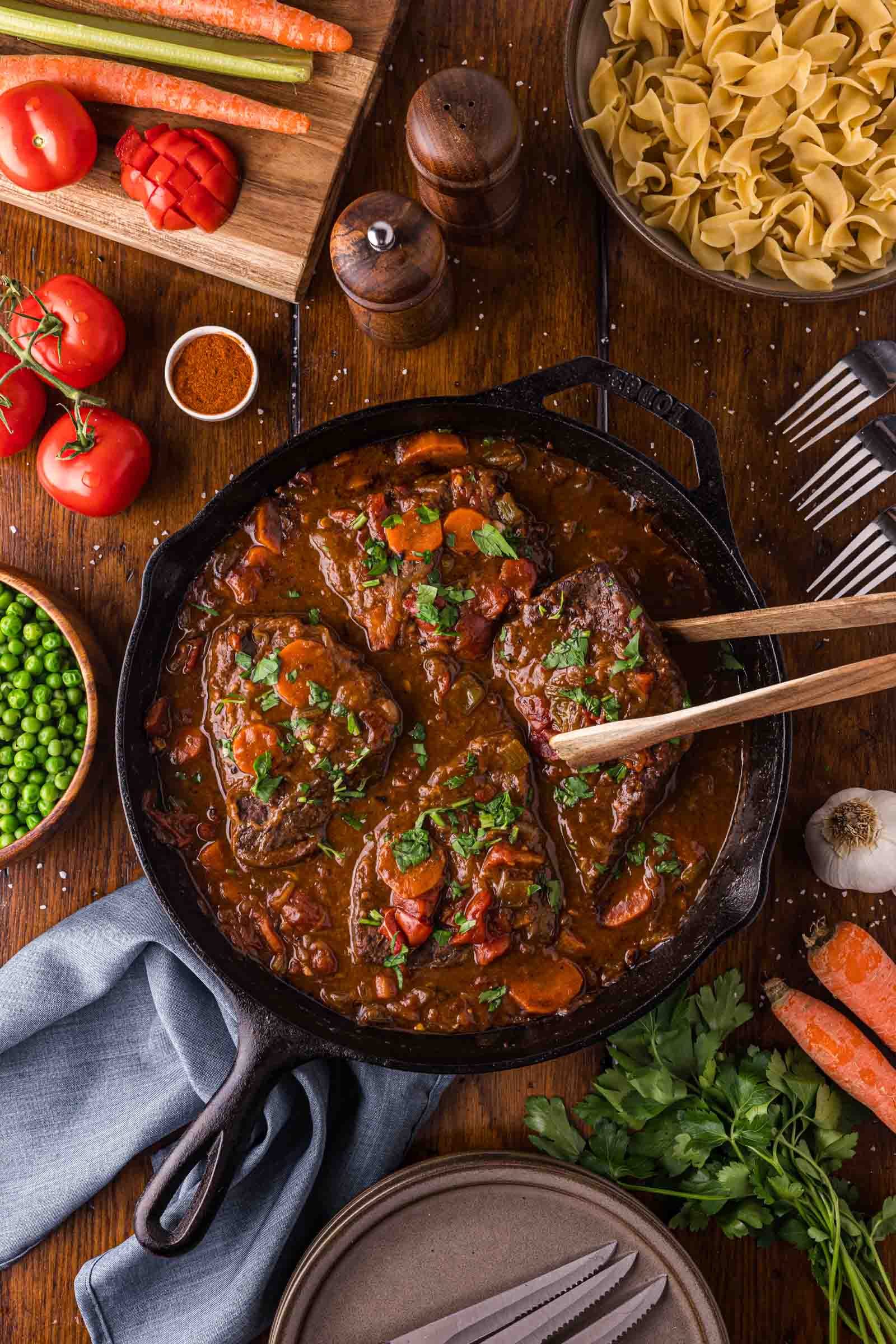
- Serve. Spoon the tomato gravy over the steaks and garnish with parsley. Serve with mashed potatoes, egg noodles, or rice, plus green beans or peas.
🔄 Substitutions
- Chuck roast, sliced into steaks, for round steak. Similar collagen breakdown and a similar braise time, but the extra marbling in chuck makes for a slightly richer gravy. If you’d rather skip slicing a roast yourself, our Dutch Oven Pot Roast uses this same low-and-slow method on a whole cut.
- Regular crushed tomatoes for fire-roasted. Works fine. The gravy loses a little smoky depth, so add an extra pinch of paprika to the dredge to make up for it.
- Bone broth for beef broth. A one-for-one swap that gives the gravy slightly more body.
- All oil for the oil-and-butter combo. Fine for the sear. You lose a bit of richness up front, but it won’t affect the final gravy much since butter isn’t part of the braise itself.
💡 Meat Nerd Tips
- Don’t rush the sear. That deep golden crust is where the fond comes from, and the fond is what seasons the entire gravy. A pan that isn’t hot enough steams the steaks instead of browning them, and you lose that base flavor for good. Country Fried Steak with Brown Onion Gravy is the same dredge-sear-gravy build on a cheap cut.
- Round steak isn’t cube steak. Cube steak comes pre-tenderized at the store with a blade. This recipe wants plain round steak, because you’re doing the tenderizing yourself with the mallet and the long braise, and pre-tenderized meat will overcook and fall apart before it’s done.
- Go by the fork, not the clock. Start checking at the 1¾-hour mark and every 15 minutes after. Ovens and cuts vary enough that the thermometer and a fork should make the call, not the timer.
- Make it a day ahead. Swiss steak reheats better than it starts. An overnight rest in the fridge lets the gravy thicken and the flavors round out.
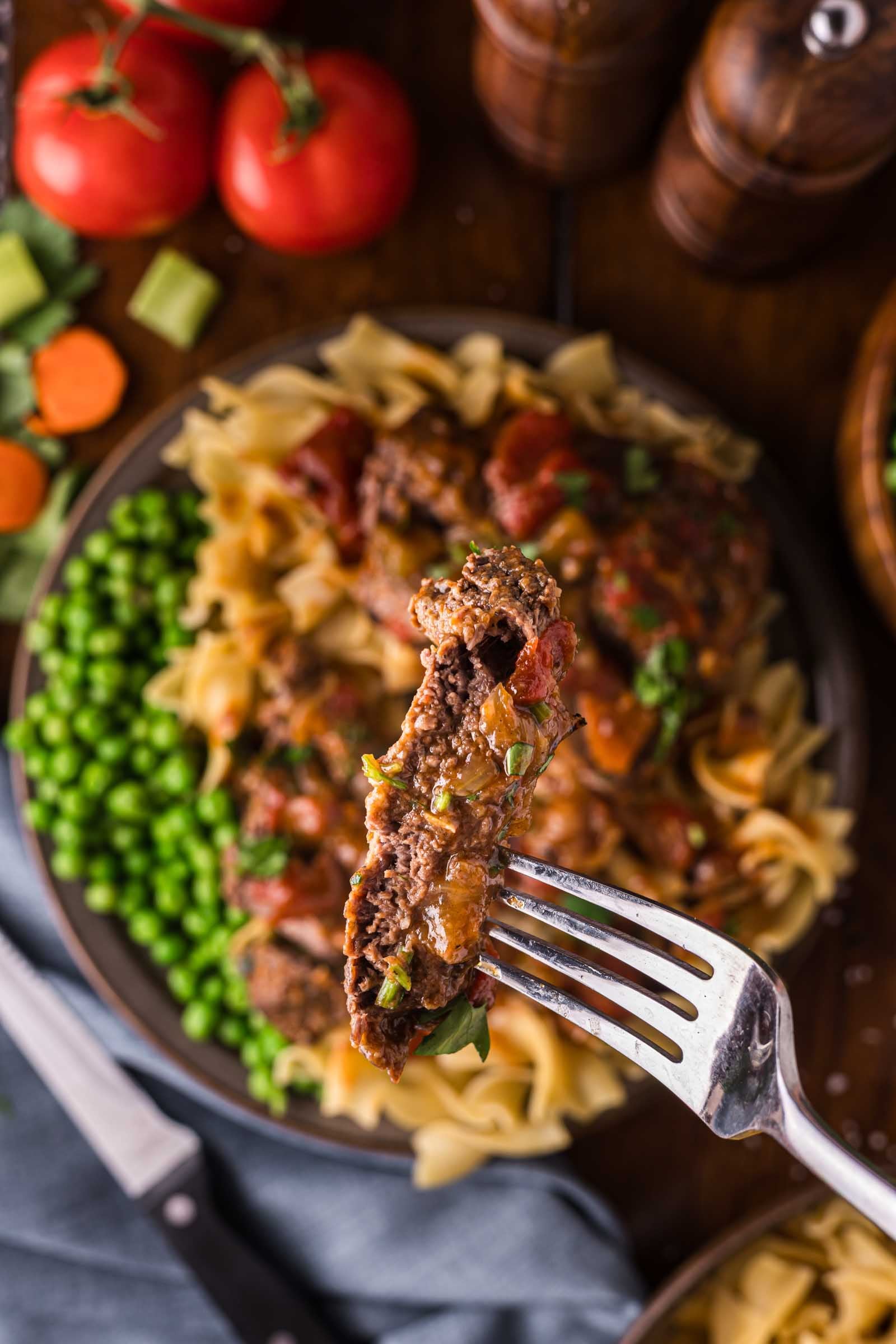
🍽️ What to Serve with Swiss Steak
- Mashed potatoes, for soaking up the gravy
- Buttered egg noodles, classic diner-style
- White rice, for a lighter base
- Green beans or peas, to cut the richness
🧊 Leftovers and Storage
- Fridge: Store steaks and gravy together in an airtight container up to 4 days.
- Freezer: Freeze up to 3 months. Thaw overnight in the fridge before reheating.
- Reheat: Covered, in a 300°F oven or over low heat on the stovetop, until warmed through. Add a splash of beef broth if the gravy has thickened too much.
Round steak braised low in a fire-roasted tomato gravy until a fork slides straight through it. You get clean slices and a gravy thick enough to coat egg noodles, from the cheapest thing in the case.
Prevent your screen from going to sleep
Dredge
-
Mix the flour, paprika, and garlic powder. Dredge the steaks in the flour mixture and shake off excess flour.
Cook the vegetables
-
Add 1 more tablespoon of the oil if needed, and add the onion, carrot, and celery. Cook 6–8 minutes until soft and beginning to brown. Add garlic and cook for 1 minute, until fragrant.
Add tomatoes and seasonings.
Serve
-
Spoon the tomato gravy over the steaks. Garnish with minced fresh parsley. Serve with mashed potatoes, egg noodles, or rice and green beans or peas.
- Ask for round steak at the butcher counter, not cube steak. Cube steak comes through the machine pre-tenderized and goes to shreds in a braise this long.
- Pull at temperature, not by look. Round steak looks done around 180°F and isn’t. It needs 195–205°F for the collagen to let go.
- Leftovers reheat well in the gravy, covered, in a low oven.
Serving: 1serving | Calories: 373kcal | Carbohydrates: 15g | Protein: 46g | Fat: 13g | Saturated Fat: 4g | Polyunsaturated Fat: 1g | Monounsaturated Fat: 7g | Trans Fat: 0.1g | Cholesterol: 120mg | Sodium: 450mg | Potassium: 971mg | Fiber: 2g | Sugar: 3g | Vitamin A: 3764IU | Vitamin C: 5mg | Calcium: 73mg | Iron: 5mg
Quick Summary
Swiss steak is round steak, dredged and seared, then braised low and slow in a rich tomato gravy until it’s fork-tender without falling apart. The one number that matters is 195 to 205°F internal, since that’s where the collagen breaks down clean. It sits right alongside our Classic Salisbury Steak with Mushroom Gravy in our weeknight comfort food rotation, and if you want more of this kind of low-and-slow beef, browse our full beef recipes collection.
❓ FAQs
It’s a braised steak in tomato gravy, and despite the name, it has nothing to do with Switzerland. “Swissing” refers to the pounding and tenderizing technique, the same term used for rolling and flattening fabric. It’s an American diner classic, not an import.
Top or bottom round is the classic choice, since it’s lean, affordable, and has enough connective tissue to turn tender in a long braise. Chuck roast, sliced into steaks, works too, and gives you a slightly richer result.
It usually hasn’t braised long enough. Round steak needs to hit 195 to 205°F internal for the collagen to fully break down, well past the temperatures you’d use for a steak you’re searing to medium-rare. If it’s still tough, it needs more time in the oven, not less.
Yes. Sear the steaks and make the sauce on the stovetop first for the flavor the browning adds, then transfer everything to a slow cooker on low for 6 to 8 hours, until fork-tender.
Swiss steak uses a whole piece of round steak braised in tomato gravy. Salisbury steak is a ground beef patty, usually served in a mushroom or onion gravy. Both are diner classics, but they’re made from completely different cuts.