



This gluten free spaghetti recipe is based on a traditional pasta dish from Umbria called spaghetti col rancetto. I used gluten-free pasta but of course you can use normal pasta too. The tasty spaghetti sauce comprises pancetta, peeled tomatoes, onion, pecorino and marjoram.
This is a quick and easy recipe, with just a handful of simple ingredients. Perfect for busy weeknights.
History of spaghetti col rancetto.
Spaghetti col rancetto is an ancient pasta recipe from Umbria particularly the area between Assisi and Spoleto. It’s a simple yet hearty dish which originated in what Italians call ‘la cucina povera’, meaning the kitchen of the poor.
The recipe gets its name from the word ‘rancido’, meaning rancid. It refers to the fact that in the past Umbrians made this recipe with aged pancetta that actually tasted a little rancid. Today, Italians use regular pancetta, of course.
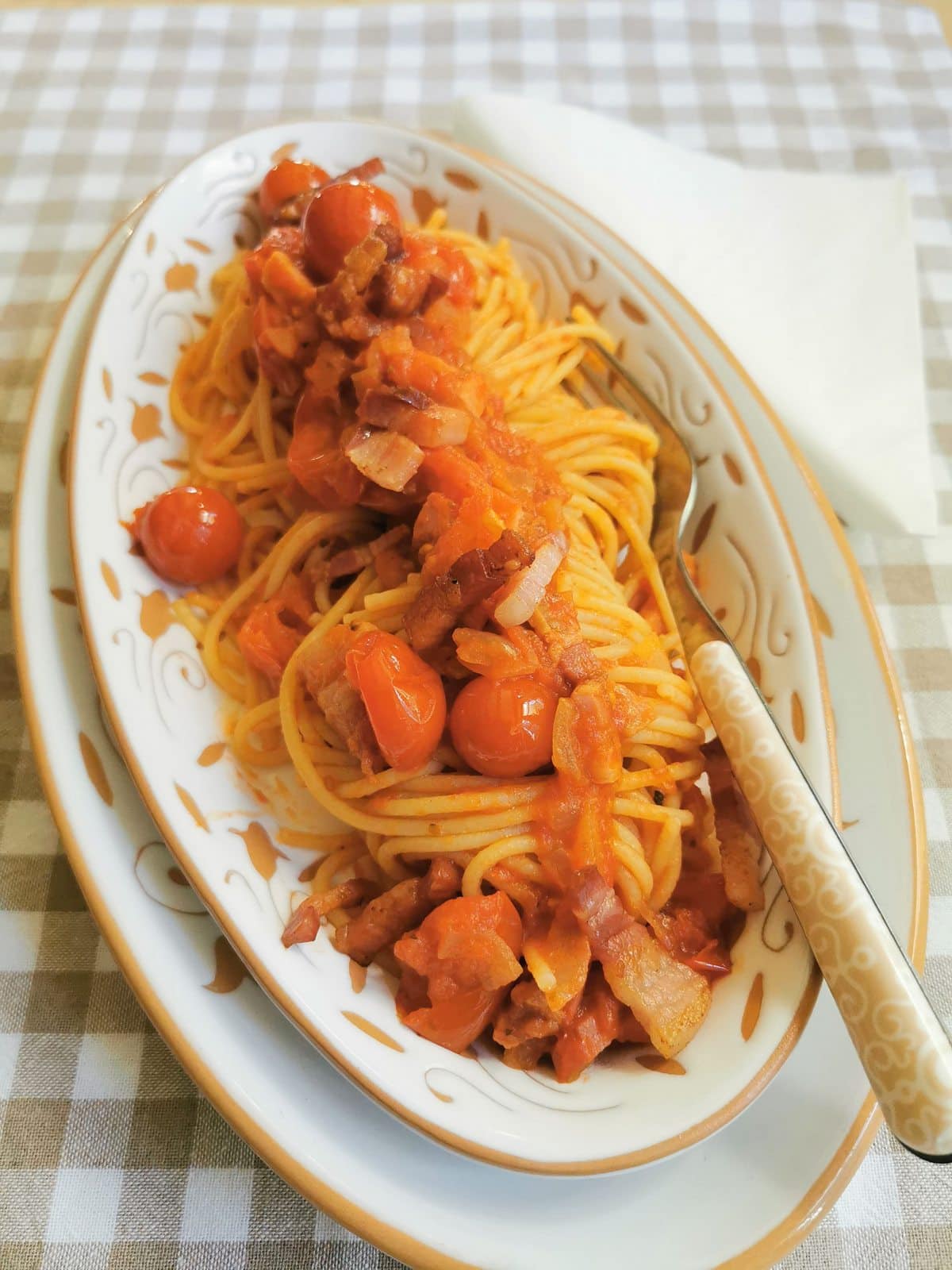
However, using old pancetta was historically born out of a need to avoid wasting the little food available. The rationale in those days was to recycle as much as possible, in keeping with the popular saying ‘del maiale non si butta via niente’,nothing of the pig goes to waste. This was especially true for the rural population whose diet was mostly based on their own livestock or harvest or what they could forage.
The pasta for col rancetto.
Traditionally, Umbrians use regional ‘umbricelli’ or ‘strangozzi’ for col rancetto., Umbricelli is a fresh handmade flour and water pasta which looks like thick spaghetti and is similar to Tuscan pici. Strangozzi is similar but the pasta strands have a rectangular cross section. However, nowadays many people use normal spaghetti for this recipe.
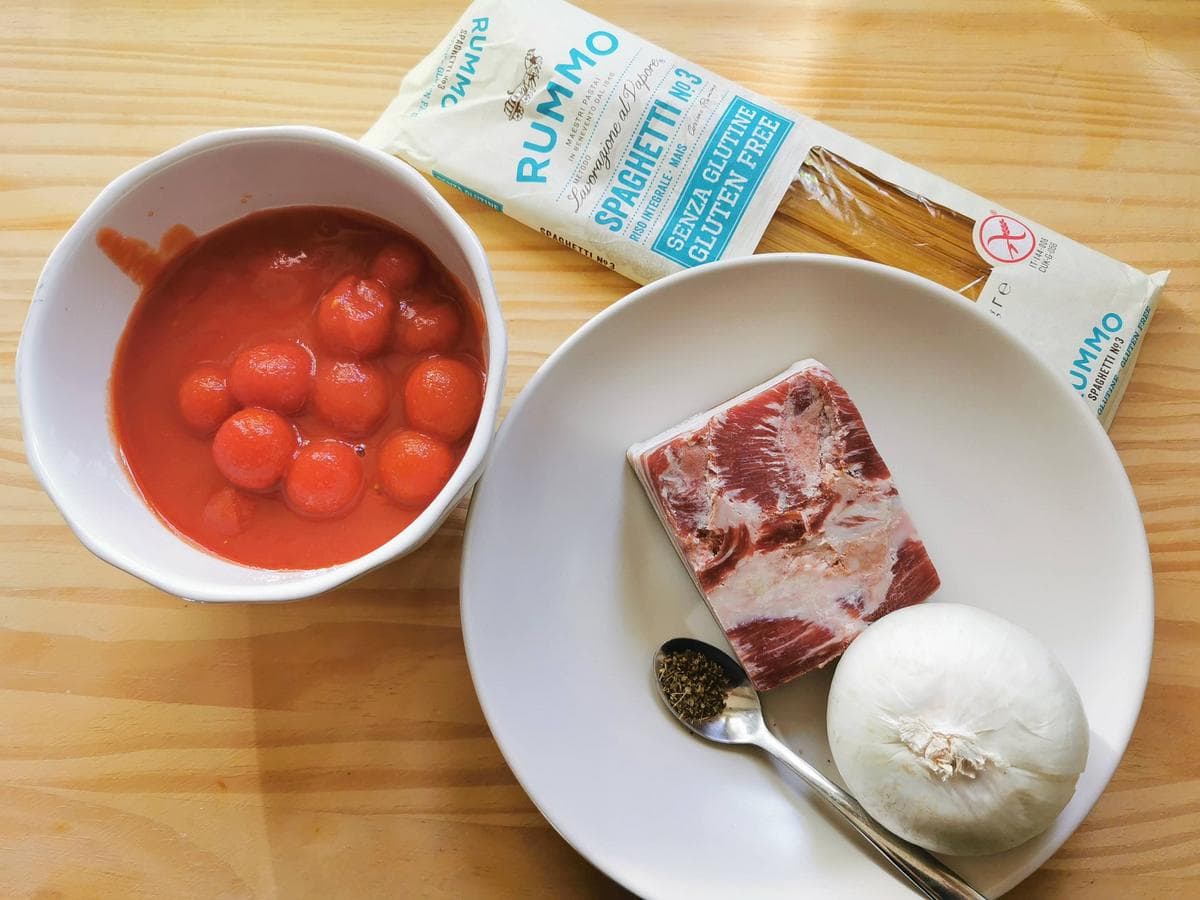
Gluten-free spaghetti.
Like many Italian dried pasta recipes, this spaghetti col rancetto is easily made gluten free because you only need to use a gluten free pasta. I chose Rummo gluten free spaghetti because Italians consider this favorite brand one of the top 5 gluten free pasta producers (links to Italian site).
What I really liked about this gluten free spaghetti is that it held its shape during cooking and had a flavor and texture that’s similar to normal spaghetti.
What I didn’t like about this gluten free spaghetti was that the pasta didn’t remain intact for leftovers. It broke into pieces. Plus, the spaghetti cooking water can’t be used to thicken the sauce because, of course, it has no starch. But, these are issues that I have come across with other gluten-free pasta brands and shapes.
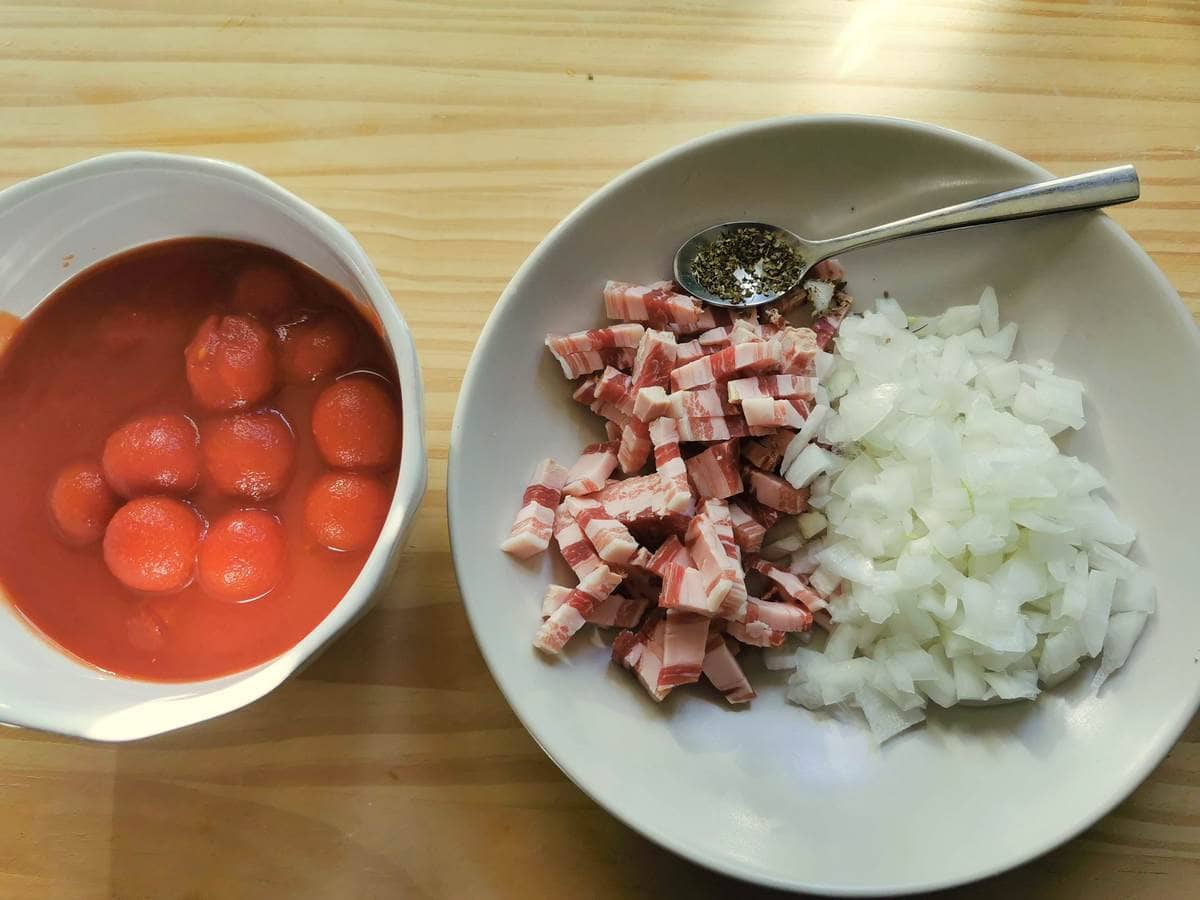
Ingredients for this gluten free spaghetti recipe.
Apart from the spaghetti, the rest of the ingredients are…
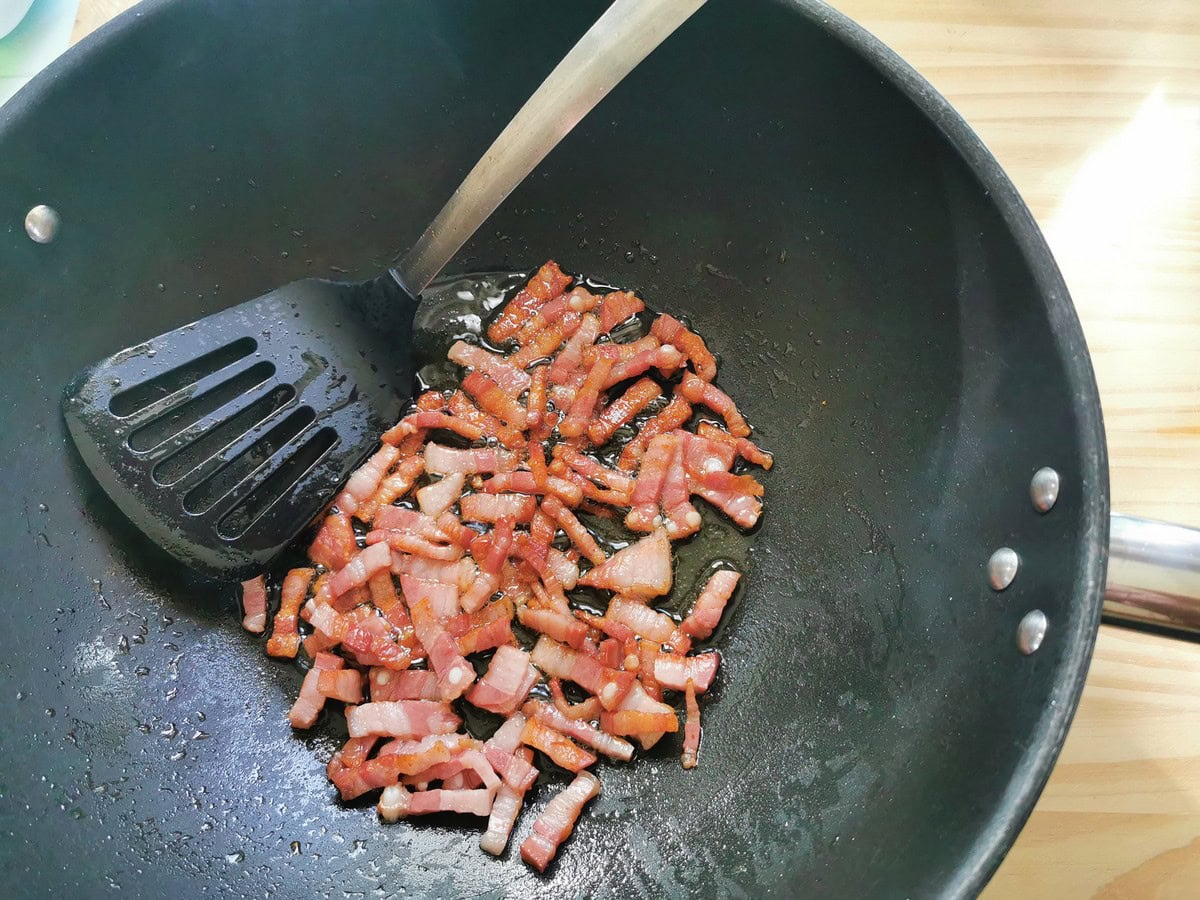
Pancetta : Italian recipes for col rancetto call for pancetta tesa. This is cured pork belly shaped in a flat slab. When cut into slices it looks like bacon although it tastes different. It’s the best type of pancetta to cut into cubes or lardons for cooking. You can often find it ready cut or sliced.
Tomatoes: I used canned peeled cherry tomatoes. You can also use canned peeled whole sauce tomatoes or fresh tomatoes which you will need to peel yourself and cut into small pieces.
Onion: The recipe I followed called for a white onion. But, a yellow onion is fine too.
Marjoram: Fresh marjoram is more traditional, but I used dried as it’s not the season for fresh herbs. You could also use fresh basil instead.
Pecorino: Pecorino is mixed into the cooked spaghetti and sauce before serving and sprinkled on the ready portions if required. You can use Parmigiano (fresh parmesan cheese) instead. However, pecorino has a saltier sharper flavor. Leave the cheese out for a dairy free version.
Optional ingredients: Although not traditional this pancetta and tomato pasta recipe is delicious spiced up a little bit with some red pepper flakes (peperoncino) or enriched with a splash of red wine.
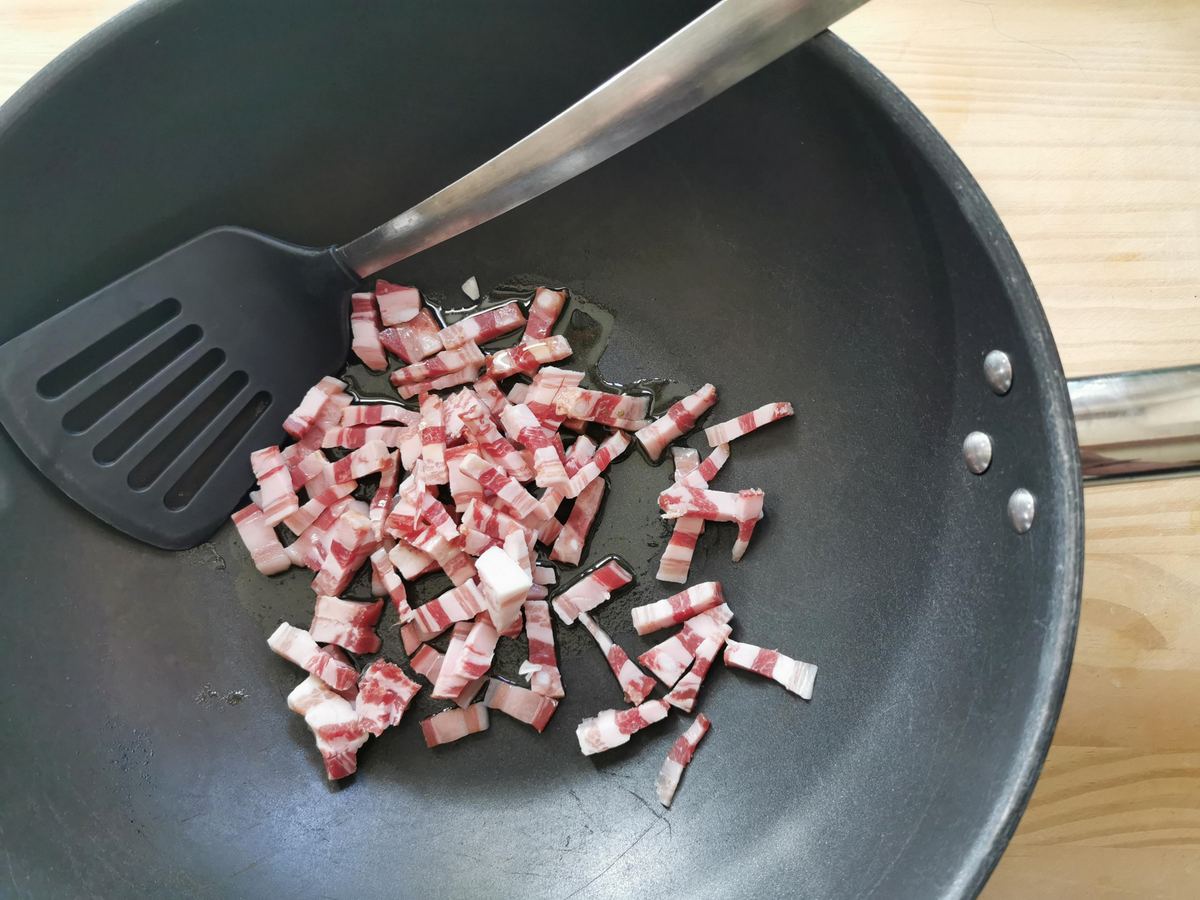
Step by step instructions.
1) First peel and finely chop the onion and dice the pancetta
2) Heat a large skillet or large frying pan and brown the pancetta for 4-5 minutes. You can add a little olive oil, but the pancetta renders quite a lot of fat on its own. Once golden and crispy, transfer the pancetta to a bowl lined with kitchen paper to drain the excess grease but leave the fat in the pan.
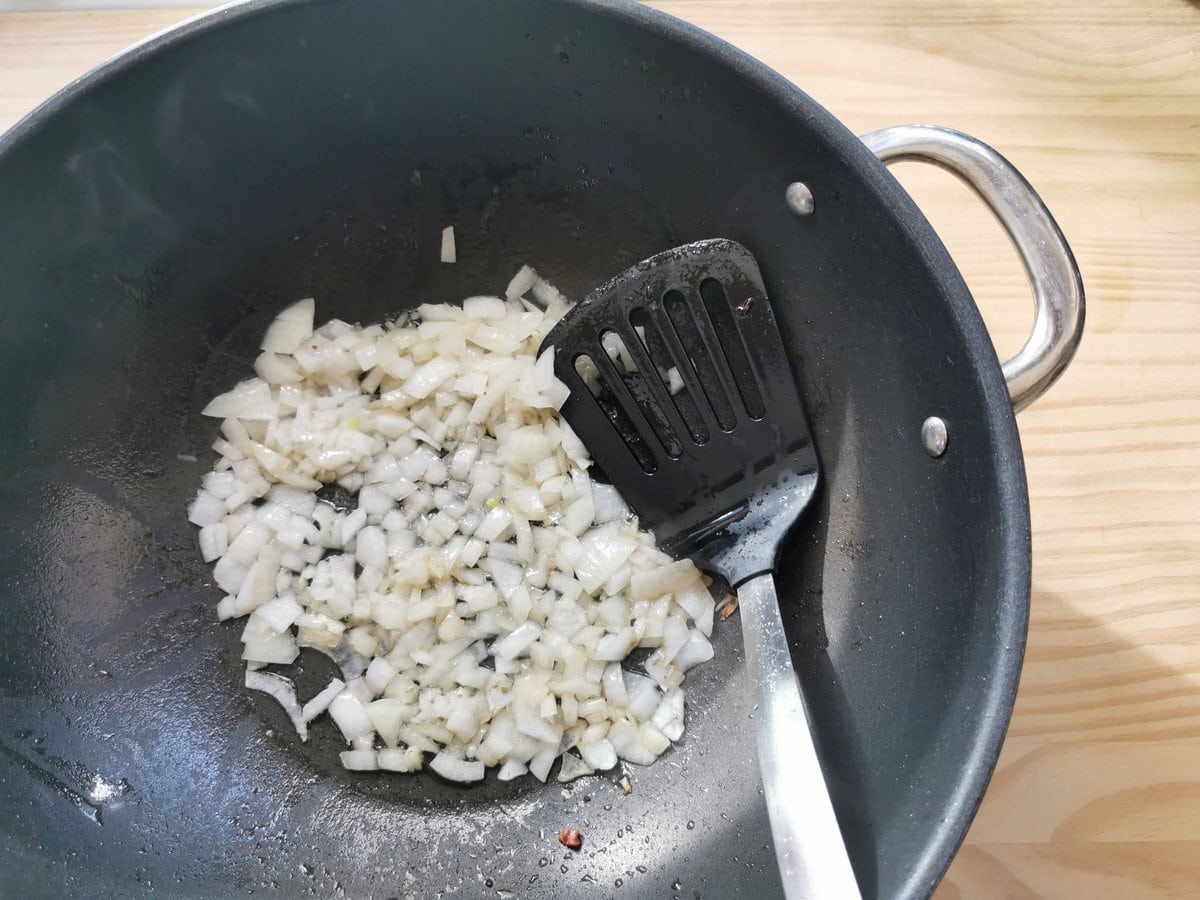
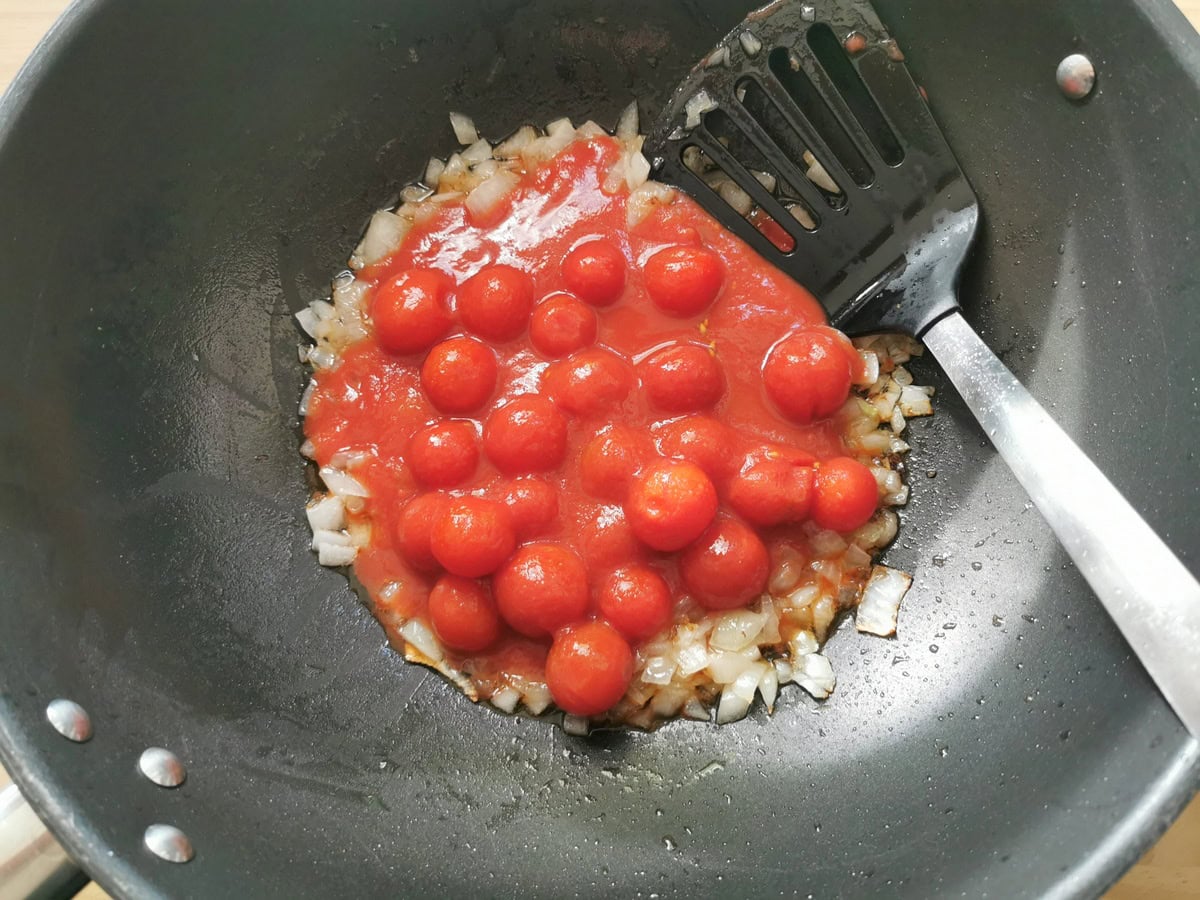
3) Sauté the onion in the pancetta fat over a medium heat for 1-2 minutes. Once the onion softens, add the peeled tomatoes and simmer for about 10 minutes over a low heat with the lid on.
4) Bring a large pot of water to a boil over a medium-high heat for the gf pasta. Add salt once it starts to boil and bring to the boil again.
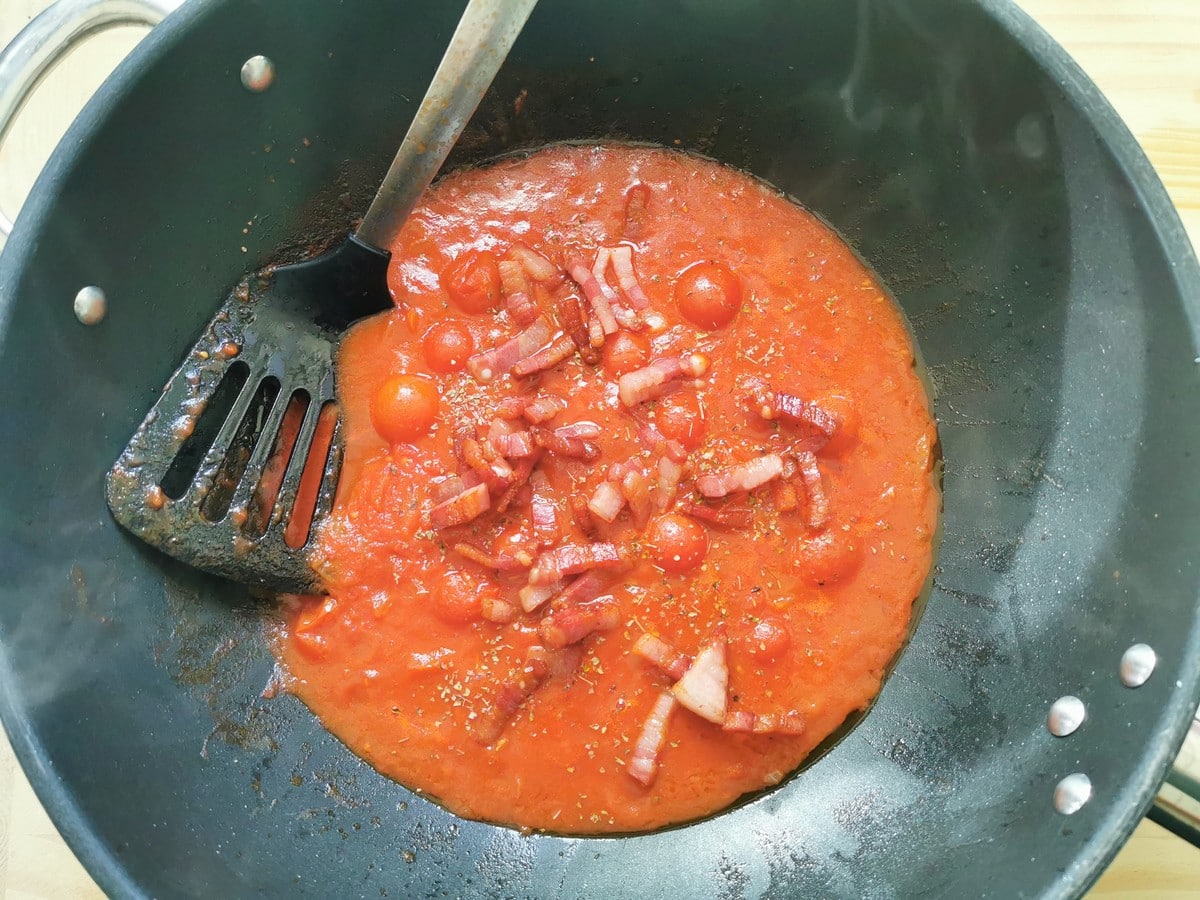
5) Add some of the pancetta, the marjoram and salt and black pepper to the tomato sauce.
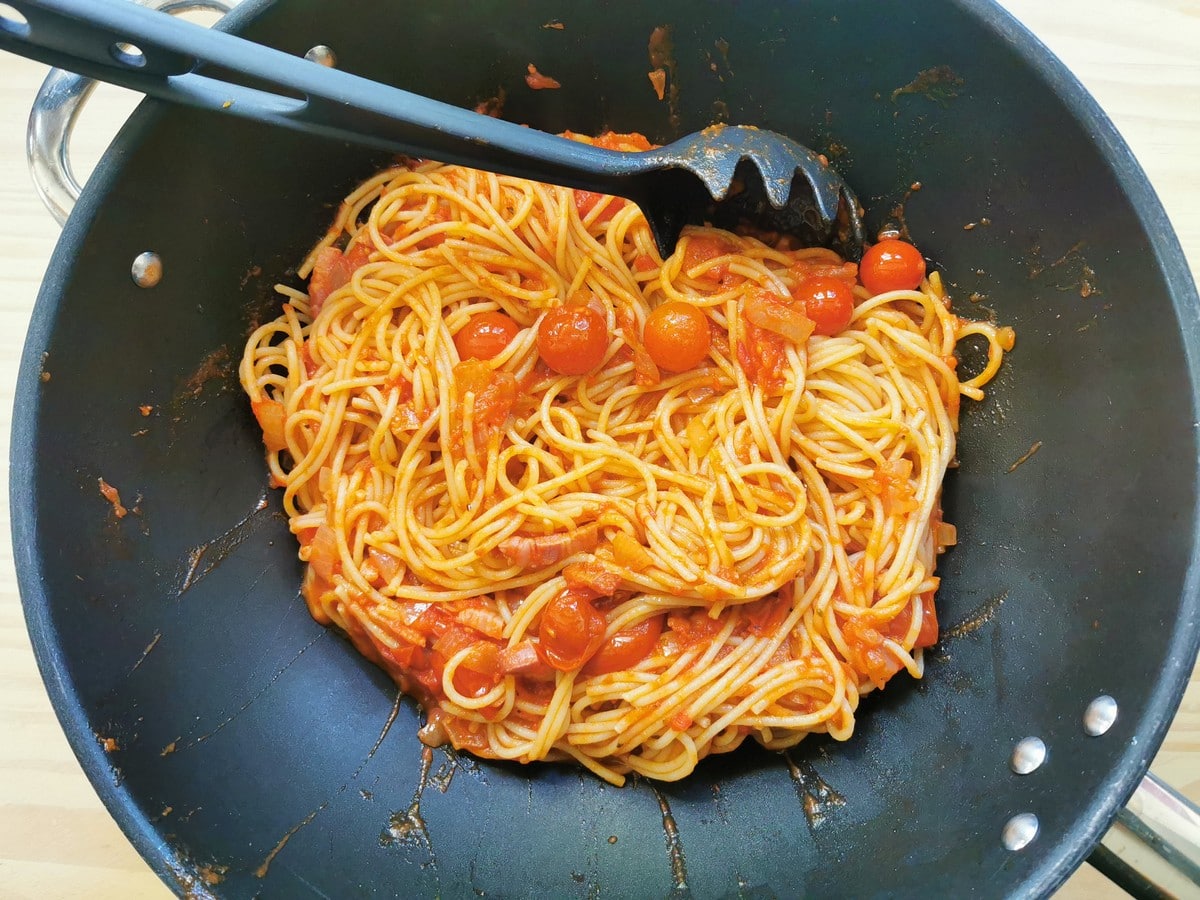

6) Cook the spaghetti al dente and drain it. Put it into the sauce and stir to combine. Finally, remove the pan from the heat and stir in the grated Pecorino.
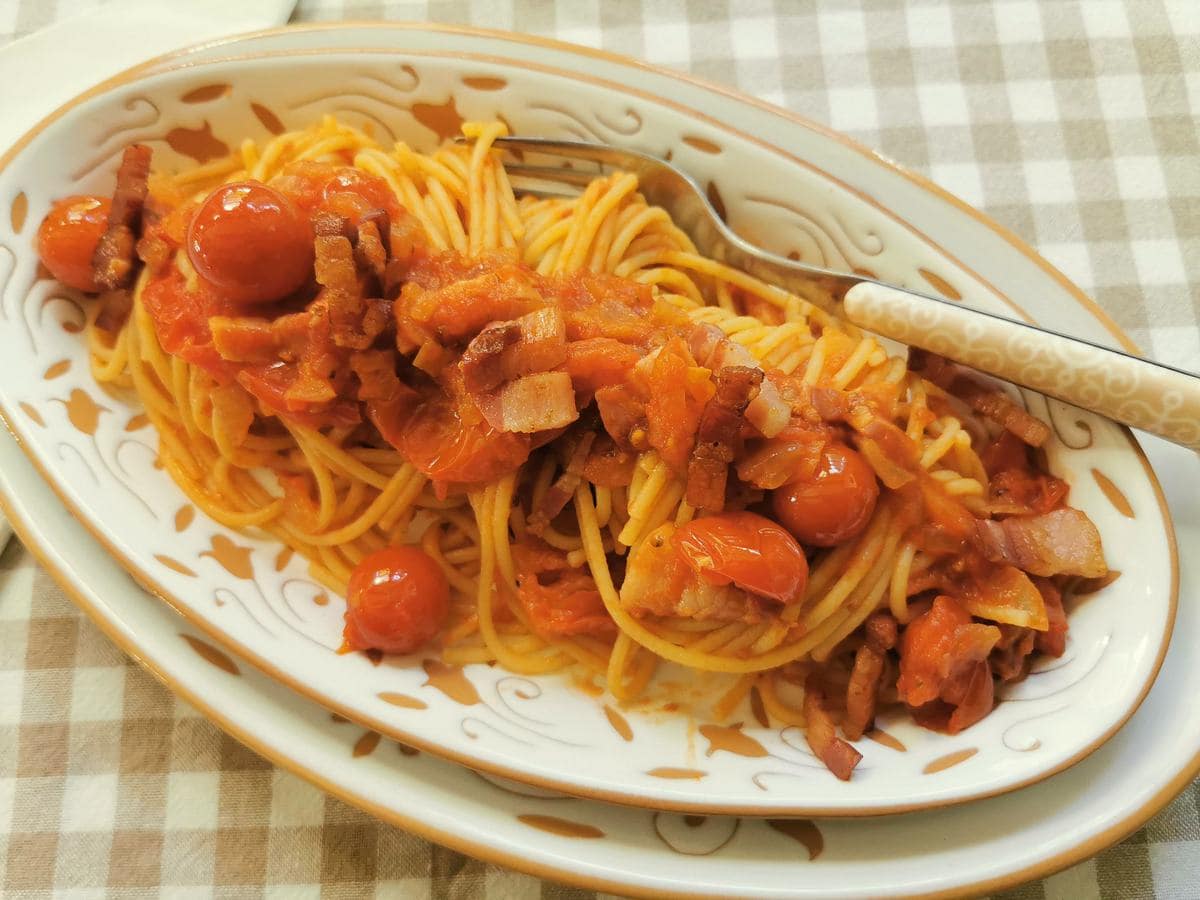
When you serve your gluten free spaghetti with pancetta and tomato sauce col rancetto, divide the remaining pancetta between the portions as well as some more grated pecorino if required.
Other easily made gluten free spaghetti recipes.
The fact that people with celiac disease or a gluten intolerance on a gluten-free diet can still enjoy a plate of spaghetti is super positive. 20 years ago, very few pasta makers produced gluten free pasta. Nowadays, there’s much more choice including different shapes made with different ingredients such as rice flour, corn flour and legumes..
Among the other spaghetti recipes on The Pasta Project that can easily be made with gluten free spaghetti without compromising the flavor of the dish are spaghetti alla puttanesca, spaghetti alla checca and linguine alla vongole (see links below). Of course, there are more. Gluten free spaghetti would be great with a Bolognese sauce too.
Pin for later.
Tips for the best gluten free spaghetti recipe.
When you want to make a gluten free spaghetti recipe, the best thing is to look for a gluten free pasta sauce recipe that has strong flavors which cover the taste of the pasta.
You also need to avoid recipes that make use of the pasta cooking water to emulsify the sauce like cacio e pepe. Normal pasta cooking water is starchy, gluten free pasta water is not.
Pasta recipes that cook the pasta risotto style such as spaghetti all’assassina don’t work with gluten free pasta because the starch from the pasta is needed to thicken the sauce and gluten free spaghetti may break into pieces when cooked this way.
What to do with leftovers.
Of course, you can keep leftover spaghetti col rancetto in a sealed container in the fridge and reheat in the microwave or oven. However, the spaghetti may break into pieces if you are using gluten free pasta.
If you have a lot of sauce, set some aside or freeze it for another day and cook just the amount of pasta you will need for one meal. You might like to change things up and use a different pasta shape with the leftover sauce.
Let me know what you think.
Whether you use gluten free spaghetti or normal spaghetti, I’m sure you’ll love this Umbrian recipe. It doesn’t take long to make and calls for just 4 main ingredients but it is super tasty. This recipe will definitely become one of your favorite weeknight dinners.
If you make this spaghetti recipe, I’d love to hear how it turns out and if you liked it. Please leave a comment here on the blog or on The Pasta Project Facebook page.
Looking forward to hearing from you!
Buon appetito!
Gluten free spaghetti with pancetta and tomato sauce (col rancetto)

This gluten-free spaghetti recipe is based on a traditional recipe from Umbria called spaghetti col rancetto. I used gluten-free pasta but of course you can use normal pasta too. The tasty spaghetti sauce comprises pancetta, peeled tomatoes, onion, pecorino and marjoram. This is a quick and easy recipe, with just a handful of simple ingredients. Perfect for busy weeknights.
Ingredients
- 14 ounces gluten-free spaghetti or normal spaghetti
- 7 ounces pancetta diced
- 2 ounces Pecorino cheese or parmesan
- 1 pound canned peeled tomatoes I used canned cherry tomatoes
- 1 white onion peeled and chopped
- 1 teaspoon dried marjoram or fresh sprig
- salt for pasta and to taste
- freshly ground black pepper. to taste
Instructions
-
First peel and finely chop the onion and dice the pancetta
-
Heat a large skillet or large frying pan and brown the pancetta for 4-5 minutes. You can add a little olive oil, but the pancetta renders quite a lot of fat on its own.
-
Once golden and crispy, transfer the pancetta to a bowl lined with kitchen paper to drain the excess grease but leave the fat in the pan.
-
Sauté the onion in the pancetta fat over a medium heat for 1-2 minutes. Once the onion softens, add the peeled tomatoes and simmer for about 10 minutes over a low heat with the lid on.
-
Meanwhile, bring a large pot of water to a boil over a medium-high heat for the gf pasta. Add salt once it starts to boil and bring to the boil again.
-
Add some of the pancetta, the marjoram and salt and black pepper to the tomato sauce.
-
Cook the spaghetti al dente and drain it. Put it into the sauce and stir to combine. Finally, remove the pan from the heat and stir in the grated Pecorino.
-
Serve your gluten free spaghetti col rancetto, after adding the remaining pancetta to each portion as well as some more grated pecorino if required.
Prevent your screen from going dark
Notes
See main content for what to do with leftovers.
Nutrition
Calories: 634kcalCarbohydrates: 80gProtein: 21gFat: 26gSaturated Fat: 10gPolyunsaturated Fat: 3gMonounsaturated Fat: 10gTrans Fat: 0.1gCholesterol: 47mgSodium: 716mgPotassium: 364mgFiber: 3gSugar: 4gVitamin A: 212IUVitamin C: 13mgCalcium: 195mgIron: 3mg
Other recipes for gluten free spaghetti.
Reader Interactions