



Shrimp are the best deal in the seafood case, and we’ll die on that hill. More flavor per dollar than lobster, faster to cook than crab, and nothing else in the shellfish world takes on big, bold flavor the way shrimp do. It’s why they can stand up to all the butter and Worcestershire in our New Orleans BBQ shrimp, and it’s why they’re the whole show here, soaking up garlic and smoked paprika oil like they were built for the job.
The skill that matters most in this recipe (and any shrimp recipe….) is the one nobody wants to talk about: deveining. For whole shell-on shrimp like these, use a toothpick slipped under the second shell segment to lift the vein out without stripping the shell, and it’s worth learning because it never stops being useful. Even when the bag from the market says peeled and deveined, check. We’ve opened enough of those bags to know that the label is merely a request…
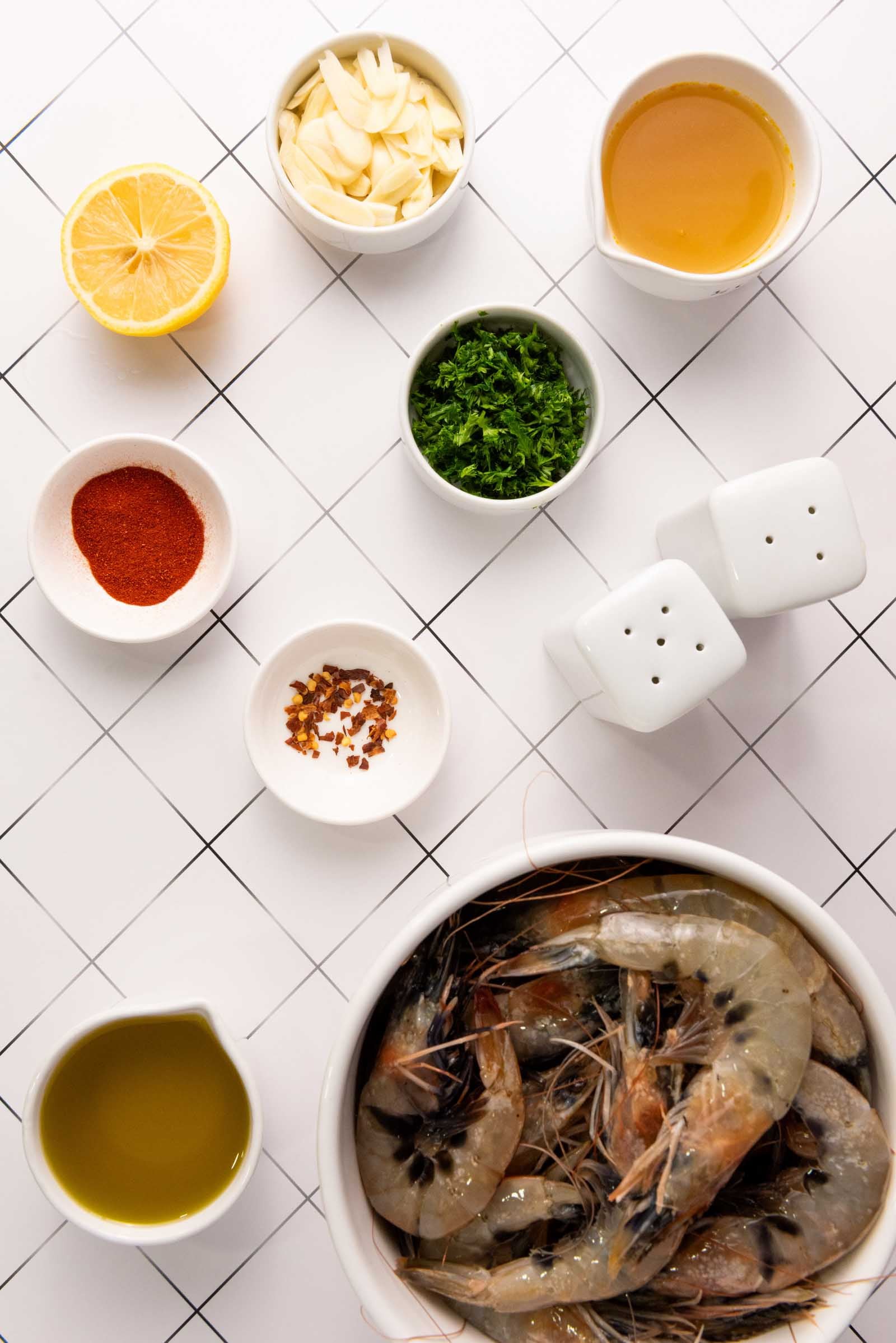
🔪 Ingredients for Gambas al Ajillo
- Large whole shrimp, head-on and shell-on: 16/20 count or larger. The head contains fat that renders into the sauce as the shrimp cooks; smaller shrimp overcook before that can happen.
- Extra virgin olive oil: This is the sauce. Use one you’d pour on bread, not the jug you save for sautéing.
- Garlic cloves, thinly sliced: Thin and even so they toast at the same rate and get crispy edges without burning.
- Smoked paprika: Goes into the cold oil first, not on the shrimp. This is the step every other gambas al ajillo recipe skips.
- Red chili flakes: Listed as optional, but the heat is part of the classic profile. Start with less if you want control over the burn.
- Low-sodium chicken or vegetable stock: Deglazes the pan and gives the sauce body without turning it heavy.
- Fresh parsley, chopped: Finishing brightness only. Add it off heat.
- Lemon juice: Just enough acid to lift everything at the end.
- Kosher salt
- Crusty bread, for serving: Not optional. The sauce exists to be soaked up.
Equipment
- 12-inch skillet: Needs to hold 2 lbs of shrimp in a single layer. Crowd them and they steam instead of sear.
- Kitchen shears: For trimming the antennae and the sharp point on the head before cooking.
📝 How to Make Gambas al Ajillo
- Prep the shrimp. Rinse under cold water. Use kitchen shears to trim the antennae and the sharp point on the head. Use a toothpick at the second shell segment to lift and pull out the vein without removing the shell. Pat completely dry and set aside. Wet shrimp drop the oil temperature and steam instead of sear.
- Bloom the paprika. Pour the olive oil into a cold skillet. Add the smoked paprika. Bring both to medium heat together, stirring gently, until the oil is warm and deeply rust-colored, about 1 to 2 minutes. Starting in cold oil is not optional; paprika scorches in seconds in hot oil and the bitterness can’t be fixed.
- Toast the garlic. Add the sliced garlic and chili flakes (if using) to the paprika oil. Cook, stirring occasionally, until the garlic is golden and fragrant, about 2 minutes. Golden is the target. Brown means bitter, and there’s no coming back from it.
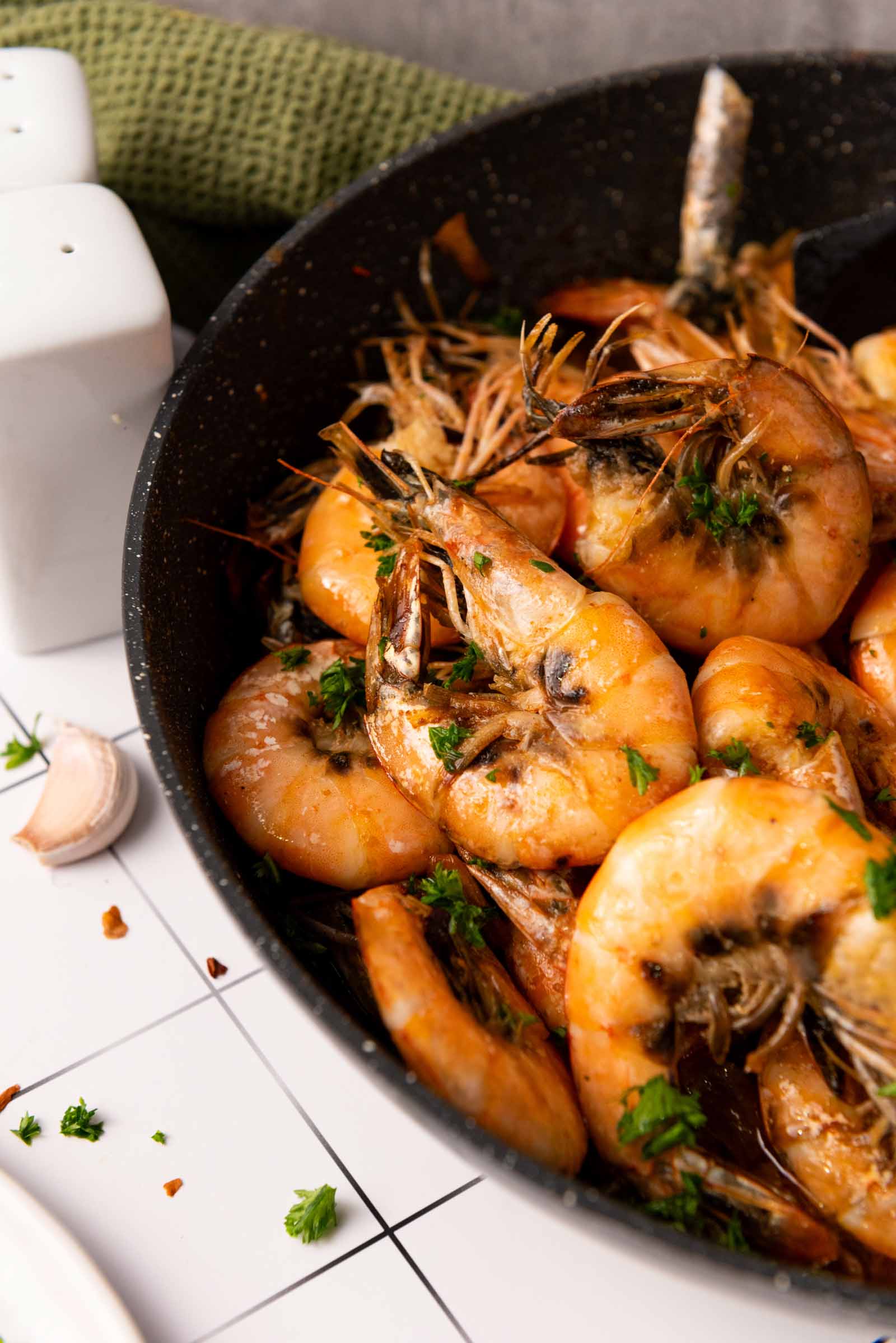
- Add the shrimp. Lay the shrimp into the skillet in a single layer. Season with kosher salt. Cook without moving for 3 to 4 minutes, until the underside is pink and you can see the oil in the pan has deepened in color from the rendered head fat.
- Flip and deglaze. Flip the shrimp and pour in the stock immediately. Let it bubble and reduce for 1 to 2 minutes. The shrimp should be bright pink and fully opaque throughout with no translucency at the thickest part.
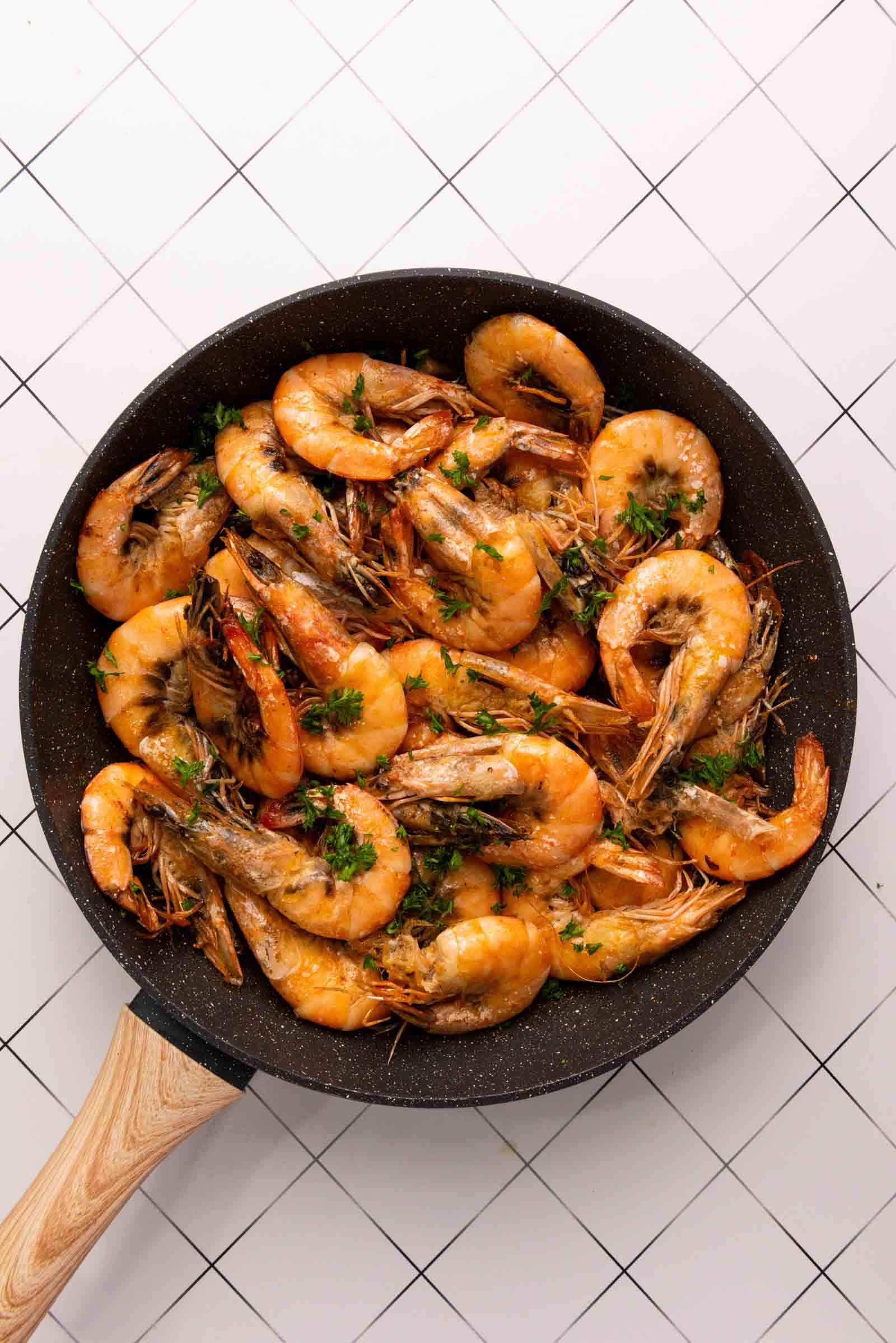
- Finish and serve. Pull the skillet off the heat. Add the lemon juice and parsley and toss gently to coat everything in the sauce. Transfer to a serving dish and serve immediately.
🔄 Substitutions
- Frozen peeled shrimp for whole shrimp: Works in a pinch, but the sauce loses the rendered head fat entirely. It becomes garlic oil shrimp rather than gambas; still good, but distinctly lighter and less complex.
- Regular paprika for smoked paprika: The smokiness disappears and the sauce reads brighter and flatter; the depth that makes the oil worth soaking bread in is mostly gone.
- Dry sherry or white wine for stock: Sharper and more acidic finish; the sauce reduces faster and tilts wine-forward rather than round and savory. Closer to the French preparation than the Spanish one.
- Lime juice for lemon juice: More bitter and pungent at the finish; the brightness tips harsh rather than clean and the citrus overwhelms the garlic instead of supporting it.
- Dried parsley for fresh: Loses the grassy brightness at the end entirely. What remains is a fleck with no real flavor impact in a dish that relies on a clean finish.
💡 Meat Nerd Tips
- Start the paprika in cold oil, every time. Hot oil scorches paprika in under ten seconds. The pan goes back to zero if it burns. Cold oil lets the compounds release slowly as the temperature climbs.
- Dry the shrimp. Two rounds with paper towels. Surface moisture drops the pan temperature the moment the shrimp hit, and wet shrimp steam instead of making contact with the oil. The difference shows up in the sauce.
- The heads are the sauce. The fat inside the heads renders into the oil as the shrimp cook, and it’s what separates these gambas al ajillo from plain garlic shrimp.
- Watch the garlic, not the clock. Two minutes is an average. Thin-sliced garlic can cross from golden to burnt in 30 seconds on a hot burner. If it starts to darken faster than expected, slide the pan off the heat for a moment. You can always add heat back. You can’t make burnt garlic unbitter, though.
🍽️ What to Serve with Gambas al Ajillo
- Crusty bread: The sauce-to-bread ratio is the whole point of the dish. Slice it thick and put more on the table than you think you need, because the pan will be wiped clean.
- Cold shrimp alongside: Serving gambas next to Shrimp Cocktail Shooters sets up a hot-and-cold contrast on the table that makes both taste better and keeps things moving through a crowd.
- As part of a larger seafood spread: These work as a hot opener before something bigger, or as one station in a full spread where Shrimp Boil Foil Packets handle the main event and the gambas disappear in the first ten minutes.
- For a whole shrimp deep dive: New Orleans BBQ Shrimp is the butter-and-Worcestershire American counterpart. Both dishes cook head-on shrimp in a sauce that demands bread, and side by side they cover everything you need to know about the difference between Spanish and Southern shrimp cooking.
🧊 Leftovers and Storage
- Fridge: Store in an airtight container up to 2 days. The garlic-oil sauce keeps well and deepens slightly overnight.
- Reheat: Low heat in a skillet with a splash of water to loosen the sauce. Do not microwave; shrimp turn rubbery fast and the shells get tough.
- Freezing: Not recommended. Shell-on shrimp texture degrades after freezing and reheating, and the sauce will break and turn greasy when it comes back up to temperature.
You will literally think about this sauce the next day. Spanish garlic shrimp that takes 8 minutes and tastes completely illegal. We’re not kidding when we say you need to triple the bread. This sauce will ruin you for regular garlic shrimp forever.
Prevent your screen from going to sleep
Bloom the Paprika
-
Pour olive oil into a cold 12-inch skillet. Add smoked paprika. Bring to medium heat together, stirring gently, until the oil is warm and rust-colored, 1 to 2 minutes. Do not add paprika to hot oil.
Toast the Garlic
-
Add sliced garlic and chili flakes to the paprika oil. Cook, stirring occasionally, until garlic is golden and fragrant, about 2 minutes. Do not let it brown.
- Bloom paprika in cold oil, not hot. It scorches in seconds in hot oil.
- Head-on shrimp are key: the fat in the head renders into the sauce as the shrimp cooks. This is what makes the oil worth the bread.
- Store in the fridge up to 2 days in an airtight container. Reheat gently in a skillet with a splash of water. Do not microwave.
- Frozen peeled shrimp work, but the sauce will be lighter without the head fat. Thaw fully and dry completely before cooking.
Serving: 1serving | Calories: 297kcal | Carbohydrates: 2g | Protein: 31g | Fat: 19g | Saturated Fat: 3g | Polyunsaturated Fat: 2g | Monounsaturated Fat: 13g | Trans Fat: 0.01g | Cholesterol: 243mg | Sodium: 187mg | Potassium: 443mg | Fiber: 0.3g | Sugar: 0.2g | Vitamin A: 356IU | Vitamin C: 3mg | Calcium: 106mg | Iron: 1mg
Quick Summary
Gambas al ajillo is one pan, eight minutes, and a half cup of olive oil that becomes the best thing on the table. Bloom smoked paprika in cold oil first, toast garlic in that base, and let the head fat render into the sauce as the shrimp cook. The rest is just finishing. Get the bread ready before the shrimp hit the pan.
❓ FAQs
Gambas al ajillo is Spanish for “shrimp with garlic.” Gambas means shrimp, and al ajillo refers to the garlic-and-olive-oil preparation common throughout Spanish cuisine. It originated in Andalusia and has been a staple on tapas menus across Spain ever since.
You can. Thaw completely and pat very dry before they hit the pan. The bigger limitation is the shrimp type: without the head, the sauce loses the rendered head fat that gives gambas its richness. Frozen peeled shrimp will produce good garlic shrimp. It just won’t be gambas in the same way.
The traditional version uses whole shrimp, and the reason goes beyond presentation. The fat inside the head renders into the olive oil as the shrimp cooks and deepens the sauce in a way peeled shrimp can’t replicate. If you can source head-on shrimp at a fishmonger or a well-stocked grocery, use them.
The main differences are the olive oil base (significantly more oil than typical garlic shrimp, because it is the sauce), the use of whole head-on shrimp, and the Spanish flavor profile built on smoked paprika and chili. Regular garlic shrimp usually relies on butter, uses peeled shrimp, and produces a lighter sauce. Gambas al ajillo is about the garlic-infused oil being the entire point.