



And yes, you can smoke beef on a gas grill. You just need the right setup, some wood chips, and patience.
Why Chuck Roast Works for BBQ Sliders
Chuck roast comes from the shoulder of the steer, an area that gets plenty of exercise. The meat contains loads of connective tissue and intramuscular fat, which make it particularly well-suited to low-and-slow smoking.
As the roast heats, the connective tissue gradually breaks down, helping transform a tough cut of beef into meat tender enough to cut with the side of a fork.
Chuck also has a practical advantage over brisket. You can purchase a roast weighing three to five pounds rather than committing to a 12 pound packer. For this smoke, I started with a boneless chuck roast weighing a little over 4 1/2 pounds.
If you have the time and patience, you can smoke a chuck roast until it’s tender enough to pull or shred with forks. I had neither, so I chopped the smoked chuck with a cleaver instead. It makes an excellent sandwich filling, especially when mixed with barbecue sauce.
How to Set Up the Monument Denali 605 for Smoking
A gas grill might not be the first thing that comes to mind when you think about smoking beef, but with indirect heat and a smoker box, it’s entirely possible.
I used the Monument Denali 605 gas grill, setting it up for indirect grilling with a target temperature of approximately 250°F.
The Monument smoker box holds wood chips, allowing them to smolder over an active burner and produce smoke inside the grill. The chuck roast sits away from the direct heat, where it can smoke slowly without scorching.
My target was 250°F, although the grill temperature fluctuated between approximately 230°F and 280°F throughout the smoke. Maintaining a steady low temperature can be tricky on a gas grill, even with the burners turned down.
Steven shared a little hack for managing the heat: Prop the grill lid open slightly with a small metal rod to allow some heat to escape. (I wish I’d known that one before I started!)
I added wood chips twice during the initial smoking stage. The goal was to develop a noticeable smoke flavor and a dark exterior bark, not to produce heavy smoke for the entire grilling session.
A few tips for smoking on a gas grill:
- Use indirect heat so the roast isn’t sitting directly over an active burner.
- Monitor the grill temperature and adjust the burners as necessary.
- Replenish wood chips when needed, especially during the early stages of smoking.
- Use a meat thermometer to follow the roast’s progress.
Smoking the Chuck Roast
I started by seasoning the chuck roast generously with Steven’s Texas Brisket Rub, covering all sides of the meat.
Once the Denali was preheated and the smoker box was producing smoke, I placed the roast over indirect heat and closed the lid.
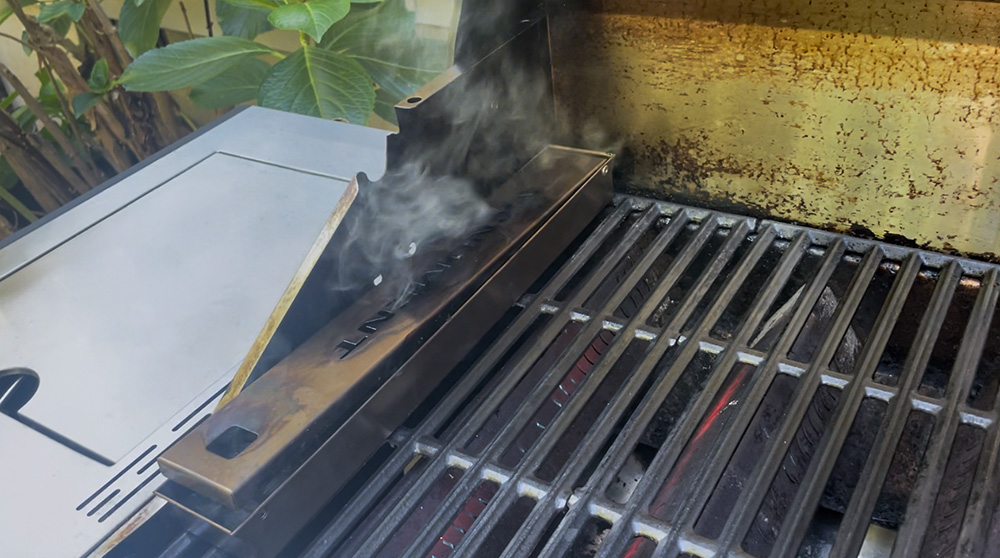
After four hours, the internal temperature was approximately 142°F. An hour later, it had only climbed to 147°F.
That slow progression isn’t unusual with a large piece of beef. Evaporative cooling can slow the rise in internal temperature, a phenomenon barbecue enthusiasts know as the stall. And personally, it drove me crazy.
By this point, the chuck roast had spent around five hours in the smoke, developing its bark and smoke flavor.
Rather than continuing to smoke the beef uncovered, I moved to the next stage: a covered finish to help tenderize the meat.
Finishing the Chuck Roast
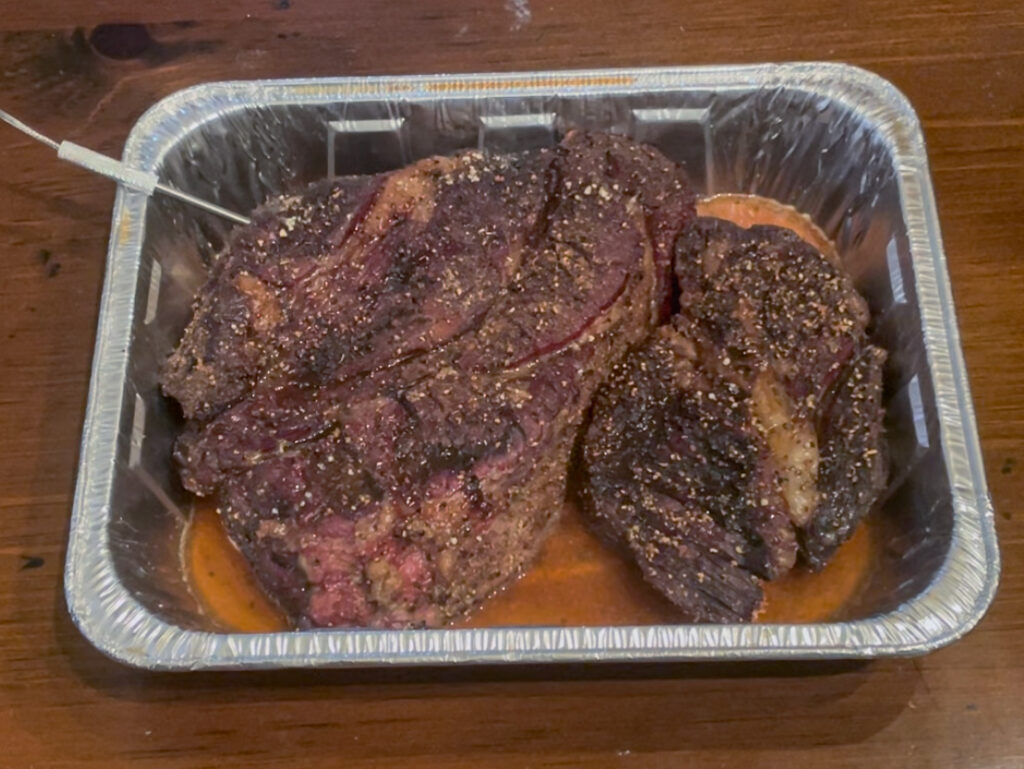
Once the smoking stage was complete, I transferred the roast to a foil pan with beef broth, Worcestershire sauce, minced garlic, and onion powder.
I covered the pan tightly to retain moisture and moved it to the oven to finish. That’s a little tip I picked up from barbecuebible.com editor Nancy Loseke: Once the grill has done its job developing the smoke flavor and bark, there’s no need to keep burning propane—unless you want to. Your oven can take it from there.
The purpose of this stage is to help break down the connective tissue while keeping the meat moist. The liquid also collects beef juices that can be used later when preparing the sliders.
After more than eight hours of total grilling and finishing time, the chuck roast reached approximately 205°F internally.
Here’s something worth emphasizing: Internal temperature alone doesn’t guarantee tender beef.
Although the roast had reached the temperature normally associated with shreddable chuck, it wasn’t quite as tender as I had hoped. One section pulled apart relatively easily, while the larger portion still offered a little resistance.
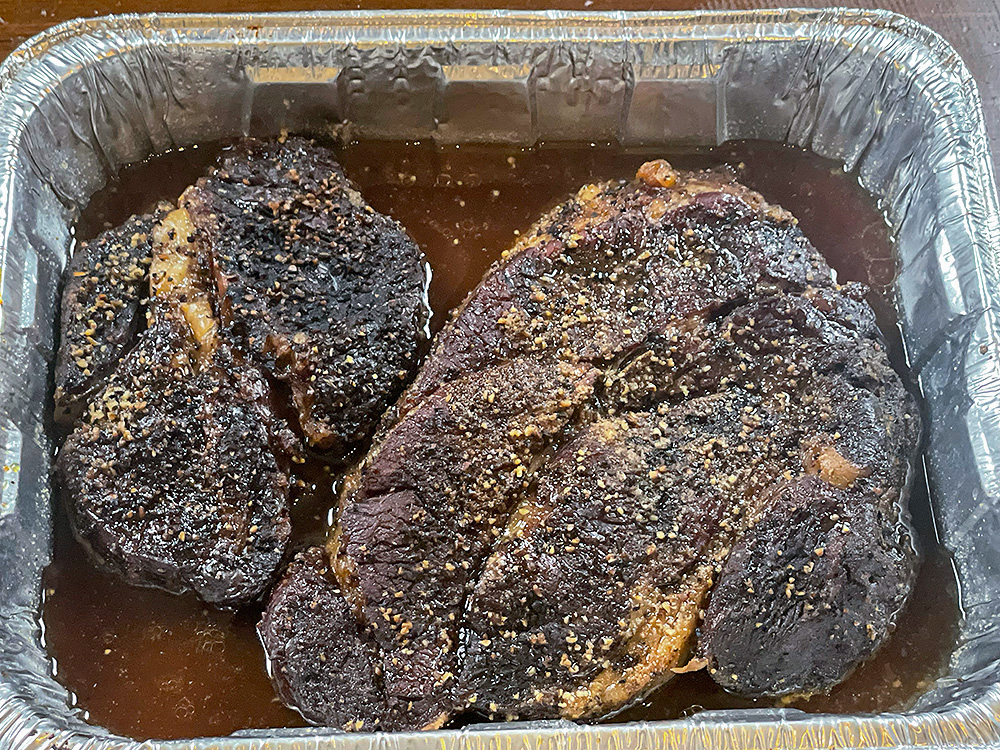
Since it was getting late, it was time for Plan B. I decided to chop the meat instead.
And that proved excellent for sliders.
If you’re aiming for fully shredded beef, you have to keep cooking until a temperature probe or skewer slides into the thickest part with very little resistance. That final tenderness test is more important than reaching a particular temperature on the thermometer.
Building the Smoked Chuck Roast BBQ Sliders
With the beef rested and chopped, it was time to assemble the sliders.
I mixed some of the chopped smoked chuck roast with barbecue sauce, using just enough to coat the beef without overpowering the smoke flavor. You can use any barbecue sauce you like, including Steven’s Chipotle Molasses Barbecue Sauce. Personally, I prefer a sauce with less sugar for health reasons. I’m partial to Stubb’s Simply Sweet Reduced Sugar BBQ Sauce.
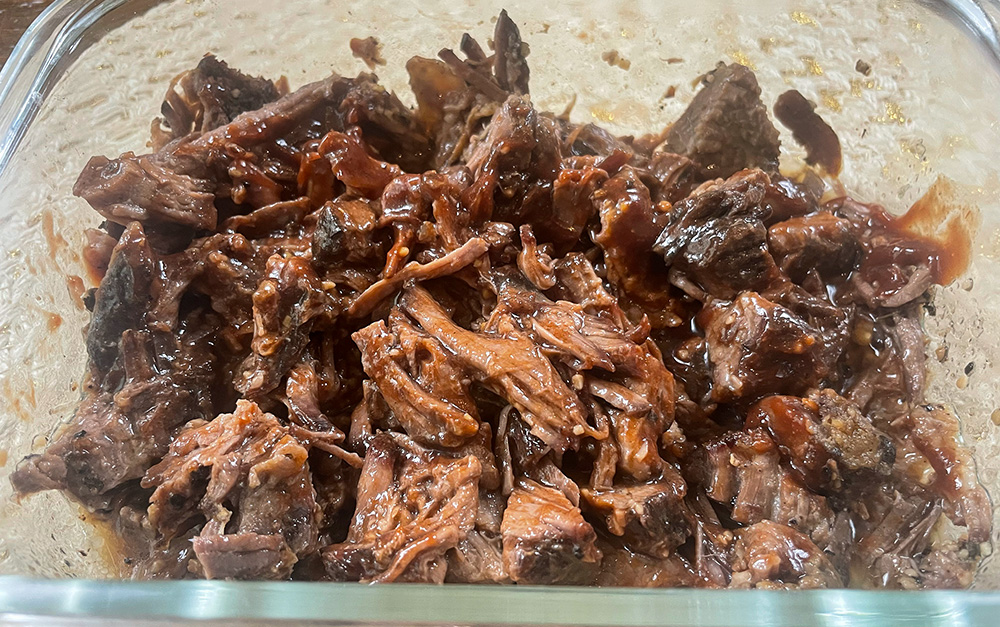
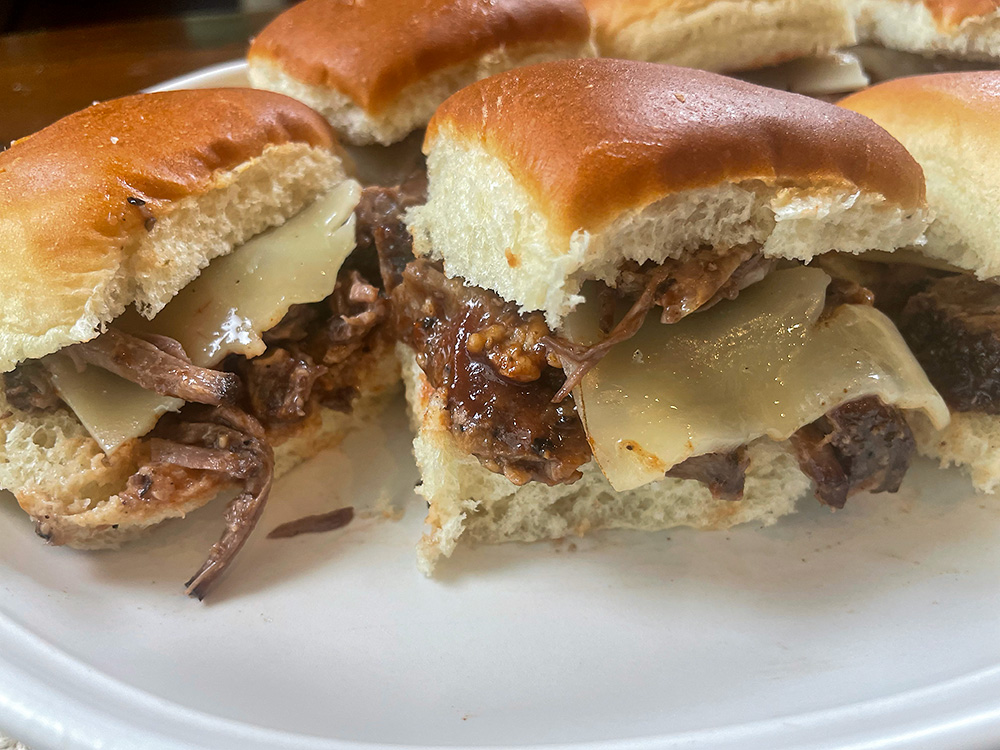
For the sandwiches, I kept it simple: Hawaiian slider rolls, smoked BBQ beef, and provolone cheese. The sweetness of the rolls worked nicely with the smoky beef and barbecue sauce.
These sliders are ideal for tailgating because you can prepare the beef the day before the game. Save some of the juices from the covered finishing stage to keep the meat moist when reheating.
On game day, simply reheat the beef until hot, toast the slider rolls, add the provolone, and assemble the sandwiches.
Smoked Chuck Roast BBQ Sliders for Game Day
The finished sliders were fantastic. The smoky beef, barbecue sauce, melted provolone, and sweetness of the Hawaiian rolls made a spectacular sandwich!
The Monument Denali 605 did a great job smoking the chuck roast. Paired with the Monument smoker box, it gave the beef plenty of smoke flavor and developed a nice bark, all on a gas grill.
Not bad for a tailgate sandwich!
Ingredients
For the smoked chuck roast:
- 1 boneless beef chuck roast (approximately 4 1/2 pounds)
- Steven Raichlen’s Texas Brisket Rub (or your favorite barbecue rub), enough to generously season the roast
- Wood chips, for smoking
- 1 cup beef broth
- 2 tablespoons Worcestershire sauce
- 1 tablespoon jarred minced garlic
- 1 teaspoon onion powder
For the sliders:
- 16–20 Hawaiian slider rolls
- Your favorite barbecue sauce, to taste
- Sliced provolone cheese, enough for each slider
Instructions
- Season the beef: Generously season the chuck roast on all sides with Steven Raichlen’s Texas Brisket Rub.
- Set up the grill: Prepare the gas grill for indirect smoking at approximately 250°F. Fill the smoker box with wood chips and position it over an active burner according to the manufacturer’s instructions.
- Smoke the chuck roast: Place the roast over indirect heat and close the lid. Maintain a grill temperature near 250°F, replenishing the wood chips as needed. Smoke until the roast develops a dark bark and reaches an internal temperature of approximately 165°F.
- Cover the roast: Transfer the chuck roast to a disposable foil pan. Add the beef broth, Worcestershire sauce, minced garlic, and onion powder. Cover the pan tightly with aluminum foil.
- Finish the roast: Return the covered pan to the grill over indirect heat. Continue smoking at approximately 250°F. When the internal temperature reaches 205°F, begin checking for tenderness. The beef is ready when a temperature probe or skewer slides into the thickest part with very little resistance.
- Rest and chop: Remove the roast from the grill and let it rest for 20–30 minutes. Chop or shred the beef, reserving some of the pan juices.
- Add the barbecue sauce: Toss the beef with enough barbecue sauce to coat it. Add a little reserved pan liquid if needed to keep the meat moist.
- Prepare the slider rolls: Split the Hawaiian slider rolls and lightly toast them on the grill. Place a portion of BBQ beef on each bottom bun and top with provolone cheese. Warm briefly until the cheese melts.
- Assemble and serve: Replace the top buns and serve warm.
Make-Ahead Tailgating Tip
Prepare the smoked chuck roast the day before the game. Refrigerate the chopped or shredded beef with some of the reserved pan juices in a covered container. On game day, reheat the beef thoroughly to 165°F, adding reserved liquid as needed to keep it moist. Toss with barbecue sauce and assemble the sliders shortly before serving.
A big thank you to Monument Grills for sponsoring this post.
Looking for more recipes like this? Browse our Recipe Index for grilled, smoked, and live-fire favorites.
Get Steven’s weekly grilling tips, seasonal recipes, and live-fire ideas in your inbox. Join our Up in Smoke newsletter. Sign up and get a FREE PDF of Steven Raichlen’s Best Ribs Recipes Ebook.
Preorder Man On Fire — A Steven Raichlen Memoir. And get some really cool rewards!
Looking to upgrade your tailgating setup? Check out our Tailgating Essentials.