



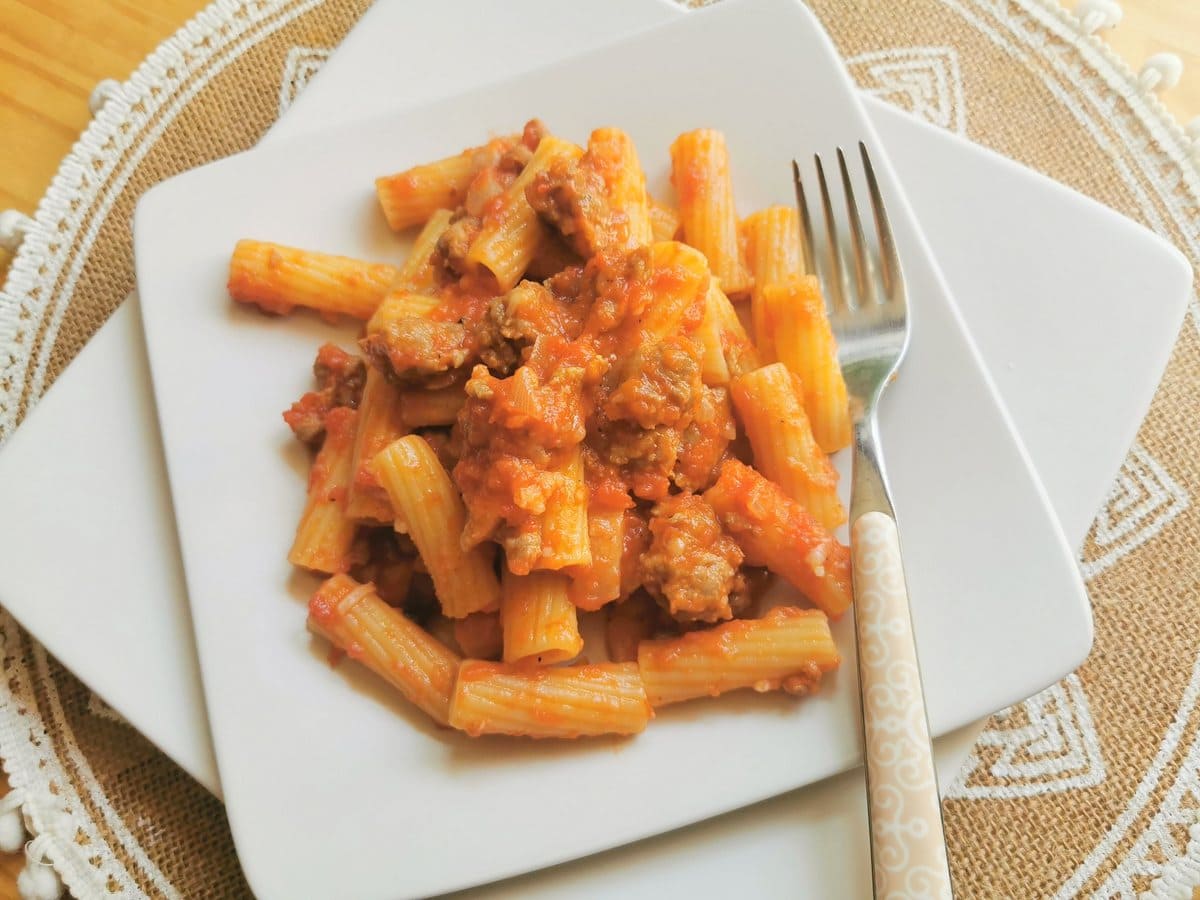
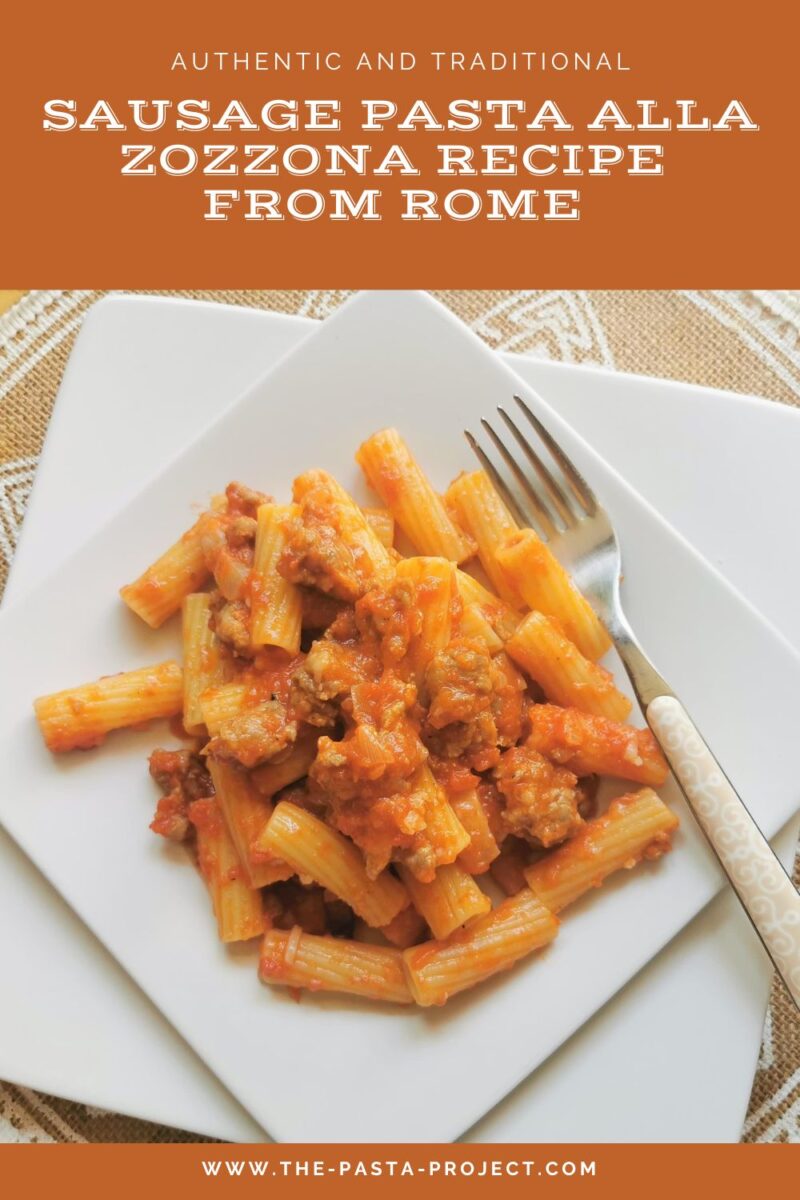
Sausage rigatoni alla Zozzona is a traditional pasta recipe from Rome that Romans traditionally make to use up leftovers of typical local ingredients such as guanciale (cured pork cheek), sausage meat, eggs and Pecorino. This is a hearty and filling dish that’s easy to put together and substantial enough to be a weeknight family meal on its own.
Pasta recipes from Rome.
The traditional cuisine in Rome and the rest of Lazio is filling and hearty. It’s based on ingredients produced in the surrounding countryside and the popular belief that servings needs to be abundant to feed a population that once worked in the fields!
Pasta is a mainstay of the Roman diet and there are many well-known pasta recipes from this part of Italy. Spaghetti alla Carbonara, Amatriciana and Cacio e Pepe have all gained immense popularity throughout Italy and abroad. Although, some overseas versions of carbonara aren’t quite the same as the authentic Italian recipe!
There are also a lot of typical Roman pasta recipes that aren’t as well-known outside of Italy. But, they are just as delicious as those mentioned above. Pasta alla Gricia, which is like Amatriciana without tomatoes, and creamy pasta alla Papalina with ham are two that come to mind. This sausage rigatoni alla Zozzona falls into this second category.
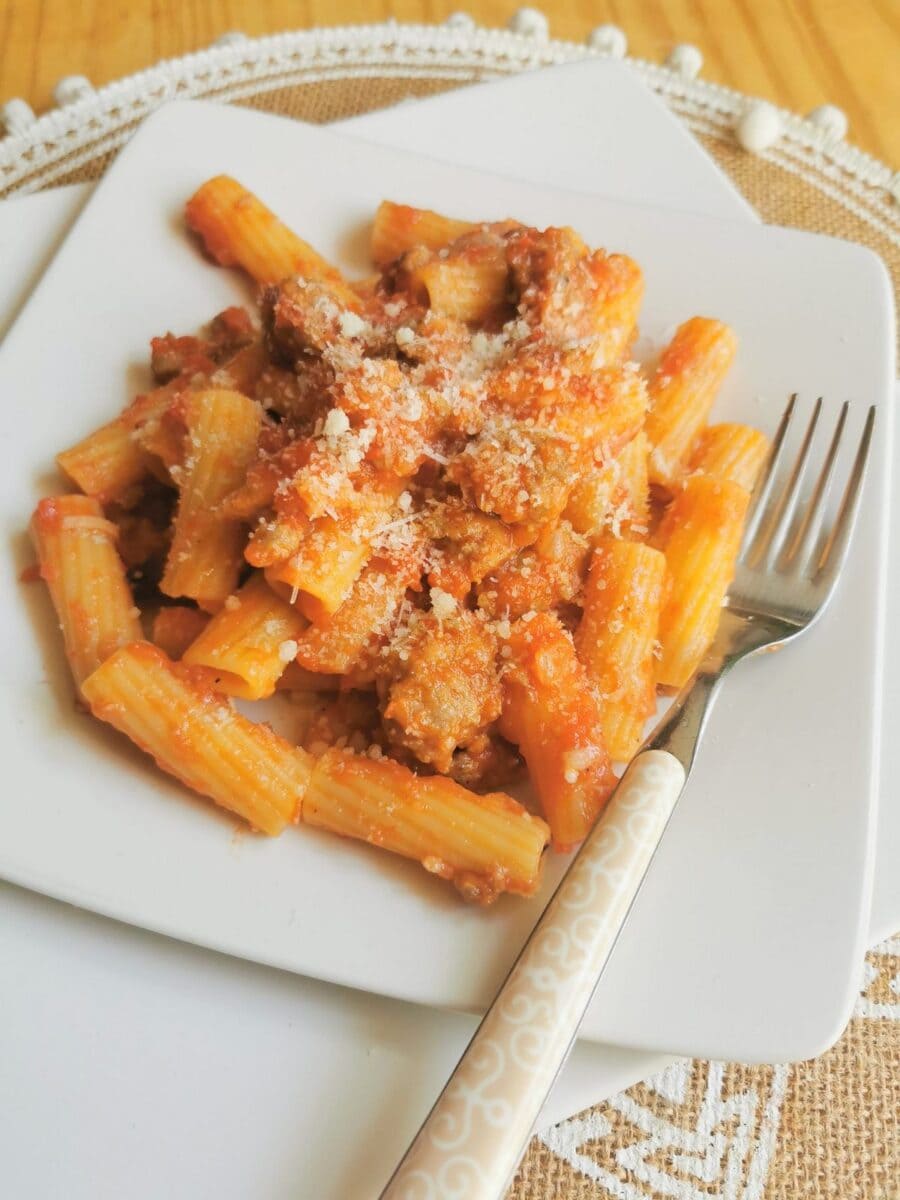
What’s in sausage rigatoni alla Zozzona?
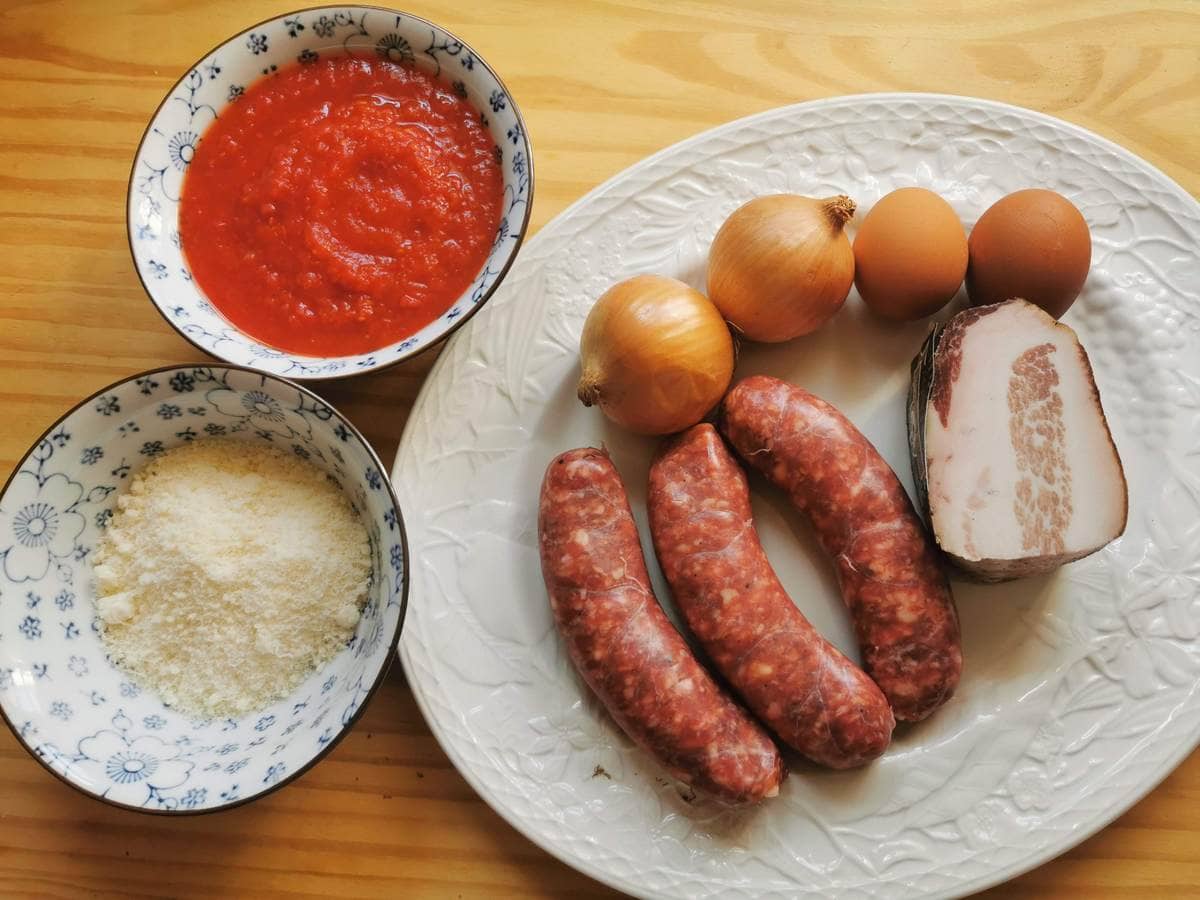
Like other pasta recipes from Lazio, rigatoni alla Zozzona is a filling recipe made with frequently used typical ingredients. In this case, guanciale, tomatoes, eggs, Pecorino and sausage. In fact, many of Rome’s favourite pasta recipes make use of the same ingredients.
Guanciale (pork cheek) or, if not available, pancetta goes into Carbonara and Amatriciana. Raw eggs are mixed into the dish before serving in Carbonara and alla Papalina. And, Pecorino Romano is the cheese of choice for the majority of Lazio pasta recipes, especially cacio e pepe!
The only ingredient in pasta alla Zozzona that doesn’t appear in the other classic Roman recipes I have mentioned is sausage. However, almost every Italian region makes use of pork sausage in pasta sauces and Lazio is no exception.
What does Zozzona mean?
In Rome, the term ‘zozzo’ in the context of food refers to something particularly rich, substantial, fatty, succulent and above all calorific. So, this is not a light plate of pasta. But, it is definitely a flavourful winner for those who like substantial and satisfying dishes! For Italians, it’s also a recipe that can be thrown together with ingredients that most have in their fridge, freezer or larder. It is often made to use up leftovers of those ingredients.
Where to eat sausage rigatoni alla Zozzona in Rome.
If you visit Rome, you are unlikely to find sausage rigatoni alla zozzona in fancy restaurants. However, you will find it in the traditional trattorias of Trastevere or, even better, the fraschette taverns in the Castelli Romani area. The Castelli Romani is an area outside of Rome that incorporates 17 towns including Frascati, which is where many believe the origin of the name of these typical taverns comes from.
Fraschette were originally places where people went to try new wines. They didn’t have kitchens, but served the wine with just bread and maybe cheese. Sometimes customers brought their own food with them and only asked for wine. Over time, stands selling food began to appear in front of the fraschette.
Nowadays, fraschette are more like normal restaurants but they serve mostly traditional Roman fare including porchetta, a typical local roasted pork, and pasta dishes like this sausage rigatoni alla zozzona. However, there’s also a restaurant in the centre of Rome called Lo Zozzone that specializes in this dish!
What pasta should you use?
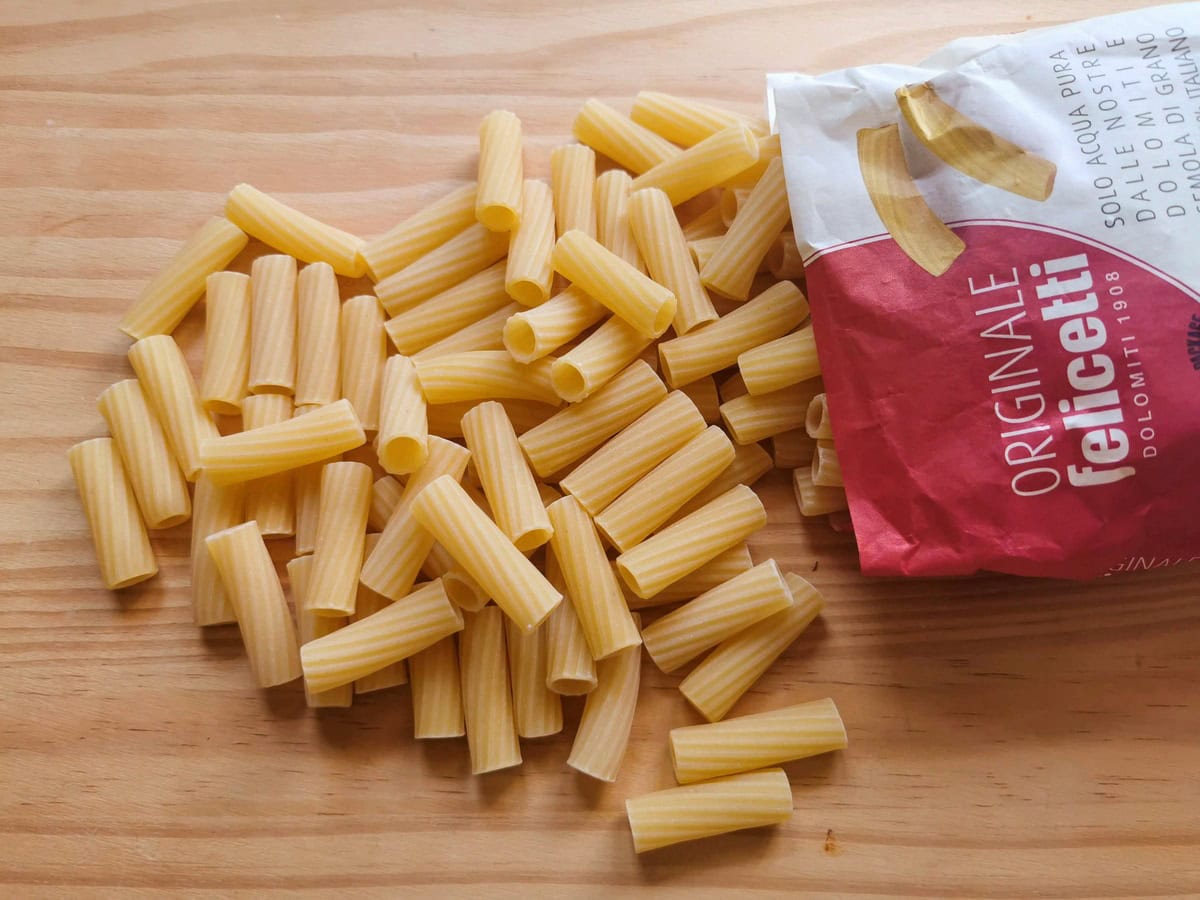
As you can imagine from the name, pasta alla zozzona is traditionally made with rigatoni, a favourite type of pasta in Rome. I used small rigatoni from a company in Trentino-Alto Adige called Felicetti. This is a pasta brand I use quite a lot.
Felicetti is widely regarded by food critics and home cooks as a ‘Rolls Royce’ of pastas. This premium Italian artisanal brand stands out for its exceptional texture, distinct single-origin grain flavors, and eco-friendly mountain production. In fact the pasta is made with mountain spring water and dried in clean mountain air! Worth trying if you come across it! (My opinion).
If you don’t have rigatoni; then another largish pasta tube such as tortiglioni or pennoni or even smaller penne, fusilli, sedani, mezze maniche or elicoidale would work well too. There are SO many types of Italian pasta tubes to choose from!
Ingredient notes and substitutions for rigatoni alla Zozzona.
Guanciale (pork cheek): Guanciale is a popular ingredient in many Roman pasta recipes. It’s quite fatty, so you don’t need to add much olive oil and may need to remove some fat with a tablespoon before adding the tomato passata. If Guanciale isn’t available, you can use pancetta.
Egg yolks: This recipe calls for 3 egg yolks. These need to be beaten with grated pecorino before adding to the pasta and sausage ragu. I used medium sized organic free range eggs. It’s important to add the eggs off the heat so they don’t scramble when mixed with the cooked pasta and sauce.
Pecorino Romano: Pecorino is the most used cheese in Roman pasta recipes. Freshly grated is best for flavor. If you don’t have Pecorino, you can use Parmigiano Reggiano instead.
Tomato passata: Most pasta alla zozzona recipes call for tomato passata (purée in US). However, you can also use fresh sauce tomatoes that you have blanched, peeled and chopped instead.
Onion: I used 2 small yellow onions. White onions are also fine.
Sausages: I used a fresh Italian sweet pork sausage known as salamella. This type of sausage often includes pancetta, garlic and wine along with pork shoulder. I would suggest using very simple pork sausages made without a lot of added herbs or spices. Italian sausages with fennel would change the taste of the finished dish. But, I think those with rosemary would work.
Optional ingredients
Some versions I came across in my research didn’t include the addition of onion, but I used it. I also found recipes that included a little milk when mixing the egg yolks with the Pecorino. I made this dish without milk.
Step by step instructions
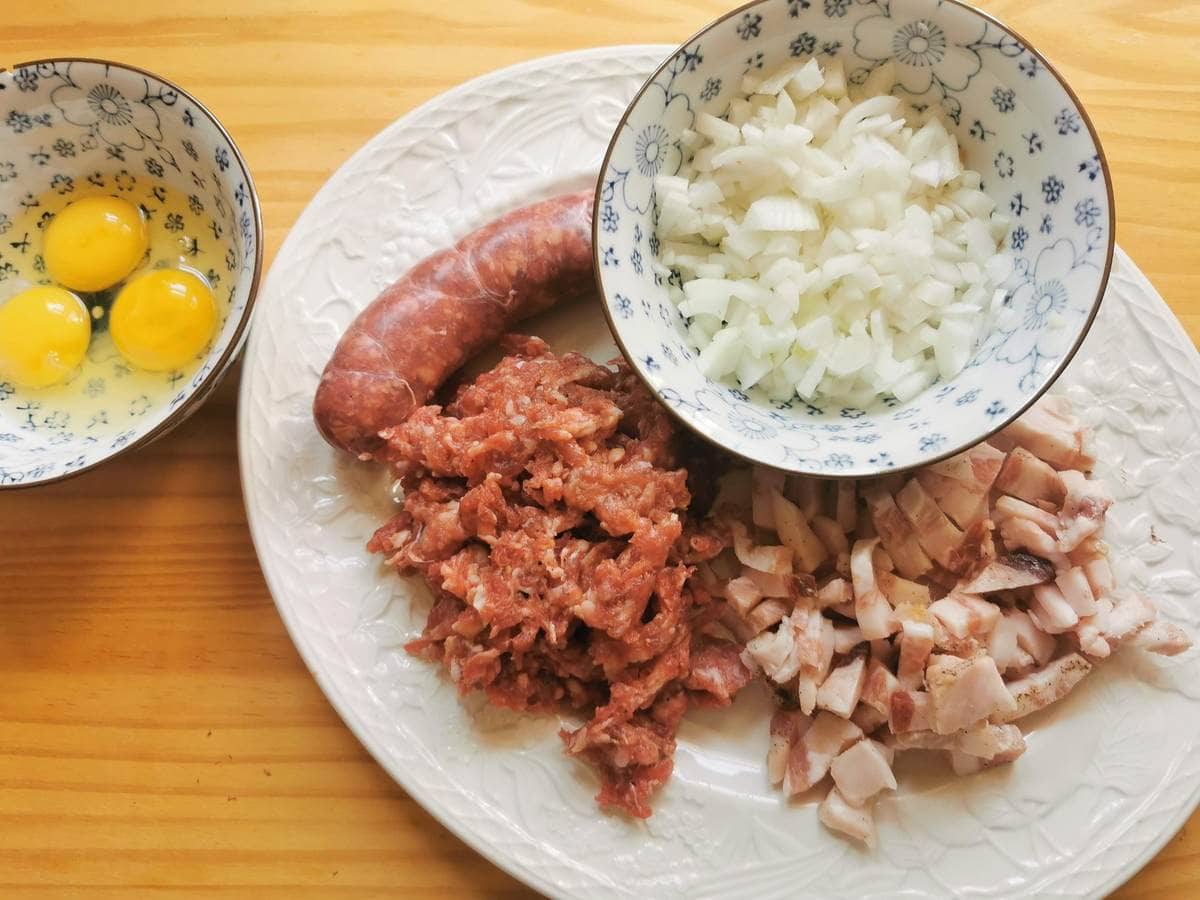
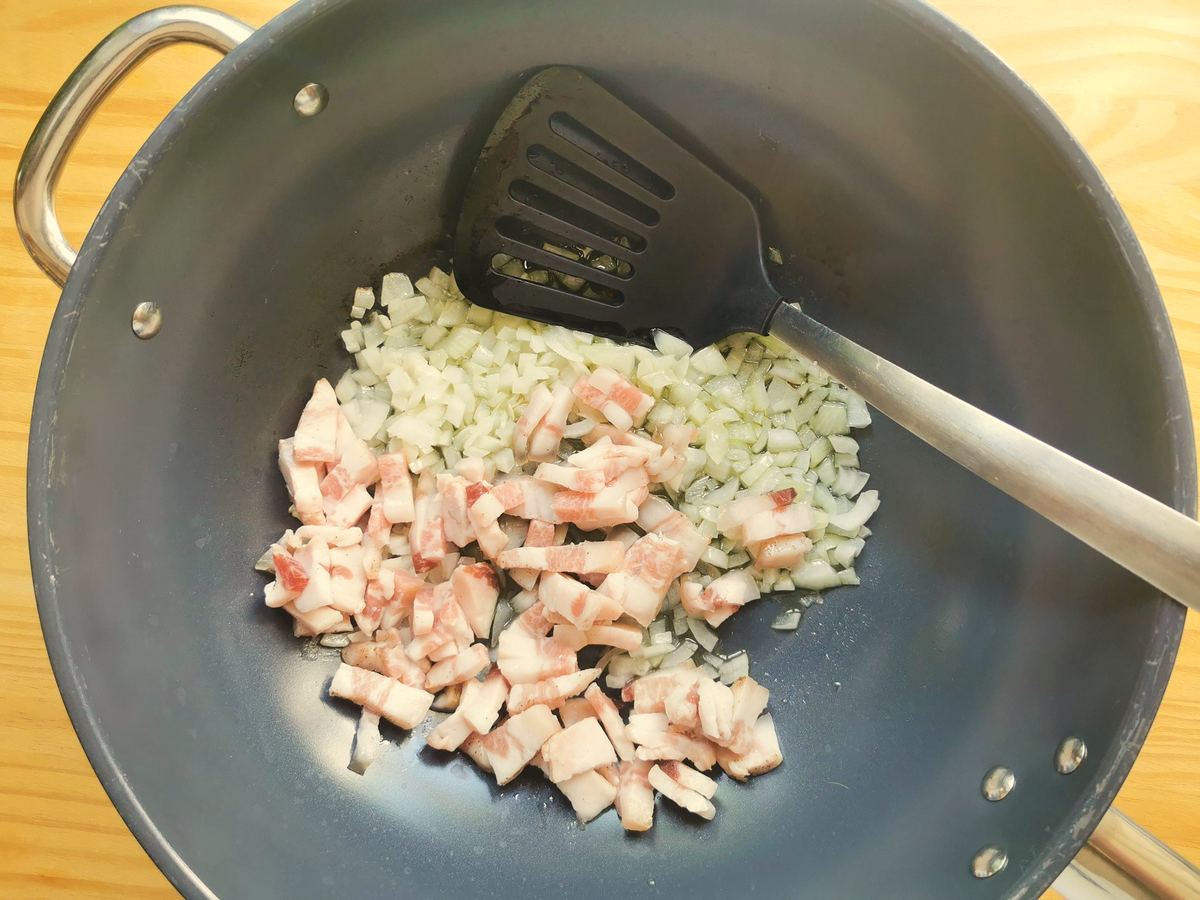
Preparation: Peel and chop the onion, remove the sausage meat from the casing and crumble it with your fingers until it resembles slightly clumpy ground pork. Finally, cut the guanciale into small cubes or lardons.
Step 1) Over a low-medium heat sauté the onion in a little olive oil until it starts to soften, then add the guanciale and cook until the fat starts to melt and turn golden brown.
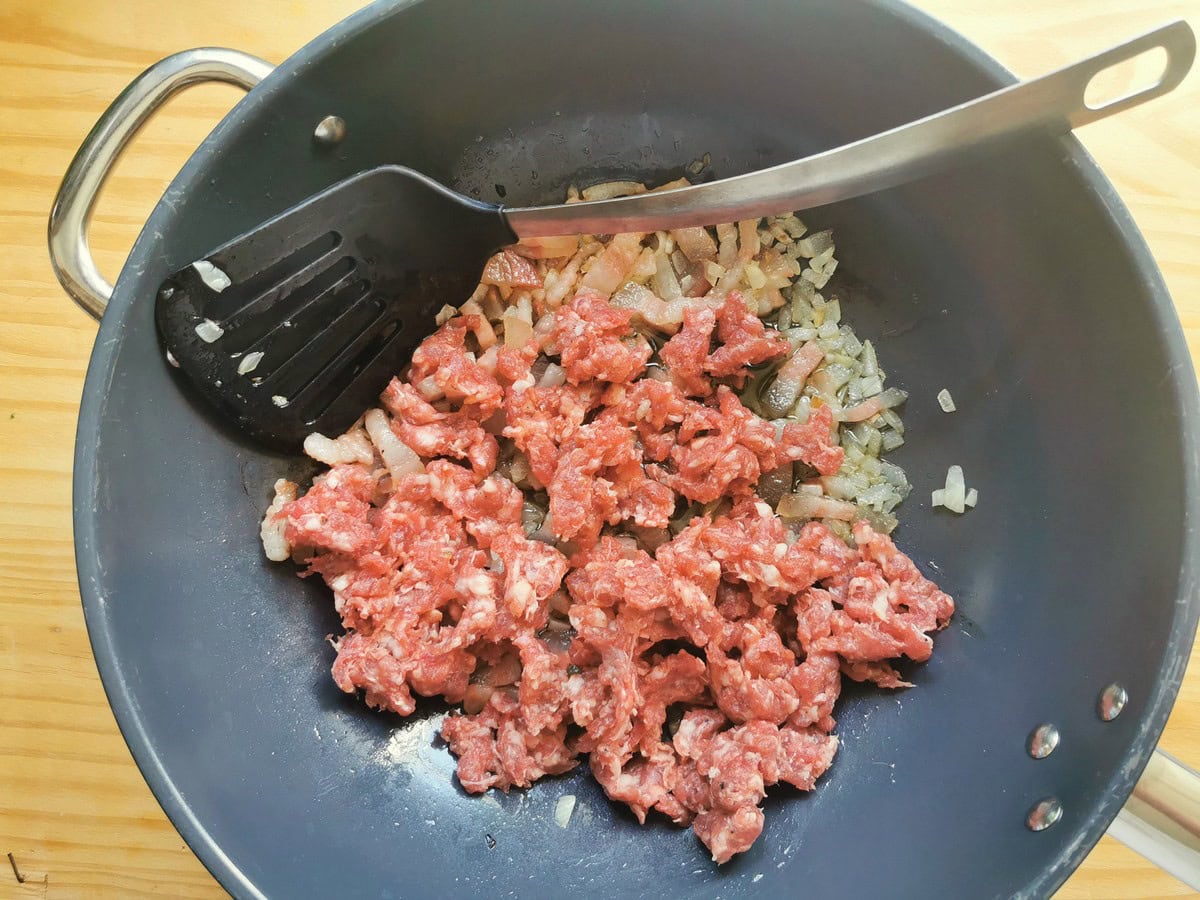
2) Add the sausage meat to the onion and guanciale and brown it. You may need to remove some of the fatty cooking juices before adding the tomato passata.
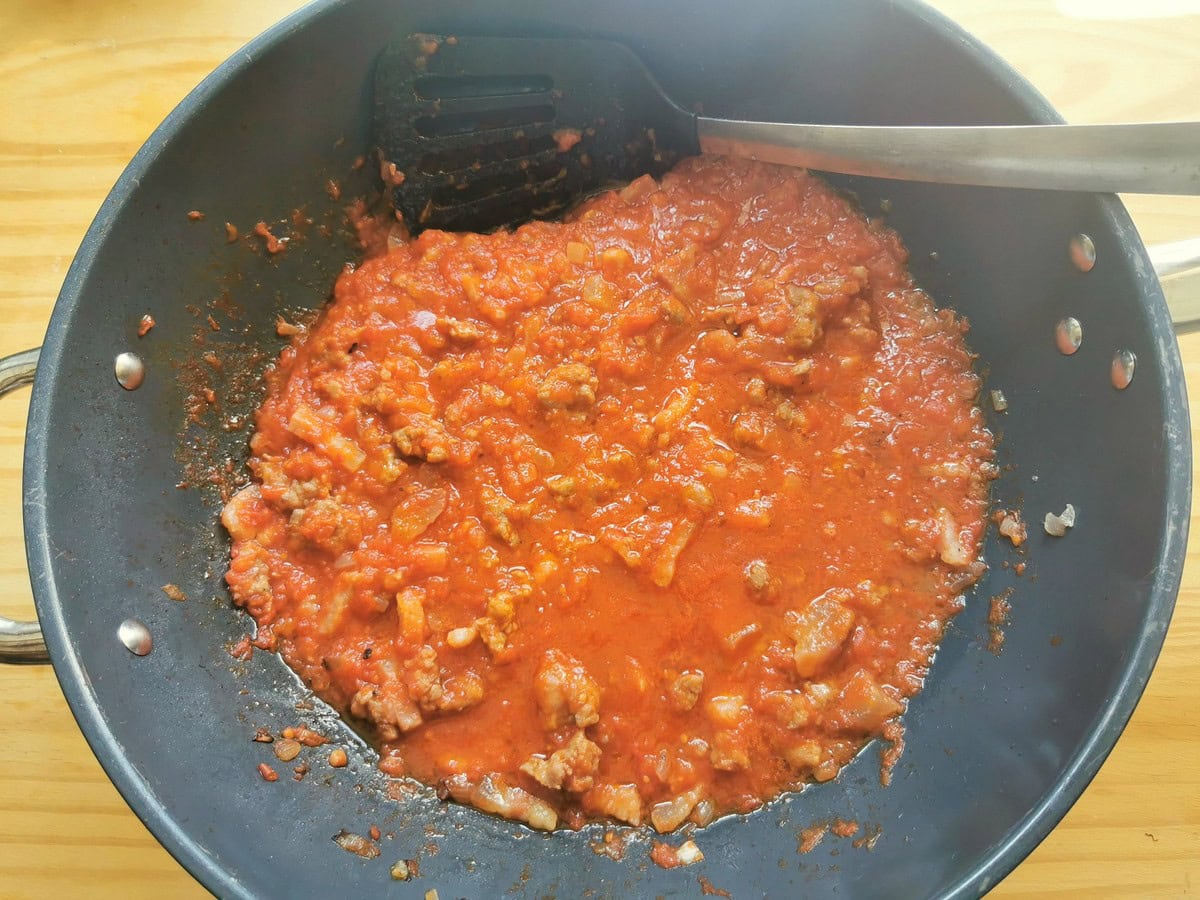
3) Add the tomato passata and mix it with the sausage, onion and guanciale. Simmer for about 15 minutes. Add salt and pepper to taste.
4) Boil a pot of water for the rigatoni. Add salt once it starts to boil. Cook the pasta al dente according to the package instructions.
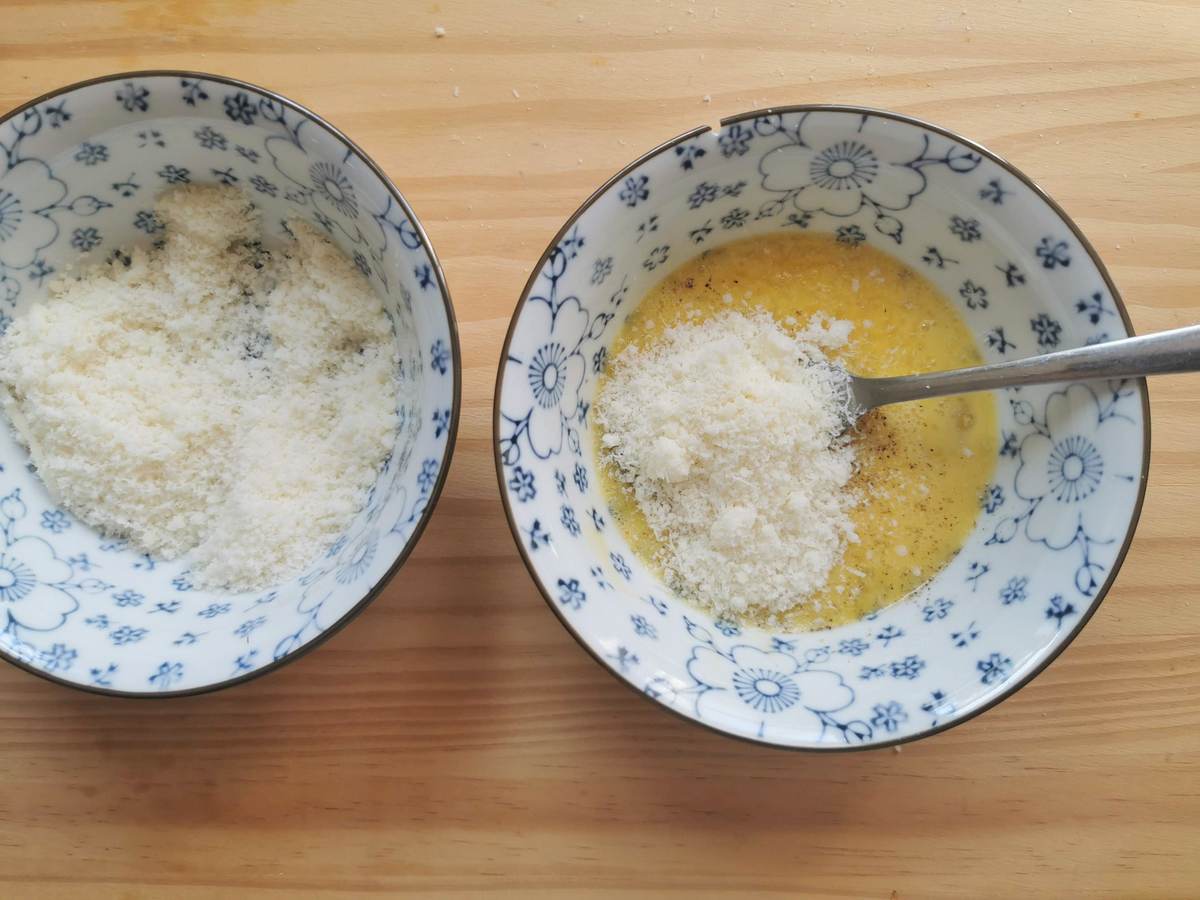
5) In the meantime, separate the egg yolks and beat them in a small bowl with ⅓ of the pecorino.
6) Drain the pasta and add it to the sausage ragu. Mix everything together well.
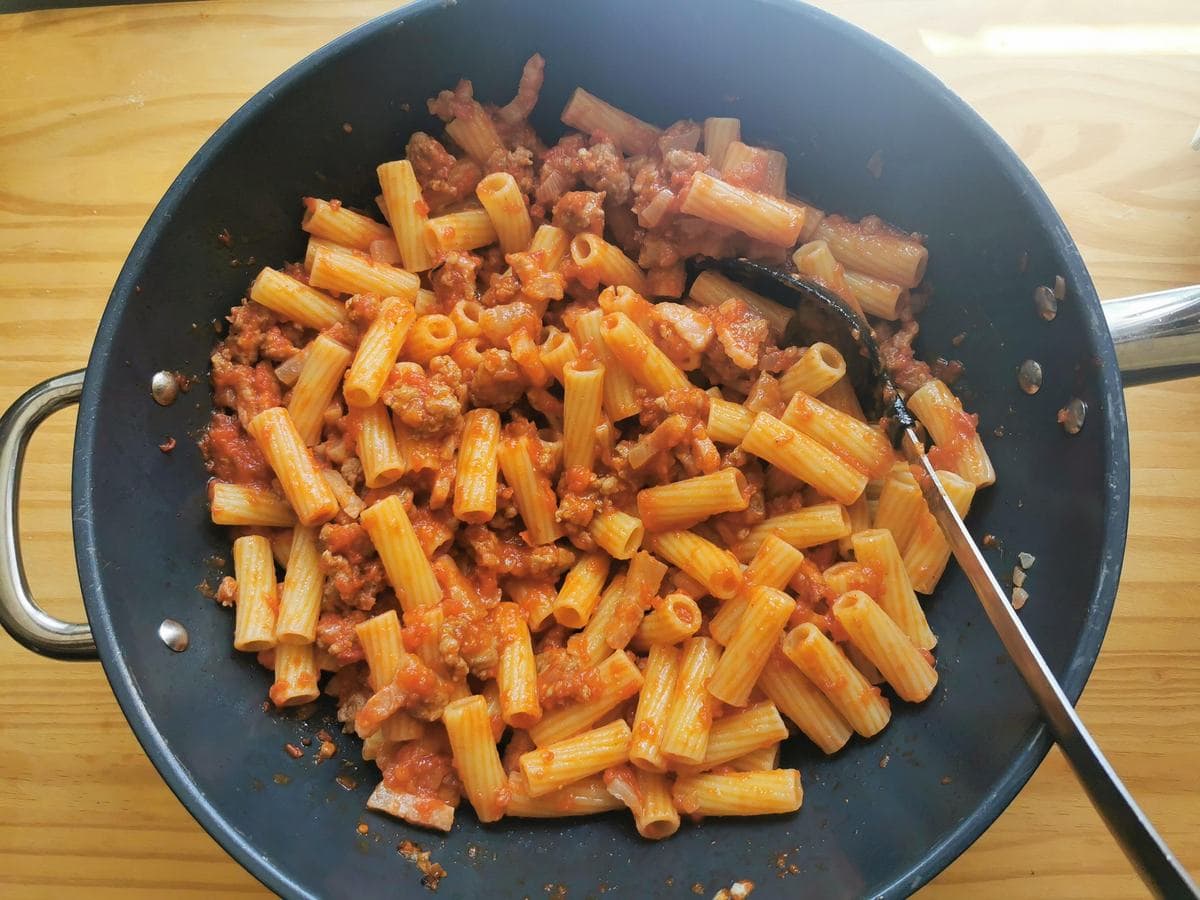
7) Take the pot off the heat and add the beaten egg and pecorino. Mix again.
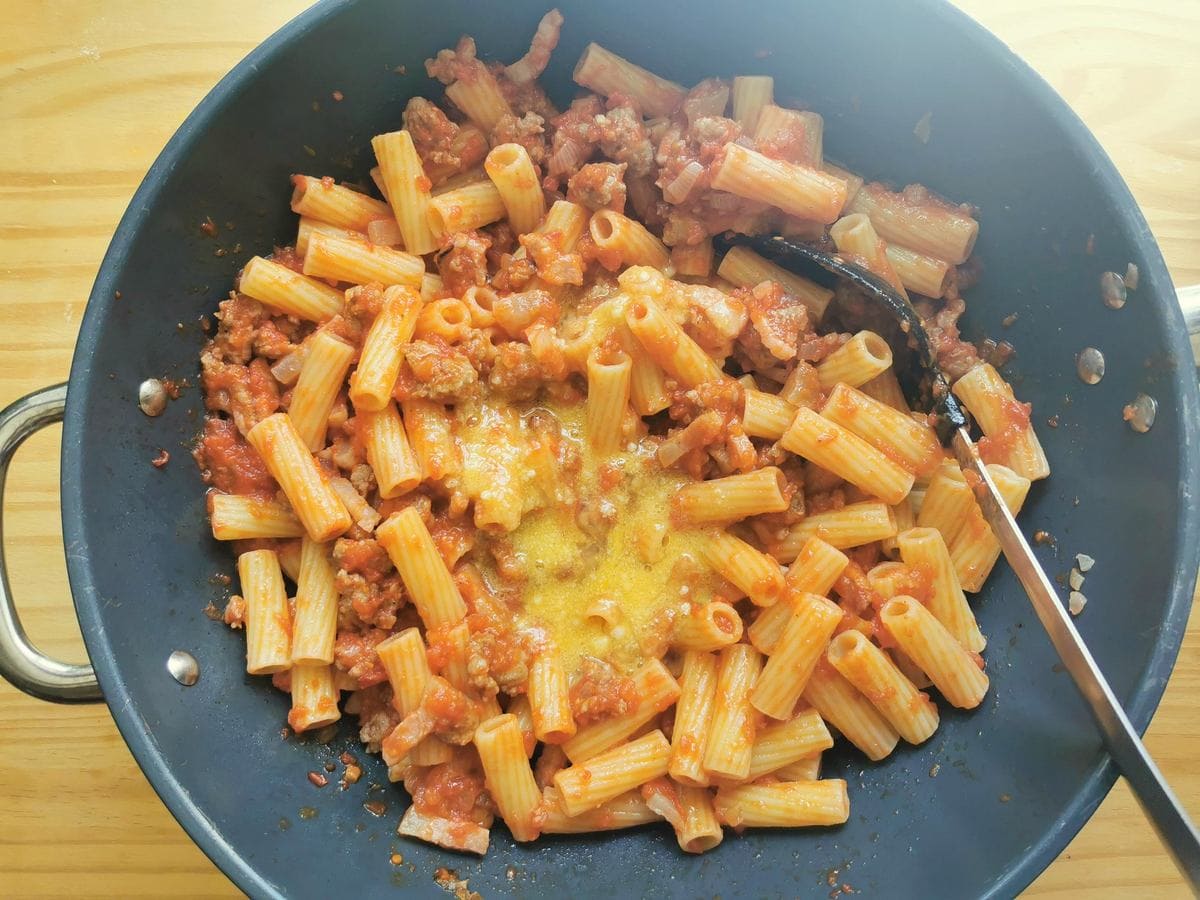
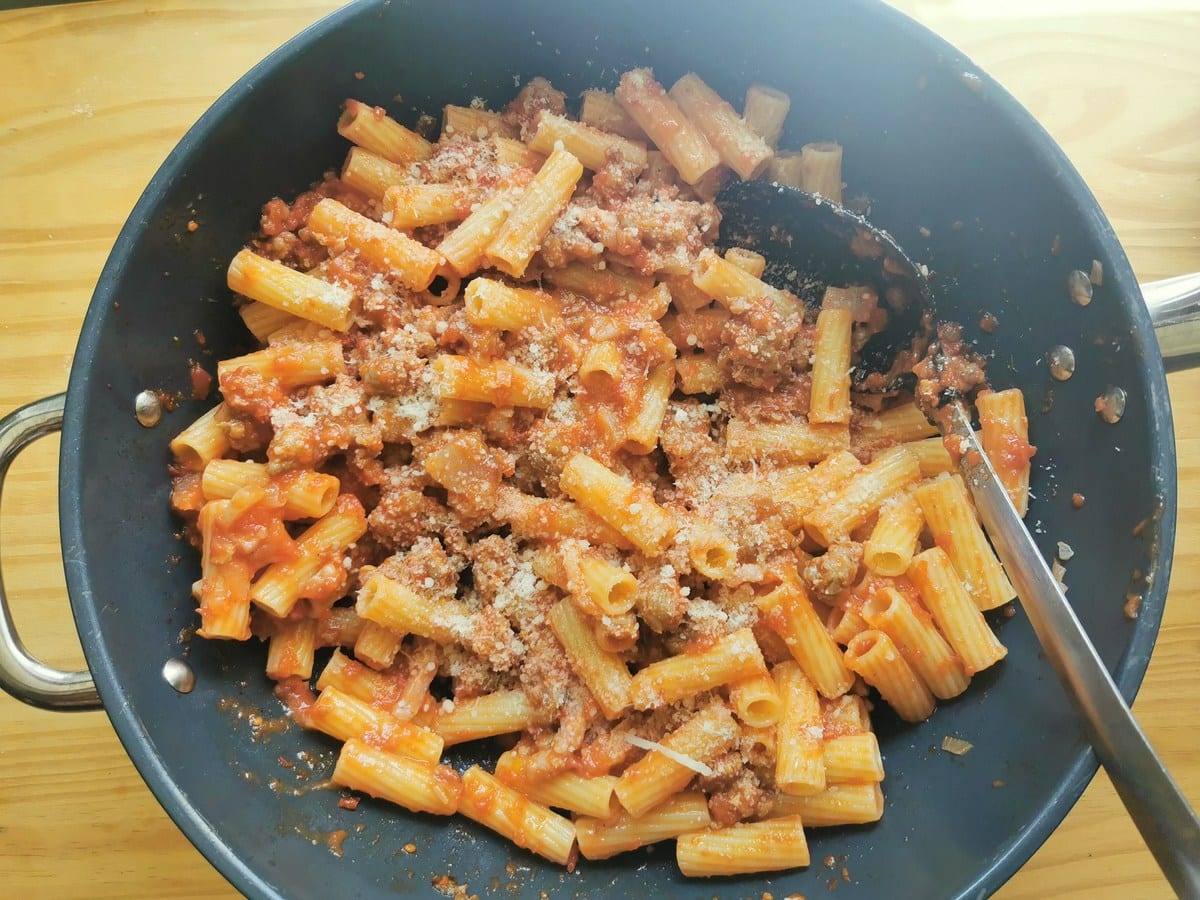
8) Add some grated pecorino to the rigatoni pasta alla zozzona and serve immediately.
What to do with leftovers.
If you have extra sausage ragu without pasta or eggs mixed in, you can freeze it for up to 3 months. Leftovers of ready mixed pasta alla zozzona can be kept in an airtight container in the fridge for up to 3 days. Reheat leftovers in the microwave or in the oven with some mozzarella slices or grated cheese sprinkled on top.
Save for later.
If you want to save this recipe for later, you can print it, bookmark this page or save it to Pinterest. Or, make your own online recipe box by clicking the ❤️ in the lower right corner of your screen & following the quick and easy instructions!
Let me know what you think.
This sausage rigatoni alla Zozzona is a classic Roman pasta dish. It makes a great family weeknight recipe. It has only a few main ingredients and really it doesn’t take long to put together. In fact, the sauce can be ready in the time it takes you to boil the water and cook the pasta!
If you do try this recipe, I’d love to hear what you think. Please write a comment here on the blog or post a comment on the Pasta Project Facebook page.
Your feedback means a lot to me!
Buon Appetito!
Other traditional sausage pasta recipes to try.
- Pasta alla Norcina from Umbria
- Venetian bigoli with luganega sausage
- Homemade garganelli with sausage ragu from Emilia-Romagna
- Umbrian lentil and sausage pasta
- Pasta alla Boscaiola
Sausage Rigatoni Pasta alla Zozzona recipe from Rome

This sausage rigatoni alla Zozzona from Rome is a great family weeknight meal recipe, especially during the colder months. It’s hearty and filling and easy to make. It calls for traditional ingredients such as guanciale (pork cheek), sausages, eggs and Pecorino, ingredients found in other classic Roman pasta recipes.
Ingredients
- 11 ounces rigatoni or other types of pasta tube
- 2-3 Italian pork sausages skins removed and meat crumbled
- 7 ounces pork cheek (guanciale) or pancetta cut into cubes
- 450 g tomato passata (1lb) or peeled tomatoes (you may need more)
- 1 onion peeled and finely chopped
- 3 egg yolks
- 3.5 ounces Pecorino Romano
- 1 tablespoon extra virgin olive oil.
- salt for pasta and taste
- ground black pepper
Instructions
-
Peel and chop the onion finely. Remove the sausage meat from the casing and chop or break into small pieces. Cut the guanciale or pancetta into small cubes or lardons. If using fresh tomatoes, blanch them in boiling water, peel and cut into quarters.
-
Fry the onion in a little olive oil until it starts to become translucent. Then add the the guanciale/pancetta. When the guanciale has started to brown a little add the sausage meat.
-
Brown the sausage. If necessary remove a couple of tablespoons of the fatty cooking liquid. Both guanciale and sausages can render a lot of fat. Then add the tomato passata. Mix and simmer for 10-15 minutes. Add salt and pepper to taste.
-
While the sauce is cooking boil the water for the pasta. Add salt once it starts to boil and bring to the boil again. Cook the pasta al dente according to the instructions on the packet. When the pasta is ready, save a little of the cooking water and drain.
-
Beat the egg yolk with a fork and add pepper and a couple of tablespoons of pecorino, mix well. Add a dash of the pasta cooking water to the eggs to temper them.
-
Add the pasta to the pan with the sauce and sauté for a couple of minutes. Remove the pan from the heat or move the pasta and sauce to a serving bowl and add the egg yolks and cheese. Mix everything together well. Serve immediately with some more Pecorino and black pepper as required.
Prevent your screen from going dark
Notes
Leftovers are delicious baked with some slices of mozzarella on top.
This recipe is traditionally made with rigatoni but you can use other types of pasta tubes such as large or small penne, tortiglioni, fusilli etc
Instead of guanciale you can use pancetta.
Guanciale and pork sausages can render a lot of fat. You may need to remove some of the fatty cooking juices before adding the tomato passata to the meat.
Nutrition
Calories: 1062kcalCarbohydrates: 73gProtein: 36gFat: 70gSaturated Fat: 27gPolyunsaturated Fat: 4gMonounsaturated Fat: 14gCholesterol: 267mgSodium: 1176mgPotassium: 886mgFiber: 5gSugar: 9gVitamin A: 872IUVitamin C: 15mgCalcium: 334mgIron: 4mg
Reader Interactions