



Freezer Meals Series
· Guide · How Long They Last
You’ve stocked the freezer. Every mold popped, bagged, and labeled into a stack of dinners built like Lego bricks, ready to grab whichever protein, starch, and veg sound good tonight. Here’s the part nobody explains when they sell you on the system: how long that stack is good for, and the two moves, thaw right and reheat right, that decide whether it tastes like the day you made it.
Three months. That’s the number to know, no matter which mold system stocked your freezer, Souper Cubes, ours, or a mismatched drawer of Tupperware. Not because the food turns dangerous after that, a freezer sitting at 0°F keeps everything safe indefinitely, but because three months is where peak texture starts to slide. Everything below covers why that happens, how to thaw it without wrecking the bite, and which reheat path gets you closest to fresh every time.
3 mo
Peak Quality Window
0°F
Keeps Food Safe, Indefinitely
Overnight
The Only Real Thaw Method
2-9 min
Microwave Reheat Range
How Long Freezer Meals Really Last
Every recipe in the Freezer Meal Prep System holds at peak quality for up to 3 months once it’s vacuum sealed or bagged with the air pressed out. That’s not a safety cutoff, it’s a quality one, and the difference is worth knowing.
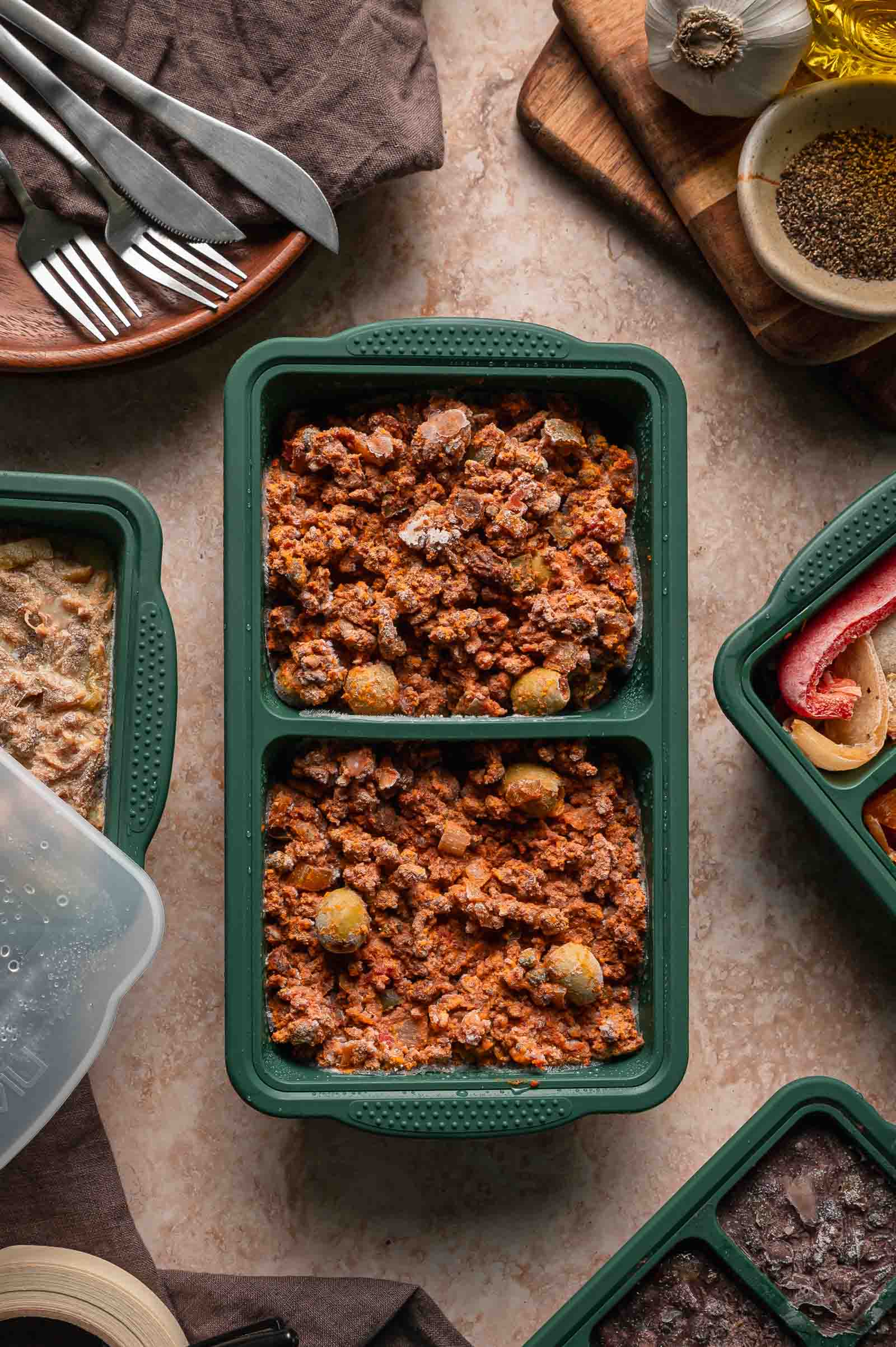
A freezer running at 0°F keeps food safe indefinitely. Bacteria don’t grow at that temperature, full stop. What you’re fighting past the 3-month mark isn’t spoilage; it’s freezer burn: dehydration at the surface where moisture sublimates out of the food and into the freezer air. It shows up as gray-white patches, a tougher bite, and a flatter flavor. None of that will make you sick. All of it will make a portion taste like it’s been in there too long, because it has. Rotate your stock, eat the oldest bags first, and you’ll never run into the question. Vacuum sealing correctly is the single biggest lever you have for stretching that window.
Why Freezing Changes Texture
Freezing isn’t storage, it’s a race against ice. The slower a portion freezes, the bigger the ice crystals grow inside the cells, and the bigger those crystals get, the more cell walls they rupture on the way out. That rupture is exactly why a reheated portion sometimes pools more liquid in the bag than it did going in, and why the bite feels slightly different from a fresh-cooked plate.
This is why every recipe in this system calls for a hard, fast freeze to solid before it ever gets bagged, not a slow drift down in temperature. Fast freezes build small, uniform crystals that leave more of the cell structure intact. Freeze times run anywhere from 4 hours for most starches and vegetables up to 8 hours for something dense with sauce like Pork Adobo, with most proteins landing around 6. Skip the hard freeze and you’re trading texture for convenience, and it’s a trade you’ll taste.
How to Thaw Freezer Meal Portions Correctly
One rule, no exceptions: thaw overnight in the refrigerator, inside the bag or container. Pull what you need the night before and let it sit on a plate on the bottom shelf.
Never thaw in the mold. By the time a portion is frozen solid, it’s already out of the mold and bagged, so that instruction doesn’t even apply here, but it’s worth saying plainly because it trips up beginners: the mold’s job ends the moment the portion pops out. And skip the counter. Room-temperature thawing pushes the outside of the portion into the temperature danger zone long before the center catches up, which is a food safety problem, not just a texture one. If you’re new to the system, the beginners guide walks through the full portion-to-plate sequence from the first freeze.
The Gear Behind our Lego Lunch Recipes
Every step above assumes you have got the right sealer and the right molds. See the exact FoodSaver sealer and Souper Cubes mold set GC runs this whole system on, plus the budget-friendly swap, in one place.
See the Full Equipment Guide →
Reheating From Frozen vs. Reheating From Thawed
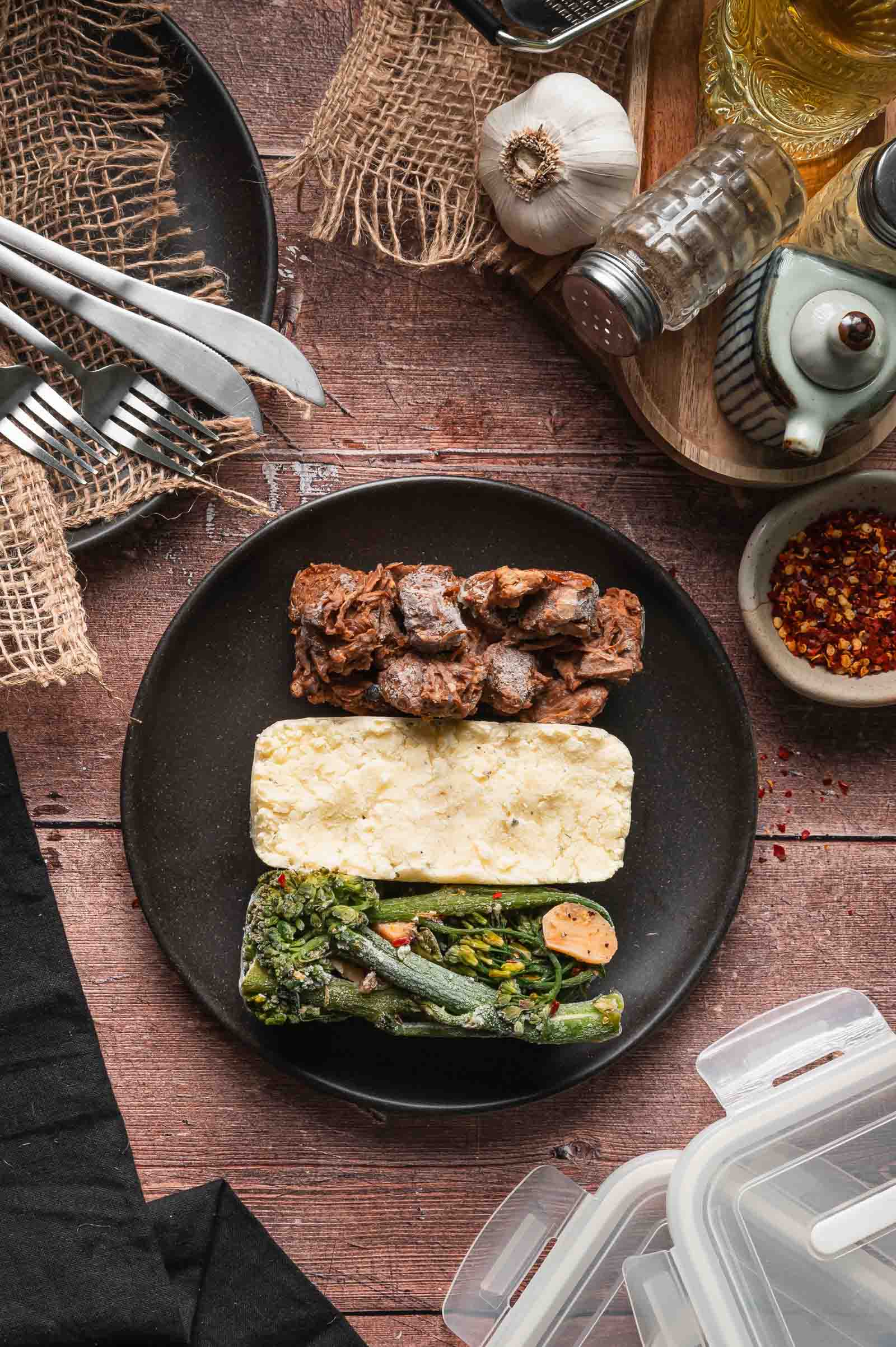
Every recipe card in this system gives you both paths, because they’re not interchangeable and the gap between them is real. Reheat times from frozen run roughly 2 to 9 minutes in the microwave depending on portion size and density. A small starch portion like Cream Cheese Mashed Potatoes is done in 2 to 3 minutes. Something dense, like Salisbury Steak Meatballs or Braised Beef Tips, needs 5 to 9.
From Frozen
2-9 min
Lower setting, splash of liquid, cover it. That traps moisture while the center comes up to temperature so the outside doesn’t dry out first.
From Thawed
Faster, Even Heat
No frozen core to fight, so it heats evenly start to finish. If you have the lead time to thaw overnight, this is the path that wins.
If you have the lead time to thaw overnight, take it. It’s faster and gives you the better texture almost every time because the portion heats evenly instead of fighting a frozen core. If you don’t, frozen works. Lower the setting, add a splash of liquid, and cover it so the outside doesn’t dry out before the center catches up.
Signs a Portion Has Gone Past Its Best
- Gray or white discoloration on the surface. That’s dehydration, the classic sign of freezer burn.
- Ice crystals inside the bag, not just on top of it. A light frost on the outside of the bag is normal. Crystals built up around the food itself mean air got in or the seal failed. Good labeling and rotation keeps you from digging up a bag that’s been sitting long enough for this to happen.
- An off or flat smell straight out of the bag. Trust your nose before you trust the calendar.
- A dry, tough, or grainy bite after reheating even when you followed the method exactly. That’s moisture loss talking, and it usually means the portion sat past its window.
Every recipe across all three Cook Sets follows the same 3-month window, the same overnight thaw, and the same frozen-vs-thawed reheat choice. Learn the rule once here, and it holds for every dinner you pull out of any batch.
Guides Worth Bookmarking
Unlock the Full System
Sign up and get every new Cook Set the moment it drops, plus the full Freezer Meal Prep System, tested recipes portioned to mix and match. All FREE.
📋 Shopping Lists
📅 Sunday Cook Order
🔄 Mix & Match Cheat Sheet
Quick Summary
Freezer meals in this system hold at peak quality for up to 3 months once sealed, longer if you don’t mind a little freezer burn. Thaw overnight in the fridge, never on the counter or in the mold, and reheat from thawed when you have the time since it’s faster and gives you the better texture almost every time. Same rule for every Souper Cubes mold or straight-sided container you’re running. For the full Lego system this timeline belongs to, see the Freezer Meals Hub.
❓ FAQs
Yes. Every recipe card in this system includes a reheat-from-frozen method. It just runs longer than reheating from thawed and usually needs a splash of liquid and a cover so the outside doesn’t dry out before the center heats through.
Only if it thawed in the refrigerator and never sat at room temperature. Every refreeze cycle costs you more texture, since it’s another round of ice crystal formation and cell damage, so plan your thaw for the portion you plan to eat rather than pulling extras “just in case.”
Look for gray or white patches on the surface and ice crystals built up inside the bag itself, not just a light frost on the outside. If you see either, it’ll still be safe to eat, but expect a drier bite and less flavor than a portion pulled fresh from the same batch.
Yes. All three Cook Sets, Bold and Saucy, Weeknight Staples, and Comfort Food Classics, use the same mold sizes, the same freeze-to-solid method, and the same 3-month peak window. Learn the timeline once and it holds for every recipe in the Freezer Meal Prep System.