


If I told you that you can make any Thai curries you want without having to follow recipes, would you believe me? Instead of going shopping according to a recipe, you can look at what’s in your fridge and make a tasty Thai curry based on what you have. It’s not hard at all because this is how most Thai people actually cook, and it’s what I want to teach you in this article: how to cook Thai curry like a Thai!
The secret is in letting go of specific recipes and learning how Thai curries are made in general. You’ll notice that there are a lot of basic, foundational techniques and ingredients that apply to all Thai curries, and once you learn them, you can start making Thai curries successfully with creativity and confidence…like a Thai!
What is a Thai curry?

First, we have to define what a Thai curry is, because it isn’t always what you think it is. A “curry” in Thai is loosely referred to as gaeng. And I say “loosely” because some of what we call a gaeng, most people would say looks more like a soup. The Western concept of a curry is something that’s rich and thick with lots of spices, which some Thai curries are, but our curries can also be light and brothy with very few spices.
What makes a soupy, stewy looking dish a gaeng in Thai cuisine is the fact it gets its main flavour from a curry paste. Which leads us right into the structure of Thai curries.
The Structure of Thai Curries
This is the important mindset shift. Once you start thinking about curries in terms of its basic structure, rather than seeing different curries as being separate recipes, you will start noticing patterns, and eventually you can make Thai curries without a recipe.
Thai curries are made up of 4 major components: The curry paste, the liquid, the nuggets, and the seasoning. Let’s go through them.
Component #1: The Curry Paste
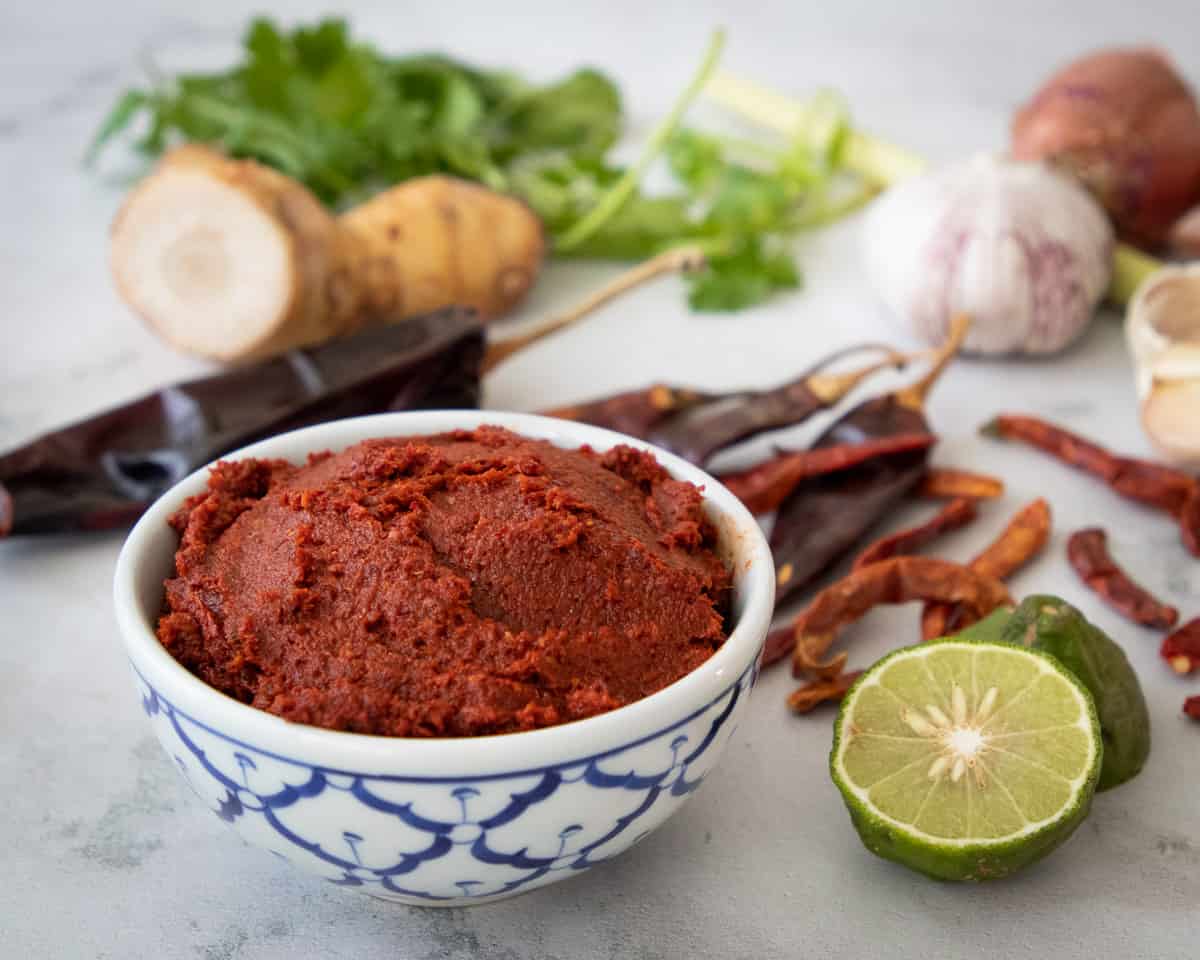
Curry paste is called prik gaeng in Thai. Prik means chilies, and gaeng means curry, so “chilies for curries” is what it roughly translates to. But of course, there’s more to it than just chilies! A curry paste is simply a mixture of herbs and spices ground up together.
Often, the paste is the identity of the curry, so a green curry uses green curry paste, and a yellow curry uses a yellow curry paste. But some curry pastes are also used in multiple different curries, most notably red curry paste which is a versatile paste that we use in various dishes.
And while different curry pastes obviously use different ingredients, they do share some common ones. The 4 ingredients that show up in almost all curry pastes are: garlic, shallots, fermented shrimp paste, and most importantly, the prik which can be any kind of chili peppers. Most commonly we use dried red chilies, but it can be fresh red or green chilies and/or even peppercorns.
Beyond these there are some that are not used in all pastes but are still very common: lemongrass, galangal, cilantro roots, and makrut lime zest.
Finally, there are some ingredients that do show up in curry pastes, but less commonly: turmeric, ginger, fingerroots aka krachai, and dry spices such as coriander seeds and cumin seeds.
So the first thing you wanna do when you wanna make a Thai curry to pick a curry paste because that will dictate the flavour profile. Most of the time, store bought curry paste is perfectly fine as long as you have a good brand. For more on how to choose a good brand, see my red curry paste review and green curry paste review, and stick to those recommended brands even if you’re buying other types of paste. You can of course try to make it yourself, and I would start with the basic red curry paste.
Component #2: The Liquid
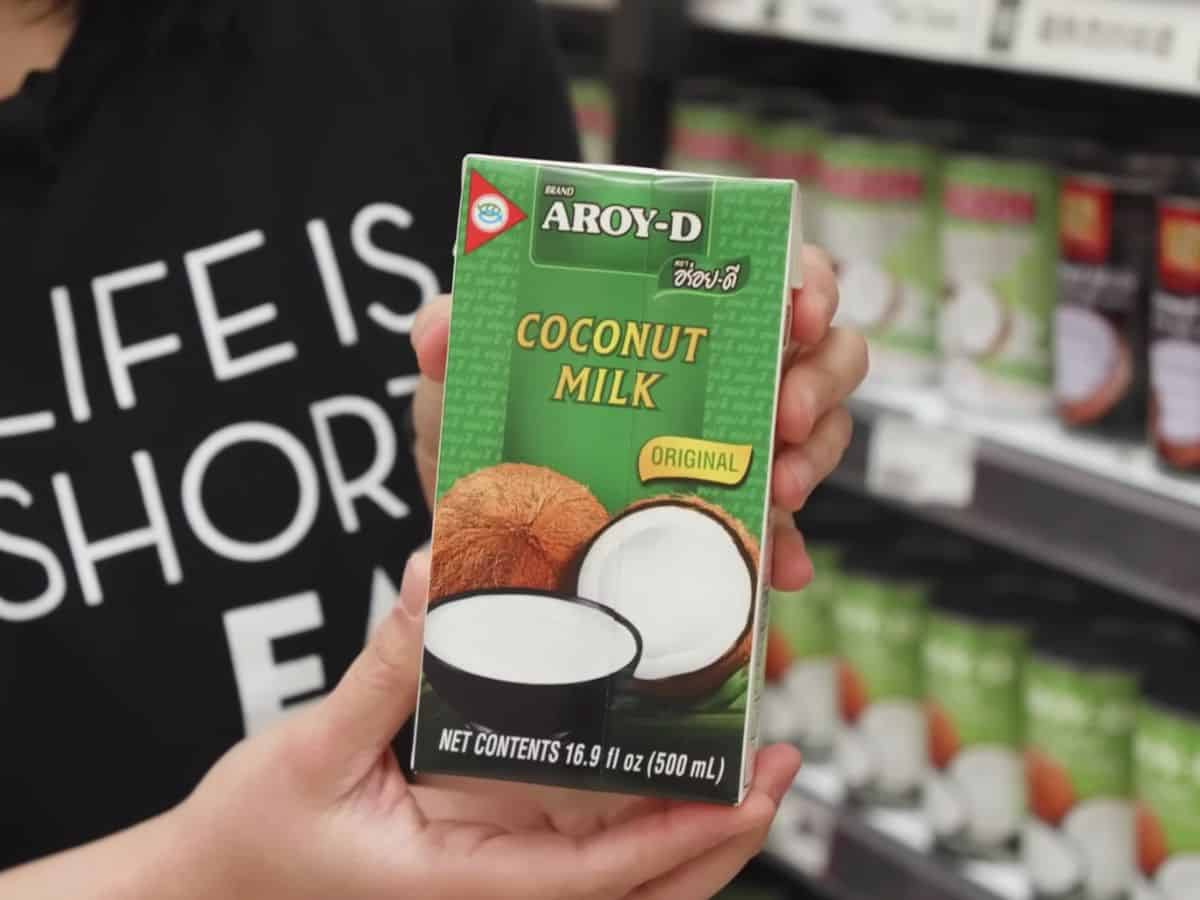
The second component of a curry is the liquid: Thai curries can be either coconut milk based, or water based. Which means you only have 2 liquid options: coconut milk and/or water. But under the umbrella of water I also include stock, which is basically a more flavourful water, and generally my preference for a flavourful curry.
Coconut milk, being a high fat creamy liquid, is going to result in a creamy curry most people are familiar with. But we rarely use ONLY coconut milk. We like to cut the richness with a bit of water or stock because you may have noticed Thai cuisine in general is not a heavy, rich cuisine.
Water based curries on the other hand do not contain any coconut milk and use only water or stock as the liquid, and these are the soupy looking curries I mentioned earlier. Water based curries are not popular overseas, you might have never seen one in Thai restaurants, but in Thailand, it is very common. Here are some of my water based curry recipes that I encourage you to check out: jungle curry, sour curry, and nam ngiew tomato curry noodles.
Component #3: The Nuggets

The “nuggets” is a term I came up with, for lack of a better word, to refer to all the chunks in your curry: the proteins, vegetables and any big pieces of herbs.
Protein: Here you have free reign! You can use any protein you want, chicken, beef, pork, tofu, fish, seafood, you name it.
Veggies: You can also technically add any vegetables, however it’s worth noting that in Thailand, we don’t add any and every veggies into curries. We tend to stick to a group of common veggies such as Thai eggplant, pea eggplant, bamboo shoots, winter melon, kabocha squash, and long beans. We also add certain fruits such as pineapple and green jackfruit. This doesn’t mean you can’t experiment with other vegetables, of course!
Herbs: Sometimes, in addition to the herbs already in the curry paste, we add visible big pieces of herbs to the curry. Most commonly this is Thai basil, makrut lime leaves, or julienned fingerroot. Fun fact: interestingly we never add cilantro leaves in curries, even though we add it to so many other dishes!
Component #4: The Seasoning
The seasonings for Thai curries are super simple:
Salt: The standard salting agent for a Thai curry is fish sauce. With the exception of a few regional curries, we don’t put soy sauce, oyster sauce or anything else salty you might have seen me use in stir fries. However, in the curry paste there is usually salt and the shrimp paste, both of which contribute to the saltiness of the curry.
Sweet: We always add a bit of sugar to balance out the saltiness, which could be palm sugar or white sugar. BUT, Thai curries should never taste sweeter than it is salty, despite what you might have had in Thai restaurants overseas which often oversweeten things. Sweetness is there to balance the salt, but it should never be the leading flavour.
Acid: Some, not all, curries also have an element of acid. If it does, this is usually tamarind paste because it holds up better to cooking than lime juice. Although occasionally I have seen people add lime juice to water based curries.
Food for Thought: Traditional VS Creative Curries
Now that we’ve talked about the structure of curries, at this point you might be thinking, “so if I just pick any curry paste, any meat, any veg, and any seasoning…I can make a mix-and-match Thai curry of my choice?” Well…yes, but let me give you some further thoughts on this.
In Thailand there are “traditional” combinations that are commonly done, and then there are combinations that you will never find for one reason or another. And the great thing about traditional curries is that they are combinations that are tried and true. You know they work, you know they are tasty. For example, we know that the traditional combo of Thai eggplant and green curry will be delicious. We know that pineapple in a red curry is also a very tasty combo. And it takes the guesswork out of making a delicious meal.
There are also some cultural or historical significance to some of the ingredient choices, for example massaman curry never uses pork because it is originally a Muslim curry. So traditional recipes are the way they are for a reason.
But in your own kitchen, my general take is that you should be free to experiment. Maybe you don’t have access to Thai eggplants, and you want to use mushrooms. Or maybe you want to try putting cauliflower in a massaman curry. Go for it. It may or may not be good, but that is the spirit of an experiment!
Of course, if you do something like that, at some point you just can’t call it a “Thai massaman curry” anymore. You’re making a curry of your own creation, using massaman paste as a base…and that is fine! The line beyond which a dish can no longer be called its traditional name is going to be different for everyone, but I’m not worried about the granular. It’s the general idea of respect that I want we all to be aware of. We can respect tradition and the culture behind the cuisine, and have the freedom to experiment at the same time.
How to Make Thai Curries: The Standard Procedures
If you’ve seen a few of my curry videos, you’ll start to notice that the methods don’t vary much. This is the beauty of it! You really just need to learn the general process, and make adjustments according to the ingredients you’re using.
There are generally two methods of curry making: saute-the-paste and no-saute methods. The first is probably the one most of you are looking for because it’s the method used for all the popular coconut milk curries you know – red, green, yellow, massaman, panang.
I will now walk you through the steps of each method, but I highly recommend you watching the video tutorial below as I go through the steps in much greater detail!
Video: Thai Curry Masterclass
Curry Making Method 1: Sauté-The-Paste Method
Step 1: Saute the curry paste.
Sauteing enhances the flavour of the herbs and spices in the curry paste. You can technically saute the paste in any kind of oil, but if your curry has coconut milk, you should saute the paste in the coconut milk for best flavour.

Bring about ⅓ of the coconut milk in the recipe to a boil, then add the curry paste and saute the paste on medium heat. Stir it frequently to it doesn’t stick and burn.
Once the paste is very thick, and you see the coconut oil separating, you can move on. Note: Some coconut milk has been processed to prevent separation, if your paste is super thick and no oil separation occurs, you can move on.
Step 2: Add the liquid & Seasoning

Once your curry paste is cooked off, you can add all of your liquid, whatever they may be and bring to a simmer.
Then add the seasonings so that once we do add the meat & veg they can absorb the seasoning as they cook. Add only about half of the salting agents at this stage and leave the rest for final adjustment.
If you have any sturdy herbs that you want to simmer such as makrut lime leaves, bay leaves or julienned krachai, now is the time to add them also.
Step #3: Add the Nuggets

This is where you’ll really need to use that judgment. Stagger-add your chosen protein and veggies so that they finish cooking at the same time. For example, in this case, I want to slow braise my chicken thigh for 15 minutes, and my kabocha squash takes 7 minutes (i know this from experience) so I will add the squash after the chicken has cooked for about 8 minutes.
This requires you to obviously know how long things take to cook, and if you’re not sure, a quick google should get you a starting point.
IMPORTANT: You want the curry paste to have a total simmering time of at least 5 minutes from start to finish to allow all the flavours from the curry paste to infuse into the liquid. So if your nuggets take only a few minutes to cook, such as fish, seafood, or chicken breast, let the sauce simmer for a few minutes before adding them.
Step #4: Taste and adjust seasoning.

Tasting and adjusting the seasoning is absolutely crucial, and should only be done once all the nuggets are cooked because meat and veg both absorb seasoning and release liquid into the curry sauce.
First ask yourself if the curry is salty enough, keeping in mind you’ll likely be eating this with plain rice so it should be strongly seasoned. Add sugar if the salt feels too aggressive and unbalanced.
Step #5: Add Finishing herbs, if any.

Finally, before you eat if you want to stir in any delicate herbs like Thai basil. Add it off heat, so it’ll gently wilt and infuse without turning black and wilty. And we’re done!
Curry Making Method 2: No-Sauté Method
In this method, the paste is added directly into the liquid without sauteing it in fat first. This is used most commonly with water based curries where the desired characteristic is light and not oily, such as the popular sour curry (gaeng som), which I demonstrated in the video tutorial. But it’s also used with some coconut milk based curries, such as kanom jeen namya, a southern fish curry served with noodles.
Step 1: Bring the liquid to a boil.
Pretty self-explanatory here! I’ll just note that if making a water-based curry, it is highly recommended that you use a good, unsalted chicken stock or pork stock as a base, and not plain water, for best flavour.
Step 2: Add the curry paste and seasoning.

Add the curry paste and seasoning and let it simmer in the liquid. As with our previous method, you want the curry paste to have a total simmering time of at least 5 minutes to allow all the herbs to cook and infuse into the liquid. So if your veg and protein are very quick cooking, give it extra time to simmer at this stage.
Step 3: Add The Nuggets

As with method #1, stagger add them so they finish cooking at the same time. Shrimp, fish, or any seafood will almost always be the last thing to go in!
Step 4: Taste and adjust seasoning

Same as above, you want to adjust seasoning after everything has finished cooking to finalize the seasoning. In this case I needed more tamarind paste for more acidity in this sour curry.
Step 5: Finishing Herbs, if any

For this sour curry, and many others, there aren’t any finishing herbs so add, so you’re done and ready to serve!
Final Takeaway – But What About Recipes?
I hope with this knowledge you’re able to cook Thai curries more freely, without relying so much on recipes. Now, don’t get me wrong, recipes are good! I write recipes for a living and yes, I still want you to use recipes! They provide guidance, ideas, and specific measurements so you you don’t have to do so much guessing and tinkering. And they also show us those tried and true traditional combinations that we love.
But recipes can also be limiting because they prescribe a specific set of ingredients which you may not have or want to use. So understanding the principles and techniques behind a dish allows you to make modifications and be creative in coming up with new combinations. They also allow you start from what you have in the kitchen, rather than starting with recipes. It’s so much more freeing, and so much more fun!
The post Thai Curry Master Class – Make Any Curry Without Recipes! appeared first on Hot Thai Kitchen.