



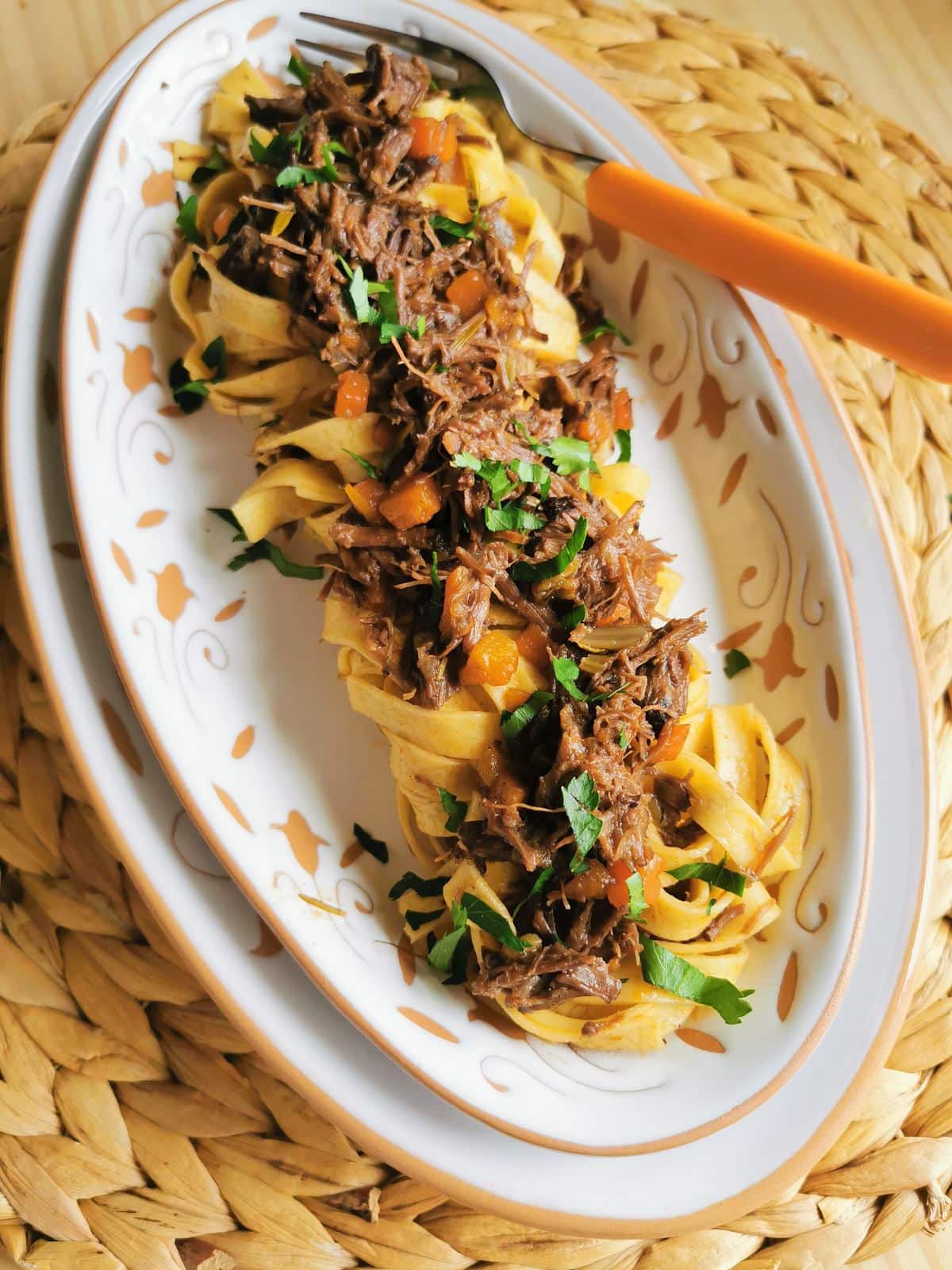
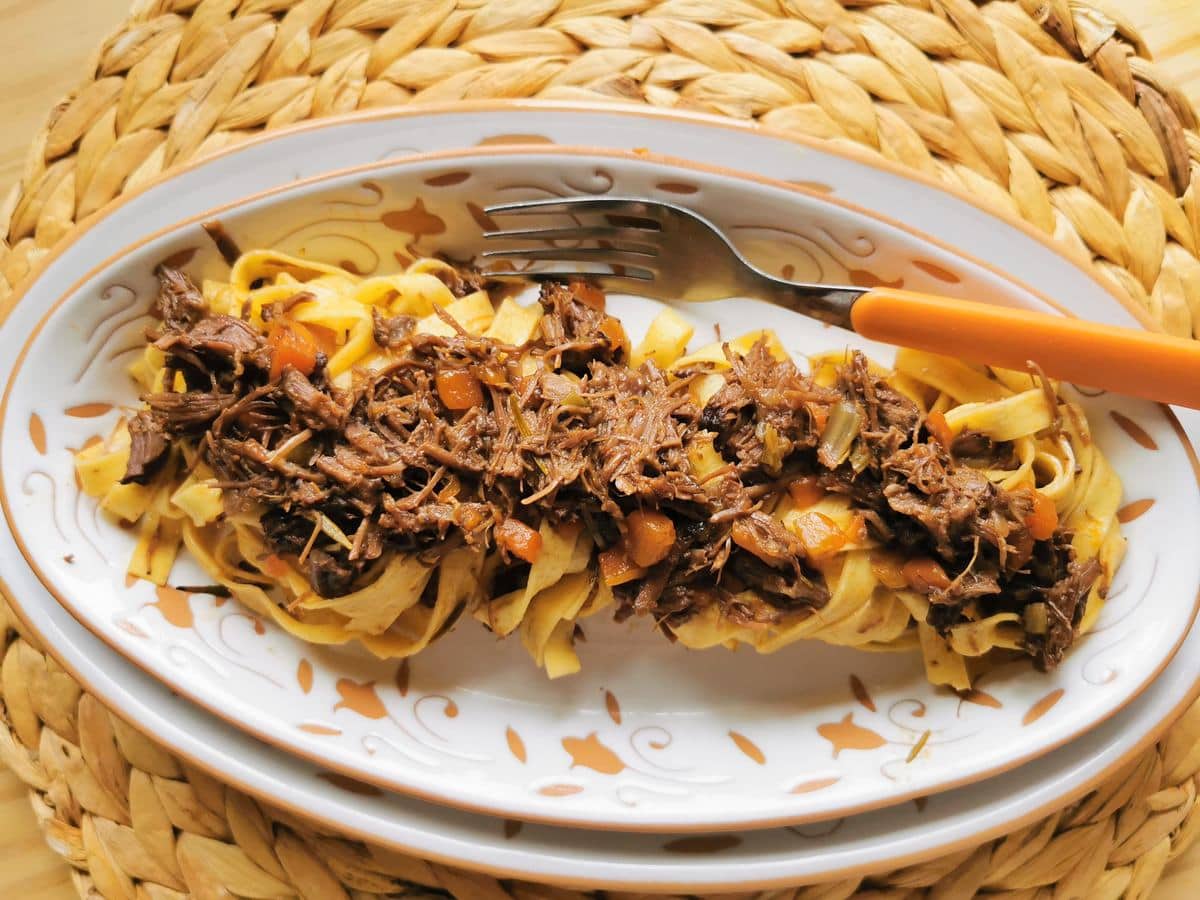
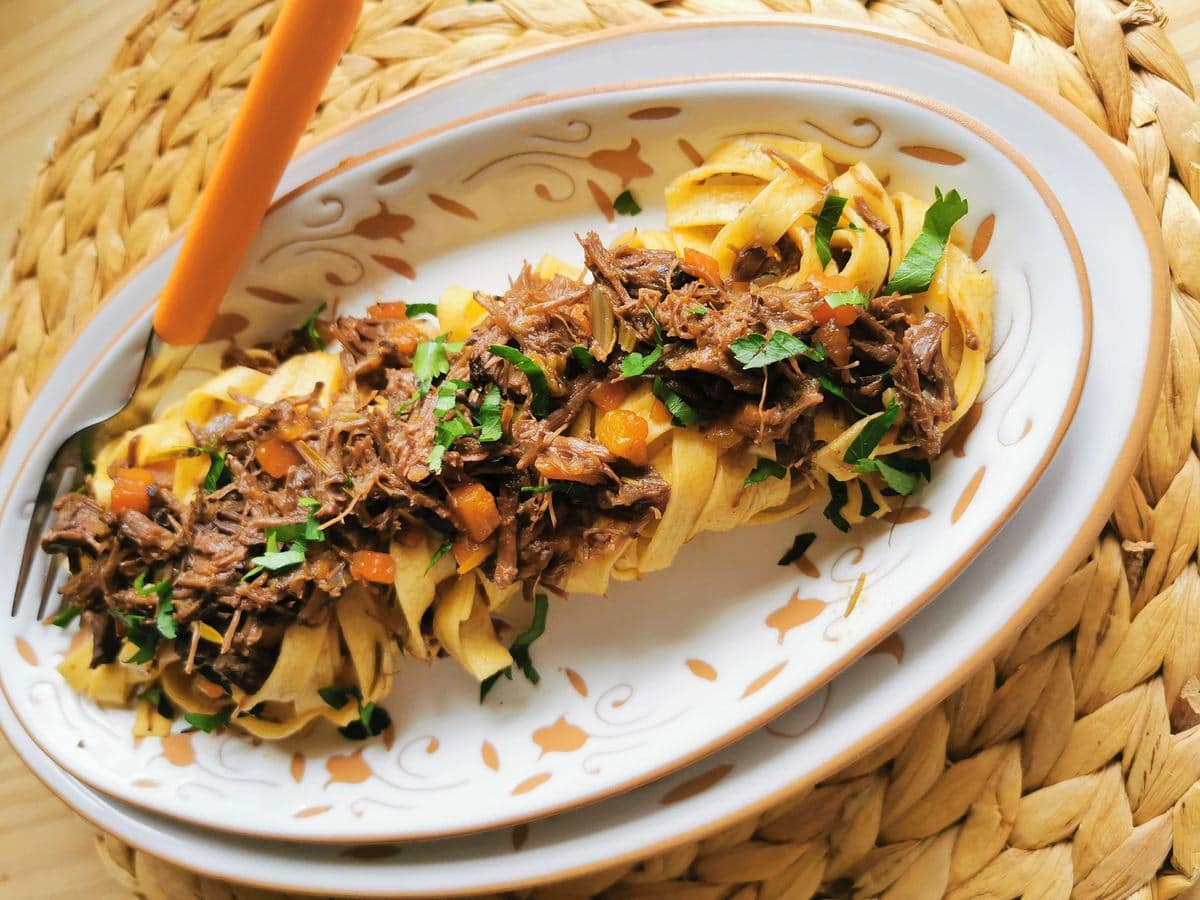
This absolutely delicious Italian beef cheek ragù is a must-try for lovers of slow-cooked rich pasta meat sauces. The beef cheeks are braised in a red wine and broth sauce along with a classic Italian soffritto of onions, celery and carrots, plus tomato concentrate, fresh herbs and cloves.
Serve this amazing dish over tagliatelle or pappardelle or even soft polenta or potato purée with some crusty bread to mop up the rich sauce.
Where is this recipe from?
I followed a recipe for beef cheeks ragu with tagliatelle from Italian celebrity chef Daniele Rossi. However, braised beef cheeks is a popular recipe throughout Italy, particularly here in the North.
For Italians, this is a dish enjoyed by generations. It’s also one with history and meaning. Invented as a way to turn a cheap cut of meat into a dish that is something extra special, braised beef cheek is comfort food at its best.
What is beef cheek?
The cheek (or guanciale in Italian) is the facial cheek muscle of the cow. It’s a highly used muscle through constant chewing , which is why it’s naturally fibrous and requires prolonged cooking to soften.
Often overlooked in favor of more well-known cuts, beef cheek, also called ox cheeks, is actually a hidden gem: a small, extremely flavorful muscle rich in collagen. It is the high content of intramuscular fat and collagen that prevents the meat from drying out during the long hours of cooking. In fact, long slow cooking makes beef cheek incredibly tender, succulent, and literally melt-in-your-mouth.
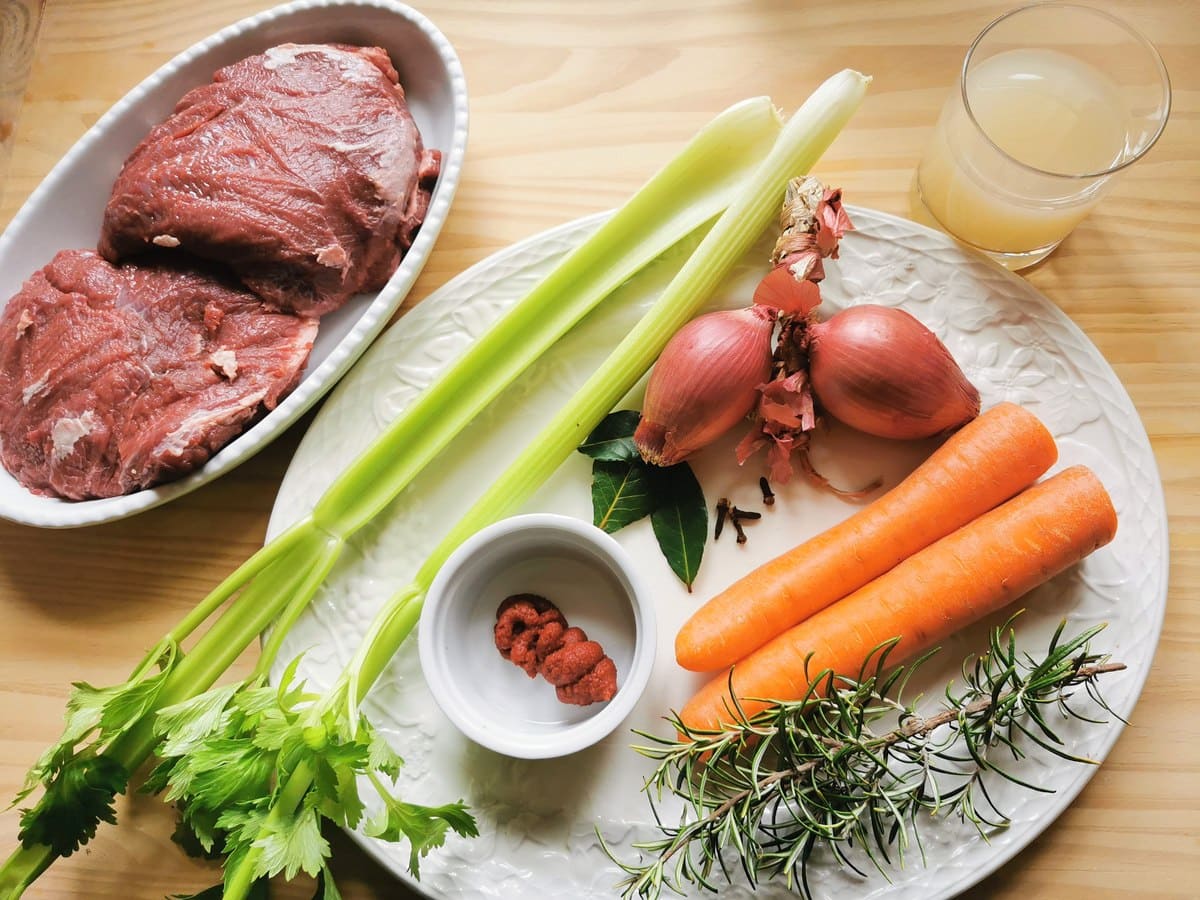
Main ingredients for Italian beef cheek ragù.
Beef cheeks: I used 1kg (2.2lbs) of beef cheek which was 2 whole beef cheeks for me. You may find that you get 3 cheeks instead, although beef cheeks are often sold in pairs.
Italian soffritto: Onion, celery and carrots. This is the Italian version of the French mirepoix and the base of many pasta sauces, soups and stews. I used red onion, but you can also use yellow or white onion, plus two carrots and two sticks of celery.
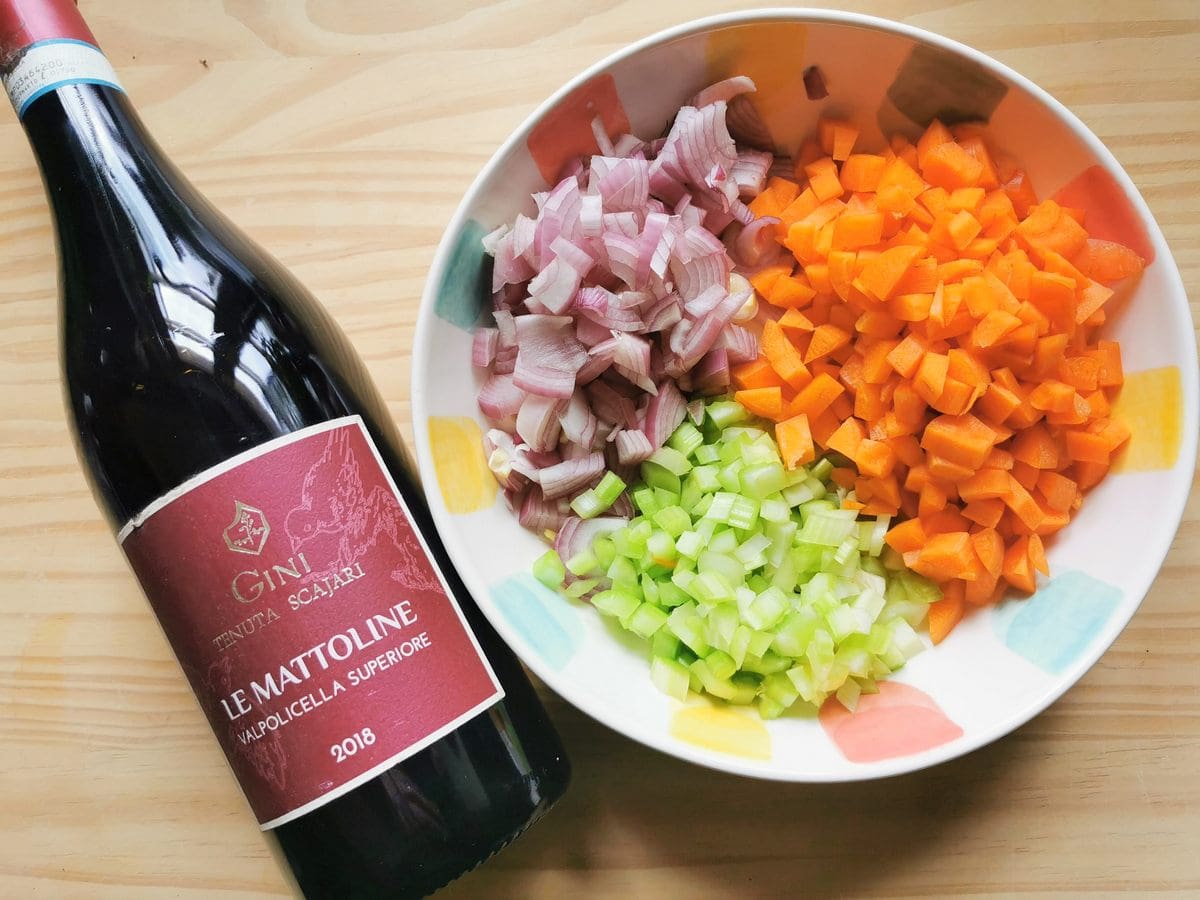
Red wine: I think it always pays to cook with a decent red wine that you’d be happy to drink too. I used a local Valpolicella Superiore from Gini. In Piemonte, braised beef cheeks are traditionally made with Barolo, Nebbiolo or Barbera. In Tuscany, they would use a good Chianti with beef cheeks. Of course, you can use other red wines but full-bodied are best.
Beef broth: You can use homemade or store-bought broth. If using the latter, look for a low sodium broth, preferably made with organic ingredients. These broths have more flavor and nutrients.
Herbs: I used fresh rosemary and bay leaves from my garden, plus cloves. You can use dried rosemary and bay leaves instead. Some recipes for beef cheek ragu include juniper berries and even cinnamon. The one I followed didn’t.
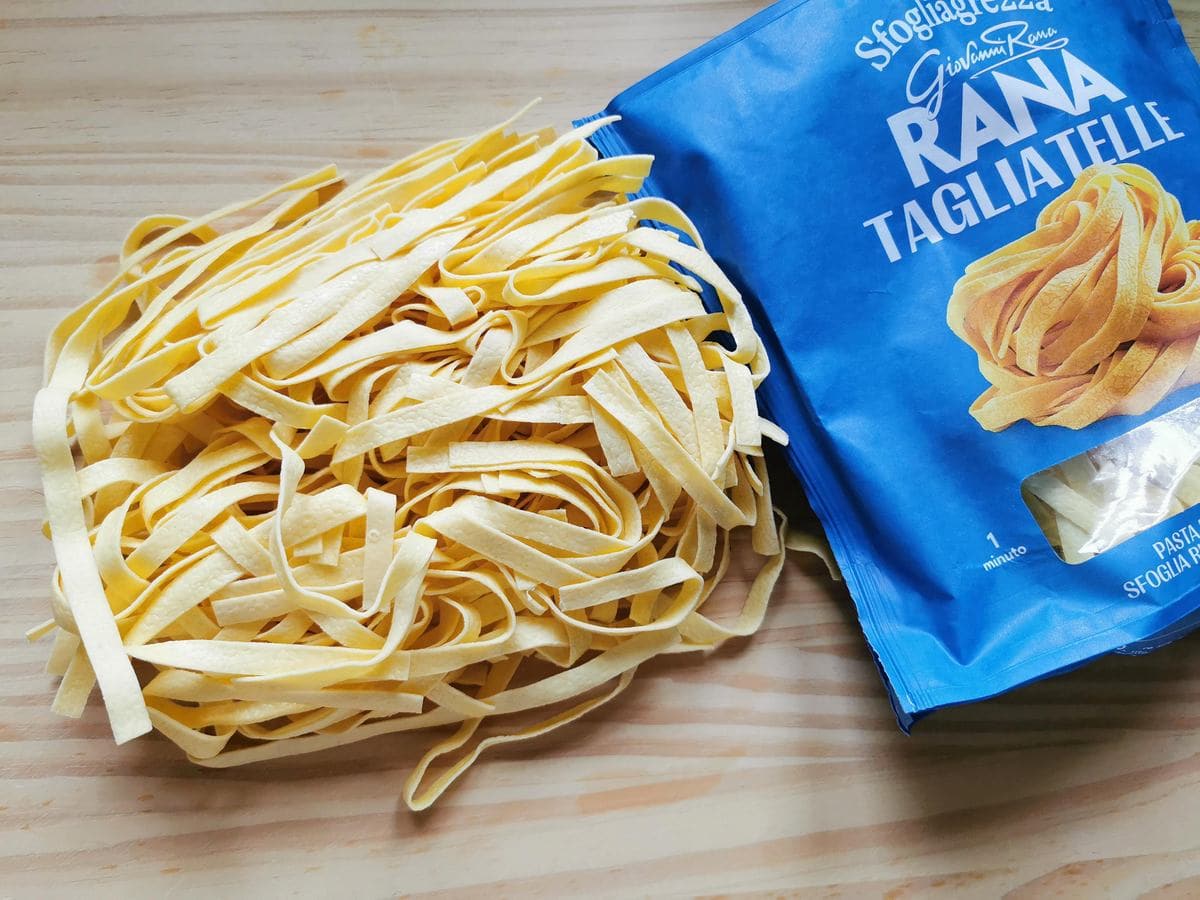
Pasta: As is traditional with other braised meat ragu recipes such as venison ragu or wild boar ragu, pasta ribbons such as fresh tagliatelle or fresh pappardelle pasta are the most popular with beef cheeks ragu. Homemade tagliatelle is a wonderful pasta choice for this ragu. However, pasta tubes such as rigatoni would work well too.
About the red wine.
A full-bodied red wine isn’t just an ingredient used for flavor. During the hours of cooking, tannins and acidity work on the meat: they soften the fibers, concentrate the juices, and create a dense base, capable of enveloping every bite. For this reason, braising wines must have body, a distinct aroma, and sufficient alcohol to withstand the long cooking time.
Step by step instructions.
Preparation: If it hasn’t been done by your local butcher, trim any outer layer of fat (fat cap) and remove the shiny silver connective tissue membrane (silver skin) from the beef cheeks . This how to clean beef cheeks video show you how to do it. Next peel the onion and cut it into cubes and wash and chop the carrot and celery.
Make the ragu.
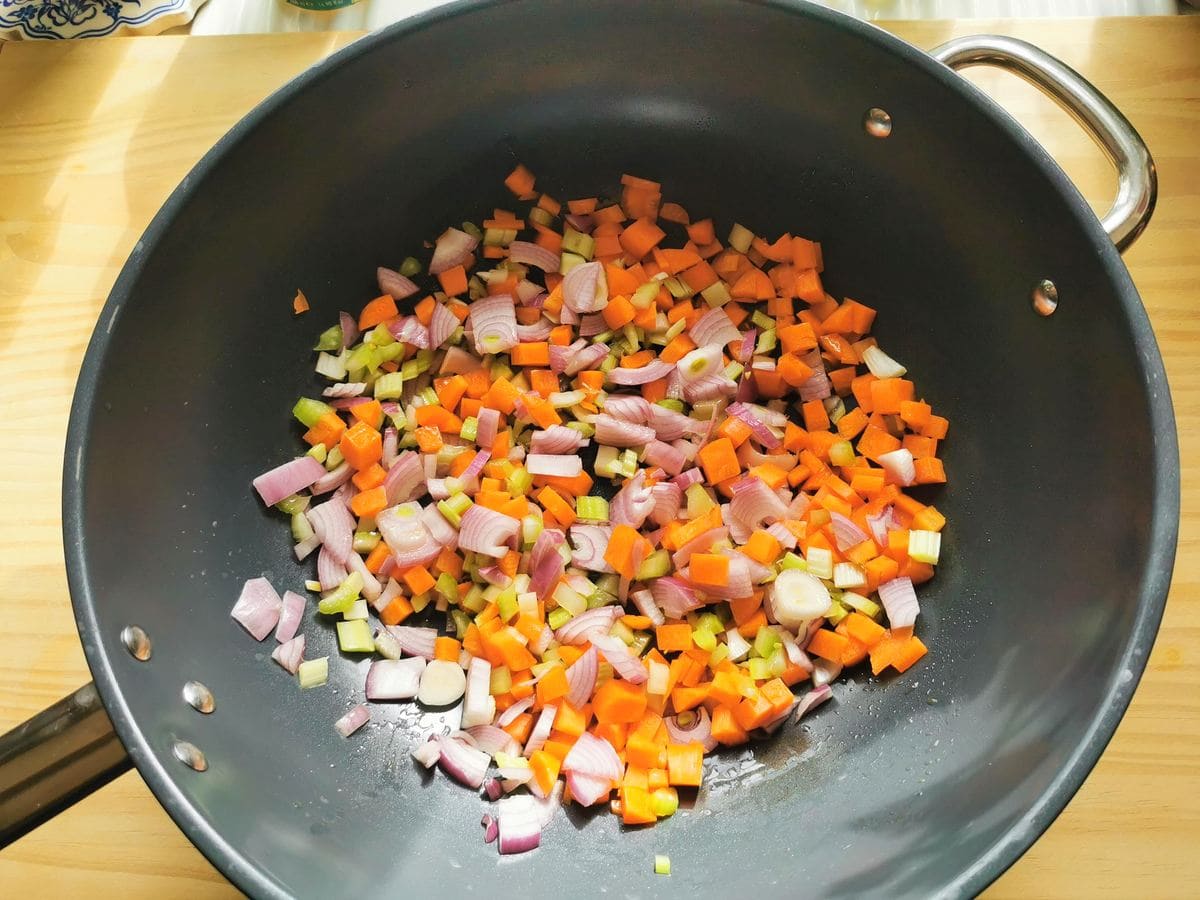
Step one: Heat some olive oil in a deep skillet and cook the diced carrot, onion and celery on a low heat until they soften.
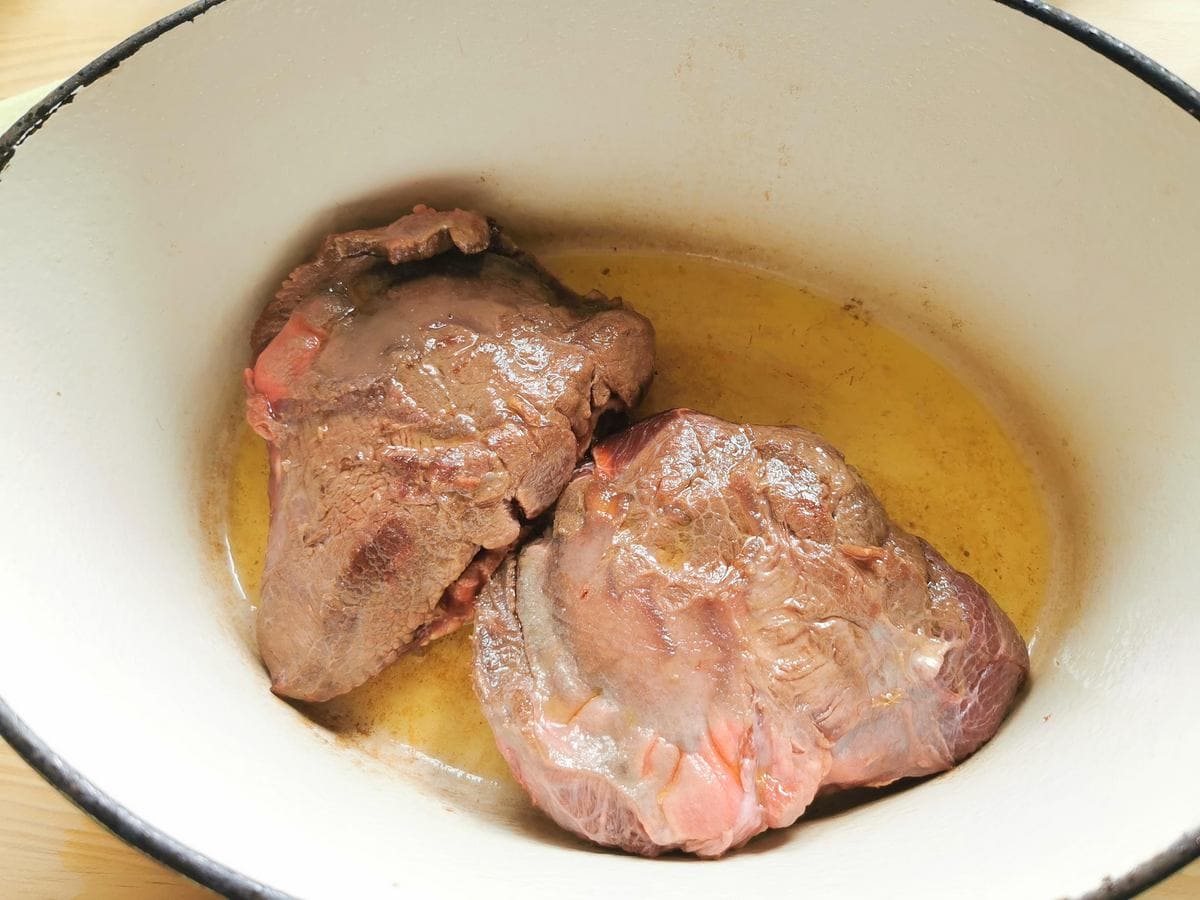
Step two: In the meantime, pat the beef cheeks dry and season with sea salt and black pepper. Heat some more olive oil in a large pot with a lid, a large casserole pan or a Dutch oven ( I used the latter). Sear the seasoned beef cheeks on each side. For faster cooking you can also cut the cheeks in half.
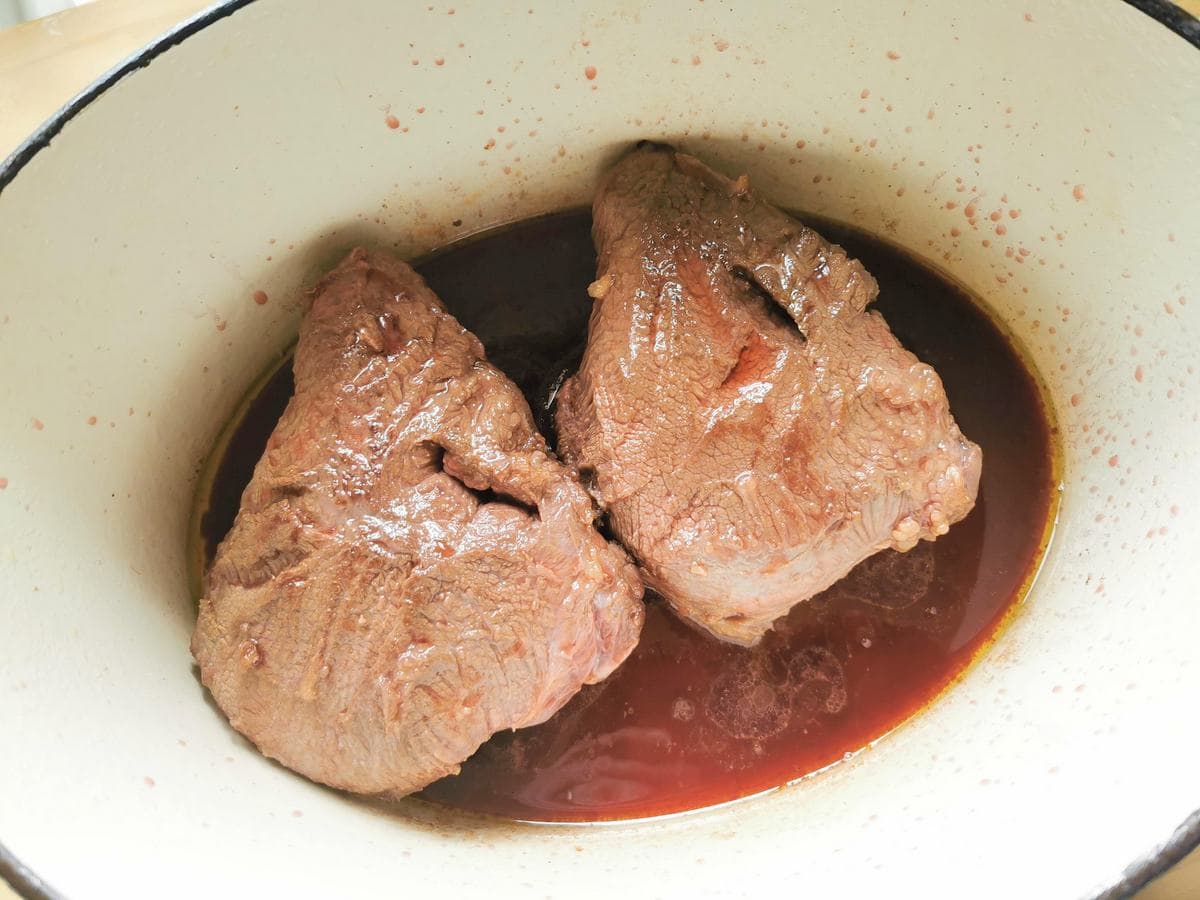
Step three: Add the red wine and use a wooden spoon to deglaze the bottom of the pan. Let the wine and cheeks cook together over a medium-high heat for 3-4 minutes.
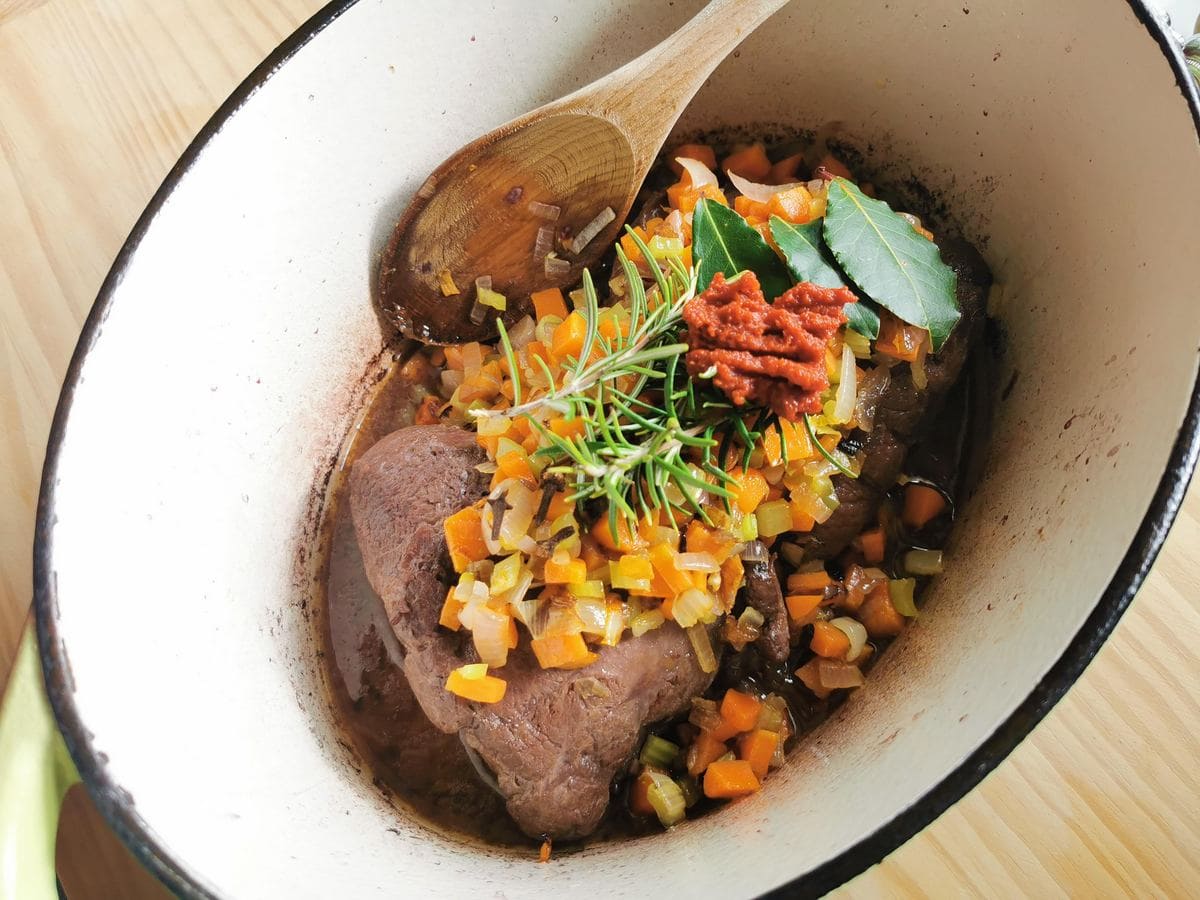
Step four: Add the cooked vegetables, herbs, cloves and tomato concentrate to the beef cheeks along with the beef broth. Mix everything together and simmer over a low heat for up to 3 hours with the lid on.
Step five: You will need to check the braising liquid hasn’t reduced too much and turn the cheeks once every 30 minutes or so. If necessary add more beef broth or a little water. If using a Dutch oven or casserole pan, you can also cook your Italian beef cheek ragu in the oven (180°c 356°F).
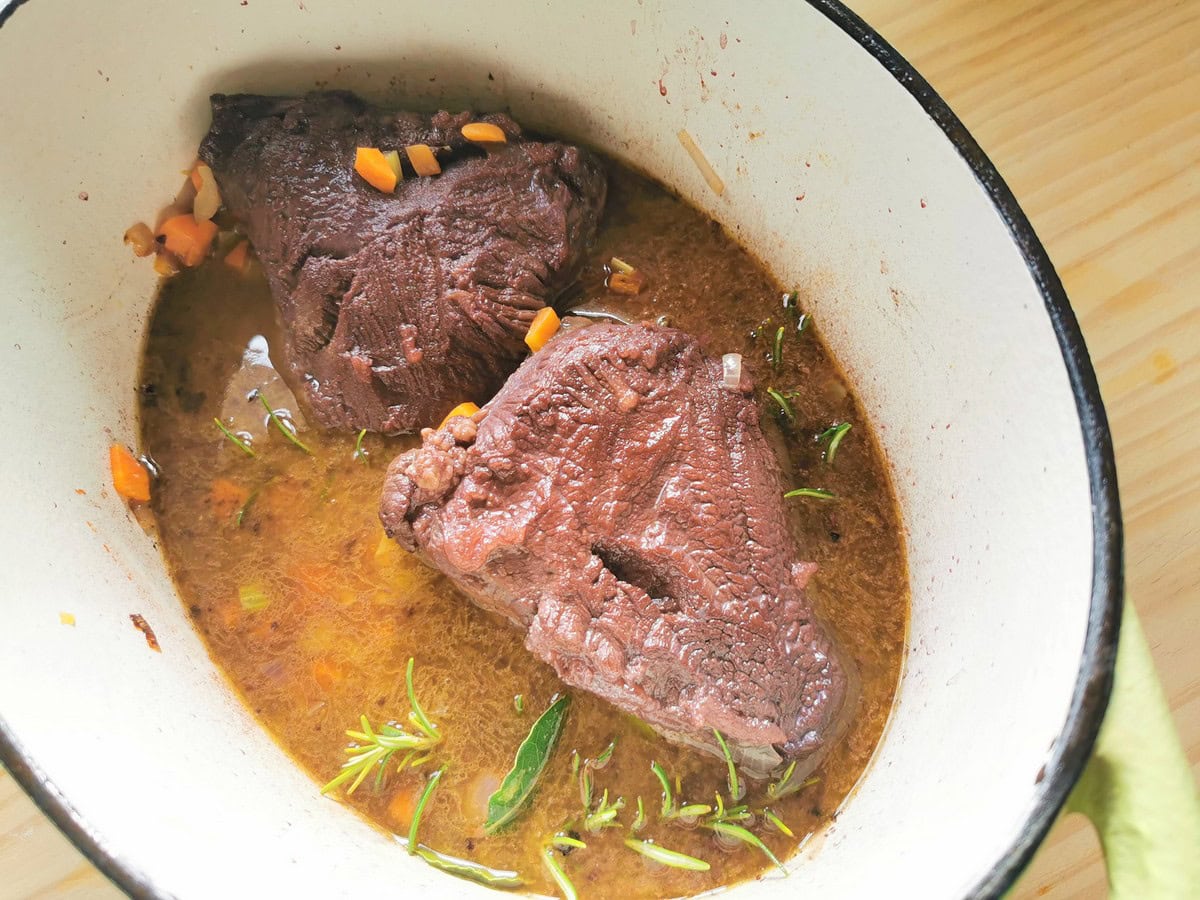
Step six: Once the beef cheeks are fork tender, remove them from the oven dish and shred using two forks. In the meantime, remove the bay leaves and simmer the sauce over a medium heat to reduce and thicken it. About 15 minutes depending on your desired thickness.
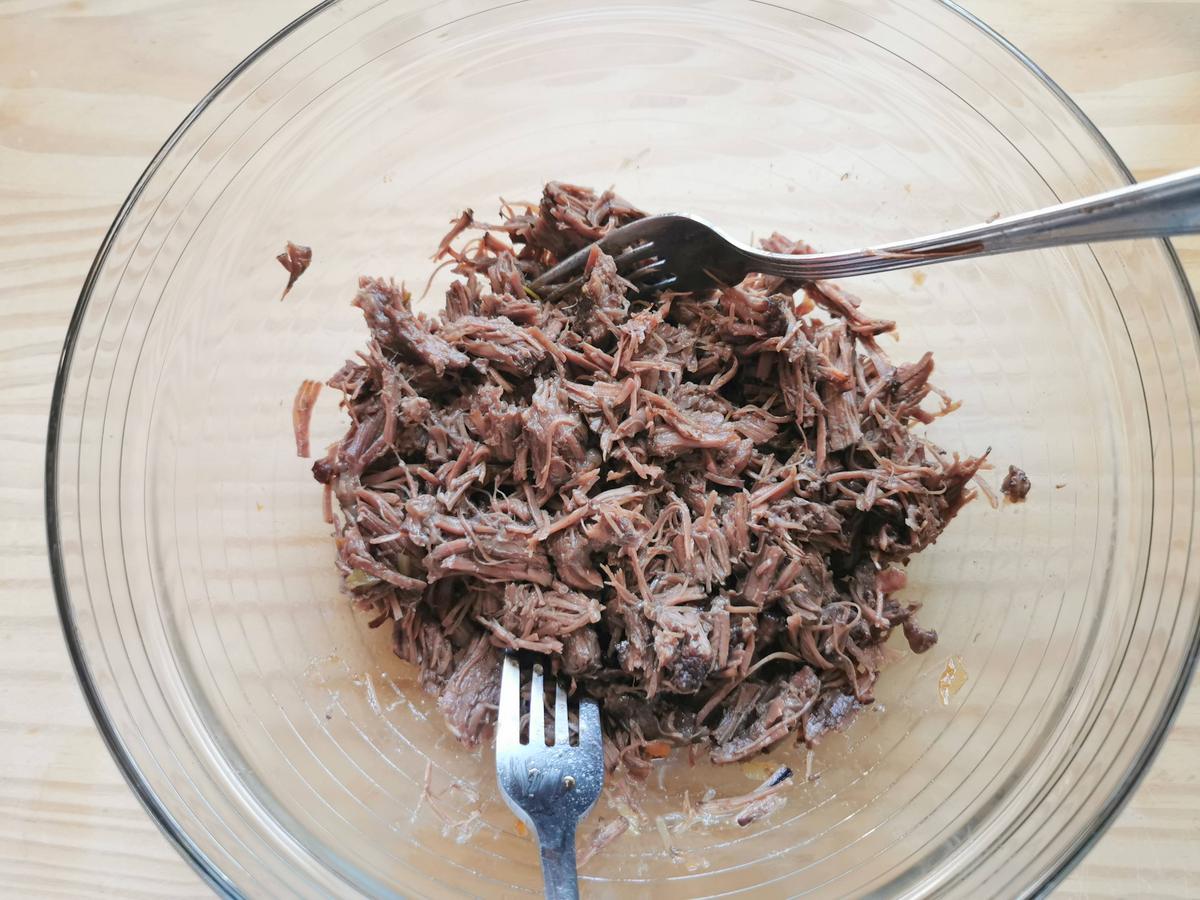
Step seven: Add the sauce to the shredded beef cheeks. If serving later, set aside or refrigerate and reheat while the pasta is cooking. I used a different pan to reheat the sauce and combine it with the pasta.
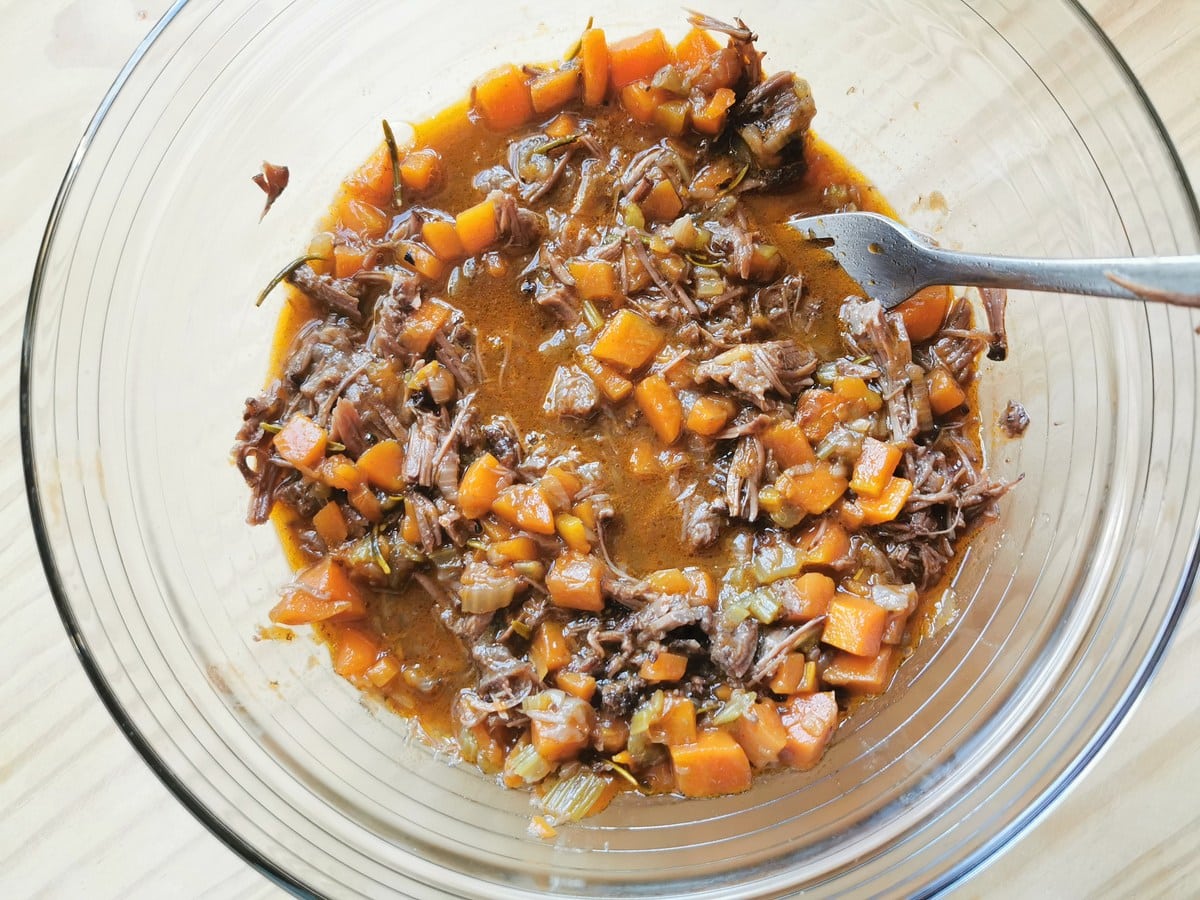
Finish and serve.
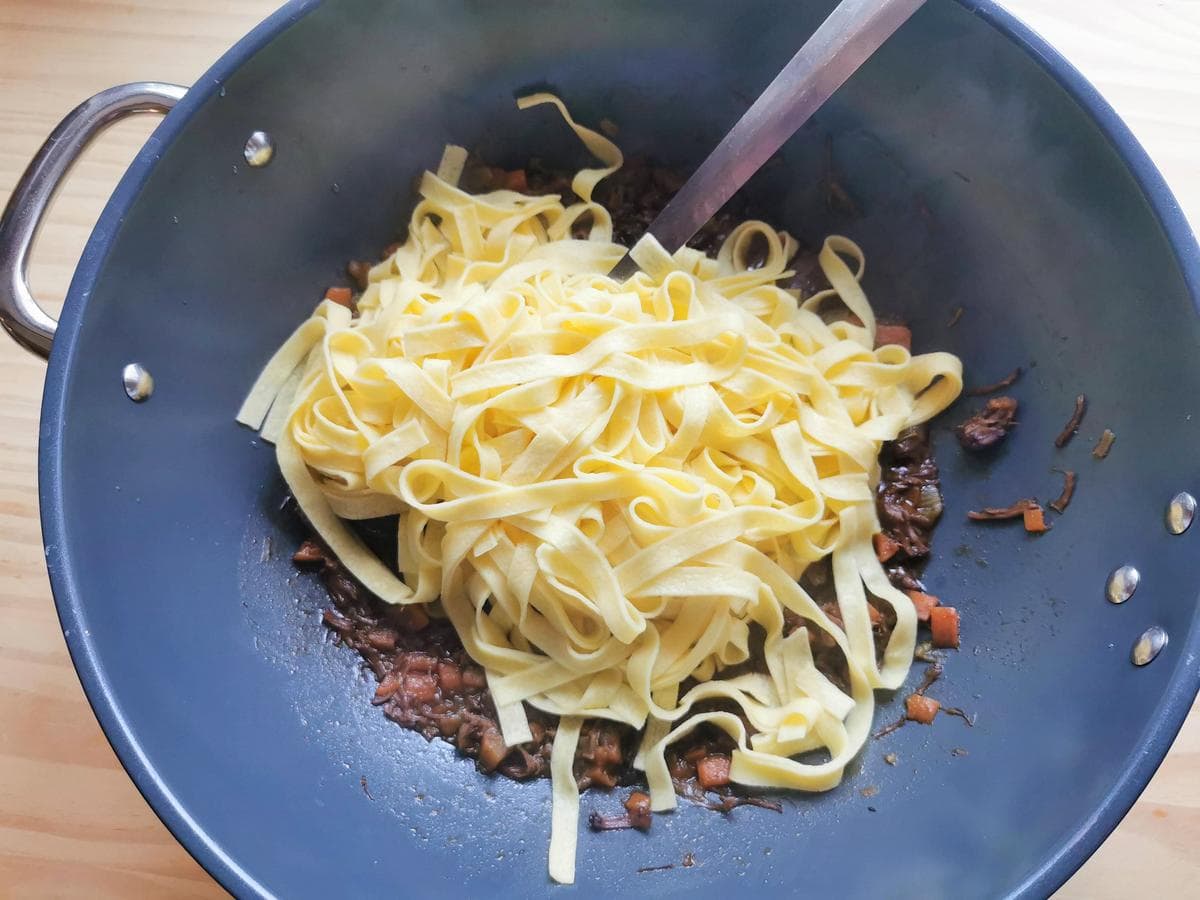
Step eight: Put a pot of water onto boil for the pasta. Add salt once it starts to boil then cook the pasta al dente according to the packet instructions. I used fresh tagliatelle from Giovanni Rana, which only needed 1 minute to cook. Fresh pasta cooks a lot faster than dried.
Step nine: Save some pasta cooking water then drain the cooked pasta and toss it carefully with the beef cheek ragu. If the sauce seems dry add some of the pasta water and mix again. Serve immediately with some chopped fresh parsley (optional) and grated Parmigiano or grana.
Alternative ways to serve your braised beef cheeks.
Instead of shredding the beef cheeks, you can cut them into slices and serve with the meat sauce over mashed potatoes or polenta. I like to cook enough beef cheeks to enjoy them two ways, as a ragu with pasta, and as a main course with potato purée.
Cooked beef cheeks freeze well and can be made a day or two in advance and kept sealed in the fridge. In fact, they taste even better after a day or so.
Making this recipe in the slow cooker.
To make this recipe in a slow cooker, simply prepare the beef cheek ragu ingredients as you would if you were cooking on the stove top or in the oven. Sear off the beef cheeks in a hot pan and add them to your slow cooker along with the vegetables and other ingredients.
Cook the beef cheek ragu on the low setting for approx 8 hours. Then shred the cheeks up and you are pretty much done! However, if the sauce seems rather liquid, use some flour or cornstarch to thicken it up.
What to do with leftovers.
If you have leftover beef cheek ragu mixed with pasta, you can keep it sealed in the fridge for up to 2 days. Reheat in the microwave or bake it with some grated Parmigiano on top.
If you have leftover ragu, keep it sealed in the fridge for up to 3 days or freeze for up to 3 months. When ready to use the frozen ragu, defrost it in the fridge overnight and then reheat slowly on the stove top. Don’t forget to let your ragu cool completely before freezing to prevent ice-crystals from forming.
Let me know what you think.
Italian cuisine includes many types of ragù. This beef cheek ragu is actually a simple recipe compared to some others and doesn’t have a lot of ingredients. It just takes time, something that many of us don’t have so much of these days. However, it’s a fabulous choice for weekends or holidays and is perfect for batch cooking. The best thing is it freezes well and tastes even better the next day.
If you try this recipe, I’m sure you’ll agree that depite the long cooking this is the ultimate ragu sauce, worth making for family and friends. If you do make it, I’d love to hear how it turns out. Please write a comment here on the blog, email me or post a comment on the Pasta Project Facebook page.
Your feedback is really appreciated!
Buon Appetito!
Slow cooked Italian beef cheek ragù with tagliatelle.

This absolutely delicious Italian beef cheek ragù is a must-try for lovers of slow-cooked rich pasta meat sauces. The beef cheeks are braised in a red wine and broth sauce along with a classic Italian soffritto of onions, celery and carrots, plus tomato concentrate, fresh herbs and cloves. Serve over tagliatelle or pappardelle or even soft polenta or potato purée with some crusty bread to mop up the rich sauce.
Ingredients
- 2.2 pounds beef cheeks
- 1 large onion or two medium sized. Peeled and chopped
- 2 large carrots washed and diced
- 2 stalks celery washed and diced
- 4 tablespoons extra virgin olive oil.
- 1 sprig rosemary
- 2 bay leaves
- 1 tablespoon tomato concentrate
- 4-5 cloves
- 7 flozs red wine full-bodied
- 5 flozs beef broth
- 14 ounces tagliatelle or pappardelle
- 1 handful fresh parsley optional
- 2 ounces grated Parmigiano or Grana optional
- salt for pasta and to taste
- freshly ground black pepper. to taste
Instructions
Preparation
-
If it hasn’t been done by your local butcher, trim any outer layer of fat (fat cap) and remove the shiny silver connective tissue membrane (silver skin) from the beef cheeks. Next peel the onion and cut it into cubes and wash and chop the carrot and celery.
Cook the ragu
-
Heat some of the olive oil in a deep skillet and cook the diced carrot, onion and celery on a low-medium heat until they soften.
-
In the meantime, pat the beef cheeks dry and season with sea salt and black pepper. Heat some more olive oil in a large pot with a lid, a large casserole pan or a Dutch oven ( I used the latter). Sear the seasoned beef cheeks on each side. For faster cooking you can also cut the cheeks in half.
-
Add the red wine and use a wooden spoon to deglaze the bottom of the pan. Let the wine and cheeks cook together over a medium-high heat for 3-4 minutes.
-
Add the cooked vegetables, herbs, cloves and tomato concentrate to the beef cheeks along with the beef broth. Mix everything together and simmer over a low heat for up to 3 hours with the lid on. You will need to check the braising liquid hasn’t reduced too much and turn the cheeks once every 30 minutes or so.
-
Once the beef cheeks are fork tender, remove them from the oven dish and shred using two forks. In the meantime, remove the bay leaves and simmer the sauce over a medium heat to reduce and thicken it. About 15 minutes depending on your desired thickness.
-
Return the shredded beef cheeks to the sauce. If serving later, set aside and reheat while the pasta is cooking. I reheated the sauce in a different pan to make it easier to mix it with the pasta.
-
Put a pot of water onto boil for the pasta. Add salt once it starts to boil then cook the pasta al dente according to the packet instructions. I used fresh tagliatelle from Giovanni Rana which only needed 1 minute to cook. Fresh pasta cooks a lot faster than dried.
-
Save some pasta cooking water, then drain the cooked pasta and toss it carefully with the beef cheek ragu. If the sauce seems dry, add some pasta water and mix gain. Serve immediately with some chopped fresh parsley (optional) and grated Parmigiano or grana.
Prevent your screen from going dark
Notes
Tips for best results.
- Use a good full-bodied red wine for maximum flavor.
During the hours of cooking, tannins and acidity work on the meat: they soften the fibers, concentrate the juices, and create a dense base, capable of enveloping every bite. For this reason, braising wines must have body, a distinct aroma, and sufficient alcohol to withstand the long cooking time. - This ragu tastes even better the next day, making it perfect for meal prep.
- If your beef cheeks aren’t easy to shred after 3 hours, continue cooking until they are. Add more broth or some water if necessary.
Nutrition
Calories: 735kcalCarbohydrates: 79gProtein: 48gFat: 24gSaturated Fat: 5gPolyunsaturated Fat: 3gMonounsaturated Fat: 14gTrans Fat: 0.1gCholesterol: 142mgSodium: 195mgPotassium: 1089mgFiber: 5gSugar: 6gVitamin A: 6231IUVitamin C: 6mgCalcium: 97mgIron: 6mg
Save this recipe for later?
If you want to save this recipe for later, you can print it, bookmark this page or save it to Pinterest.
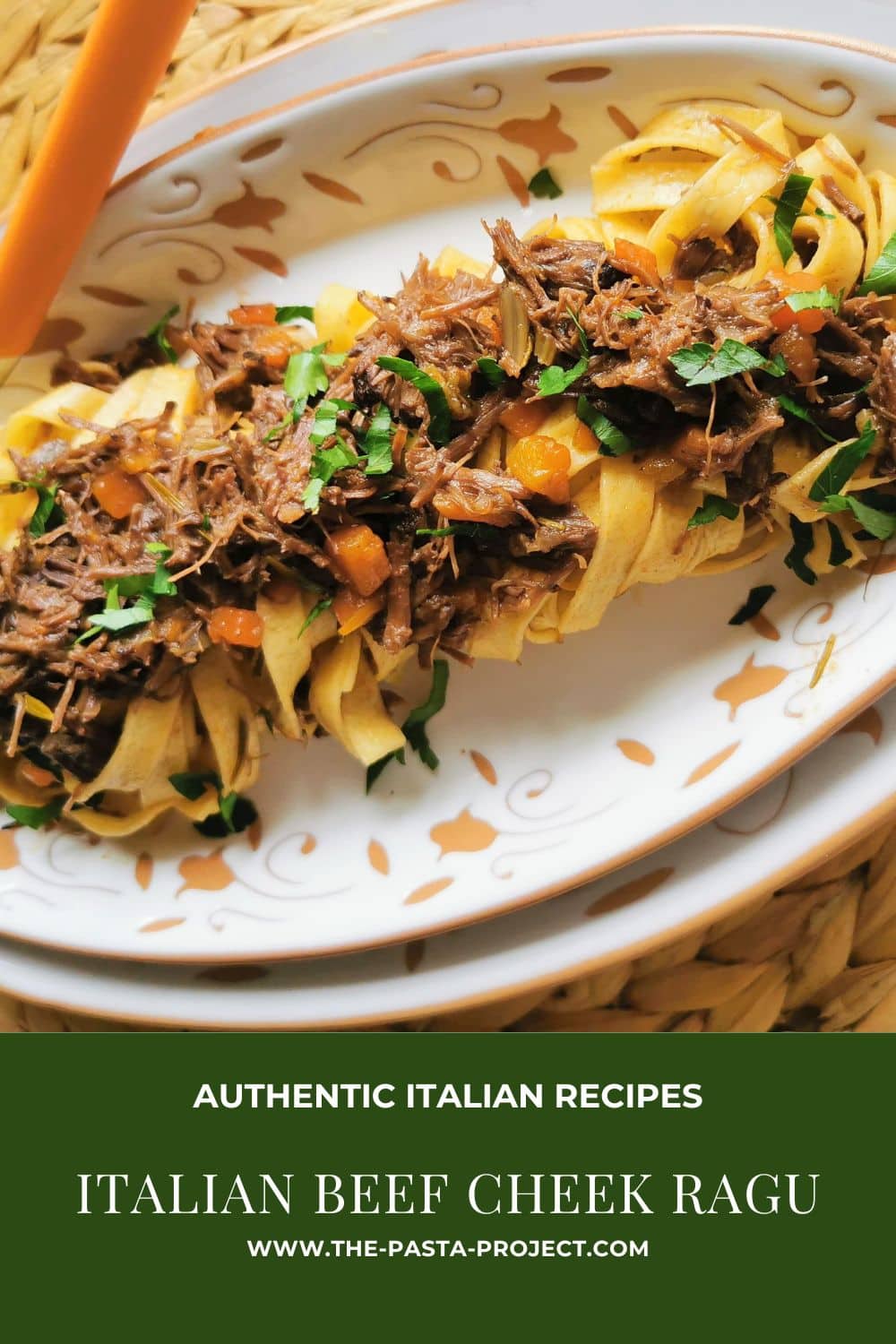
Pin for later.
Other slow cooked ragu recipes to try.
- Ziti alla Genovese
- Venison ragu with pappardelle
- Beef braciole with pasta.
- Oxtail ragu from Rome
- Octopus ragu
Reader Interactions