



Master Class
Below the baby back (anatomically speaking) comes the spare rib—a meaty rack that’s larger, slightly tougher, and intensely flavorful. It should be cooked “low and slow” (at a low temperature for a long time) to achieve the requisite tenderness.

Trim the cartilaginous bottom (called rib tips), the last two ribs on the narrow end of the rack, and some of the fat off a rack of spareribs and you get a St. Louis cut—a spare rib that looks and cooks like a baby back. Pro tip: Use the rib tips and any meaty trim to flavor baked beans, soup, or pork stock.

The fourth kind of rib—the country-style rib—isn’t really a rib at all. It’s an odd cut from the hog’s neck that looks and cooks like a thick elongated pork chop. It may or may not have a bone. It should be direct grilled, exactly as you’d do with a pork steak or chop. Pro tip: Boneless country-style ribs can easily be turned into kebabs by slicing the meat into 1-inch cubes. Marinate, if desired, then skewer and grill with your favorite accompaniments. (We love pineapple. Tacos al pastor, anyone?)
The various ways to cook ribs:
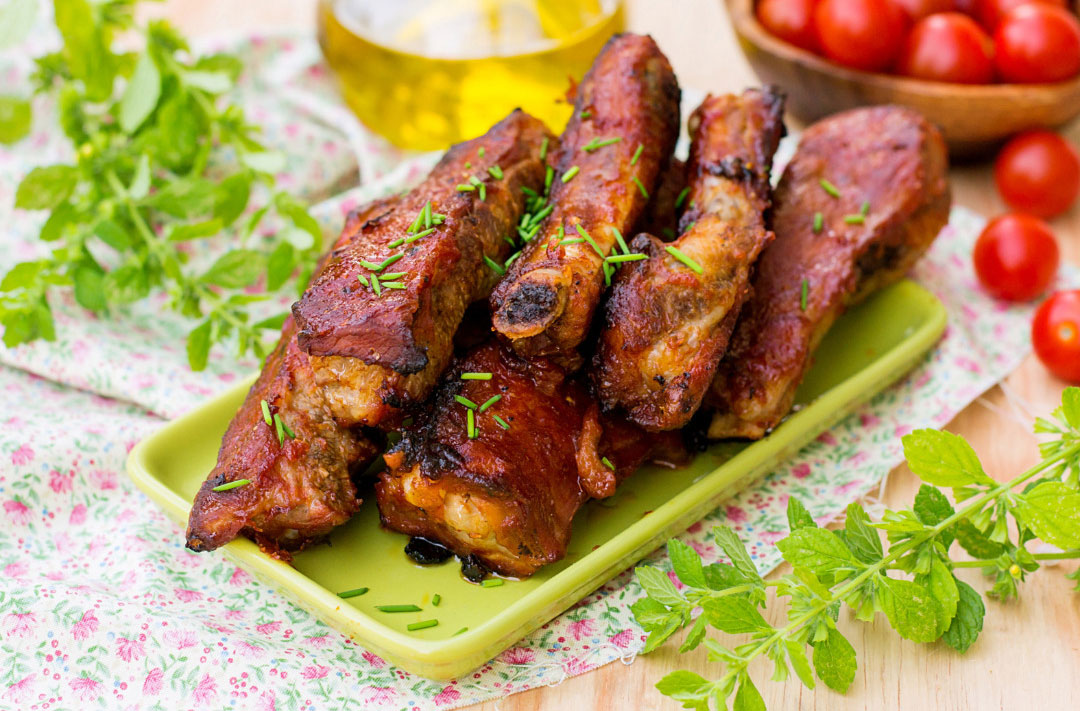
Ribs are highly versatile in that they can be cooked a variety of ways. Baby backs can be indirect grilled at a higher temperature (300 to 325 degrees)—a process that will take around 2 hours, or smoked like true barbecue at 225 to 250 degrees (closer to 3-1/2 to 4 hours). Hawaiians cook them on the rotisserie. St. Louis-cut ribs can be cooked either way, too.
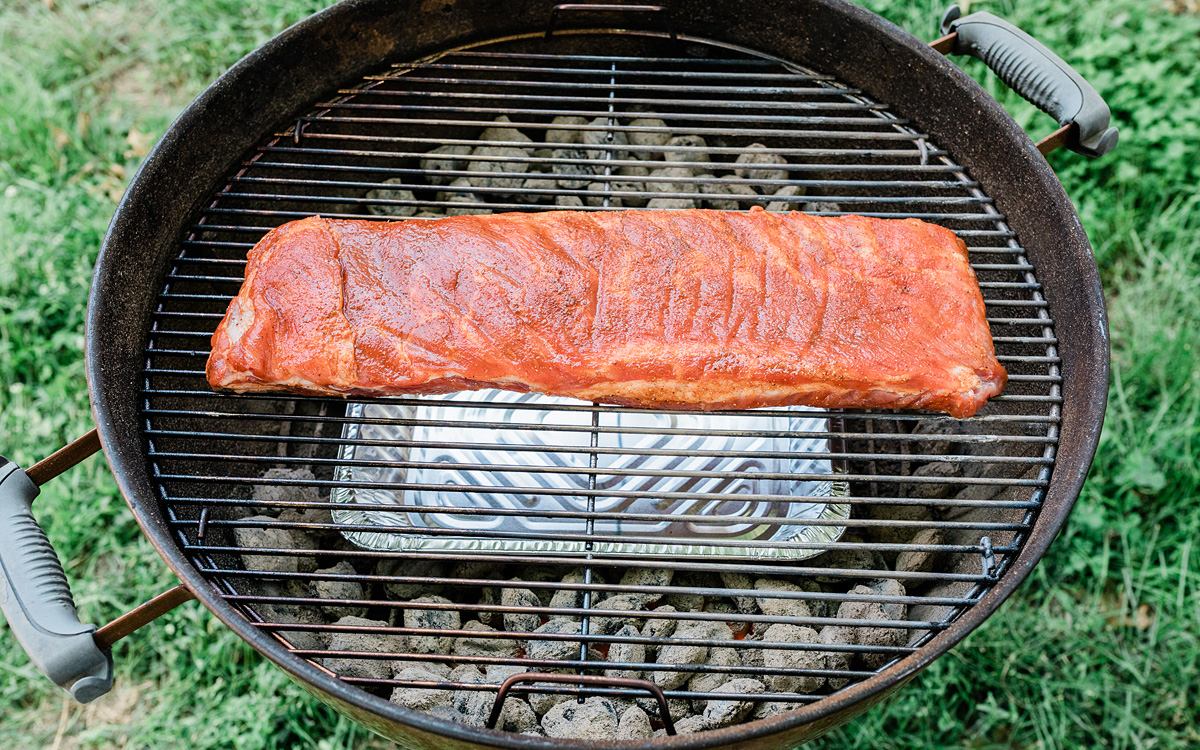
Spareribs should be cooked low and slow in a smoker: figure on 4 to 5 hours. Hickory is the traditional wood for smoking spareribs, but any hardwood works great.
Country-style ribs should be direct grilled—3 to 5 minutes per side over a medium-high flame should do it.
How to trim ribs:
A papery membrane covers the inside (the concave part) of your rib. Many pit masters remove it. (It’s said to interfere with the absorption of the spice and smoke flavors.). To do so, pry it up at the end of a couple of the rib bones with the end of a spoon handle. Grab it with a paper towel (it’s slippery and pull it off. At the same time, you can cut off any gross gobs of fat or dangly parts.
How to flavor ribs:
Take a page from the competition barbecuer’s playbook. Layer the flavors on your ribs. Start with a rub sprinkled over the ribs and rubbed into the meat. During the cook, you can spray your ribs apple cider, beer, or wine. Right at the end, brush on your favorite barbecue sauce, then sizzle the ribs directly over the fire for a minute or two—just long enough to sear the sauce into the meat. Do not apply the sauce too early, or the sugar in it will burn. Pro tip: Before applying a rub, slather the rack of ribs with yellow mustard.

The three-two-one method:
This one was all the rage on social media a few years ago. In a nutshell, you smoke the ribs uncovered for 3 hours, then wrapped in foil with butter and apple juice for 2 hours, then finish uncovered for 1 additional hour. Those numbers work for spareribs, but for baby backs, I recommend 3-1-1 timing.
How do you know when the ribs are cooked:
Ribs should be tender, but still have a little chew to them. In my opinion, the meat should not fall off the bone. (Such ribs were probably boiled or braised before grilling.)
Ribs should be cooked until the meat shrinks back from the ends of the bones by 1/4 to 1/2 inch.
Another test for doneness is to lift the rack in the middle with tongs. The meat should start to tear at the top.
Yet another test is to pull a rib off the rack. You should be able to tear it apart with your fingers.
So what else should you know?
Where your pork comes from matters as much as how you cook it. I’m partial to heritage breeds like Duroc or Berkshire.
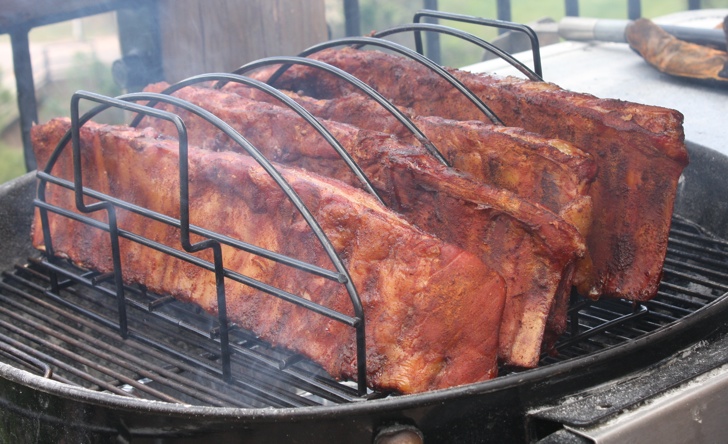
invest in a rib rack, which holds the racks upright so you can fit four racks instead of two on your grill. A must for a small cooker, like a Weber Kettle or Smokey Mountain.
Beef ribs are a whole different animal which we’ll cover in a new masterclass.
And now, the recipes to put your master class to use:
I’ve been cooking ribs for decades, and I’m still learning new things every time I fire up the grill or smoker. If you want to go deeper, I devoted an entire book to the subject—Best Ribs Ever: A Barbecue Bible Cookbook—because ribs reward curiosity, patience, and practice. Use this masterclass as your foundation, then keep experimenting. The best ribs you’ll ever cook are the ones that teach you something along the way.
Pork Ribs: Frequently Asked Questions
What are the different types of pork ribs?
There are four main types of pork ribs: baby back ribs, spareribs, St. Louis–cut ribs, and country-style ribs. Baby backs are tender and quick cooking, spareribs are meatier and best cooked low and slow, St. Louis ribs are trimmed spareribs that cook evenly, and country-style ribs are not true ribs and should be grilled like pork chops.
What temperature should I cook pork ribs?
For traditional barbecue, pork ribs should be cooked at 225–250°F until tender. Baby back ribs and St. Louis–cut ribs can also be indirect grilled at a higher temperature, around 300–325°F, to reduce cooking time while keeping them juicy.
Do I need to remove the membrane on pork ribs?
Many pit masters remove the thin membrane on the bone side of ribs because it can block seasoning and smoke from penetrating the meat. While not mandatory, removing it helps improve texture and flavor.
How do I know when pork ribs are done?
Pork ribs are done when they are tender but still have some chew. The meat should pull back from the ends of the bones by about ¼ to ½ inch, and the rack should bend easily when lifted with tongs, with the meat beginning to tear.
When should I add barbecue sauce to ribs?
Barbecue sauce should be applied near the end of cooking. Adding it too early can cause the sugars in the sauce to burn. Brush it on during the final minutes, then briefly sear the ribs over direct heat to set the sauce.
Related Posts
Check out our 1000+ Recipes section here on Barbecue Bible.Com
Also, sign up for our Up in Smoke newsletter so you don’t miss any blogs and receive some special offers! PLUS get Raichlen’s Burgers! PDF for free!
Follow Steven on Facebook, Instagram, YouTube, TikTok, Reddit, and Pinterest!
Check out our store powered by BBQGuys!