



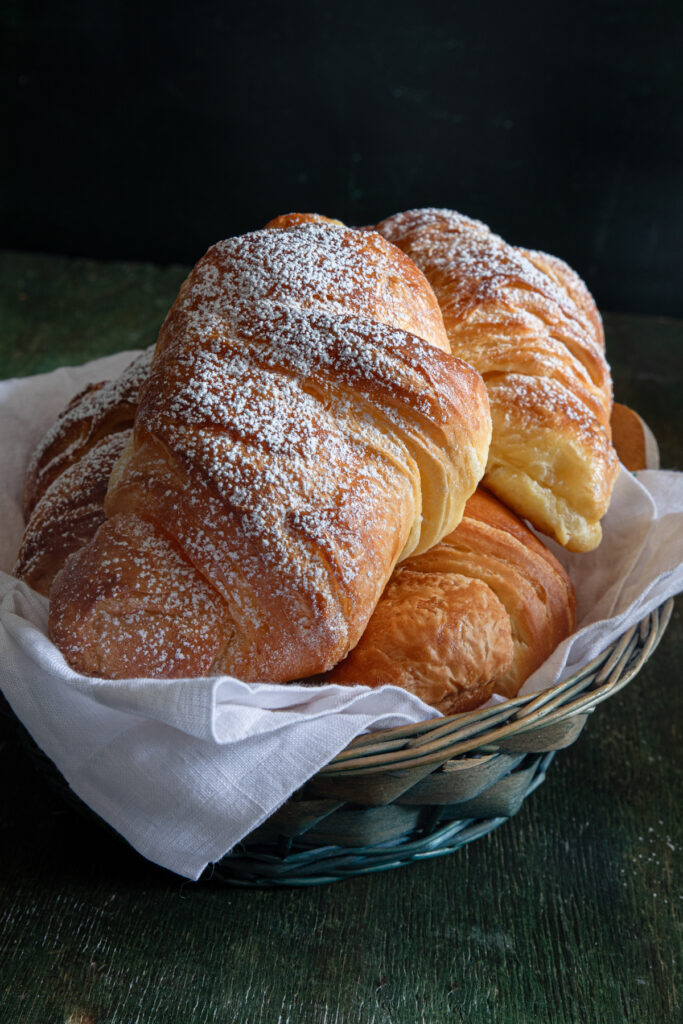
These Italian cornetti are soft, lightly sweet breakfast pastries with flaky, buttery layers and a tender crumb. Made with eggs and a touch more sugar than French croissants, they are best enjoyed warm with a cappuccino, just as they are served in Italy.
In Italy, Italian cornetti are part of the everyday morning ritual. The word cornetto means “little horn,” referring to its crescent shape, and they are what you will find displayed behind the glass in nearly every bar and pasticceria, alongside other traditional pastries like bomboloni, sporcamuss or maritozzi.
While they may look similar to the croissants found in Austria or France, cornetti have their own distinct character. The enriched dough and gentle sweetness create a texture that feels closer to my brioche bunnies, making them especially suited for breakfast and perfect for baking with a filing of pastry cream, jam, or chocolate.
Italian Cornetti vs French Croissants
Although they share a similar crescent shape and layered dough, Italian cornetti and French croissants have a few key differences that set each of them apart from the other.
Sweetness: Italian cornetti contain more sugar, giving them a gentle sweetness. French croissants are much less sweet and can be served savory or sweet.
Dough: Cornetti are enriched with eggs and milk, creating a softer, more tender crumb. French croissants typically do not include eggs and rely more heavily on butter for structure.
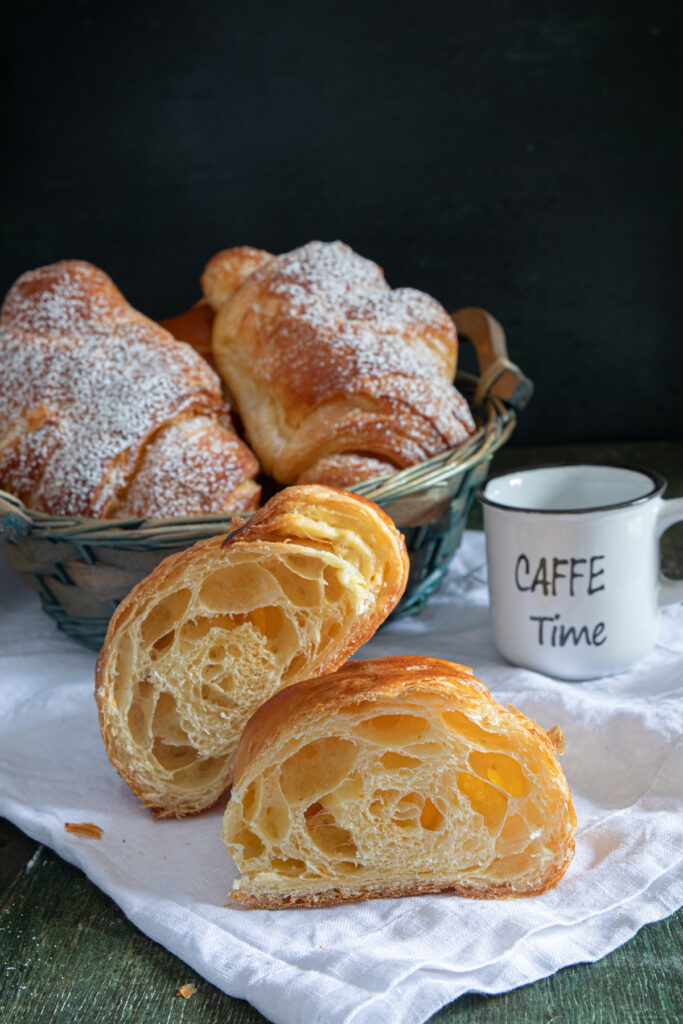
Texture: Croissants are known for their crisp exterior and airy interior. Italian cornetti have a texture that feels closer to brioche, with a softer bite.
How they are served: In Italy, cornetti are almost always enjoyed for breakfast with a cappuccino and simply dusted with powdered sugar.
Ingredient Notes
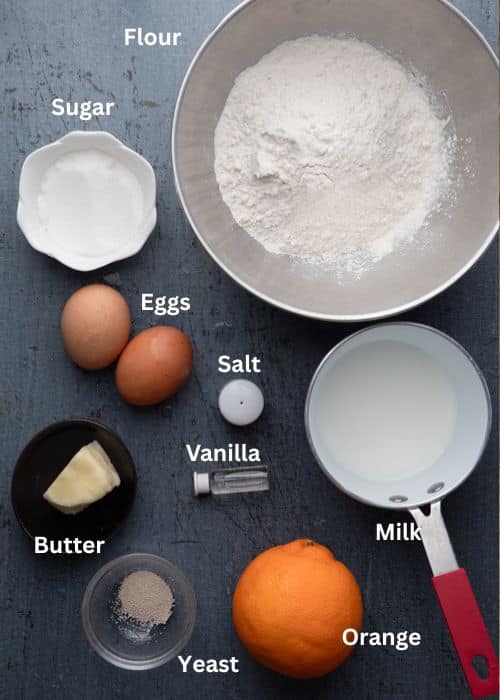
- Milk: Use lukewarm whole milk to activate the yeast and enrich the dough. Milk helps create a tender crumb and a soft texture.
- Active dry yeast: The milk should feel warm to the touch, not hot. If the yeast does not activate after a few minutes, it may need to be replaced.
- All-purpose flour: Provides enough structure for rolling and folding while keeping the finished pastry tender.
- Egg and egg yolk: These enrich the dough and contribute to the soft interior and beautiful golden color.
- Sugar: Adds gentle sweetness and helps the cornetti brown nicely in the oven.
- Orange zest: Adds a subtle citrus aroma that is traditional in Italian breakfast pastries. Lemon zest can also be used for a slightly brighter flavor.
- Vanilla extract: Enhances the sweetness and adds depth.
- Salt: Balances the sweetness and supports proper dough structure.
- Softened Butter (in the dough): Kneaded directly into the dough to add richness and improve texture.
- Cold Butter (for laminating): Rolled into a sheet and folded into the dough to create the layers. It should be cold but pliable so it does not break through the dough.
- Egg Wash: Brushed on before baking for a shiny, golden finish.
How to Make Italian Cornetti
Start by activating the yeast in warm milk. The milk should feel warm to the touch, not hot. If the yeast does not become slightly foamy after a few minutes, it may no longer be active.
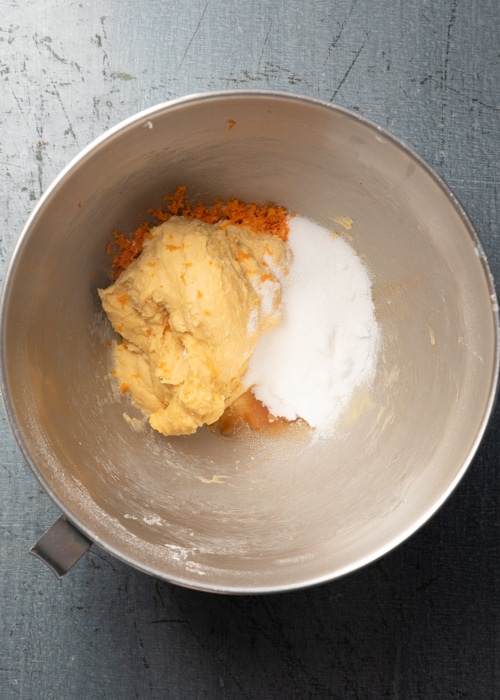
Add the flour, egg, and yolk and begin mixing until a rough dough forms. Then add the sugar, zest, salt, and vanilla and continue mixing until everything is combined.
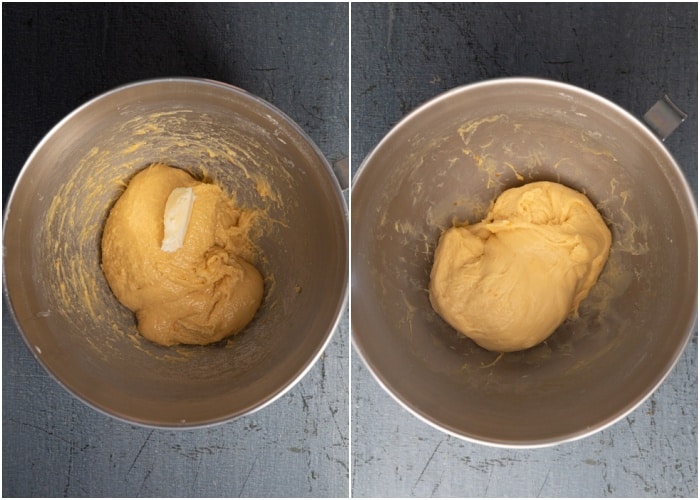
Knead until the dough is smooth and elastic. It should stretch without tearing easily. Add the softened butter gradually, letting each piece fully absorb before adding more. The dough should be soft and smooth with a slight sheen, not sticky.
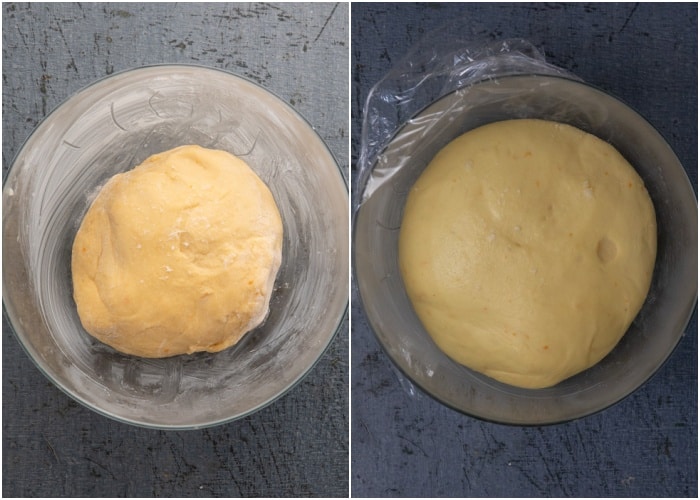
Let it rise until doubled in size, then refrigerate overnight. The long chill firms up the dough and makes it much easier to roll the next day.
Roll the cold butter between parchment paper into a rectangle. The butter should be cold but pliable. If it is too hard, it will break into pieces. If it is too soft, it will blend into the dough instead of forming layers.
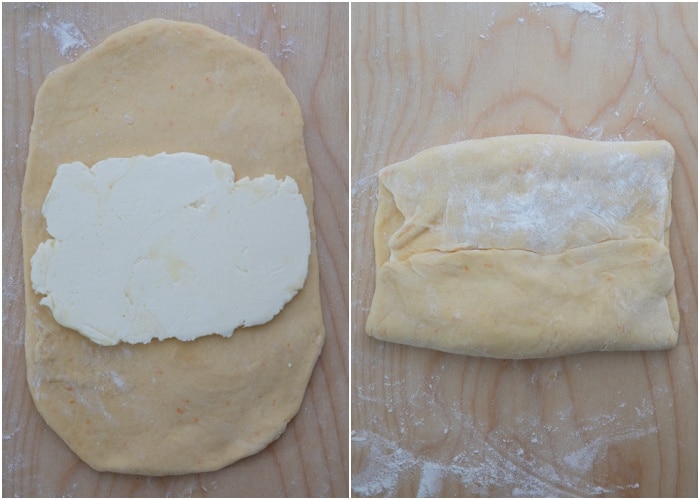
Roll the chilled dough into a rectangle about twice the size of the butter block. Place the butter in the center and fold the dough over it so the edges meet without overlapping. This seals the butter inside and locks it into the dough.
Turn the dough with the open side facing you, gently pat the entire surface with a rolling pin to form a rectangle.
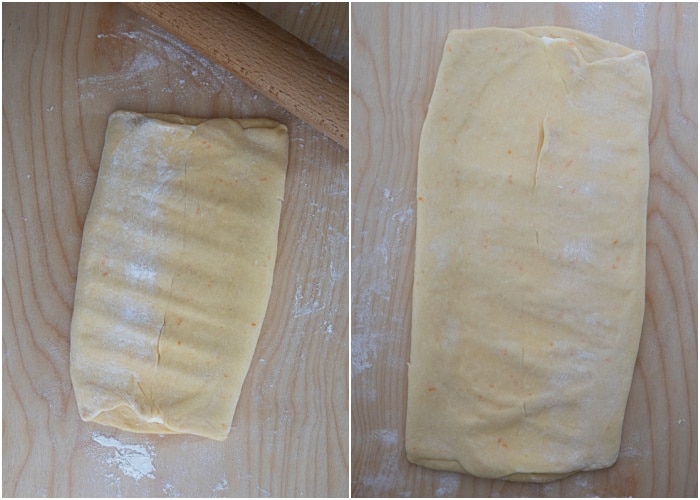
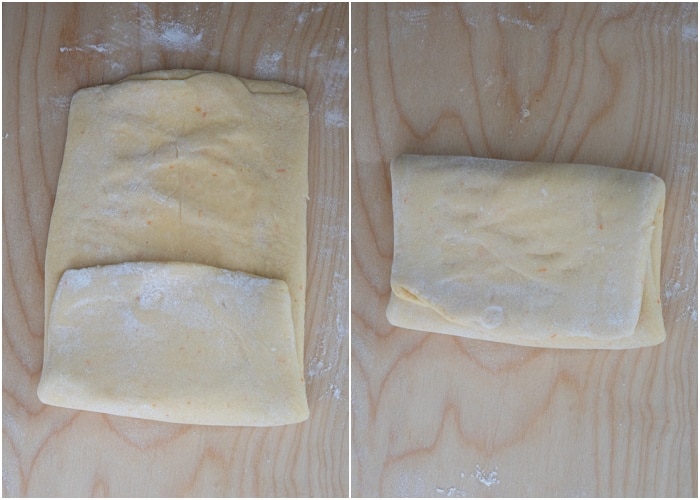
Roll the dough into a longer rectangle. Fold one side toward the center and the other over it, like folding a letter. Chill for one hour. Repeat this rolling and folding process two more times, chilling between each round to keep the butter cold and the layers distinct.
After the final fold, roll the dough into a large rectangle.
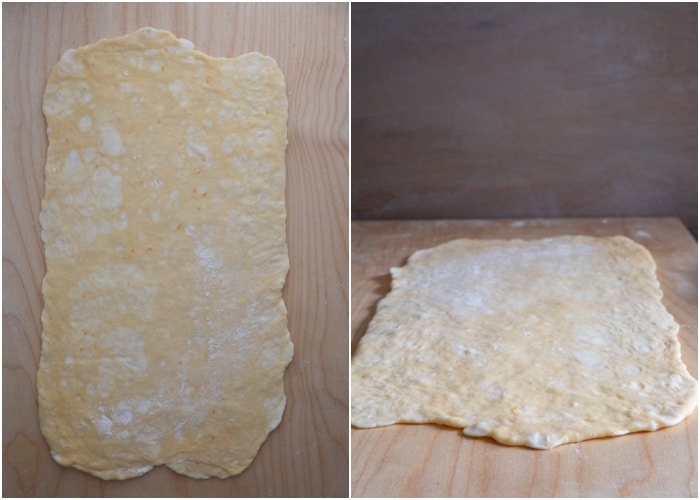
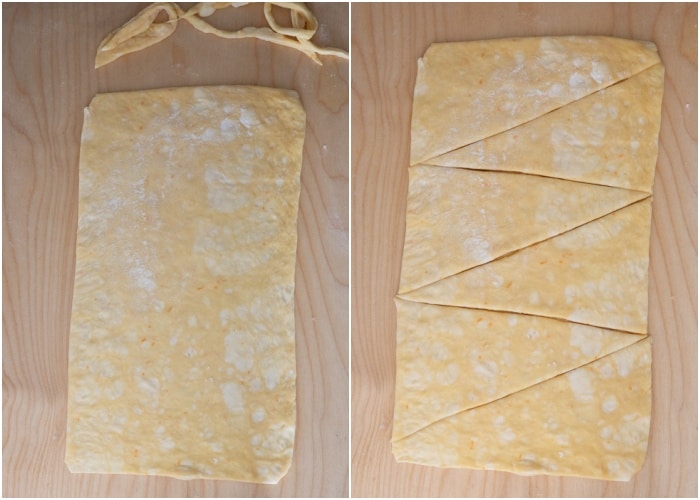
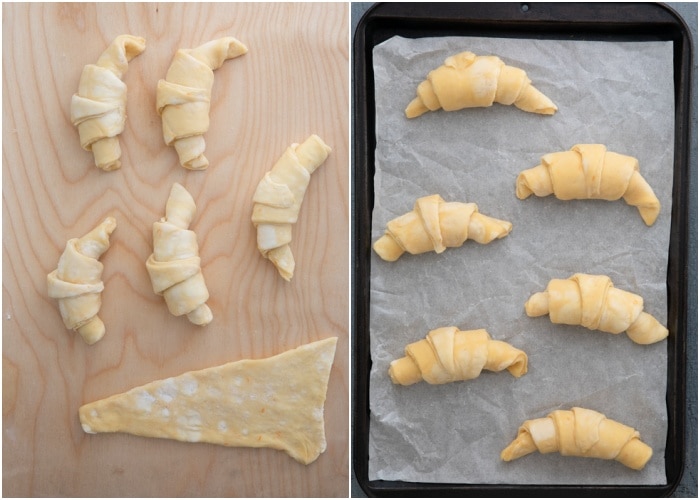
Trim the dough then cut it into triangles. Gently stretch each triangle slightly to lengthen it, then roll from the wide end toward the tip to form the crescent shape.
Place the cornetti on a parchment lined baking sheet, leaving space between each one.
Let the shaped cornetti rise in a warm, draft-free area until tripled in size. They should look noticeably puffy and airy before baking.
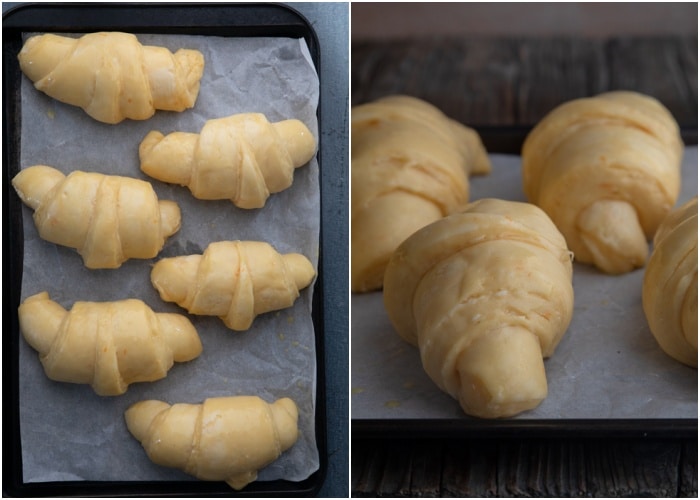
Brush with egg wash and bake until golden brown. Let cool slightly before dusting with powdered sugar.

recipe tips and troubleshooting
Use a kitchen scale for accuracy. Because this is a laminated dough, precise measurements matter. Weighing your ingredients using the metric system will give you consistent results.
Work at your own pace. Because the dough chills overnight and rests between folds, this recipe naturally gives you flexibility. If needed, you can pause after any fold and continue later, as long as the dough stays well chilled.
Keep everything cool during folding. If the dough or butter starts to feel soft, return it to the refrigerator before continuing. Warm butter will blend into the dough instead of forming layers.
Do not rush the resting time. Chilling between folds relaxes the dough and keeps the butter firm. Taking your time helps create distinct layers and a lighter texture.
Allow a full final rise. The shaped cornetti should look noticeably puffy and nearly tripled in size before baking. If under-proofed, they will bake up densely instead of light.
If butter leaks during baking: This usually means the butter was too warm during folding or the layers were not properly sealed. Using a good quality butter with a higher fat content can also help create more stable layers.
Variations
- Milk instead of egg wash: For a lighter finish, brush the tops with milk instead of egg wash before baking. They will still brown nicely but with a softer shine.
- Vanilla syrup glaze: Instead of powdered sugar, brush warm cornetti with a simple syrup made from equal parts sugar and water with a little vanilla. It adds a glossy bakery-style finish.
- Filled cornetti: Before baking, you can add a small spoonful of filling at the wide end of each triangle before rolling. Try apricot jam, Italian pastry cream, or another favorite sweet filling.
Make Ahead and Freezing
If you do not plan to bake all of the cornetti at once, you have two options.
- Freeze after baking: Allow the baked cornetti to cool completely, then freeze in an airtight container. To serve, warm them in a hot oven for a few minutes until heated through.
- Freeze after shaping:Place the shaped cornetti on a tray and freeze until solid, then transfer to a freezer-safe bag. When ready to bake, set them on a parchment-lined sheet and let them thaw and rise until fully puffed before baking as directed.
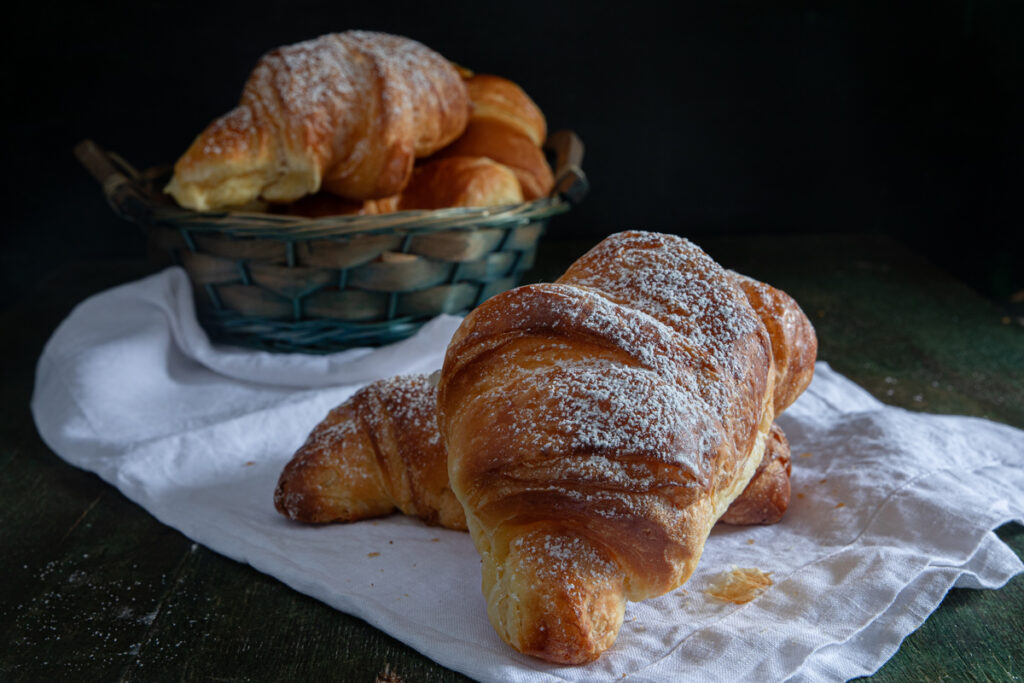
These Italian cornetti are the kind of pastry that turn an ordinary morning into something special. Light, buttery, and delicately sweet, they’re perfect enjoyed warm with a dusting of powdered sugar or filled with jam, pastry cream, or a swipe of Nutella. Whether paired with a cappuccino for a slow weekend breakfast or served as part of a holiday brunch, these soft, golden crescents bring a little taste of Italy right to your kitchen. Enjoy!
- 6⅔ tablespoons lukewarm milk (whole/heavy) 98ml
- ¾ teaspoon active dry yeast
- 2 cups all purpose flour
- 1 large egg (room temperature)
- 1 large egg yolk (room temperature)
- 1 tablespoon orange zest
- ½ teaspoon salt
- ¼ cup granulated sugar
- ½ teaspoon vanilla extract
- 3 tablespoons butter very soft 40g
EXTRAS
- ½ cup butter
- 2-3 tablespoons powdered / icing sugar
EGG WASH
- 1 large egg
- 1 tablespoon water
-
In the mixing bowl add the lukewarm milk and sprinkle the yeast on top, let sit 5-10 minutes then stir to combine. Add the flour, egg and yolk, mix on #1 speed for 5 minutes, add the zest, salt, sugar and vanilla continue to knead on #1.5 speed for approximately 5-6 minutes, when the dough is elastic and smooth add the butter a little at a time absorbing before adding more, knead until the dough is completely elastic, smooth and semi glossy, approximately 18-20 minutes on speed #2.
-
Move the dough to a lightly floured flat surface and form into a ball, place in a lightly buttered bowl, cover with plastic and let rise for 2 hours until doubled. Then place in the fridge for 8-15 hours.
-
Remove the ½ cup / 112 g butter from the fridge let sit 30 minutes then roll it between 2 pieces of parchment paper to form a ½ inch / 1 cm rectangle, then place in the fridge.
-
Remove the dough from the fridge (it should be tripled), let sit at room temperature for 30-60 minutes. Then place the dough on a floured flat surface and roll into a rectangle ½ inch / 1 cm rectangle approximately 2 x size of the butter rectangle.
-
Remove the butter sheet from the fridge and place in the centre of the dough, fold the edges over, so that the edges meet but do not overlap, turn the dough with the open side facing you, gently pat the entire surface with a rolling pin to 9¾x5 inches / 25×13 cm rectangle.
-
Roll the dough out to a ½ cm / 1 cm rectangle 13×6¾ inches / 33x17cm. Fold one flap to the centre and the other flap on top, like an envelope. Press down lightly with a rolling pin, wrap in parchment paper and chill one hour. Repeat this procedure two more times.
-
After the last fold roll the dough to ½ inch / 1 cm rectangle 15¼ x 9 inches 39×23 cm and cut out triangles, gently stretch each and roll up from the widest part to form a crescent. Place them about 2-3 inches apart on a parchment paper lined baking sheet or two. Cover with a clean tea towel and let rise in a warm draft free area until tripled in size, approximately 4-6 hours.
-
Pre-heat oven to 350F/180C.
-
Brush the risen cornetti with the egg wash and bake 15-20 minutes or until golden brown. Let cool on a wire rack, dust with powdered sugar before serving. Enjoy!
Best eaten fresh but they will keep for up to 2-3 days in an airtight plastic bag or container.
Calories: 426kcal | Carbohydrates: 44g | Protein: 8g | Fat: 24g | Saturated Fat: 14g | Polyunsaturated Fat: 1g | Monounsaturated Fat: 7g | Trans Fat: 1g | Cholesterol: 150mg | Sodium: 393mg | Potassium: 108mg | Fiber: 1g | Sugar: 12g | Vitamin A: 810IU | Vitamin C: 1mg | Calcium: 48mg | Iron: 2mg | Phosphorus: 115mg
Related
It’s All About Pasta
Amazing pasta recipes to make your mouth water!

Authentic Italian Desserts
75 Traditional Desserts Made Easy