



On the grill or in the smoker, pork belly performs so well because its fat renders slowly. As it cooks, that fat bastes the meat, keeping it moist while it absorbs smoke and seasoning. The result is a cut that builds deep flavor and resists drying out, which is why pork belly has become a staple on grills and smokers around the world.
Best Ways to Cook Pork Belly
Pork belly can be cooked in several distinct ways, depending on how it’s cut and how you plan to use it.
Grilled Pork Belly
Sliced pork belly cooks well over direct heat, where the fat can render and the edges can crisp without drying out the meat. Thin or medium slices work best. This approach is especially common in Korean barbecue, where pork belly is grilled simply and served with sauces or wraps that balance its richness. The key here is to slice it thin.

Pork Belly Burnt Ends
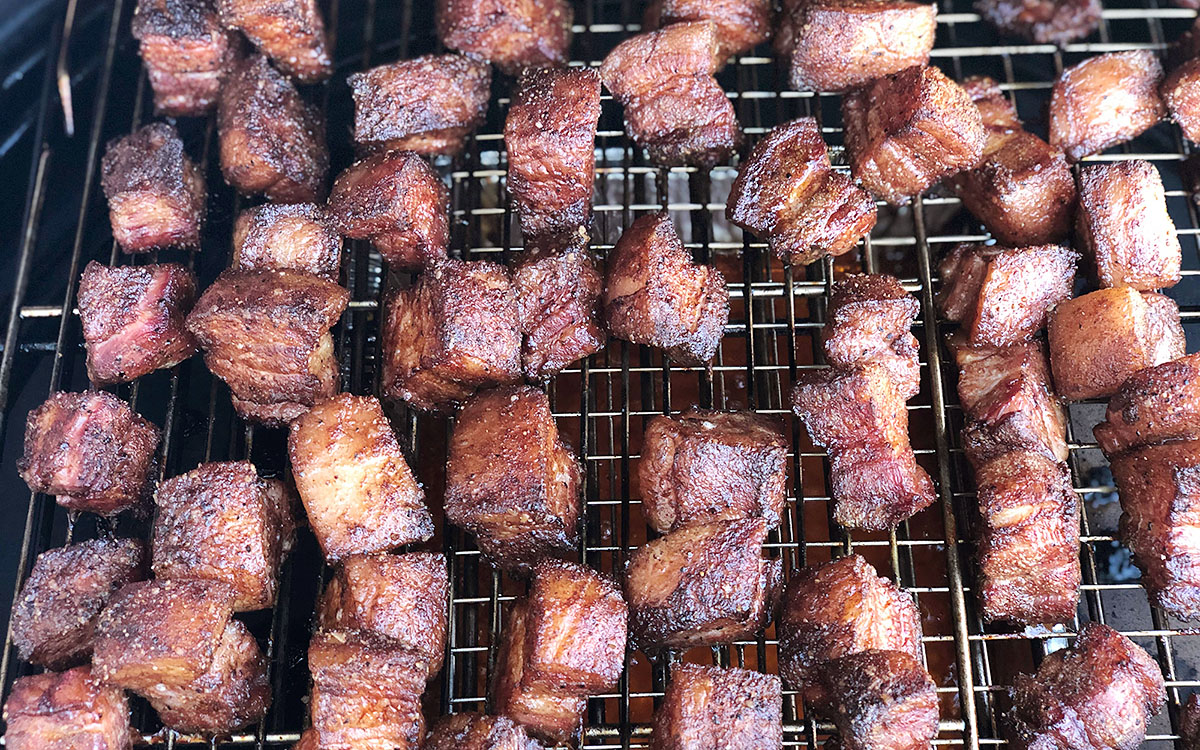
Cubed pork belly is a popular alternative to brisket burnt ends. The cubes are smoked until tender, then finished with sauce to create a sticky exterior and a rich, soft interior. Pork belly’s fat content allows it to stay moist while building deep flavor over the course of the cook.
Smoked Pork Belly
Whole slabs or larger pieces of pork belly can be smoked slowly to develop a deep, smoky flavor and a tender, sliceable texture. Smoked pork belly can be served on its own, sliced for sandwiches, or used in dishes like tacos, steamed buns, or grain bowls.

Steamed or Braised, Then Finished Over Fire
In some preparations, pork belly is gently steamed or braised before being finished over fire. This approach softens the meat and renders some of the fat first, while the final cook adds color and texture. Japanese chashu uses this same cut but relies entirely on braising; finishing pork belly over fire adds browning and smoke while preserving that tenderness.
Making Bacon at Home
Pork belly is the starting point for homemade bacon. After curing with salt and seasonings, the belly is smoked and sliced. Making bacon at home offers full control over flavor, smoke level, and thickness, and it begins with understanding pork belly in its fresh, uncured form.
Pork Belly Around the World
Pork belly appears in traditional dishes across many cuisines, each using the cut a little differently but relying on the same balance of meat and fat.
In Korea, pork belly is best known as samgyeopsal, where thick slices are grilled over high heat and eaten with ssamjang, garlic, and leafy wraps. The goal is crisp edges, rendered fat, and contrast from fresh accompaniments.
In Japan, pork belly is commonly prepared as chashu, a braised cut served with ramen. Rolled or slab-style pork belly is simmered in a seasoned liquid until tender, producing soft slices with distinct layers of meat and fat.
Chinese cuisines make frequent use of pork belly in dishes like hong shao rou (red-braised pork belly), where slow cooking turns the fat silky and rich rather than crisp. Try braising the pork belly in your smoker.
Must try pork belly recipes
With these traditions and techniques in mind, here are some of our favorite pork belly recipes—especially satisfying in the winter!
Pork Belly Tips Before You Start
- Skin on or skin off:
Skin-on pork belly works best for roasting or crisping the skin; skin-off is usually easier for grilling, burnt ends, and smoking. - Portion size matters:
Pork belly is rich. Plan smaller portions than you would for lean cuts. - Seasoning goes a long way:
Pork belly doesn’t need heavy rubs. Salt, pepper, and a balanced sauce are often enough. - Sauce late, not early:
Sugary sauces can burn. Apply them toward the end of cooking. - Rest before serving:
Let pork belly rest briefly so the fat settles and the texture improves.
Pork Belly: Frequently Asked Questions
Is pork belly the same as bacon?
No. Bacon is made from pork belly, but it has been cured and usually smoked first. Fresh pork belly is uncured and can be grilled, smoked, braised, or turned into bacon at home.
Do I need to remove the skin from pork belly?
It depends on how you plan to cook it. Skin-on pork belly works well for roasting or crisping the skin, while skin-off pork belly is easier to grill, smoke, or cut into burnt ends.
What’s the best temperature for cooking pork belly?
Pork belly is forgiving, but most barbecue methods work best at moderate temperatures, typically between 250°F and 300°F for smoking. For grilling sliced pork belly, higher direct heat works well to render fat and brown the surface.
How do I know when pork belly is done?
Pork belly is done when it is tender and the fat has rendered. Internal temperature is a guide, but texture matters more—properly cooked pork belly should feel soft and flexible rather than tight or rubbery.
Why is pork belly so popular for burnt ends?
Pork belly’s high fat content keeps it moist during long cooks and helps it absorb smoke and sauce. That combination makes it well suited for rich, tender burnt ends with a sticky exterior.
Pork belly earns its place in barbecue because it’s both forgiving and rewarding. It works across techniques, shows up in traditions around the world, and delivers flavor that few cuts can match. Once you start cooking pork belly over fire, it’s a cut that’s hard to stop coming back to.
Related Blogs
Check out our 1000+ Recipes section here on Barbecue Bible.Com
Also, sign up for our Up in Smoke newsletter so you don’t miss any blogs and receive some special offers! PLUS get Raichlen’s Burgers! PDF for free!
Follow Steven on Facebook, Instagram, YouTube, TikTok, Reddit, and Pinterest!
Check out our store powered by BBQGuys!