



Beaver tails are a Canadian delicacy made with golden fried dough shaped like a beaver’s tail and coated in cinnamon sugar. Recreate this authentic pastry at home for a nostalgic taste of Canada!
If you’ve ever been to a Canadian fair, carnival, or Ottawa’s Winterlude, you’ve probably seen people lining up for authentic beaver tails. This Canadian delicacy is fried until golden with crisp edges and a chewy center, a nostalgic treat Canadians have loved for decades.
Similar to bannock, another Canadian fried dough, they’re are unique in that they’re made with yeast for a lighter, chewier texture. Alongside maple leaf sandwich cookies and butter tarts, they’re one of the country’s most beloved sweet pastries, and now that I live in Italy, I love recreating them with this homemade beaver tails recipe.
Why You’ll Love This Recipe
- Familiar yet unique: This sweet Canadian treat has the nostalgic flavor of churros, funnel cake, or elephant ears, but with its own chewy, yeasted texture.
- Customizable: The classic cinnamon sugar coating is just the beginning; top them with chocolate, fruit, or even maple glaze.
What Are Beaver Tails?
Beaver Tails are a famous Canadian pastry made from yeasted dough that’s stretched into the shape of a beaver’s tail, fried like a donut until golden, and coated in cinnamon sugar. They were first introduced in Ontario in the late 1970s and have since become a beloved Canadian delicacy.
And no, they aren’t actually made from beavers! The name is a playful nod to one of Canada’s most iconic animals, with the stretched dough resembling the flat, wide shape of a beaver’s tail.
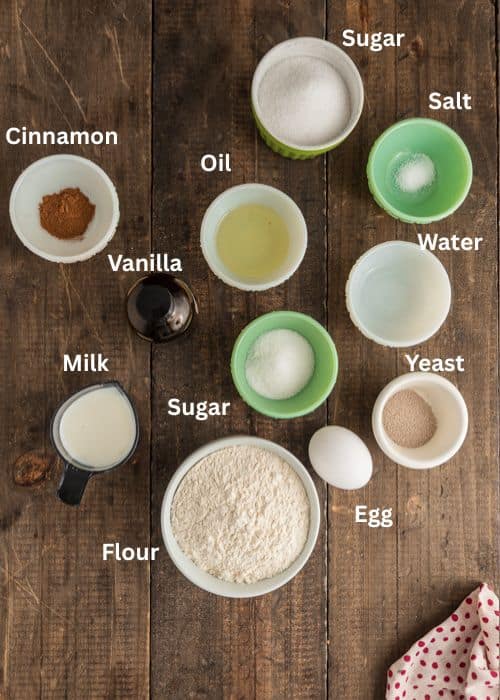
Ingredient Notes
- Warm water & milk: Activate the yeast and help create a soft, tender dough. Using both gives the pastry a richer flavor than water alone.
- Active dry yeast: The leavening agent that makes the dough light and chewy. Be sure it’s fresh so your dough rises properly.
- Egg yolk: Adds richness and helps the dough stay soft inside while frying.
- Oil or melted butter: Keeps the dough tender and adds flavor. Either works depending on what you have on hand.
- Granulated sugar: A little goes into the pastry dough to add a sweet taste.
- Salt and vanilla extract: Balance the sweetness and add depth of flavor.
- All-purpose flour: Gives the dough structure. Spoon and level for accuracy.
- Cinnamon sugar: A thick coating of cinnamon with granulated sugar is the classic finishing touch to a beavertail.
- Oil for frying: Use a neutral oil with a high smoke point like vegetable or canola.
How to Make Beaver Tails
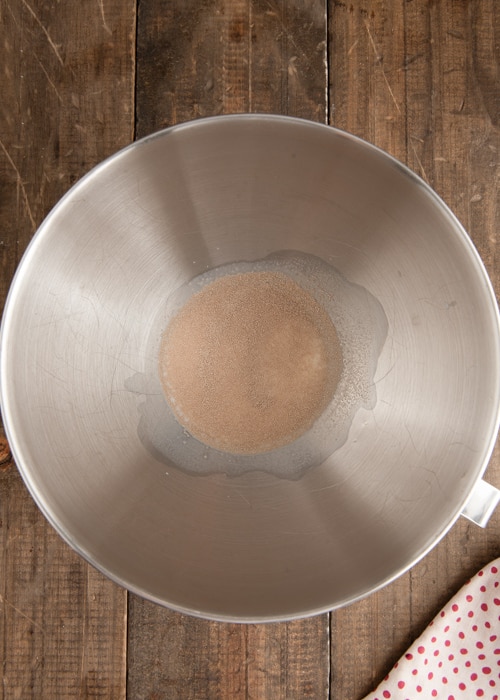
To start, activate the yeast by stirring warm water, warm milk, and a pinch of sugar together in the bowl of your stand mixer. Sprinkle the yeast over top and let it sit until it becomes foamy.
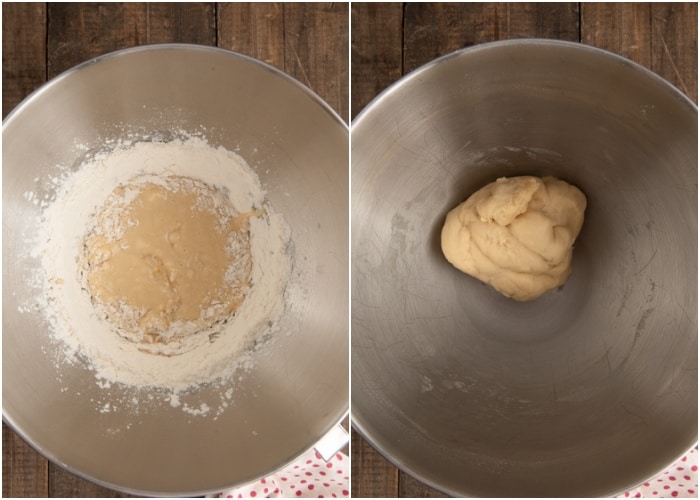
Next, add in the egg yolk, oil (or melted butter), sugar, salt, and vanilla. Give it a quick stir, then add the flour. Knead with the dough hook until the dough comes together.
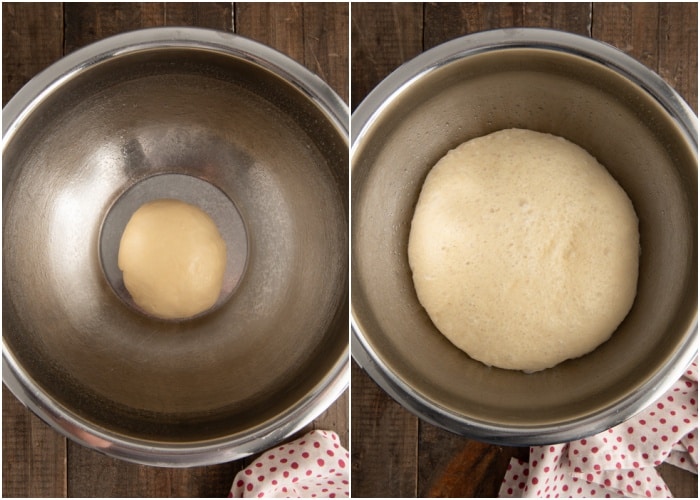
Once the dough is ready, move it to a lightly floured surface, shape it into a ball, and place it in a lightly oiled bowl. Cover and let it rise in a warm spot until it doubles in size.
After rising, punch down the dough and knead it just a few times to smooth it out. Divide into 4 pieces and stretch or roll each one into an oval. This is where you’ll see that classic beaver tail shape!
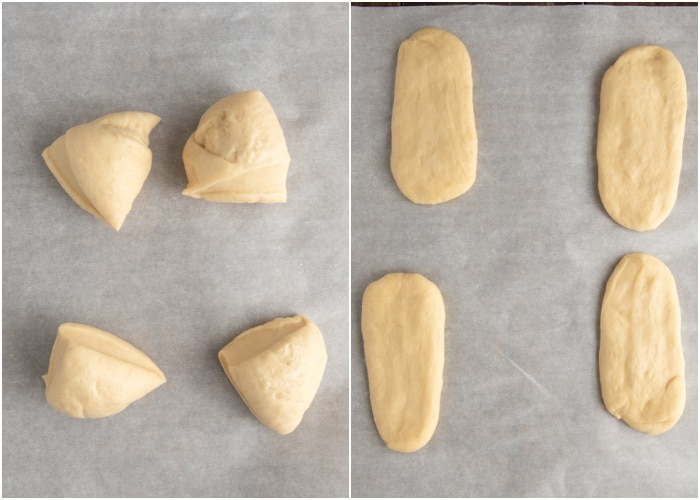
Now it’s time to fry. Gently place one dough oval in the hot oil and fry until golden. Remove and let drain briefly on a paper towel. While still warm, press each fried beavertail pastry into the cinnamon sugar mixture so it sticks to the surface.
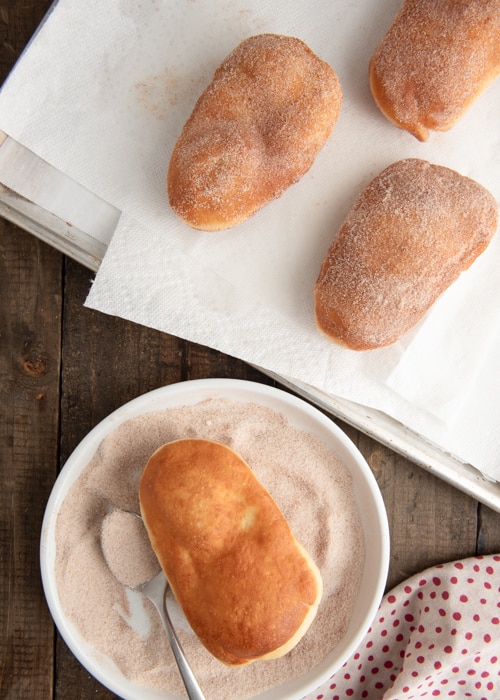
Shake off any excess, serve right away, and enjoy your homemade beaver tails!
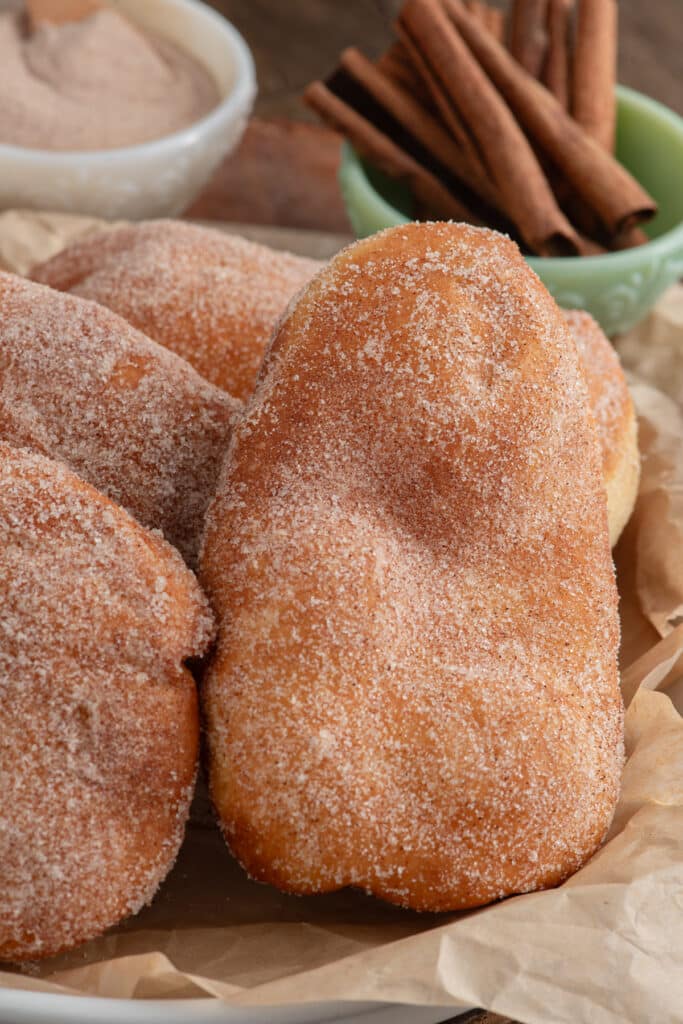
recipe tips
- Frying temperature matters: Keep the oil between 360–370°F. Too hot and the outside will brown before the inside cooks; too cool and the dough will absorb oil and turn greasy. A candy or frying thermometer helps a lot here.
- Don’t overcrowd the pan: Fry one or two at a time so the oil temperature stays steady.
- Stretch and score: Gently pull the dough into an oval shape, then use a sharp knife to lightly score the surface so it resembles a beaver’s tail.
- Coat generously: Brush the hot pastry with melted butter if needed, then dip in plenty of cinnamon sugar. A thick coating is what gives a classic cinnamon sugar beavertail its authentic taste.
- Serve fresh: This homemade treat is best enjoyed warm right after frying when the edges are crisp and the centers are still soft.
Favorite Toppings
Here are a few popular variations you might see at Canadian stands:
- Maple glaze: A sweet nod to Canada’s most famous flavor. Try the maple glaze from my easy cinnamon rolls.
- Nutella and bananas: Rich, creamy, and a longtime fan favorite.
- Strawberries and whipped cream: Fresh, light, and perfect for summer.
- Powdered sugar: Simple but always delicious.
Chocolate and mini marshmallows: For a gooey, s’mores-inspired twist.
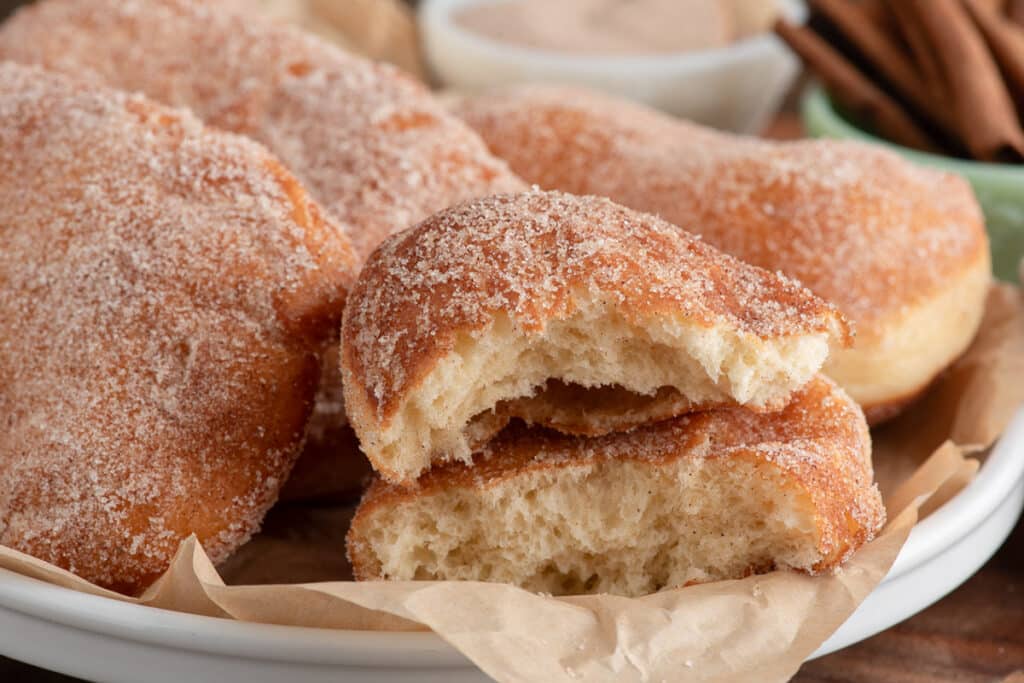
These classic Canadian BeaverTails are best enjoyed warm and freshly topped, when the dough is crisp on the outside and soft inside. Whether finished simply with cinnamon sugar or loaded with your favourite toppings, they’re a nostalgic treat that brings a taste of Canada to any kitchen.
- 1 tablespoon water (lukewarm)
- ¼ cup milk (lukewarm)
- 1 pinch granulated sugar
- 1 teaspoon active dry yeast
- 1 large egg yolk (room temperature)
- 1¼ tablespoons oil (or melted butter)
- 1¼ tablespoons granulated sugar
- ¼ teaspoon salt
- ½ teaspoon vanilla extract
- 1¼ cups all purpose flour
EXTRAS
- ½ cup granulated sugar
- ½-1 teaspoon cinnamon
- oil for deep frying
-
In the stand mixer mix together the water, milk and pinch of sugar, sprinkle the yeast on top and let sit for 5-10 minutes. Add the egg yolk, oil, remaining sugar, salt and vanilla and stir to combine. Add the flour and knead for approximately 5-6 minutes until combined.
-
Move the dough to a lightly floured flat surface and form into a ball. Place in a lightly oiled bowl, cover with plastic wrap, place in a warm draft free area and let rise until doubled.
-
Punch the dough down and knead a few times, divide into 4 parts and form each into an oval shape ¼ inch shape.
-
Heat 2 inches of oil in a medium heavy pot (or follow the directions if using a deep fryer) using a candy thermometer until temperature reaches 360-370F (180-185C).
-
Place cinnamon and sugar on a plate.
-
Fry the dough until golden 1-2 minutes on each side, drain on a paper towel, while still warm press dough gently in the sugar. Shake off any excess. Serve immediately. Enjoy!
While these pastries are best fresh, if you have extras, keep them in an airtight container at room temperature for up to 1 day. Reheat briefly in the oven to crisp them back up.
To freeze – they should be completely cooled, place the fried pastries (without cinnamon sugar coating) in a freezer-safe bag or container. Freeze for up to 1 month. Reheat from frozen in a 350°F oven until warmed through. (They won’t be quite as crisp as fresh, but still tasty.) After reheating, coat in cinnamon sugar.
Calories: 321kcal | Carbohydrates: 60g | Protein: 6g | Fat: 7g | Saturated Fat: 1g | Polyunsaturated Fat: 2g | Monounsaturated Fat: 3g | Trans Fat: 0.02g | Cholesterol: 48mg | Sodium: 155mg | Potassium: 80mg | Fiber: 2g | Sugar: 30g | Vitamin A: 87IU | Vitamin C: 0.02mg | Calcium: 36mg | Iron: 2mg | Phosphorus: 79mg
recipe FAQs
In some ways, yes. Both are made from yeast dough and fried until golden, but beaver tails are stretched flat into an oval shape rather than puffed into rounds. The texture is light and chewy, with that signature cinnamon sugar coating.
Yes! You can swap instant yeast for active dry yeast in the same amount. Just skip the proofing step and mix it directly with the flour before kneading.
While these pastries are best fresh, if you have extras, keep them in an airtight container at room temperature for up to 1 day. Reheat briefly in the oven to crisp them back up.
Yes, once completely cooled, place the fried pastries (without cinnamon sugar coating) in a freezer-safe bag or container. Freeze for up to 1 month. Reheat from frozen in a 350°F oven until warmed through. (They won’t be quite as crisp as fresh, but still tasty.) After reheating, coat in cinnamon sugar.
Related
It’s All About Pasta
Amazing pasta recipes to make your mouth water!
Authentic Italian Desserts
75 Traditional Desserts Made Easy