



Siling haba is a long green chili pepper commonly used in Filipino soups and stews. You will often see a few pieces added to sinigang or dinuguan, usually whole. They give the dish some chili flavor without making it too spicy. Slice them open when you want more heat.
When I am in the Philippines, I usually buy siling haba at the local market. I prefer the medium-sized ones. I also buy them from the supermarket when I need some right away. In the US, I sometimes use serrano, jalapeño, or finger chili when siling haba is unavailable. Serrano and jalapeño can be hotter, so you need to be careful about how much you add. I have a separate post on serrano pepper if you want to compare the two.
What is Siling Haba?
Siling haba simply means long chili in Tagalog. You might also know it as siling mahaba or siling pansigang because it is commonly added to sinigang. It belongs to the Capsicum annuum species, along with bell peppers and jalapeños.
In English it is usually called long green pepper or finger chili. Be careful when searching for long pepper online. That name can also refer to Piper longum, a dried Indian spice that is completely different from siling haba. If you are buying peppers for a Filipino recipe, look for fresh green chilies, not the dried spice.
Different Varieties You’ll Find
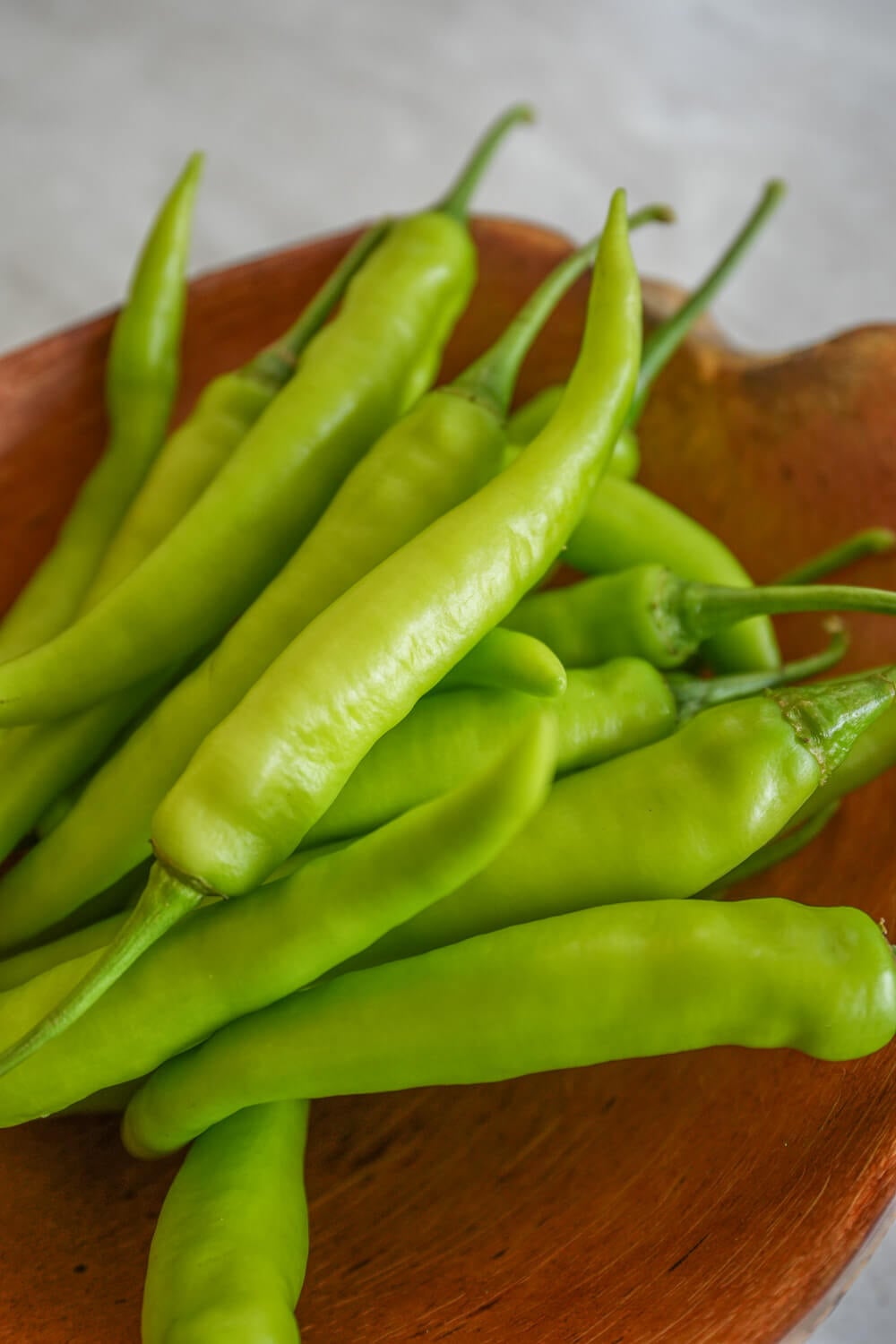
- Green siling haba – The standard one. Light green, 5 to 7 inches long, and thin-fleshed. It goes into sinigang, dinuguan, paksiw, and most everyday cooking.
- Red siling haba – The same pepper left on the plant until it ripens. It turns red and tastes a little sweeter, and it is often a little hotter. Cook it the same way. It looks good in pickled chili and in any dish where you want some color.
Siling labuyo is the other chili you will see next to it at the market, and the one people mix it up with. Labuyo is small, pointed, usually red, and many times hotter. I wrote about the Scoville scale and where labuyo lands on it in how hot is your chili pepper.
What Can You Use Instead?
- Serrano and jalapeño – Use fewer pieces than the recipe calls for. For dynamite lumpia, pick the longest serranos in the bin.
- Finger chili – The closest match. It can go in piece for piece.
- Anaheim and banana pepper – The two I list in my sinigang na hipon recipe. They are bigger, so one large pepper can replace two siling haba.
Picking the Best Siling Haba
You may also see siling haba sold as siling espada or siling Tagalog.
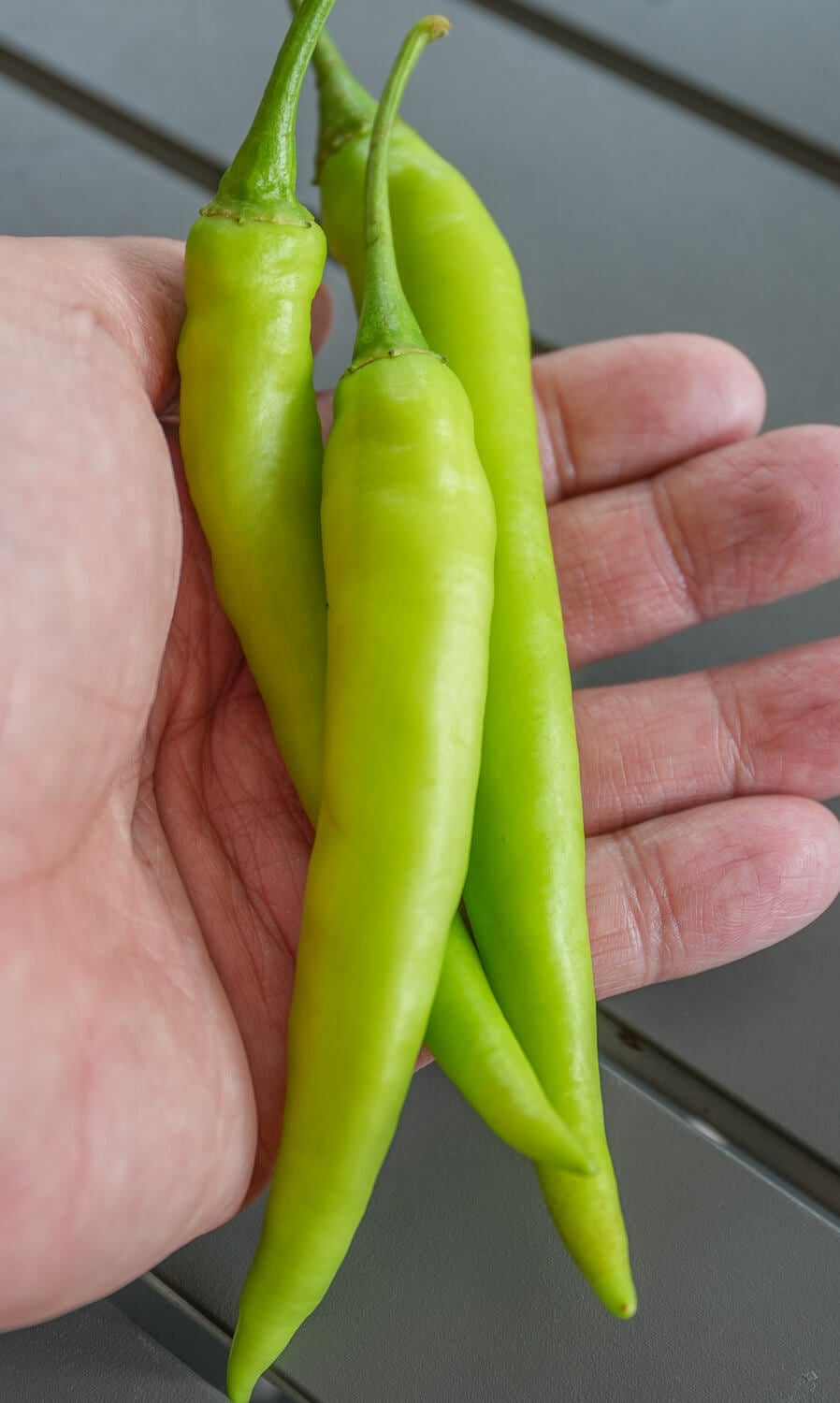
- Firm and glossy – A fresh pepper is smooth, shiny, and firm from stem to tip, and it gives a little when you press it because the flesh is thin. Pass on any that are wrinkled, limp, or soft in spots.
- Even light green color – Pale green all over is what you want for cooking. Patches of red are fine and mean it started to ripen. Dark or sunken spots mean it is on the way out.
- Check the stem – Look for peppers with fresh-looking stems. Avoid those with dried, shriveled stems or soft spots around the top.
- Medium size – These are the ones I prefer. Some exceptionally long peppers sold under the same name may be a different variety.
- Available all year – It grows year-round in the Philippines, so there is no season to wait for. Buy what looks freshest on the day instead of stocking up.
Nutritional Profile
Like other fresh chilies, siling haba is low in calories and contains vitamins C and A. Since only a few peppers usually go into an entire pot of soup, they contribute more flavor than nutrition to each serving.
Storage Tips
- Room temperature – A day or two on the counter is fine if you will cook them soon. Keep them out of direct sun and away from the stove. They go limp fast in a warm kitchen.
- Refrigerator – The best place for them. Keep them dry and unwashed, wrapped in a paper towel inside a loosely closed bag in the crisper drawer. They keep 1 to 2 weeks this way. Wash them right before using.
- Freezer – You can freeze siling haba without slicing it. Rinse, dry, and put the peppers in a freezer bag with the air pressed out. They keep 3 to 6 months. Use them straight from the freezer in soups and stews. The texture goes soft after thawing, and that does not matter once they are simmered.
- Pickled in vinegar – Sliced siling haba in cane vinegar with garlic and a little salt keeps much longer in the refrigerator than fresh peppers do, and it doubles as a dipping sauce. My Filipino vinegar guide covers which vinegar to use and the spiced vinegar that already has chili in it.
Cooking Techniques That Work Best
- Whole in soups. Add the peppers whole during the last 10 minutes. Leave them whole for the aroma, or split one open if you want some heat in the broth.
- Simmered in stews. In dinuguan and paksiw, the peppers go in near the end. Add them late so they keep their shape and their fresh taste. If you add them too early, they can become too soft and start falling apart.
- Sliced into coconut milk. In Bicol-style dishes the peppers are sliced so the heat spreads through the sauce. In my spicy ginataang hipon I suggest using a few pieces of long green pepper only if you prefer the dish mildly spicy. Add siling labuyo when you want it really spicy.
- Stuffed and fried. The size and thin flesh make siling haba the right chili for dynamite lumpia. Slit one side lengthwise, scrape out the seeds and the white membrane, fill with cheese and seasoned ground pork, and wrap. Take out every bit of the membrane if you want it mild, because frying does not tame the heat.
- In the dipping sauce. You can also slice siling haba into vinegar or fish sauce for a dipping sauce with a little heat. Slice it as thin as you can so the flavor gets into the sauce within a few minutes. I have a post on fish sauce if you want to know more about patis as a dip.
Best Flavor Pairings
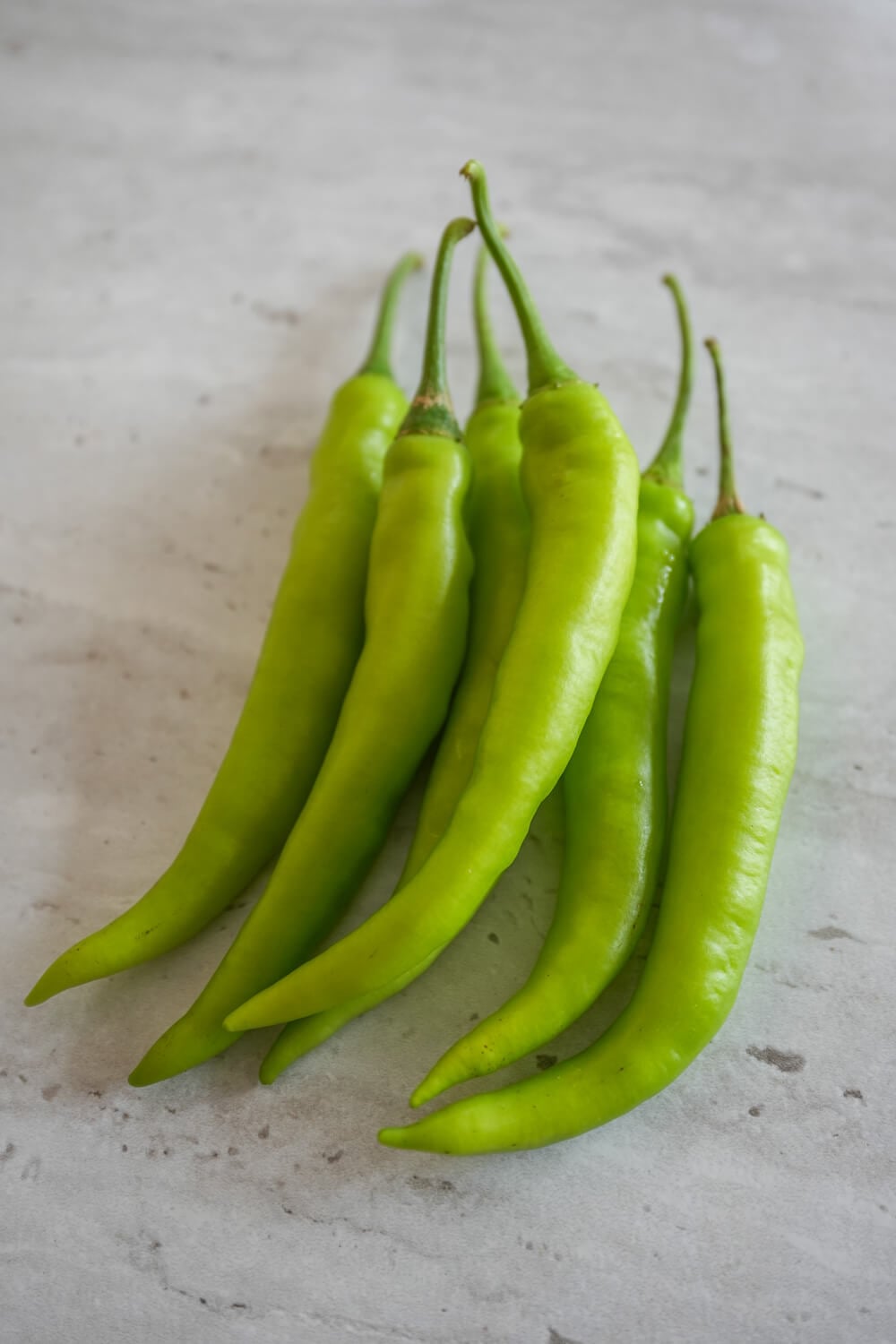
Siling haba goes with sour dishes and with coconut milk. In paksiw, the peppers sit under the fish with the ginger and garlic and cook in the vinegar, and they come out of the pot whole and soft enough to eat with the fish. In Bicol Express and the other coconut milk dishes, the peppers are sliced and cooked with bagoong alamang, so the saltiness of the bagoong and the heat of the chili go into the sauce together. Garlic, onion, and ginger are what usually cook alongside it.
Preparation Tips
- Wash the peppers. Rinse siling haba under running water and pat dry before using.
- Leave them whole for soups and stews. Keep the stems attached to help the peppers hold their shape while cooking. You can easily remove the stems at the table.
- Remove the membrane and seeds for less heat. Trim the stem and slice the pepper lengthwise. Use a spoon or the tip of a knife to scrape out the white membrane and seeds. Most of the capsaicin is concentrated in the membrane.
- Use fresh peppers for pickles and sawsawan. Young, firm siling haba can be eaten raw. They have a crunchy texture and are usually only mildly spicy. Older, larger peppers with thicker skin are better cooked.
- Wash your hands after handling. Siling haba is generally mild enough to handle without gloves, but capsaicin can still irritate your eyes. Wash your hands and knife thoroughly after cutting the peppers.
Classic Filipino Dishes with Siling Haba
- Sinigang – Two or three whole peppers go in with the last batch of vegetables. The miso versions use them the same way, like my sinigang na bangus sa miso, where the peppers go in together with the fish.
- Dinuguan – Add the long green peppers with the pork blood and let them simmer until tender. Three or four pieces are enough for a pot that serves six. They give the stew a mild chili flavor without overwhelming the pork and vinegar.
- Bicol Express – Sliced siling haba is the first chili in the coconut milk and shrimp paste sauce, with labuyo or Thai chili as the second. Adjust the ratio of the two to set how spicy the dish turns out. My chicken bicol express uses the same two chilies with chicken instead of pork.
- Dynamite Lumpia – The one dish where the pepper is the main ingredient instead of a flavoring. It has to be siling haba or a long serrano, because the pepper needs to be long enough to stuff and thin enough to cook through inside the wrapper.
Filipino Recipes with Siling Haba
Most of these recipes use siling haba whole. Dynamite lumpia is different because the pepper itself is stuffed and fried.
Sinigang
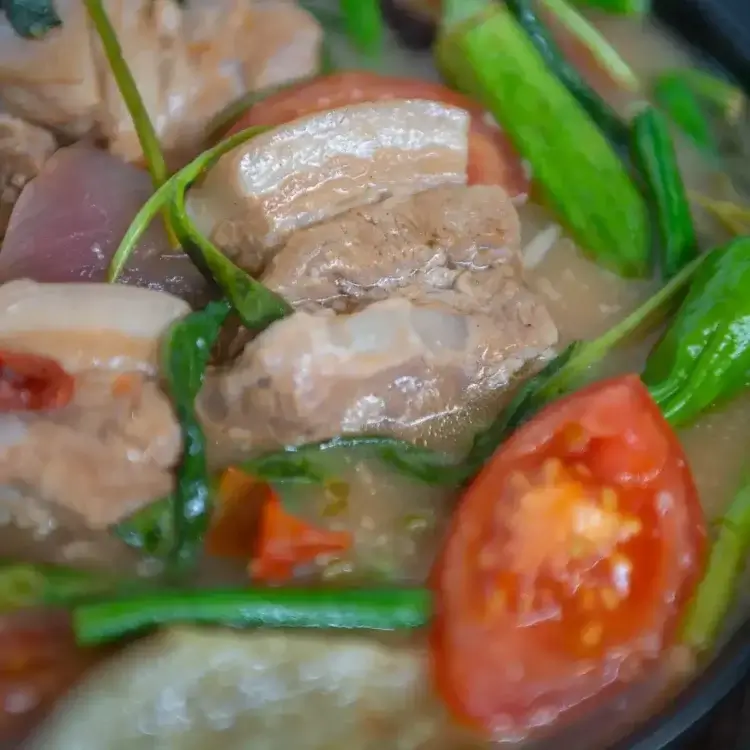
Two long green peppers go into this pork sinigang along with the vegetables. The soup has a sour tamarind broth, with pork belly, kangkong, radish, and other vegetables.

Dinuguan
Pork shoulder and pork ears stewed in pork blood and vinegar with lemongrass and bay leaves. The long green peppers go in with the blood near the end.

Bicol Express
My Bicol Express recipe uses serrano peppers, but you can substitute siling haba. The pork belly cooks in coconut milk and coconut cream with shrimp paste and ginger, while the peppers provide the heat.

Paksiw Na Bangus
Milkfish cooked in vinegar and water with ginger, garlic, eggplant, and okra. Two long green peppers go into the pot under the fish and come out tender and whole.
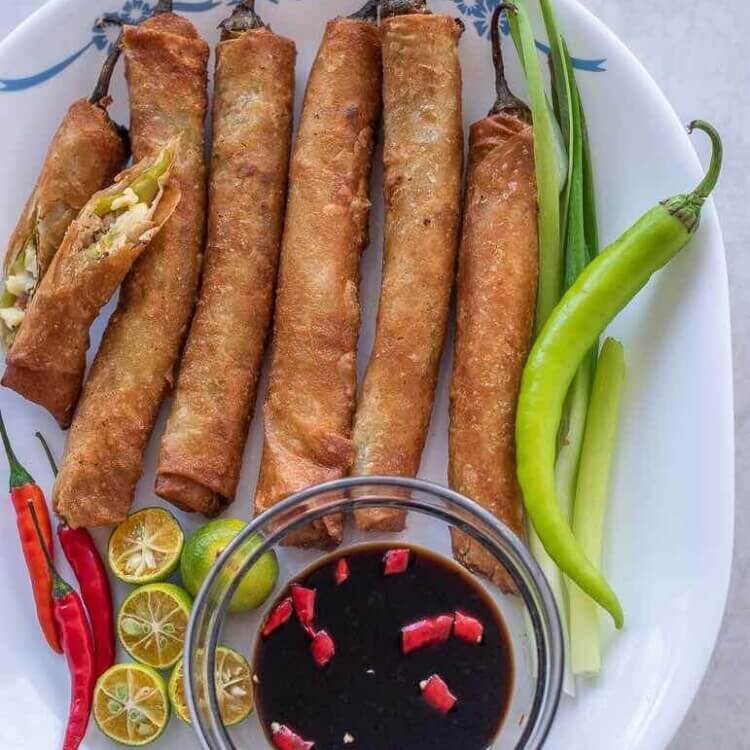
Dynamite Lumpia
This is one recipe where the chili is the main ingredient. The peppers are stuffed with cheddar cheese and sautéed ground pork, wrapped in lumpia wrappers, and fried until crisp.

Gising gising
A Filipino dish made with winged beans and ground pork cooked in coconut milk. Garlic, onion, fish sauce, and green chili peppers give it a savory, mildly spicy flavor. It is served hot with steamed white rice.
When you cook sinigang, try taking one of the cooked siling haba out of the pot and putting it in a small bowl of patis. Crush the pepper with the back of a spoon to release its flavor into the fish sauce. You can serve this alongside the soup, especially for those who want a little more heat with every bite.