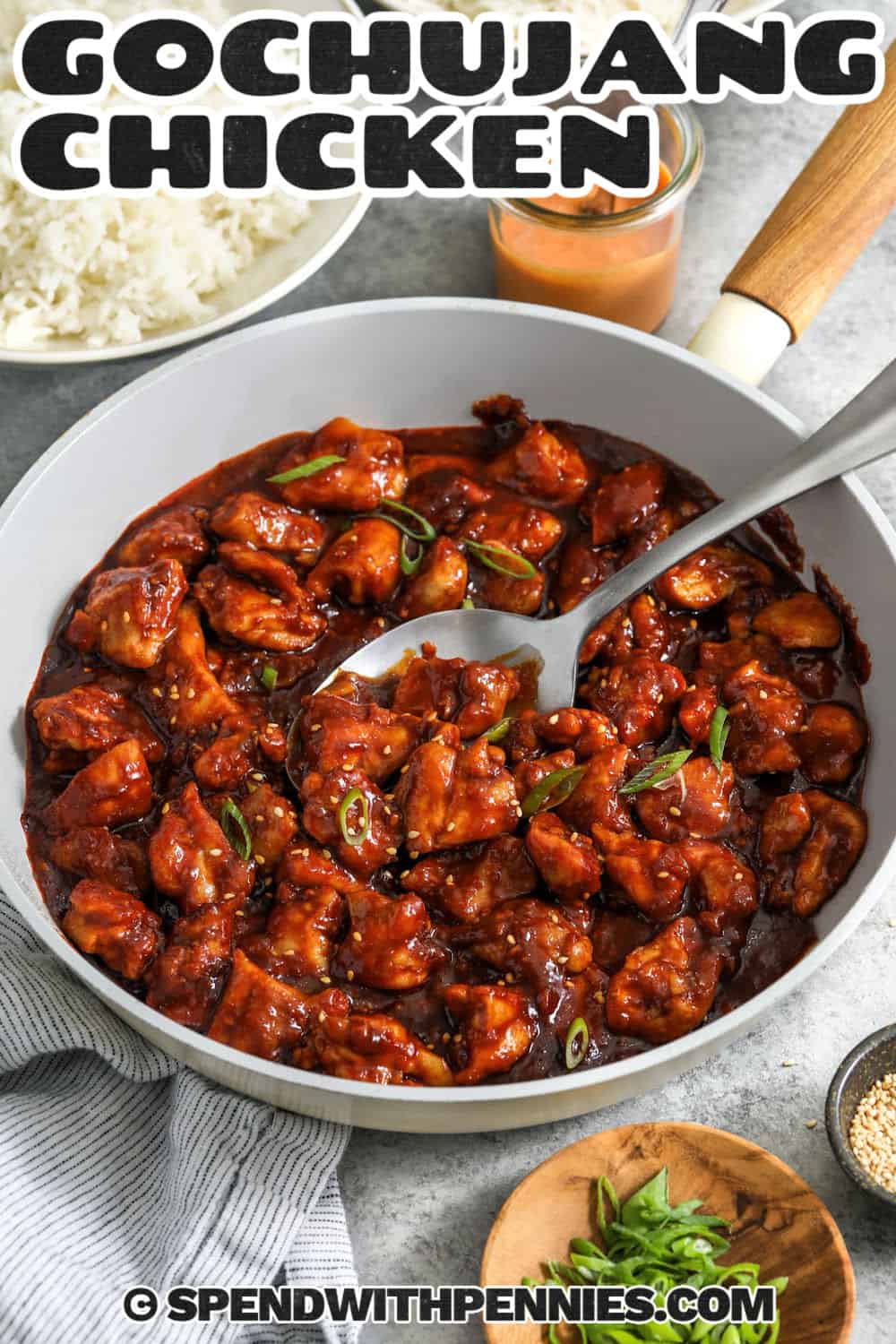
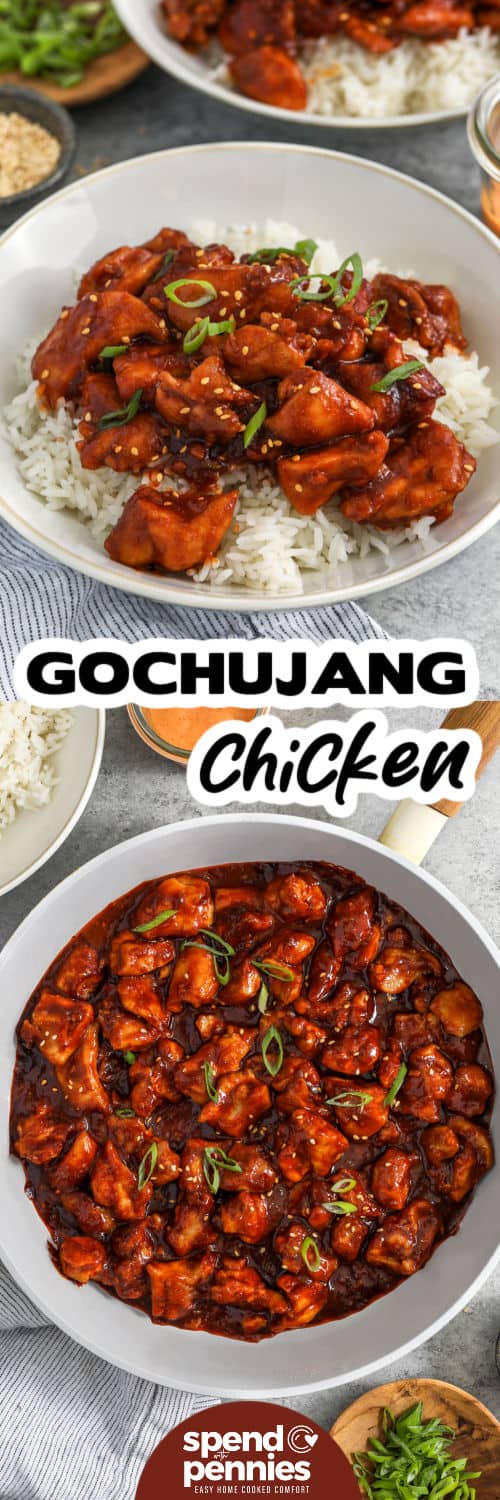
This Gochujang Chicken is ready in just minutes, with tender chicken coated in a sticky, savory-sweet sauce with just enough spice. Adjust the gochujang depending on who’s at the table, then serve over Instant Pot rice with refreshing Asian cucumber salad to balance the heat.
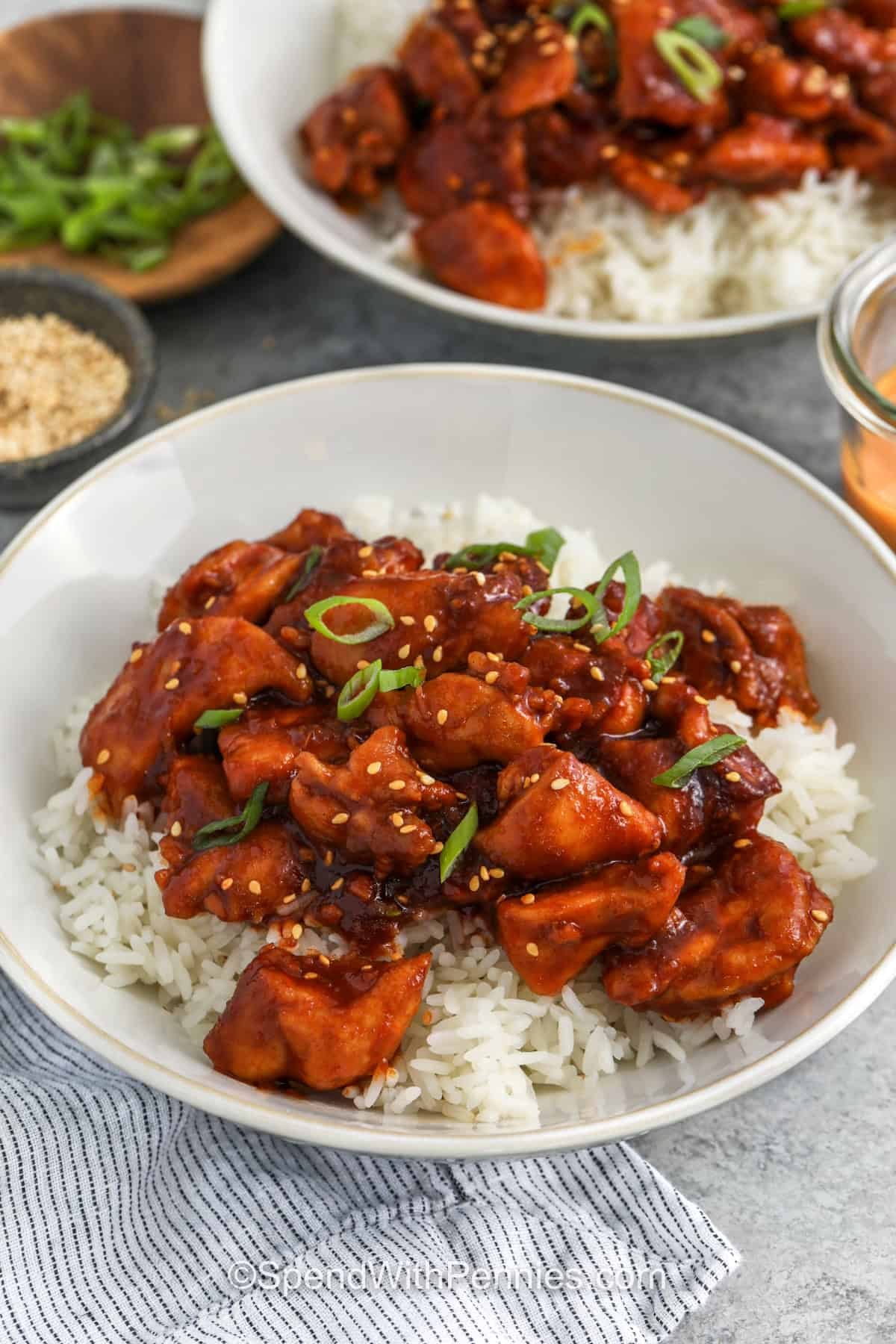
Holly’s Recipe Highlights: Gochujang Chicken
- Why Make It: One skillet and bite-sized chicken mean quick cooking, easy cleanup, and plenty of sticky sauce in every bite.
- Technique: Cornstarch gives the chicken lightly crisp edges and helps the glossy sauce cling to every bite.
- Prep Note: Whisk the sauce before heating the skillet so everything is ready once the chicken starts cooking.
- Tools: A large skillet and two mixing bowls.
- Total Time:
- 15 mins
- Serves:
- 4

Ingredient Notes
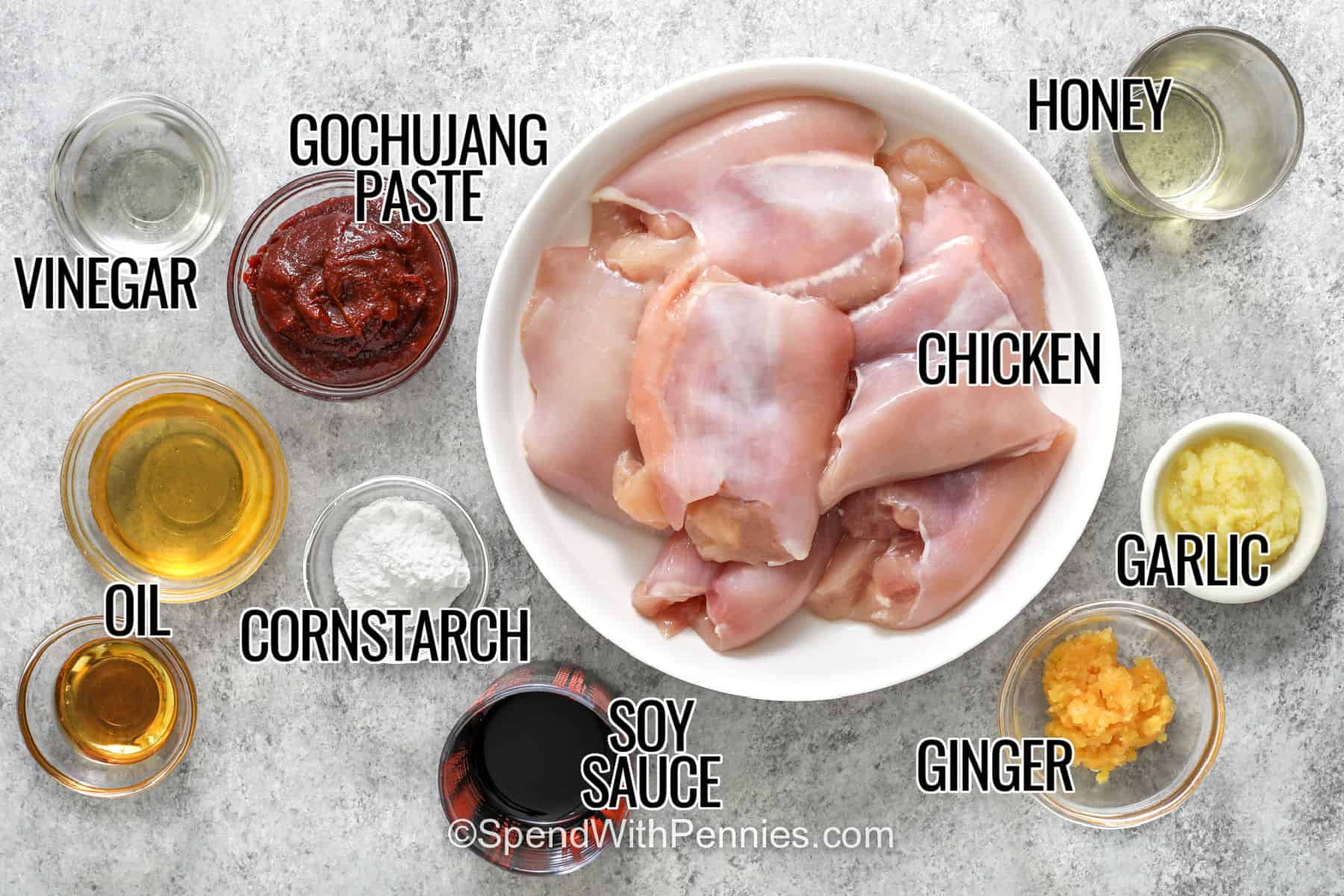
- Chicken Thighs: Boneless, skinless thighs stay juicy during high-heat browning. Chicken breast works too, but it cooks more quickly, so be careful not to overcook it.
- Cornstarch: A light coating encourages browning and gives the chicken a lightly crisp exterior before the sauce is added.
- Gochujang: Korean fermented red chili paste adds savory, sweet, and spicy flavor to the sauce. Heat levels vary by brand, so start with less and add more to taste.
- Soy Sauce: Low-sodium soy sauce adds savory depth without overpowering the other flavors, or replace with Tamari.
- Honey: Brown sugar or maple syrup can be used in a pinch; each will give the sauce a slightly different flavor.
- Rice Vinegar: Use unseasoned rice vinegar for the most control over the overall sweetness.
- Fresh Ginger: Keep ginger in the freezer and grate it straight from frozen for easy prep.
Variations
- Add Vegetables: Add steamed broccoli, bell peppers, snap peas, or green beans for a colorful chicken-and-vegetable skillet.
- Reduce the Heat: Use a lower amount of gochujang and add a little extra honey to balance the heat.
Save It For Later
- Keep leftovers in an airtight container in the refrigerator for up to 4 days. Store rice separately.
- Store leftovers in an airtight container or freezer-safe bag and freeze for up to 3 months.
- Thaw overnight in the refrigerator and reheat gently on the stovetop or in the microwave, adding a splash of water if the sauce has thickened.
- Leftovers are especially good in rice bowls with cucumbers, shredded carrots, Asian slaw, or steamed vegetables.
Better-Than-Takeout Favorites
Did you enjoy this Gochujang Chicken Recipe? Leave a comment and rating below.


-
Toss the chicken with 1 tablespoon cornstarch.
-
In a small bowl, whisk together gochujang, soy sauce, honey, 3 tablespoons water, rice vinegar, sesame oil, garlic, ginger, and 1 teaspoon cornstarch. Set aside.
-
Heat the oil in a large skillet over medium-high heat. Add half of the chicken and cook until browned and cooked through, about 5 to 6 minutes. Transfer it to a bowl and repeat with the remaining chicken.
-
Turn the heat down to medium. Whisk the sauce in the bowl before adding it to the pan, as the cornstarch can settle to the bottom. Add the sauce to the skillet. Continue whisking until the sauce thickens.
-
Add the chicken, along with any juices, back to the skillet and cook until coated and heated through. Stir in an additional tablespoon of water if the sauce gets too thick.
-
Garnish with green onions and sesame seeds. Serve over rice.
When browning the chicken, smaller batches brown better. After adding it to the pan, let it sit undisturbed for a few minutes until one side is golden.
To make gochujang mayo sauce for serving: Stir together ¼ cup mayonnaise, 1 ½ teaspoons gochujang, and 1 teaspoon rice vinegar.
Keep leftovers in an airtight container in the refrigerator for up to 4 days and in the freezer for up to 3 months.
Calories: 314 | Carbohydrates: 15g | Protein: 34g | Fat: 12g | Saturated Fat: 3g | Polyunsaturated Fat: 4g | Monounsaturated Fat: 4g | Trans Fat: 0.1g | Cholesterol: 162mg | Sodium: 588mg | Potassium: 527mg | Fiber: 0.4g | Sugar: 10g | Vitamin A: 117IU | Vitamin C: 3mg | Calcium: 30mg | Iron: 2mg
Nutrition information provided is an estimate and will vary based on cooking methods and brands of ingredients used.
 Course Main Course
 Cuisine American, Asian
© SpendWithPennies.com. Content and photographs are copyright protected. Sharing of this recipe is both encouraged and appreciated. Copying and/or pasting full recipes to any social media is strictly prohibited. Please view my photo use policy here.