



We’re on a journey of going back to basics and teaching you how to render your own fats. You are about to turn the chicken skin everybody else throws away into two things at once: a bowl of gribenes, salty crackly bits that eat like pork rinds made from chicken (they will vanish in minutes, trust us), and a jar of schmaltz, the rendered chicken fat Jewish home cooks have used for matzo balls and fried potatoes for generations.
You’ll learn how to make schmaltz in a skillet in about an hour. Just like our lard and tallow, you can store the jar in the fridge for up to three months and use schmaltz anywhere you would use any cooking fat.
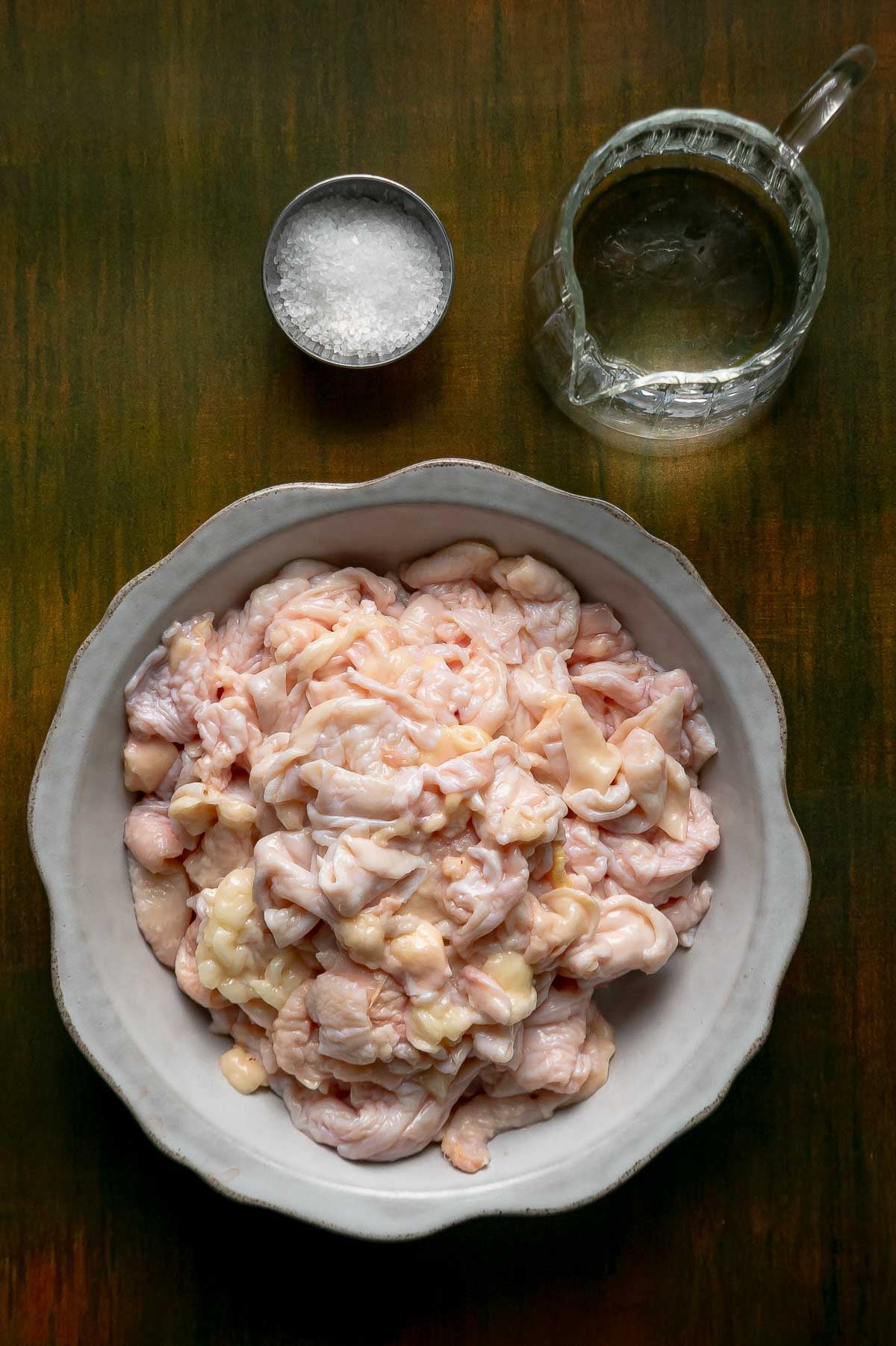
🔪 Ingredients for Schmaltz and Gribenes
- Chicken skins: skin from breasts, thighs, or whole chickens all works. Skins with more visible fat still attached give you more schmaltz. Trim off any real pieces of meat before you cut them, because meat does not render and only gets in the way of the crunch.
- Water: just enough to keep the pan gentle while the skins start giving up their fat. It cooks off completely.
- Kosher salt: for the gribenes only. The schmaltz stays unsalted.
Equipment
- Heavy-bottomed skillet or wide sauté pan: holds medium low heat evenly and gives the skins room to sit in a single layer, so nothing scorches in a hot spot.
- Kitchen shears or a sharp chef’s knife: chicken skin is slippery, and even ½-inch pieces are what let everything finish at the same time.
- Slotted spoon: lifts the gribenes out and leaves every drop of fat in the pan.
- Fine mesh strainer and cheesecloth: catches the small browned bits so the schmaltz comes out clean.
- Heatproof bowl or glass measuring cup: the fat is hot when you strain it, and a spout makes the pour into a container easy.
📝 How to Make Schmaltz and Gribenes
One pound of chicken skin takes about 50 minutes on the stove. It’s the same water start we use to render beef tallow, with one big difference: lard and tallow only give you fat, and schmaltz hands you a second recipe in the same pan.
- Trim and cut the skins. Trim away any substantial pieces of chicken meat, then cut the skins into roughly ½-inch pieces. Keep them similar in size so the fat renders evenly and the smaller pieces don’t burn before the bigger ones crisp.
- Start them in water. Combine the chicken skins and water in a heavy-bottomed skillet, spread the skins into an even layer, and set the skillet over medium low heat.
- Let the fat start moving, 12 to 15 minutes. Stir every few minutes until the skins begin releasing their fat. The water simmers around the skins and keeps them from browning before enough chicken fat has rendered into the pan. Very little liquid fat this early is normal.
- Render low for 20 to 25 minutes. Keep the heat at medium low, stirring and separating the pieces occasionally. The skins will shrink, curl, and turn from pale to light golden as the fat renders out. Keep the heat controlled so the fat has time to melt out before the skin gets deeply browned.
- Finish the crisp, 8 to 12 minutes. Once the skins are golden and the bubbling has noticeably slowed, turn the heat down slightly. Stir more often until the pieces are evenly golden brown, crisp, and no longer look thick or fatty. Pull the skillet off the heat before the skins turn dark brown. With the water gone, the fat runs hotter and the skin moves from golden to too dark much faster.
- Drain the gribenes right away. Lift them out with a slotted spoon onto a paper towel lined plate and spread them into a single layer so the excess fat drains instead of pooling around them.
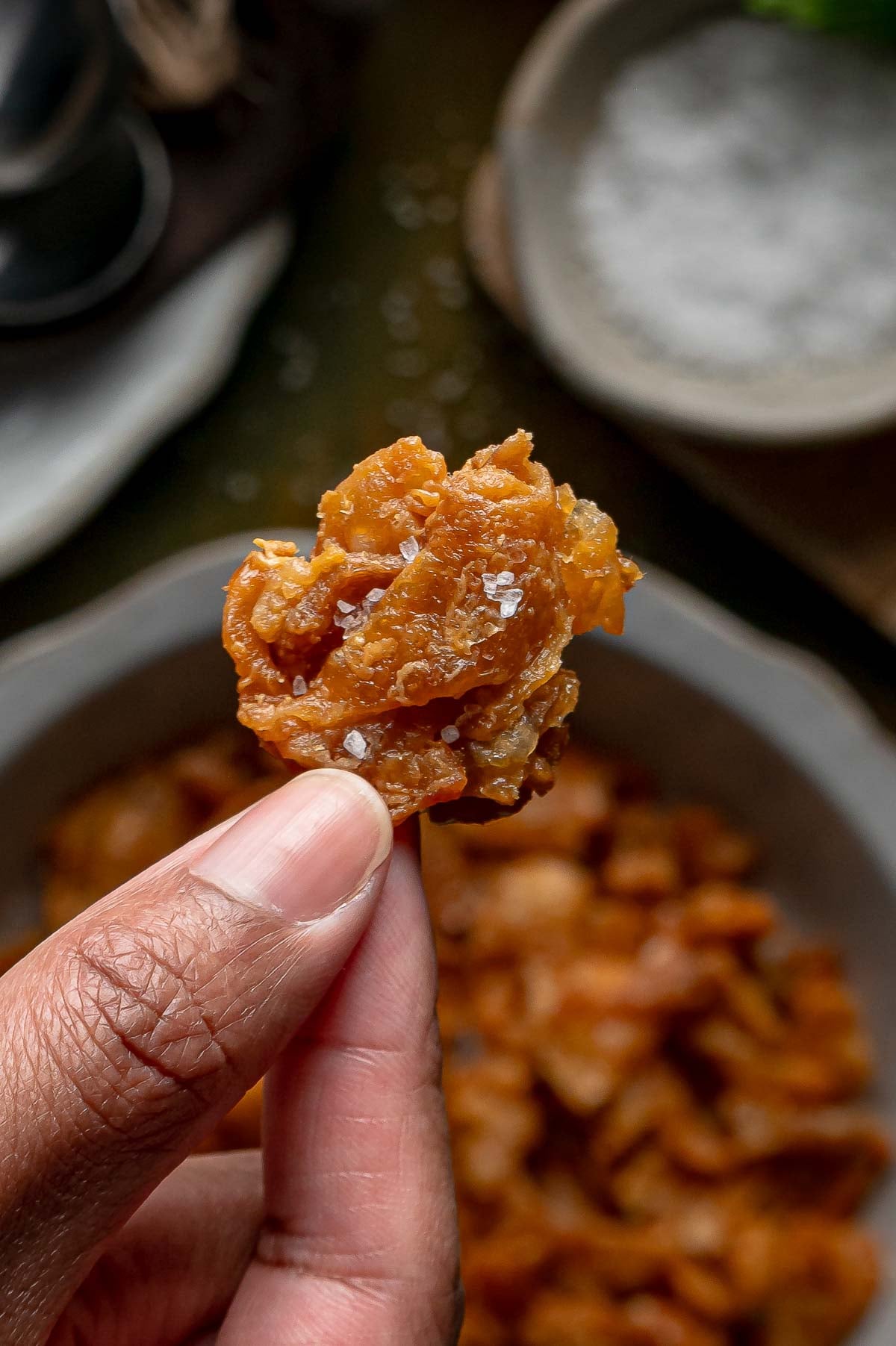
- Salt them while they’re hot. Season the gribenes with the kosher salt and toss gently so it spreads evenly. Let them cool uncovered for 5 to 10 minutes. They firm up and get crisper as the last of the steam escapes.
- Strain the schmaltz. Line a fine mesh strainer with cheesecloth, set it over a heatproof bowl or glass measuring cup, and carefully pour the warm schmaltz through to catch the small bits of chicken and browned sediment.
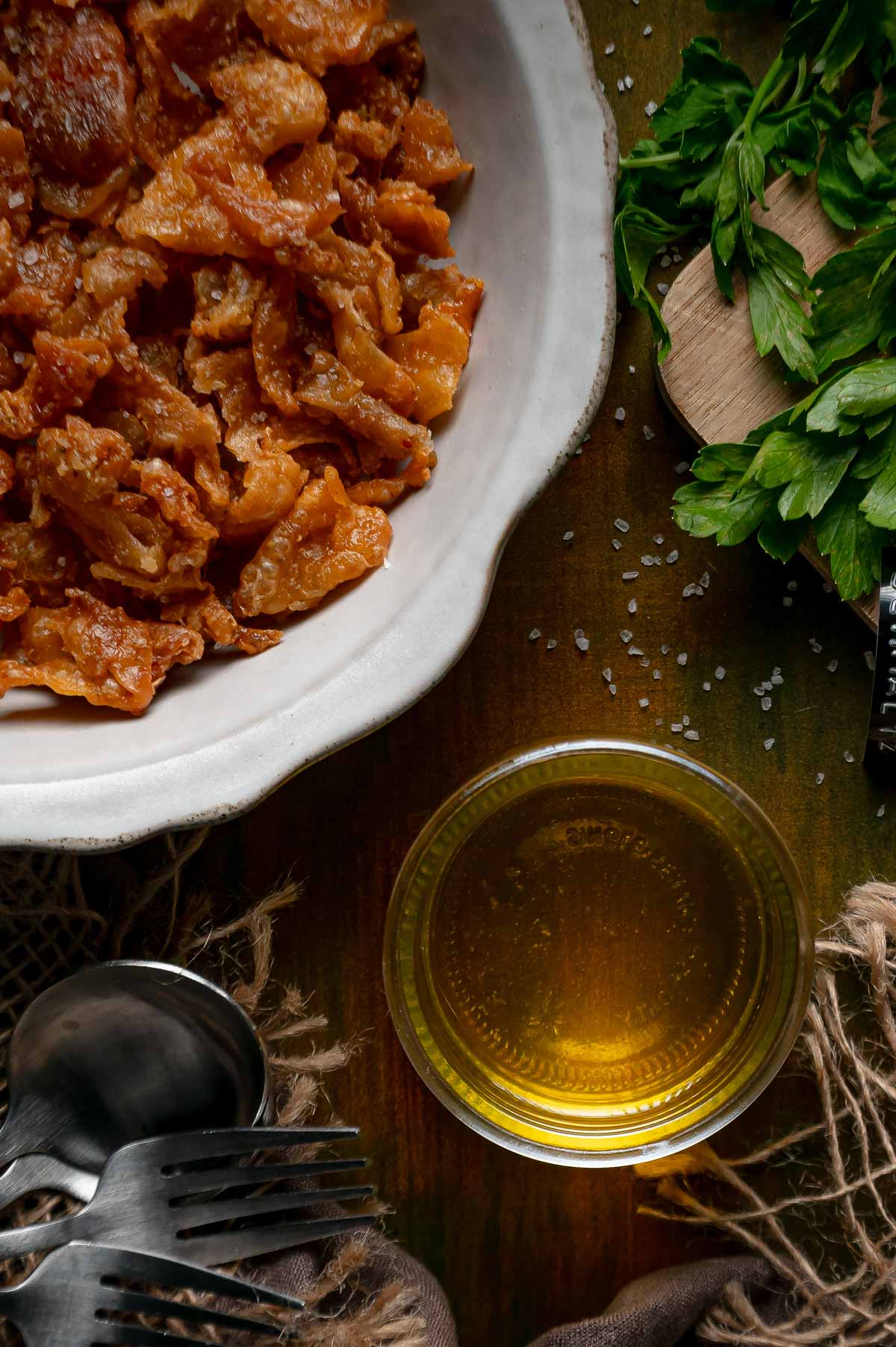
- Cool it and jar it unsalted. Let the strained schmaltz cool slightly, then transfer it to a clean container. Leave it unsalted so you can season it for whatever it goes into next.
🔄 Substitutions
- Breast, thigh, or whole-chicken skin: any of them works, and you can mix them in one batch. The fattier the skin, the more schmaltz you pour off at the end.
- ¾-inch pieces for bigger gribenes: cut the skins larger if you want a chunkier bite. Add a few minutes to the render and watch closely during the final browning.
💡 Meat Nerd Tips
- Rubbery gribenes need more time, not more heat. The fat trapped under and inside the skin has to melt out before the skin can go crisp. Turning the burner up just browns the outside of a piece that is still fatty in the middle.
- Listen to the pan. The loud, busy bubbling at the start is mostly water boiling off. When the pan goes noticeably quieter, the water is gone, the fat gets hotter, and browning speeds up. It’s the same physics behind crispy chicken skin on a roast bird, and the moment to start stirring more and watching closer.
- Get the gribenes out of the fat fast. Leaving them to sit in the schmaltz makes the outside feel greasy and slows down the crisping.
- Never salt the schmaltz. Salting the fat while it renders limits what you can use it for later and makes anything you cook with it harder to season accurately.
- Hands off the cheesecloth. Squeezing or pressing it after straining pushes the sediment right back into your fat.
🍽️ What to Cook with Schmaltz and Gribenes
- Potatoes. Roasted, fried, or smashed, a spoonful of schmaltz gives them a savory, roast chicken flavor that olive oil never will.
- Matzo balls. This is the fat that belongs in them.
- Chopped liver. Cook the livers and onions in schmaltz, then finish the bowl with a handful of gribenes on top.
- Rice. Stir a spoonful into a pot of hot rice, and it tastes like it was cooked in stock.
- Chicken, seared in its own fat. Swap it in for the oil in our lemon garlic chicken in cast iron.
- Sautéed vegetables. Onions, cabbage, and greens all go into the pan with schmaltz instead of oil.
- Gribenes as a topping. Scatter them over mashed potatoes, eggs, or a salad, anywhere you want salt and crunch. This is sooooo good.
- The rest of the fat shelf. Round out the pantry with lard rendered in a slow cooker and beef tallow.
🧊 Leftovers and Storage
- Schmaltz in the refrigerator: a clean, airtight container keeps it for up to 3 months.
- Schmaltz in the freezer: up to 1 year. Portion it before freezing so you only thaw what you need.
- Gribenes: let them cool completely, then store them separately from the schmaltz in an airtight container in the refrigerator for up to 3 days.
- Bringing gribenes back: a few minutes in a hot oven or air fryer brings back the crunch.
You are done throwing chicken skin in the trash. One skillet gets you a jar of schmaltz for the next three months of potatoes and a bowl of crackly gribenes you’ll be salting while they’re still hot.
Prevent your screen from going to sleep
-
Heavy-bottomed skillet or wide saute pan
-
Slotted spoon
-
Paper towels
-
Fine Mesh Strainer
-
cheesecloth
-
Heatproof bowl or glass measuring cup
-
Clean airtight container
Trim and Cut the Skins
-
Trim any substantial pieces of chicken meat, then cut the skins into roughly ½-inch pieces. Keeping the pieces similar in size helps the fat render evenly and prevents smaller pieces from burning before larger pieces become crisp.
Begin the Render
-
Cook for 12 to 15 minutes, stirring every few minutes, until the skins begin releasing their fat. The water will simmer around the skins and help keep them from browning before enough chicken fat has rendered into the pan.
Render Low and Slow
-
Continue cooking over medium-low heat for 20 to 25 minutes, stirring and separating the pieces occasionally. The skins will gradually shrink, curl, and change from pale to light golden as their fat renders. Keep the heat controlled so the fat has time to melt out before the skin becomes deeply browned.
Crisp the Gribenes
-
Reduce the heat slightly once the skins are golden and the bubbling has noticeably slowed. Cook for another 8 to 12 minutes, stirring more frequently, until the pieces are evenly golden brown, crisp, and no longer look thick or fatty. Remove the skillet from the heat before the skins become dark brown.
Serve
-
Serve the gribenes warm or at room temperature as a snack, garnish, or crunchy topping. Use the schmaltz for potatoes, matzo balls, chopped liver, rice, or sauteed vegetables.
- Use chicken skins from breasts, thighs, or whole chickens. Skins with more visible fat attached will naturally produce more schmaltz.
- For larger gribenes, cut the skins into ¾-inch pieces, increase the rendering time slightly, and watch carefully during the final browning stage.
- Store cooled schmaltz in a clean airtight container in the refrigerator for up to 3 months, or freeze for up to one year. Portion before freezing.
- Store completely cooled gribenes separately in an airtight container in the refrigerator for up to 3 days.
- Do not squeeze or press the cheesecloth after straining; it forces sediment back into the fat.
Serving: 1g | Calories: 60kcal | Carbohydrates: 0.04g | Protein: 7g | Fat: 4g | Saturated Fat: 1g | Polyunsaturated Fat: 1g | Monounsaturated Fat: 1g | Trans Fat: 0.02g | Cholesterol: 35mg | Sodium: 185mg | Potassium: 85mg | Vitamin A: 17IU | Calcium: 4mg | Iron: 0.2mg
Quick Summary
Schmaltz is rendered chicken fat and gribenes are the crispy skin left behind, so one pound of chicken skin gives you both. Start the skins in a skillet with a little water over medium low heat, render them slowly for about 50 minutes until golden brown and crisp, and pull them before they go dark. Salt the gribenes while they’re hot, strain the schmaltz through cheesecloth, and keep it unsalted so it works in anything.
❓ FAQs
Gribenes are the crispy, salty pieces of chicken skin left in the pan after you render schmaltz. Think of them as pork rinds made from chicken. Eat them as a snack, or use them as a crunchy topping for chopped liver, mashed potatoes, or eggs.
The water keeps the pan temperature gentle while the skins begin releasing their own fat. Once the water evaporates, the skins start frying and browning in the schmaltz they’ve produced, instead of scorching before any fat has rendered.
Heating the skin gradually lets the fat melt out before the outside browns. Starting in a very hot pan gives you gribenes that are brown on the outside but still fatty or chewy inside.
Strained schmaltz keeps up to 3 months in a clean, airtight container in the refrigerator and up to 1 year in the freezer. Portion it before freezing so you can thaw only what you need.
Use it anywhere you would use butter or oil for savory cooking: roasting or frying potatoes, matzo balls, chopped liver, stirred into rice, or sautéing vegetables. Keep it unsalted so you can season each dish on its own.
More technique like this lives in the Girl Carnivore Meat Labs, and the rest of our chicken recipes are where this jar of schmaltz is going next.