



Laab (a.k.a larb) is one of the most iconic dishes of Thai cuisine, beloved by both Thais and people around the world. It’s such a classic that laab was the second recipe I ever posted on Hot Thai Kitchen way back in 2009! It’s a warm salad of ground meat, dressed with a bright, spicy lime dressing and loaded with fresh herbs like mint and cilantro. You can enjoy it as a meal with sticky rice and fresh veggies, or serve it alongside other Thai dishes. It is also one of the easiest Thai dishes you can make at home, perfect for any Thai food beginners!
[feast_advanced_jump_to]
Cultural Context: What is laab?
Let’s get the most important thing out of the way first: while many Thai restaurants write this dish on the menu as larb, the correct pronunciation and the way it should be written is laab. The R is not pronounced. (If you speak British or Australian English, this does not concern you 😉.)
Laab ลาบ is a salad that is local to Laos and the northeast region of Thailand known as Isaan. But today, it is popular in all regions of Thailand. It is typically made of ground protein (can be pork, beef, chicken, or even fish) and lots of fresh herbs such as mint, cilantro, and green onions. It is a sour, salty, and spicy dish as the dressing is made of lime juice, fish sauce, and dried chili flakes. The most important ingredient in laab is toasted rice powder or kao kua, which gives laab its unique and identifying toasty aroma.
Because laab is mostly meat, it is served with a lot of raw vegetables such as cabbage, lettuce leaves, cucumber, and long beans. The starch it is traditionally served with is Thai sticky rice, though in a pinch, jasmine rice also works.
This recipe is for laab moo, which means laab with pork, and it is the most popular type of meat used for laab in Thailand. However, you can substitute another kind of ground meat, more details in the ingredients section below.
Ingredients and Important Notes
Here are all the ingredients for laab; please read important notes about them before you start. For amounts, check out the full recipe card below.

- White jasmine rice or glutinous rice, uncooked. This is for making the most important ingredient in this whole thing: toasted rice powder or kao kua. Glutinous rice (sticky rice) is more commonly used since it is the staple rice in the Isaan region, but I prefer using jasmine rice because it is more fragrant. Choose either.
- Makrut lime leaf (optional) for adding extra aromat to your toasted rice powder.
- Ground pork. Lean ground pork is fine as long as it is not TOO lean. A little fat is ideal for keeping things moist, especially since there is no added fat in the dressing. You can sub ground chicken or turkey (use dark meat for best results), or ground beef. Here’s my chicken laab (laab gai) recipe. For a vegan version, see my corn and tofu laab recipe here
- Shallots, red onion will also work if shallots are not available. Red onions tend to be a little sweeter, so you may prefer that if you find raw shallots a little too pungent.
- Fish sauce. See my post here about how to choose good fish sauce.
- Lime juice. For best flavour use fresh lime juice for this recipe, do not use bottled lime juice.
- Chili flakes or chili powder. Laab is supposed to be spicy so I recommend adding as much as you can! In Thailand we use roasted chili flakes which are a bit smokey, but whatever you have will work. If you don’t eat spicy, do not omit the chilies or your laab will not taste right, as you will lose the chili flavour. Choose a mild chili powder, such as kashmiri chili powder, or the generic “red pepper flakes.” If using red pepper flakes I recommend grinding it further in a spice grinder as the flakes are quite large and don’t integrate well into dishes. If you’ll be cooking Thai food regularly, I recommend making your own mild chili flakes, see “How to Make Mild Chili Flakes” below.
- MSG or chicken bouillon powder (optional). Look, I never used to put MSG in my laab, and for years I felt like there was something different between the laab I made and the ones I get in Thailand. Turns out, it was the MSG. It not only adds umami but in this dish it also helps balance out the sharp acidity of the lime, creating a more well-rounded flavour. If you don’t have MSG, you can add chicken bouillon powder (which contains MSG). If you don’t want to do either, sugar can be a compromise – add a pinch of sugar to balance the acid, but do not add so much that the sweetness is detectable.
- Mandatory herbs: Cilantro, green onions, and mint. It’s not a complete laab without these. If you’re a cilantro hater, I will make an exception for you to leave it out.
- Optional herbs: makrut lime leaves, sawtooth coriander, lemongrass, dill. Add these if you like them, but no need to go out of your way to find them.
- Sticky rice for serving. At the store, the rice is labelled as “glutinous rice” or “sweet rice.” Make sure it is long grain and from Thailand. Here’s a post with 7 different ways to make sticky rice, and my favourite “quick” method is this hot soak method.
- Fresh raw vegetables for serving. Laab is a strongly flavoured dish, and eating it alongside some fresh crunchy vegetables makes it more delicious. Some good options are green cabbage (preferably Asian style), cucumber, radishes, long beans, and romaine lettuce.
Step-By-Step
Here are all the steps to make this recipe. If this is your first time, I highly recommend watching the video tutorial to ensure success!

- Add about a third of the fish sauce to the ground pork and mash it to mix, and also to get rid of the “tube” shapes that ground meat comes in so your laab doesn’t end up with weird meat tubes.

- Make the toasted rice powder. Place the rice and a makrut lime leaf (if using) in a dry pot or skillet and stir constantly over medium high heat until the rice is deeply browned. It will get a bit smokey so make sure you have good ventilation.

- If adding a makrut lime leaf, once it is dry and crisp, quickly remove it from the pan to prevent it from burning. This will likely happen before the rice is fully toasted. (I grab it quickly with my fingers, but to be safe, you should probably use tongs or chopsticks.)

- Transfer the rice and the lime leaf to a coffee grinder or mortar and pestle and pound into a powder. The crispy leaf will grind along with the rice, adding a citrusy aroma to the rice powder.

- This is the texture you’re looking for – not as fine as flour, but like dry sand with no chunky pieces. If you’re left with the center stem of the lime leaf at the end, discard it.

- Add 2 tablespoon of water to a pot and bring to a simmer over high heat. Add the ground pork and cook, breaking it up as you go, just until the pork is done. Turn off the heat.

- While the pork is hot, add the shallots and julienned lime leaves, and any other sturdy herbs you are using such as lemongrass. Stir and let the residual heat wilt the shallots and distribute the aroma.

- Add the seasonings: remaining fish sauce, lime juice, chili flakes, MSG (if using), and toasted rice powder. Stir to mix.

- Once the laab is no longer piping hot, or just before serving, add the delicate herbs: cilantro, green onions, mint and sawtooth coriander (if using).

- Serve with fresh veggies and a side of Thai sticky rice. Enjoy!
Watch The Full Video Tutorial!
All my recipes come with step-by-step video tutorials, and if it’s your first time making laab, I highly recommend watching it to ensure success! If you enjoy the show, please consider subscribing to my YouTube channel. Thank you!
How to Make Mild Chili Flakes for Mild Laab
While you might be tempted to skip the chilies to make a mild laab, trust me when I say that your laab will not taste as good, because in addition to heat, chilies provide a key flavour that’s important to the flavour profile of laab. While you can look for mild chili powder, you can also make your own which allows you to customize the heat level to your tolerance. If you want to cook Thai food regularly, I promise it’ll come in handy! It keeps in the freezer indefinitely and in the fridge for a few months.
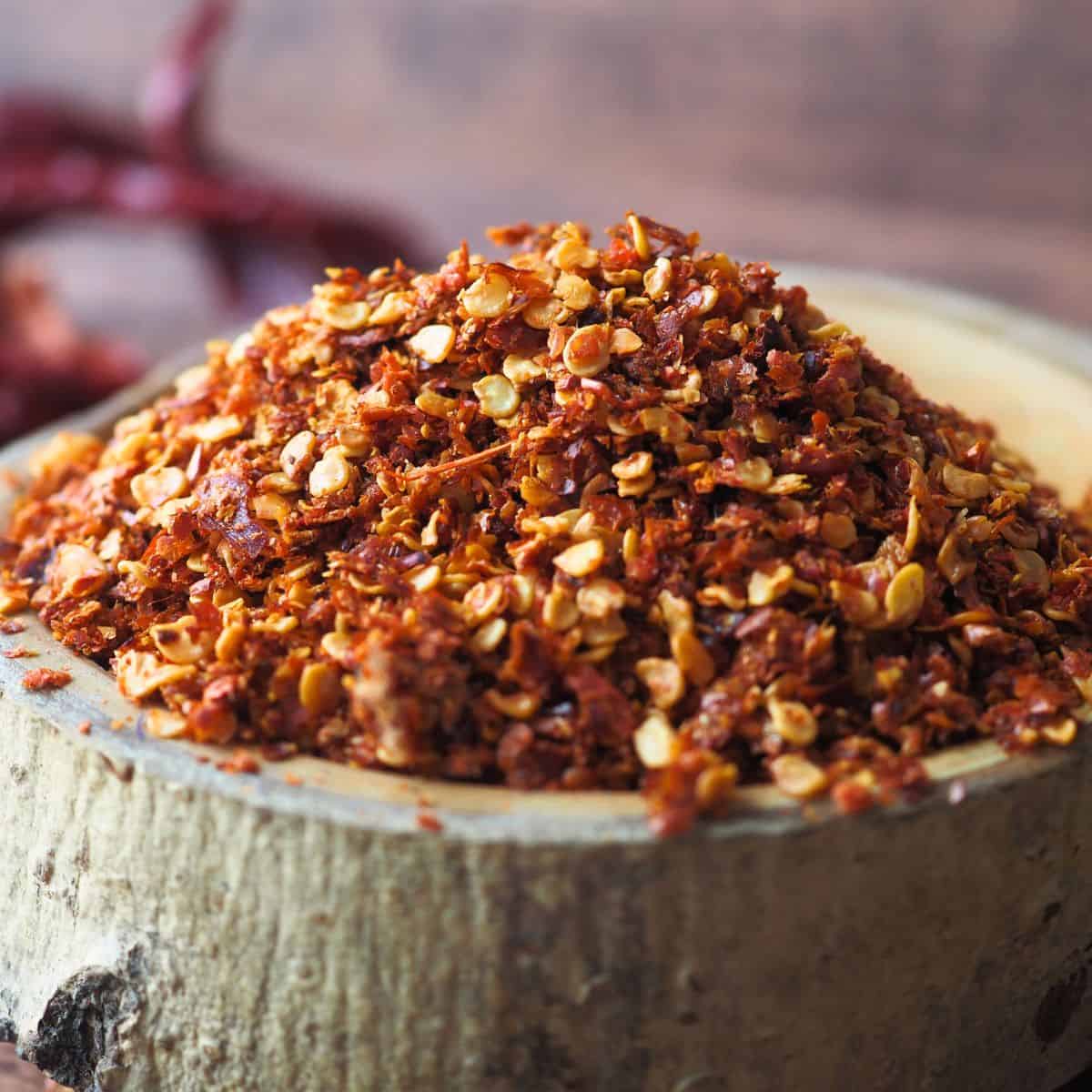
- Buy whole dried chilies whose spice level suits your tolerance. Latin American stores are best for this as they have lots of variety. Guajillo and California peppers have almost no heat. Puya peppers have a little kick but are still mild. You can also combine chilies, for example get guajillo/California and then spike it with a few chile de arbol (which are very hot) for a custom heat level.
*As a guideline, for this laab recipe, you want to be able to add at least 1 teaspoon of chili flakes. If adding 1 teaspoon makes the dish too spicy, make it milder. - Cut the dried chilies into chunks with scissors, and discard the seeds that fall out but no need to remove any seeds still inside. Toast them briefly over low heat in a dry skillet, stirring constantly, until they are crispy and smell slightly smokey.
- Remove from heat and grind into fine flakes using a coffee/spice grinder. Keep in the fridge or freezer as dried chilies can get mold overtime.
How to Eat Laab Like a Thai
A plate of laab arrives with a side of sticky rice and a bunch of raw vegetables…and if you wonder “how do I tackle this?” You’re not alone! Let me explain.
Typically laab is served family style, meaning you’re sharing the laab with a few people, you are not served a plate of laab that is your own to finish. You start by putting some of the sticky rice on your personal plate. Then scoop some of the laab and grab a few pieces of veg onto your own plate as well. Then you can:
- Take a bite of laab (with a spoon) and follow it up with a bite of sticky rice (the sticky rice is eaten by hand), so both the rice AND the laab are in your mouth at the same time. You can do the same with laab + veg combo.
- You can also use the vegetable as a “spoon” and put the laab on it, kind of like a lettuce wrap. This works well with cabbage, lettuce and cucumber slices.
- If there is any dressing on the plate you can also use sticky rice to sop it up!
This is just typically how Thai people eat laab; don’t feel like these are rules. You can eat it however you want!
For more on Thai dining etiquette, check out my post How To Eat Thai Food Correctly.
Recipe Card

Authentic Thai Laab with Pork (Laab Moo) – Isaan Style

Prep Time: 15 mins
Cook Time: 15 mins
Total Time: 30 minutes

Yield: Serves 2

Category: Main Dish

Method: Sautéing

Cuisine: Thai

Diet: Dairy-Free, Gluten-Free, Low-Carb

Pin Recipe
Description
An iconic Northeastern Thai salad of ground pork with lots of fresh mint, cilantro and green onions, with a unique aroma from toasted rice. Laab is bright, bold, and spicy. Very easy and quick, perfect for even Thai food beginners!
Ingredients
/* JG – NerdPress – 04/11/2025 – Center Save This Submit Button */ @media only screen and (min-width:431px) { .hubbub-save-this-submit-button-paragraph-wrapper { display: flex !important; justify-content: center !important; } .hubbub-block-save-this-submit-button { width: 25% !important; } } /* AW 10-16-25 – reduce whitespace */ .hubbub-save-this-form-wrapper { line-height: 1.25em; }
Save this recipe!
Toasted Rice Powder (Kao Kua)
- 2 Tablespoons jasmine rice or Thai glutinous rice
- 1 makrut lime leaf (optional)
Laab
- 9 oz (250 g) ground pork (or sub ground dark meat chicken)
- 2 Tablespoons (30 ml) fish sauce, divided
- 2 Tbsp (30 ml) water
- ¼ cup (25 g) thinly julienned shallot
- 2 makrut lime leaves, finely julienned (optional)
- 2 Tablespoons (30 ml) lime juice
- 1–2 teaspoons chili flakes, or to taste (see note 1)
- ⅛ – ¼ teaspoon MSG (optional, see note 2)
- ¼ cup (5 g) mint leaves, larger leaves roughly torn
- 8–10 sprigs cilantro, roughly chopped
- 1 small green onion, chopped
- 2–3 leaves sawtooth coriander, thinly sliced (optional)
- For serving: Thai sticky rice and crunch fresh vegetables e.g. green cabbage, cucumber, long beans, romaine lettuce, or radishes.
- Ingredients & Kitchen Tools I Use
Instructions
- Toast the rice. In a medium size pot, add the raw rice and the optional makrut lime leaf and put it over high or medium high heat. Stir it constantly until a the rice is toasted until deeply browned. If using the lime leaf, pick it out of the pan as soon as it becomes dry and crispy, which will likely happen before your rice is toasted. Remove the rice from the pot immediately to prevent it from over-toasting from the residual heat and let cool slightly. You can keep the toasted rice in a sealed container in the fridge for up to a month.
- Grind the toasted rice. Transfer the rice and the lime leaf into either a mortar and pestle or a coffee grinder. Grind into a powder, but it need not to be flour-fine, just a sand-like texture without any chunky pieces is fine. The lime leaf will grind along with the rice, but if using a mortar and pestle, you will be left with the center stem of the leaf which you can discard.
- Make the laab: Add roughly a third of the fish sauce (2 teaspoons) into the pork and mash it with a fork to mix and get rid of the tube shapes ground meat often comes in.
- In the same pot you used to toast the rice, add the water and bring to a boil over high heat. Then add the ground pork and stir to break it up until it is fully cooked. Remove from the heat immediately, do not let it over cook.
- Using the pot as your mixing bowl, while still hot, add the shallots and the julienned lime leaves (if using), stir to mix and wilt the shallots, breaking up the layers of the shallots as much as you can.
- Add the remaining fish sauce, chili flakes, MSG, toasted rice powder, and the lime juice. Mix well, taste and adjust seasoning as desired, adding more chili flakes if you like it spicier.
- Just before serving, add the delicate herbs: cilantro, green onion, mint, sawtooth coriander (if using). Tip: Before you add the herbs, if the pork is still quite hot, let it cool for a couple of minutes so the herbs don’t wilt as much.
- Serve warm or room temp with sticky rice and fresh crunchy vegetables.
Notes
1. Laab is supposed to be spicy, so add as much as you can tolerate! If you don’t eat very spicy, don’t omit the chilies altogether because you’ll be missing the chili flavour. Instead opt for milder chili flakes such as the “red pepper flakes” sold in Western grocery stores. More on this in the ingredient section in the blog post.
2. Most laab in Thailand contains MSG; it not only adds umami but also helps balance out the acidity of the lime. You can sub ¼ teaspoon of chicken bouillon powder which contains MSG. Otherwise adding a pinch of sugar can also help balance the acid, but it won’t taste as good.
The post Authentic Thai Laab – Just Like in Thailand! (Laab Moo) appeared first on Hot Thai Kitchen.