



There are two ways to thaw a turkey breast, and the only question is how much time you’ve got before dinner needs to be on the table. In the frigerator, it takes about about six hours a pound. The faster option, in cold water, it’s about thirty minutes a pound. We’re walking you through how to safely thaw that Butterball either way.
Cold water is the one that saves a the day if you forgot to thaw the bird. It works as long as you change the water every thirty minutes, which is the step most people skip, but it’s the one thing that helps the turkey breast thaw quickly in time for the Thanksgiving dinner table.
🦃 Why Thawing a Turkey Breast Right Matters
A frozen turkey breast is dense, and dense things thaw from the outside in. Rush it on the counter and the outer inch climbs into the danger zone, 40 to 140°F, where bacteria double every twenty minutes, while the center is still a block of ice. You end up with a breast that is unsafe on the outside and undercooked in the middle.
A properly thawed breast pays you back three ways:
- It cooks evenly. No icy core means no scorched exterior while you wait on the center.
- It takes seasoning. Salt, butter, and rub go on and under the skin instead of sliding off a frozen surface.
- It stays juicy. A breast that starts at a uniform 35°F hits its finish temperature all at once instead of overcooking the edges.
⏱️ How Long It Takes to Thaw a Turkey Breast
Weight decides everything here, so check the package before you plan anything. The math is roughly 6 hours per pound in the refrigerator and 30 minutes per pound in cold water.
| Turkey breast weight | Refrigerator thaw | Cold water thaw | Serves |
|---|---|---|---|
| 2 to 3 lbs | 12 to 18 hours | 1 to 1.5 hours | 4 to 6 |
| 4 to 5 lbs | 24 to 30 hours | 2 to 2.5 hours | 8 to 10 |
| 6 to 7 lbs | 36 to 42 hours | 3 to 3.5 hours | 12 to 14 |
| 8 lbs and up | 48 hours or more | 4 hours or more | 16 and up |
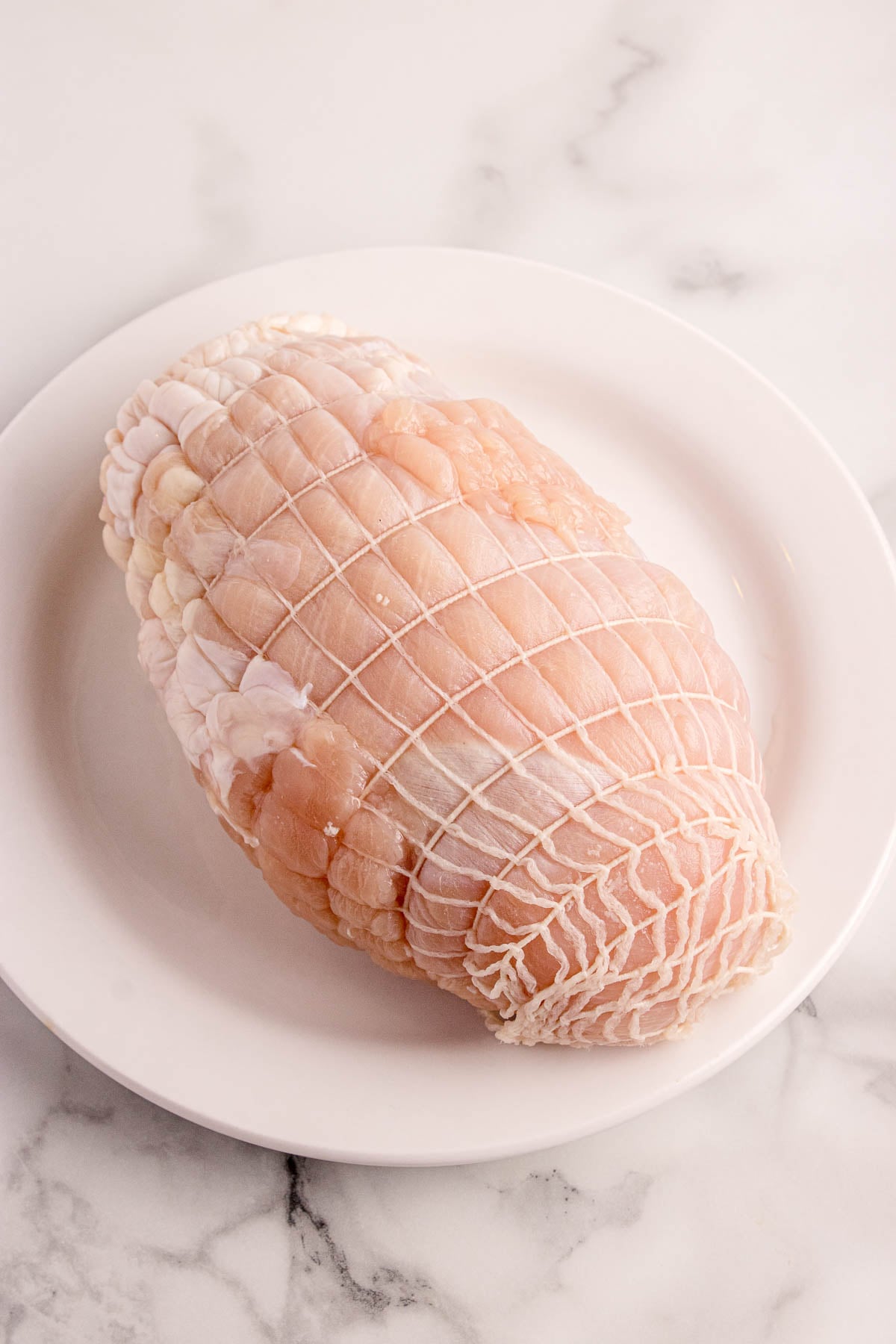
A bone-in breast runs to the long end of every range because the bone and the extra mass hold cold longer. A boneless roast, netted or tied, sits at the short end. When you are cutting it close, plan on the longer number and be pleasantly surprised.
Got a whole bird in the freezer instead? Stop here and go read how to safely thaw a turkey, because a 16 pound turkey is a three to four day project in the refrigerator and none of the numbers above apply to it.
❄️ What You Need
- A rimmed sheet pan or shallow tray. Anything with a lip. This is the single piece of gear that keeps raw poultry drip off your produce drawer.
- An instant-read thermometer. A Thermapen is what we reach for. It turns “I think it’s thawed” into a number.
- Leak-proof bags. One gallon zip-top for a small breast, heavy-duty for anything bigger or any package that is already torn.
- A stockpot, basin, or clean sink. Cold water method only. It has to be deep enough to submerge the breast completely.
- Ice. Cheap insurance for holding the water bath under 70°F.
- Paper towels. For drying the breast before it goes anywhere near heat.
🥤 Pro Tip: Safe handling
- Clear the bottom shelf of the fridge before you start, not after the tray is already in your hands.
- Sanitize the sink and counter before and after with a solution of 1 tablespoon unscented bleach per gallon of water.
- Wash your hands for twenty seconds after every single time you touch the package.
🧊 Method 1: The Refrigerator Thaw (Safest)
This is the one to use when you have the time. It never leaves the safe zone, it needs almost nothing from you, and it is the only method that lets you refreeze the breast uncooked if dinner moves.
- Inspect the packaging. Run your hands over it and look for tears, punctures, or a broken seal. If it is compromised at all, slide the whole thing into a leak-proof bag before it goes in the fridge.
- Set up a tray. Put the breast on a rimmed sheet pan or shallow pan. Thawing poultry leaks, and you want that liquid in a pan, not on the shelf below.
- Put it on the bottom shelf. Lowest shelf, always, so nothing can drip onto ready-to-eat food. Confirm the fridge is running at 40°F or below with your thermometer. Anything warmer and the whole plan is off.
- Check it every 12 hours. Press the thickest part. Early on it will feel like a rock, then like firm clay, then it gives.
- Confirm it is done. The thickest part should read 32 to 40°F, press with a slight give, and show no ice crystals in the folds or under the netting.
After It Thaws in the Fridge
Cook it within 1 to 2 days. This is also the one window where refreezing raw is fine, since the breast never left the safe zone. Have an extra day? Use it for a dry brine, which is the highest return move you can make on a turkey breast.
💧 Method 2: The Cold Water Thaw (Fastest)
Six times faster than the fridge and completely safe as long as you keep the water cold and keep changing it. This is the noon rescue.
- Seal it, then seal it again. The packaging has to be watertight. If there is any damage, move the breast to a heavy-duty leak-proof bag and press out as much air as you can so it does not float.
- Fill the bath with cold tap water. Aim for 60 to 70°F, which is what the cold tap runs in most kitchens. Warm water is not a shortcut, it is a bacteria bloom.
- Submerge it completely. Every square inch under water. If it bobs, weigh it down with a plate. Exposed surfaces sit in room-temperature air and thaw at a different rate.
- Change the water every 30 minutes. Set a timer, because this is the step people skip. Drain, refill with fresh cold water, and drop in a handful of ice if the bath is creeping past 70°F.
- Rotate at every water change. Flip the breast over each time so the same side is not always resting against the bottom of the pot.
- Check at the estimated finish time. No hard spots anywhere, uniformly cool to the hand, and 32 to 40°F on the probe in the thickest part.
- Cook it now. A cold water thawed breast goes straight to the oven, smoker, or slow cooker. Do not refreeze it raw.
From here, a rosemary garlic smoked boneless turkey breast is about three hours away, or a slow cooker turkey breast if you need the oven for everything else.
🌡️ How to Tell It’s Fully Thawed
Run more than one of these. Any single test can lie to you, and a breast that is 90 percent thawed feels exactly like one that is done.
- The probe: 32 to 40°F in the thickest part, then again an inch away, then near the center seam. Three spots, not one.
- The press: Push into the thickest section with your thumb. It should give like firm butter, with no hard shelf underneath.
- The bend: The breast should flex. Stiffness means there is still ice in the middle.
- The look: Uniform pale pink throughout. Any white, frosty patches or crystals in the folds mean it needs more time.
Still a little firm in the center? Give it another 30 minute water change, or another 6 hours in the fridge. Once it clears, check our meat temperature guide for the finish temp on the cook side.
🚫 What Never to Do
- Never thaw on the counter. The surface sits in the 40 to 140°F danger zone for hours while the middle is still frozen. This is the single most common way a holiday goes wrong.
- Never use warm or hot water. It cooks the outer layer to a gray band and grows bacteria at the same time. Cold tap water only.
- Never leave the water sitting. Unchanged water warms toward room temperature and the thaw stalls out in the worst possible range. Thirty minutes, every time.
- Never refreeze a cold water thawed breast raw. Cook it first, then freeze the cooked meat if you want to save it.
- Never wash the raw breast. Rinsing aerosolizes bacteria across your sink and counter. Pat it dry with paper towels instead and toss them straight in the trash.
- Microwave only as a true last resort. Remove all packaging, use the defrost setting in short bursts, turn it often, and cook it the second it is out. The edges will start cooking, and there is no way around that.
🧹 When to Toss It
- Leaking package, everything else fine: Don’t toss it, move the breast to a clean leak-proof bag or a rimmed dish, sanitize every surface the juices touched, and keep going.
- Sour or ammonia smell: Discard it. Fresh turkey smells like almost nothing. Trust your nose over the sell-by date every time.
- Slimy or tacky surface: Discard it. That film is bacterial growth, and rinsing does not fix it.
- Gray or green cast: Discard it. A little iridescence on sliced cooked turkey is normal, but a dull gray-green raw breast is not.
- Left out overnight on the counter: Discard it, even if it still feels cold. There is no way to know how long the surface spent above 40°F.
💡 Meat Nerd Tips
- Read the weight, do not eyeball it. Every number on this page is weight driven. A 4.5 pound breast run on a 4 pound schedule leaves you an icy core at exactly the wrong moment.
- Set an alarm for the water changes. Thirty minutes disappears when you are cooking. Unchanged water is the one thing that turns the fast method into the unsafe method.
- Thaw a day early on purpose. A breast that finishes Wednesday holds fine until Thursday, and that spare night is free dry brining time.
- Pat it bone dry before it hits the heat. A thawed breast carries surface water, and wet skin steams instead of browning. Paper towels, both sides, under the netting.
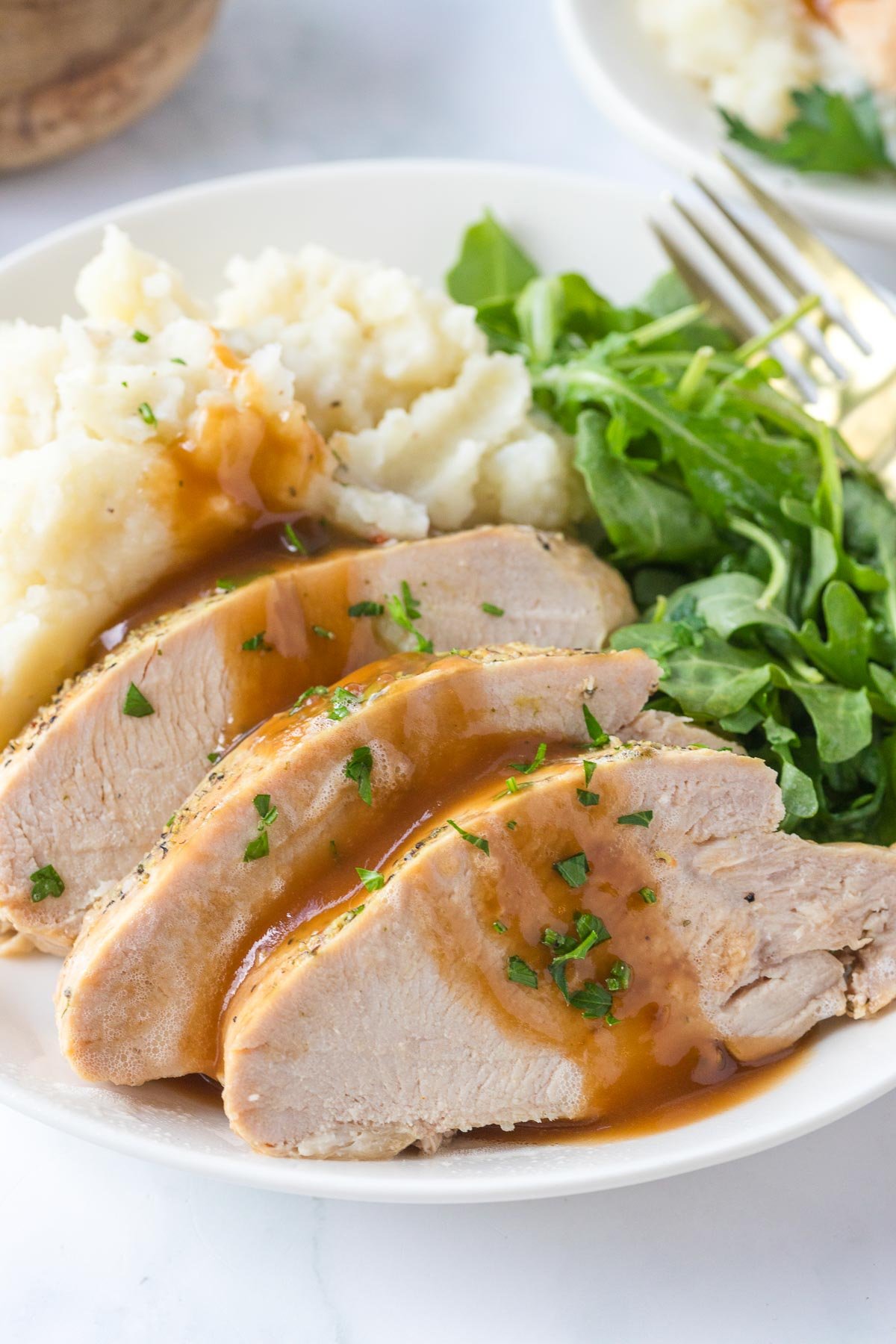
- 160°F. Cook turkey breast to 160°F and let it rest for 10 miutes before slicing into pencil thin strips, about 1/4″ thick for serving.
The turkey breast in your freezer is closer to dinner than you think. Two methods, timed out by the pound, and nobody has to know how close it was.
Prevent your screen from going to sleep
-
Rimmed sheet pan or shallow tray
-
1-gallon zip-top or heavy-duty leak-proof bags
-
Large stockpot basin, or clean sink
-
Paper towels
Refrigerator Method,
-
Inspect and Bag: Check the packaging for tears or a broken seal. If it is compromised, slide the whole thing into a leak-proof bag.
-
Set Up: Set the breast on a rimmed sheet pan and place it on the bottom shelf. Confirm the fridge is at 40F or below.
-
Wait and Check: Allow about 6 hours per pound. Check every 12 hours. Done when the thickest part reads 32 to 40F with no hard spots and no ice crystals.
Cold Water Method
-
Seal Watertight: Confirm the packaging is fully sealed, or move the breast to a heavy-duty leak-proof bag and press out the air.
-
Submerge: Fill a stockpot or clean sink with 60 to 70F cold tap water and submerge the breast completely. Weigh it down with a plate if it floats.
-
Change and Rotate: Drain and refill with fresh cold water every 30 minutes, rotating the breast each time. Add ice if the bath climbs past 70F. Allow about 30 minutes per pound.
-
Confirm and Cook: Check three spots for 32 to 40F, a slight give under the thumb, and no ice crystals. Pat dry with paper towels. Cook a cold water thawed breast immediately.
- Refrigerator thawed breasts can be refrozen raw. Cold water and microwave thawed breasts cannot; cook them first.
- Bone-in breasts run to the long end of every time range. Netted boneless roasts finish sooner.
- Never thaw on the counter. The surface sits in the 40 to 140F danger zone for hours while the center is still frozen.
- Once thawed, cook within 1 to 2 days.
Quick Summary
To thaw a turkey breast safely you have two options: the refrigerator at 40°F or below, which runs about 6 hours per pound and lets you refreeze, or a cold water bath at 60 to 70°F changed every 30 minutes, which runs about 30 minutes per pound and has to be cooked right away. It is fully thawed when the thickest part reads 32 to 40°F in three spots with no hard shelf and no ice crystals. The one rule with no exceptions is that a turkey breast never thaws on the counter.
❓ FAQs
Yes, it is safe, but plan on at least 50 percent more cooking time and expect uneven results. You also lose the ability to season under the skin or brine it. Use a thermometer and pull at 160°F, since carryover brings it to 165°F during the rest.
Only if it thawed in the refrigerator and stayed at 40°F or below the whole time. A breast thawed in cold water or a microwave has to be cooked first, and then you can freeze the cooked meat. Expect a little moisture loss on the second freeze either way.
One to two days once it is fully thawed. Keep it on the bottom shelf on a rimmed tray at 40°F or below. If you are past two days and have not cooked it, cook it now and freeze the cooked meat rather than gambling on another day.
Yes. Bone-in breasts are denser and hold cold longer, so use the long end of every time range. A netted boneless roast of the same weight finishes closer to the short end because the mass is more evenly distributed.
Move it to the cold water method and keep changing the water every 30 minutes until it clears. Do not put a partially frozen breast in the oven on a schedule, because the center will still be climbing while the outside dries out.