


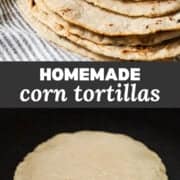
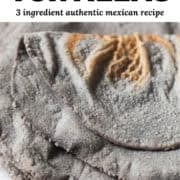
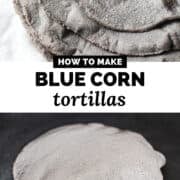
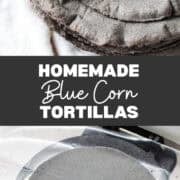

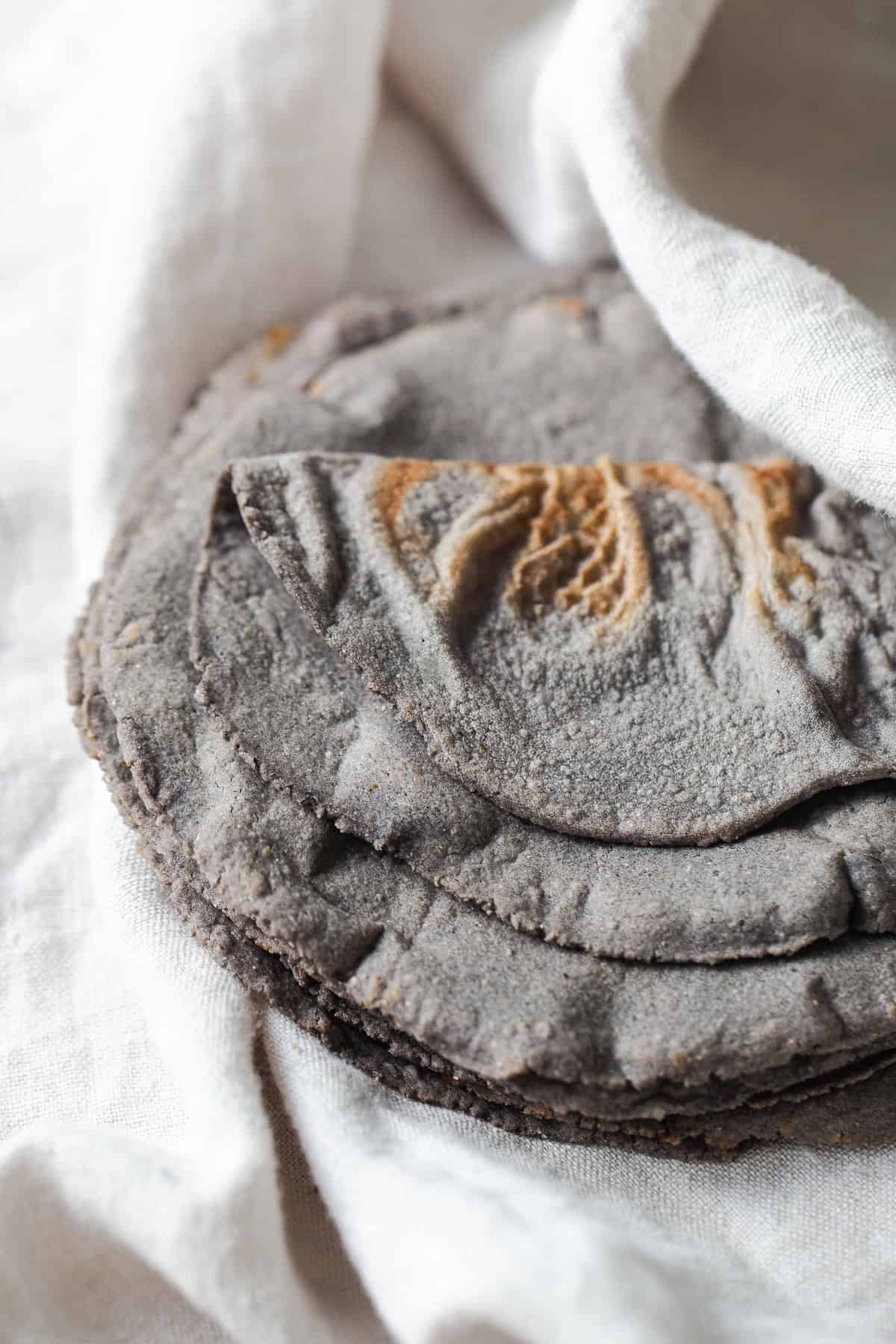
These blue corn tortillas have become my favorite after a lifetime of eating corn tortillas almost daily. Just blue corn masa harina, salt, and warm water, ready in about 45 minutes, and they’re nuttier and earthier than white corn. So good with any taco filling!
A Note from Isabel

Blue corn tortillas weren’t part of my childhood. My parents made white and yellow corn tortillas, and that’s what I grew up eating, so for a long time that’s just what a tortilla was to me.
That changed when I got older and started paying closer attention to how tortillas are actually made. Masa harina comes in blue, red, white, and yellow, and which one ends up on the table depends a lot on where in Mexico you are. Blue corn is eaten much more in the central and southern regions, and my family is from the northern region.
So I went looking for blue corn masa harina to see what I’d been missing, and the flavor is what sold me. It’s nuttier and earthier than white, with a little more savory to it, and it makes some of the best tortillas I’ve ever had. Now they’re in my regular rotation right alongside my flour tortillas, and I can’t get enough!
What Makes Blue Corn Masa Different
Blue corn masa harina is made the same way as any other masa harina – from nixtamalized corn – which just means the corn was cooked and soaked in an alkaline solution before it was dried and ground. Blue corn masa harina is that same thing, made with maíz azul instead of white or yellow corn.
The color is completely natural and comes from anthocyanins, the same pigments that make blueberries blue. Nothing is added and nothing is dyed.
Flavor is the bigger difference. A blue tortilla tastes nuttier and earthier than a white one, with a more concentrated corn flavor.
Blue corn also has more protein and antioxidants than white corn, and a lower glycemic index.
What doesn’t change is how it behaves. The dough handles just like regular masa.
Ingredients You’ll Need
Full amounts are in the recipe card below, but here’s what each one is doing, as well as some equipment that makes the process easier.
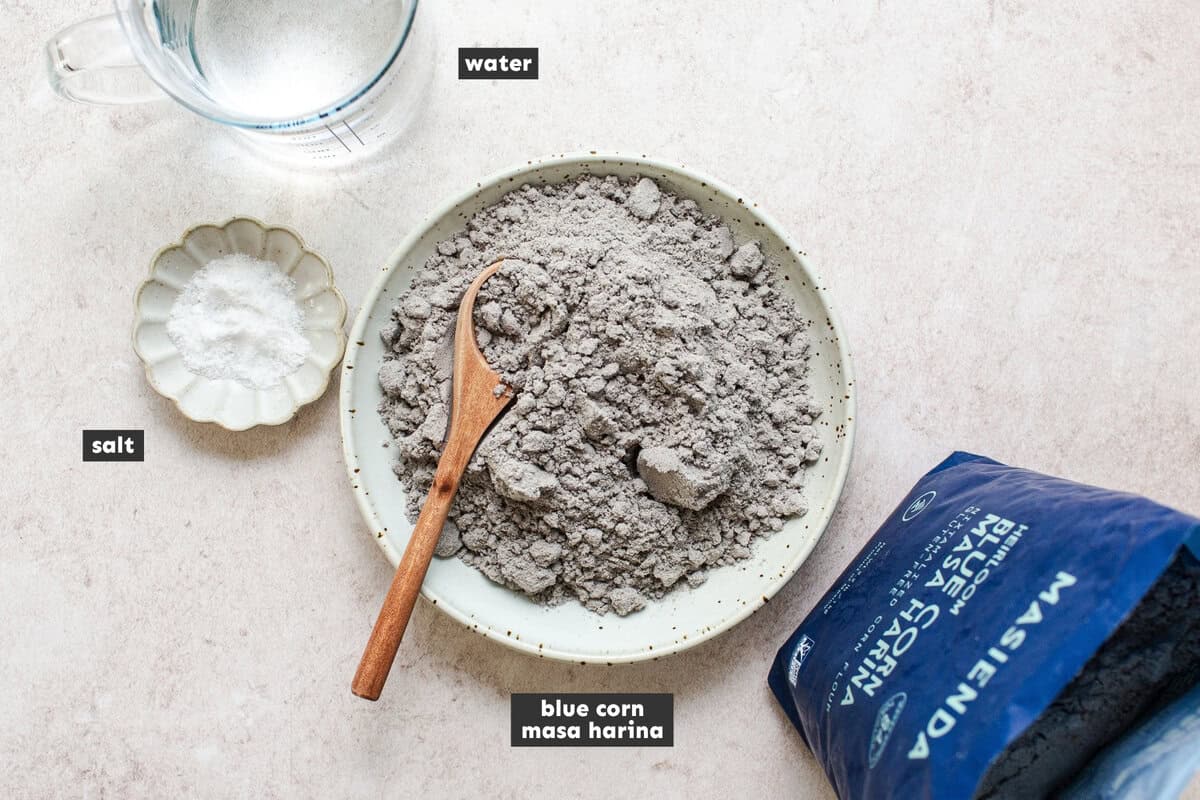
- Blue corn masa harina: Corn flour made from nixtamalized blue corn, and it’s really the whole recipe. I use Masienda, and Maseca makes a blue corn version you can sometimes find in grocery stores. Whatever brand you can get your hands on will work.
- Fine salt: A teaspoon brings out the nutty, earthy flavor in the blue corn. Don’t skip it, or your tortillas will taste flat.
- Warm water: Warm water softens the masa harina and makes the dough easier to work with. Masienda drinks up more than Maseca does, so I land closer to 1¾ to 2 cups with Masienda and 1½ with Maseca. Start at 1½ either way and go from there.
- Tortilla press: A tortilla press makes this so much easier, and they’re not expensive. If you don’t have one, press the dough between two sheets of parchment with a large glass baking dish, pushing down as evenly as you can so the thickness stays the same all the way around.
- Parchment paper or plastic: This keeps the dough from sticking to the press. Parchment paper is great, but I also like cutting the side seams off a large Ziploc bag so it opens into one big rectangle.
- Nonstick skillet, comal, or cast iron: Any of these work. I’ve tried all three and I get the best puff on a good nonstick skillet, even though a comal is what’s traditionally used.
- Tortilla warmer (optional): A tortilla warmer keeps them hot and pliable while you cook the rest. This isn’t totally necessary, but it’s very nice to have.
How to Make Blue Corn Tortillas
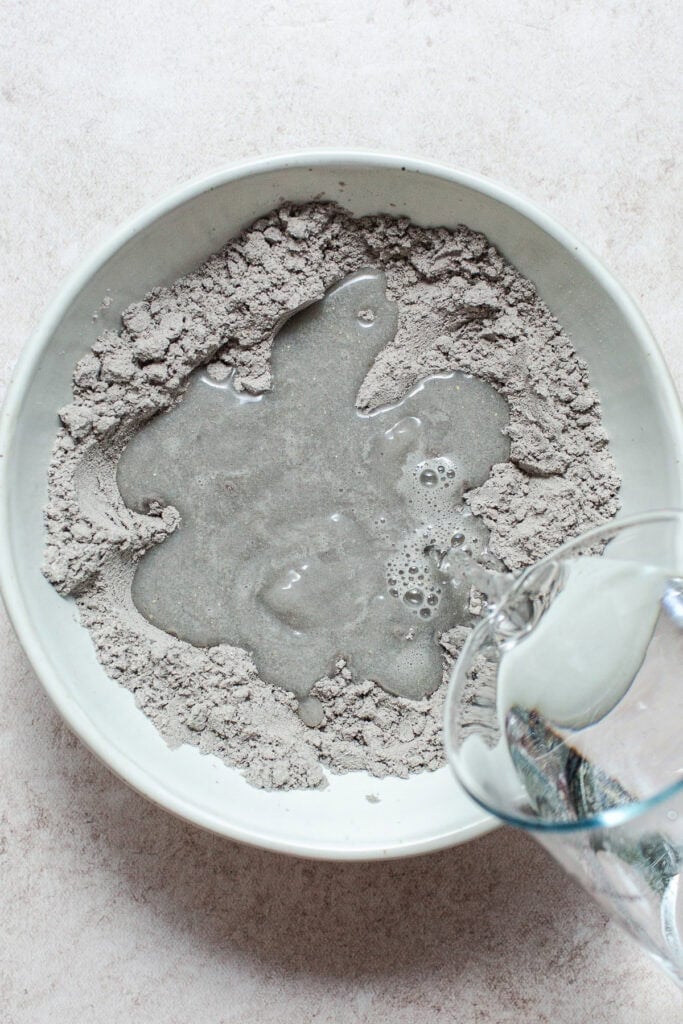
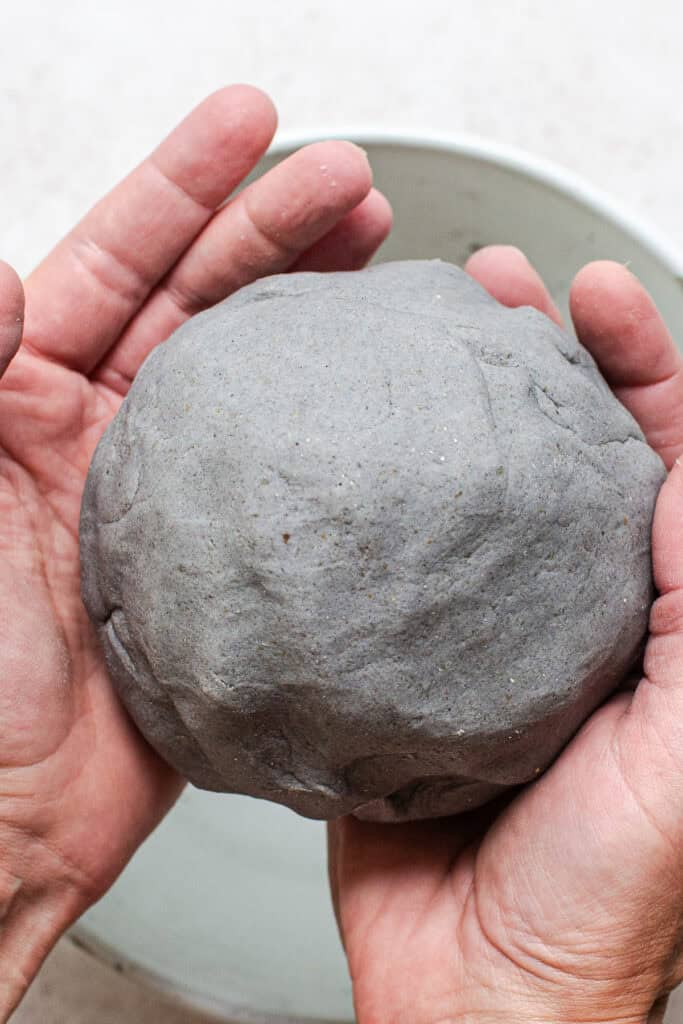
Here’s a quick overview of how to make them. Full times and amounts are in the recipe card below.
- Mix the masa. Whisk the masa harina and salt together in a large bowl, then pour in 1½ cups of warm water and stir until it starts clumping into a dough.
- Knead it. Get your hands in there for about 3 minutes, until the dough is smooth and there’s no dry masa left in the bowl. You want it soft and pliable, not crumbly and not sticky.
- Divide and cover. Portion the dough into 12 balls and keep a damp cloth over them so they don’t dry out while you work.
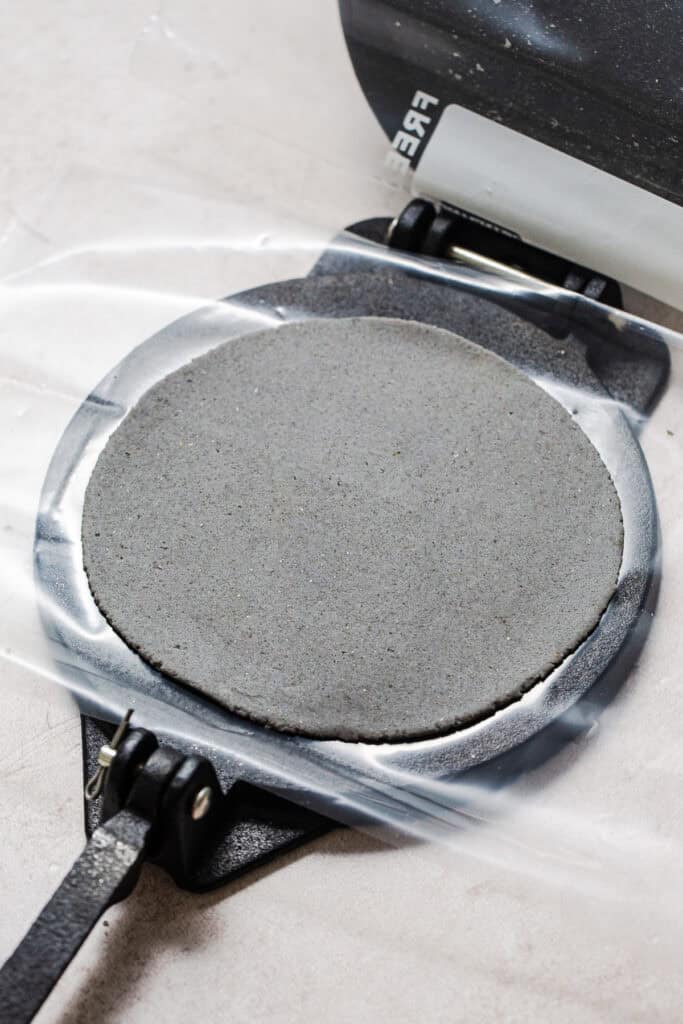
- Press. Sandwich a ball between two pieces of plastic or parchment on the tortilla press and flatten it to about 5 to 6 inches. Peel off the top sheet, then the bottom, and lift the tortilla into your hand.
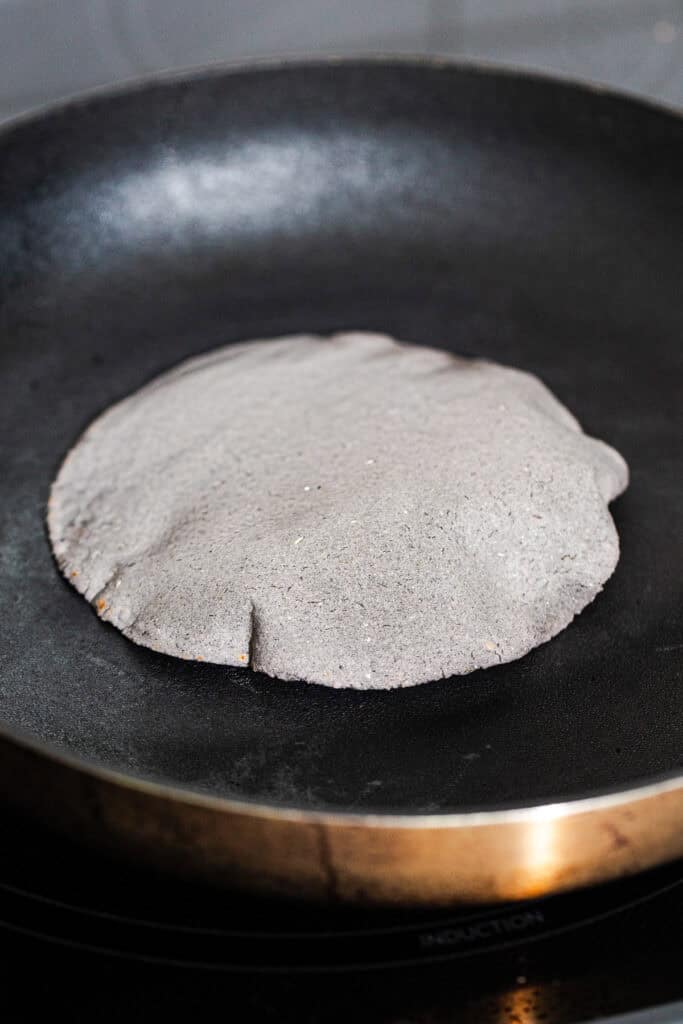
- Cook. Cook in a hot skillet for 15 to 20 seconds, flip, cook another 15 to 20 seconds, then flip again and cook 30 seconds per side. Watch for it to balloon up on that last one.
- Keep warm. Move each tortilla straight into a warmer as you finish it, or into a kitchen towel tucked inside a zip-top bag.
Recipe Tips
- Do the thumbprint test before you press anything. Roll a piece of dough into a ball and press your thumb into the middle. If the edges crack, it needs more water. Knead in a tablespoon at a time until it stops. I go a lot deeper on getting the moisture right in my homemade corn tortillas, and all of it applies here too.
- Use a nonstick skillet if you want them to puff. A comal is what’s traditionally used and it works fine, but nonstick is where I’ve had the best luck, and it’s the easiest surface to learn on.
- Give it a little help puffing. If a tortilla isn’t puffing on its own, press down gently on it with a spatula or your fingers right after you flip it. That’s usually enough to get it going.
- Expect the first couple to be duds if you’re a beginner. It takes me a few tries before one finally puffs, the same way the first couple of pancakes are always the worst. Keep pressing.
- Try the scrunch test on a cooked one. Crumple it up in your hand. If it springs back without tearing or cracking, you got it right. If it doesn’t, they’re still going to taste good.
Ways To Use Blue Corn Tortillas
Blue corn tortillas work anywhere a regular corn tortilla would, and the color makes them look like you tried a lot harder than you did.
How to Store and Reheat
- To store, cool them completely, wrap in a clean kitchen towel, and seal in a bag in the fridge for up to 5 days.
- To freeze, seal in a freezer bag and press out the air. Thaw overnight in the fridge before reheating.
- To reheat, warm on a hot skillet for 20 to 30 seconds a side, or right over an open flame. Skip the microwave as it dries them out.
Blue Corn Tortillas FAQs
Yes, when you make them yourself. Blue corn masa harina is nothing but corn. The bagged blue corn tortillas and chips at the store are a different story and sometimes have wheat mixed in, so read those labels.
Yes, it swaps into pretty much anything you’d make with regular masa harina. I’ve used it for gorditas, sopes, tetelas, huaraches, and even my masa harina biscuits. It behaves the same way, you just end up with a blue version.
Almost always because the dough was too dry. It needs more water than you’d think. If they crack while you’re pressing them or break when you fold one, knead in another tablespoon of water at a time until they stop.
Absolutely, and I do this all the time. Cut them into triangles and fry them for tortilla chips, chilaquiles, or migas. Once they’re fried and covered in salsa, nobody can tell.
-
Whisk the masa harina and salt together in a large bowl. Pour in 1½ cups of warm water and stir until a shaggy dough forms, then knead by hand for about 3 minutes until it’s smooth and no dry masa is left. It should feel like soft Play-Doh. If it cracks when you press it, work in more water a tablespoon at a time. If it clings to your skin, dust in a little more masa harina.
-
Portion the dough into 12 balls, set them on a plate, and drape a damp cloth over them so they stay moist while you work.
-
Heat a nonstick skillet or comal over medium-high until it’s good and hot. While it heats, trim the seams off a large zip-top bag to get two flat sheets of plastic, or cut two squares of parchment.
-
Sandwich a dough ball between the two sheets on the tortilla press and flatten it to about 5 to 6 inches across. Peel the plastic away and lift the tortilla into your hand.
-
Lay it on the hot skillet. Give it 15 to 20 seconds, flip, another 15 to 20 seconds, then flip once more and cook 30 seconds a side. It should puff on that last flip. Repeat with the remaining dough.
-
Move the cooked tortillas into a tortilla warmer as you go, or wrap them in a clean kitchen towel and slip them into a large zip-top bag so they stay soft.
-
Serve right away, or cool and store wrapped in the fridge for up to 5 days.
Prevent your screen from going dark
- Storage and reheating. Let the tortillas cool completely before you put them away, and make sure they aren’t damp, since trapped moisture makes them go bad faster. Wrap them in a clean kitchen towel, seal them in a bag, and keep them in the fridge for up to 5 days. To reheat, warm them on a hot skillet or comal for 20 to 30 seconds a side, or right over an open flame. Don’t microwave them; they dry out and crack.
- Freezing. They keep for up to 3 months in the freezer. Seal them in a freezer bag with as much air pressed out as you can and label it with the date. I like to put a piece of parchment between each one so they don’t stick together, though if you let them thaw all the way they’ll separate fine either way. Thaw overnight in the fridge before reheating.
- Water. How much water depends on your brand. With Masienda I use closer to 1¾ to 2 cups, and with Maseca 1½ cups is usually right. Start at 1½ and go from there.
- Thumbprint test. Roll a piece of dough into a ball and press your thumb into the middle. If the edges crack, it’s too dry. The dough will often feel fine and still fail this, so trust the crack over the feel.
- Don’t have a tortilla press? Press the dough between two sheets of parchment using a large glass baking dish. The trick is pressing as evenly as you can so the thickness stays the same all the way around.
Serving: 1tortilla | Calories: 69kcal | Carbohydrates: 14g | Protein: 2g | Fat: 1g | Saturated Fat: 0.1g | Polyunsaturated Fat: 0.3g | Monounsaturated Fat: 0.2g | Sodium: 196mg | Potassium: 50mg | Fiber: 1g | Vitamin A: 41IU | Calcium: 27mg | Iron: 1mg
Nutrition information is automatically calculated, so should only be used as an approximation.
More Recipes To Try
Photography by Ashley McLaughlin.