


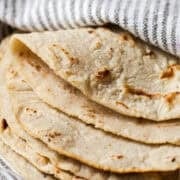

This corn tortilla recipe is the one my mom talked me through over the phone, and it was one of the first traditional Mexican foods I ever learned to make. All you need is masa harina, salt, and warm water. They take about 45 minutes from start to finish and puff up right in the skillet.
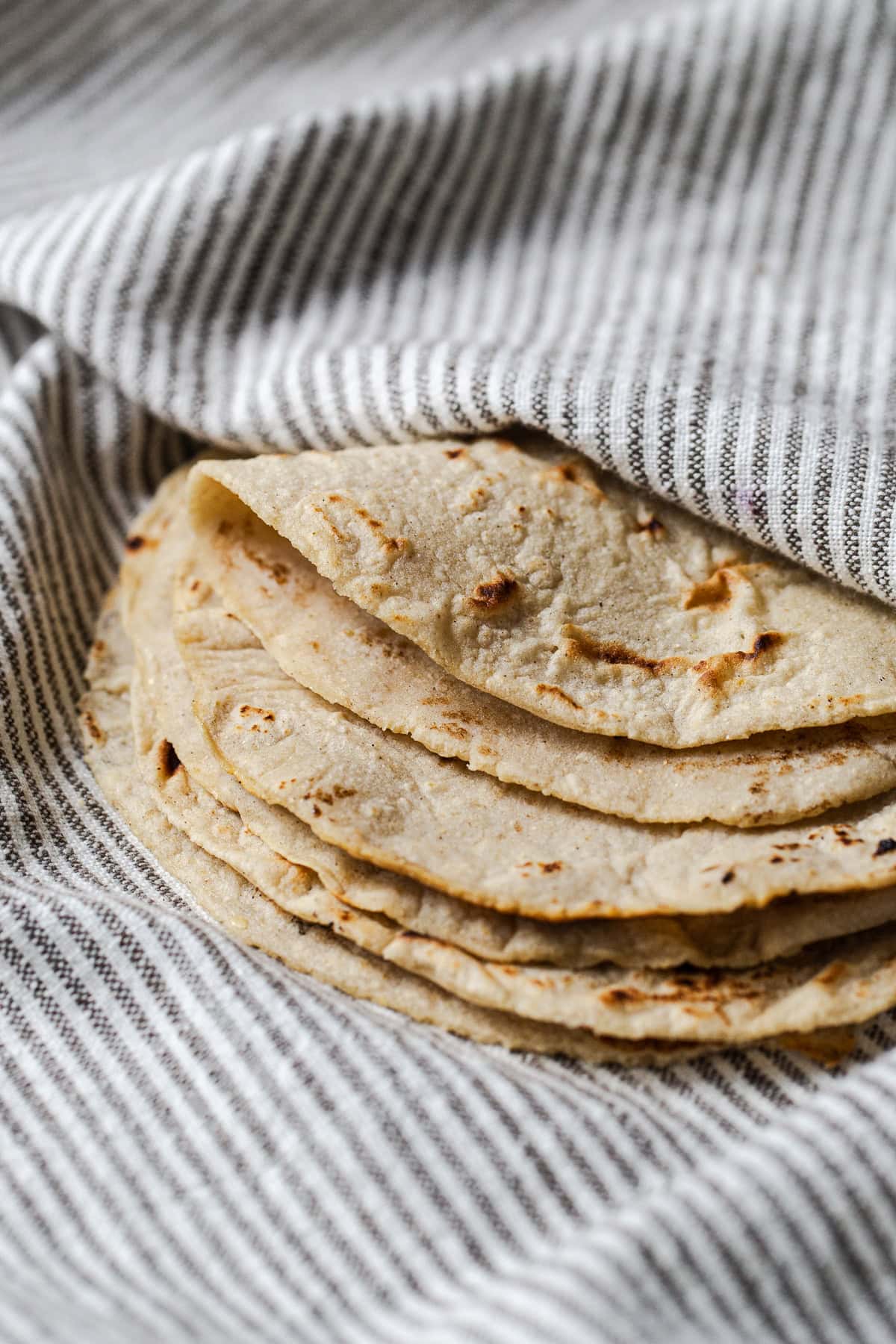

I grew up eating corn tortillas every single day, but I didn’t learn how to make them until I was an adult. One afternoon, I called my mom and had her walk me through it. She couldn’t give me measurements, so she described it instead: what the dough should feel like when it’s ready, how thin to press it, how long to leave it alone on the skillet before you touch it. It took me a few bad batches before it clicked.
Now I’m an expert at making them, and my kids eat them faster than I can press them. We use them for everything from tacos to eating them plain, rolled up with a little salt, which is still my favorite way to eat one straight off the comal.
If you’ve got a bag of masa harina in the pantry, sopes and gorditas are the next thing to make with it. And if you’re more of a flour tortilla person, I’ve got you covered there too!
What Is Masa Harina?
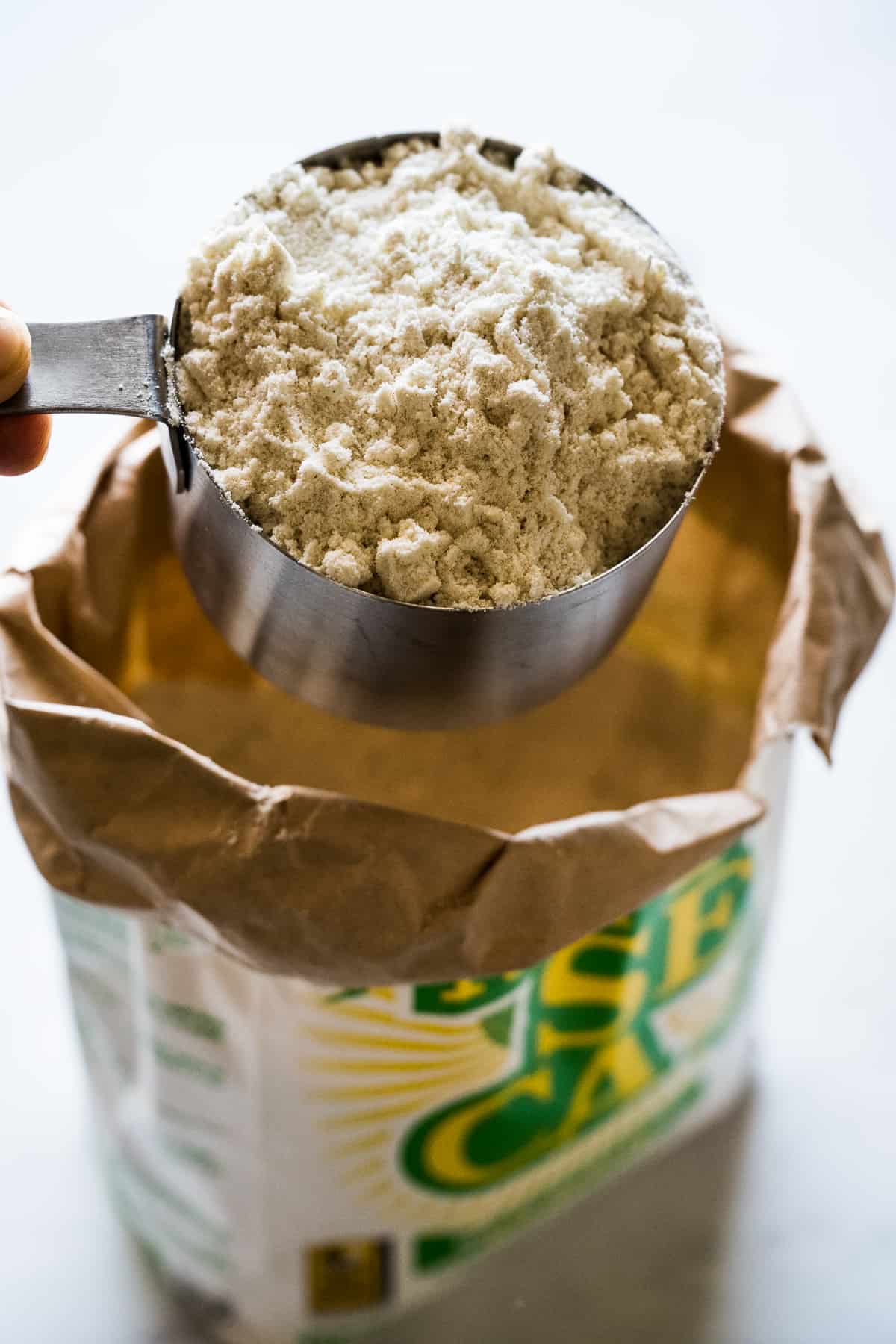
Masa harina means dough flour in Spanish, and it’s made from corn that’s been cooked and soaked in limewater, then dried and ground. That step is called nixtamalization, and it’s what gives corn tortillas their flavor.
Cornmeal, corn flour, and cornstarch can’t be swapped in for masa harina. They’re completely different things, and they taste completely different.
I go back and forth between using two brands. Maseca is in most grocery stores, usually in the international foods section or the baking aisle, and it’s what my parents use to make tamales and these corn tortillas. Masienda is a bit harder to find in stores, but in my opinion it has a better corn flavor and is what I use almost exclusively now. For 2 cups of masa harina, I use about 1½ cups of water with Maseca and closer to 2 cups with Masienda.
Ingredients You’ll Need
- Masa harina: It comes in white, yellow, red, or blue corn varieties, and any of them will work here.
- Warm water: You’ll need water to rehydrate the masa harina to form a dough. The amount of water you’ll need will vary depending on the brand of masa harina and the overall moisture level in your home. Start with 1 ½ cups, then add more as needed.
- Fine salt: It dissolves evenly into the dough. Coarse salt can leave you biting into a salty spot.
Recipe Tips
- Water content: Getting the moisture level just right is the tricky part, especially your first time. Start with 1½ cups and add more as needed. You want the dough as wet as it can get before it becomes difficult to work with, so if it’s really sticking to your hands and not coming together, it’s too wet. To check, roll a piece into a ball and press down on the middle with your palm. If the edges crack, it’s too dry. It may feel like it doesn’t need more water, but if it cracks, knead in a tablespoon or two at a time until it stops.
- Getting your corn tortillas to puff: The main factor that affects the puff is moisture. The steam created when the tortilla hits the hot pan is what makes it balloon, so the wetter the dough, the better your odds. If the moisture is right, look at your pan next. If one side cooks too long, the tortilla dries out before you flip it. Those first two quick flips create a sear that traps the steam. It takes practice, and the first few are usually duds, kind of like the first couple of pancakes.
- Use a nonstick skillet. A comal works too, but I’ve had the best luck getting tortillas to puff on nonstick, and it’s the easiest surface to learn on.
- If you don’t have a tortilla press, you can flatten the dough with a large baking dish instead. Put it between two sheets of parchment and press as evenly as you can so it’s the same thickness all around.
How to Store and Reheat
These are best the day you make them, but they keep well enough for a few days.
- To keep them warm, stack them in a tortilla warmer, or wrap them in a clean kitchen towel and slide the whole bundle into a large resealable bag. The towel holds the heat and the bag holds the moisture.
- To store, let them cool, wrap them in a towel, and seal them in a bag in the fridge for up to 5 days.
- To reheat, warm them on a hot skillet or comal, or right over an open flame if you have a gas stove. Skip the microwave; it dries them out and makes them crack.
Ways to Use Corn Tortillas
They make the best tacos and quesadillas fresh off the skillet when they’re still soft enough to fold without cracking. My usual fillings are carnitas, carne asada, and chorizo with a spoonful of salsa verde.
Once they’ve dried out a day or two, fry them! Older tortillas make the best tortilla chips and tostada shells, and slightly stale ones are exactly what you want for red chilaquiles or chilaquiles verdes.
Corn Tortilla FAQs
Warm them one at a time on a dry skillet or comal over medium-high heat for about 20 to 30 seconds per side, until they’re soft and bendable. If you have a gas stove, you can do it right over the flame.
You can. A teaspoon or two of lard kneaded into the dough keeps them soft and pliable for a bit longer. Lard is the traditional choice, but olive oil does the same job.
Yes. Masa harina is just corn, so these are naturally gluten-free and vegan. Store-bought corn tortillas sometimes have other things mixed in, so check the label if that matters to you.
A little. White and yellow taste pretty similar, and blue corn is a bit earthier. All of them work with this recipe.
-
Make the dough. In a large bowl, mix together the masa harina and salt. Add 1½ cups of warm water and stir until a dough starts to form. Use your hands to knead it together for about 3 minutes, until the dough is smooth and all the water is absorbed. It should feel soft and pliable, like Play-Doh, not crumbly or sticky. If it cracks when you press it, add more water a tablespoon at a time. If it sticks to your hands, add a little more masa harina.
-
Divide the dough into 12 equal balls. Place them on a plate or in a bowl and cover with a damp cloth or plastic wrap so they don’t dry out while you work.
-
Set a comal or nonstick skillet over medium-high heat and let it get really hot. While it heats up, cut the seams off a large zip-top bag to make two pieces of plastic, or grab two sheets of parchment paper.
-
Press the tortillas. Lay one piece of plastic (or parchment) on the tortilla press. Place a dough ball in the center, add the second piece on top, then press. You’re aiming for about 5-6 inches in diameter. Carefully peel back the plastic and transfer the tortilla to your hand.
-
Cook. Place the tortilla on the hot skillet. Cook for 15-20 seconds, flip and cook another 15-20 seconds, then flip one more time and cook for 30 seconds per side. This last flip is where the magic happens, and you’ll see it start to puff up. Repeat with the remaining dough balls.
-
Keep warm. Stack the cooked tortillas in a tortilla warmer, or wrap them in a clean kitchen towel and tuck them into a zip-top bag. This keeps them soft and pliable until you’re ready to eat.
-
Serve immediately or store tightly wrapped in the fridge for up to 5 days.
Prevent your screen from going dark
- Adding fat: A small amount of lard or olive oil (about 1-2 teaspoons) can be kneaded into the dough to help keep the tortillas more pliable. Lard is the traditional choice, but olive oil works great too.
- Thumbprint test: Take a piece of dough and roll it into a ball. Press down on the middle of the ball with a finger or the palm of your other hand. If the edges of the flattened ball crack, it’s too dry and needs more water. It may feel like it doesn’t need more water, but if it cracks, trust me – knead in a tablespoon or two of water at a time until it passes this test.
- No tortilla press: If you don’t have a tortilla press, you can use a large baking dish to flatten the dough in between two sheets of parchment paper. The trick is to press the dough as evenly as possible so that it’s the same thickness all around.
- Tortilla warmer: To keep the tortillas warm and pliable when serving, place them inside a tortilla warmer or wrap them in a clean kitchen towel and place them inside a large resealable storage bag to help them retain heat and moisture.
Serving: 1tortilla | Calories: 69kcal | Carbohydrates: 14g | Protein: 2g | Fat: 1g | Saturated Fat: 0.1g | Polyunsaturated Fat: 0.3g | Monounsaturated Fat: 0.2g | Sodium: 196mg | Potassium: 50mg | Fiber: 1g | Vitamin A: 41IU | Calcium: 27mg | Iron: 1mg
Nutrition information is automatically calculated, so should only be used as an approximation.
More Mexican Recipes
This post was originally posted on September 2023 and has been updated with more helpful information and step-by-step photos.
Photography by Ashley McLaughlin and Isabel Orozco-Moore.