



Freezer Meals Series
· Starch
When I grew up, we would put just about anything in the mashed potatoes to make them less dry. Mayo, ranch dressing, mountains of butter that would make even Paula Deen blush. But we never tried cream cheese, and now I am left wondering why. Talk about the richest, creamiest mashed potatoes you’ll ever have. These are it. And bonus, they work perfectly for meal prepping Lego lunches to stock your freezer (if you somehow don’t eat them all tonight).
We tested this specifically for the GC Freezer Meal System, where vegetables, proteins, and starches are portioned separately and mixed together for quick dinners later. What makes cream cheese mashed potatoes freeze well isn’t a secret ingredient; it’s moisture control. Let the drained potatoes sit in the hot, empty pot for a few minutes before you touch them with a masher, warm the butter and half and half before they hit the potatoes, and cool everything down fully before you portion it.
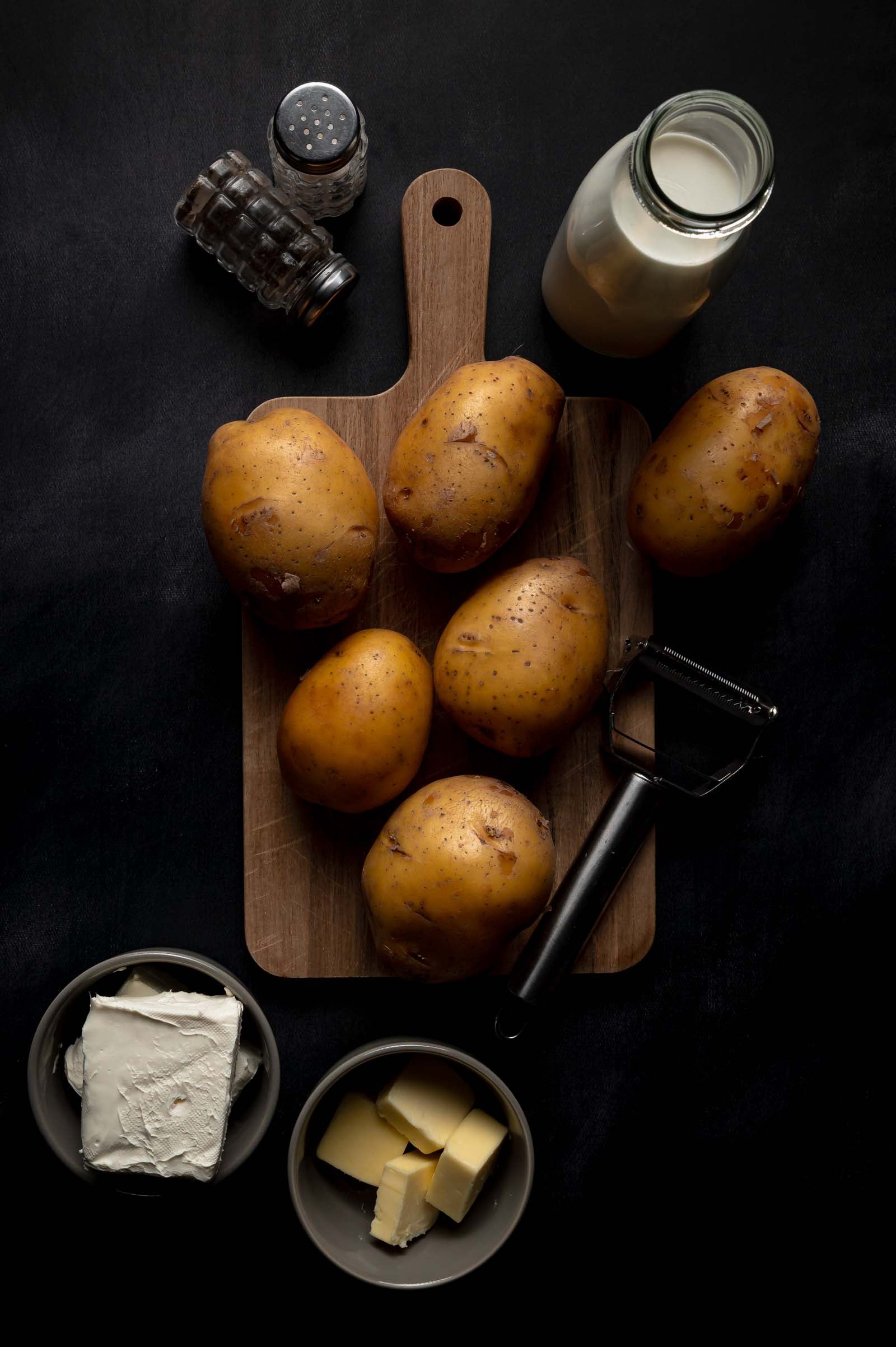
🔪 Ingredients for Cream Cheese Mashed Potatoes
8Portions
4 hrsFreeze Time
2-3 minReheat Time
3 moFreezer Life
- Yukon Gold potatoes: Their starch content sits right in the middle, creamy enough to mash smooth, sturdy enough to hold a portion shape once frozen. Russets turn grainier after a freeze-thaw cycle, and waxy reds never mash fully smooth to begin with.
- Kosher salt: Used in the cooking water and again in the mash. Diamond Crystal measures differently than Morton’s, so taste as you season if you’re using a different brand.
- Unsalted butter: Cubed so it melts evenly into the warm half and half instead of sitting in one greasy pool.
- Half and half: Warmed before it hits the potatoes. Warm dairy blends in smooth, cold dairy fights you and leaves streaks.
- Cream cheese: The whole reason this version tastes tangier and more classic than a Boursin-style mash, and it’s a lot friendlier on a grocery budget too. Use a full block, not a spread, and let it soften before it goes into the warm dairy. For more on how cream cheese behaves once it hits heat, our Traeger Smoked Queso with Chorizo leans on the same melt-and-loosen trick, just in dip form.
- Black pepper: Freshly cracked if you have it. It’s a small amount, so make it count.
Equipment
- ½-cup silicone freezer molds: This portion size reheats evenly and slots into meal prep bowls without extra math.
- Freezer-safe bags or containers: For transferring portions out of the molds once they’re frozen solid.
- Vacuum sealer (optional): Stretches freezer life another month or so when it’s used correctly. Freeze the portions solid before you seal them.
Full picks and links for every mold, sealer, and bag in this system: Freezer Meal Prep Equipment Guide.
📝 How to Make Cream Cheese Mashed Potatoes
- Boil the potatoes. Add the potato chunks to a large pot, cover with cold water by about an inch, and stir in the salt. Bring it to a boil over high heat.
- Cook until a fork meets no resistance. Lower the heat once the water’s at a steady boil and simmer for 15 to 20 minutes, until the potatoes break apart easily when pressed with a fork.
- Let the steam escape. Drain the potatoes and set them back in the warm, empty pot for 2 to 3 minutes off the heat. This is the step most people skip, and it’s the reason freezer mashed potatoes turn watery.
- Warm the dairy and melt in the cream cheese. Warm the butter and half and half in a small saucepan over low heat until the butter melts and the half and half is hot but not bubbling. Pull it off the heat, add the cubed cream cheese, and let it sit for a minute so it softens into the warm liquid instead of seizing into cold lumps.
- Mash, then fold in the dairy. Mash the potatoes until mostly smooth, pour in the warm cream cheese mixture, salt, and pepper, and fold just until everything looks creamy and the cream cheese has disappeared completely. Keep mashing past that point and you’ll knock the starches loose and end up with a gluey pot instead of a creamy one.
- Check the texture before you commit to freezing. The potatoes should look a little looser than what you’d serve straight from the pot, soft enough to fall from a spoon but still holding a peak. Stir in a small splash of warm half and half if they feel stiff or crumbly.
- Taste, adjust, and cool completely. Season to taste, spread the potatoes into a shallow dish, and let them cool at room temperature for 20 minutes before chilling in the fridge for at least an hour. Cooling fully before portioning keeps steam from getting trapped in the molds, which is what turns into ice crystals and a grainy reheat later.
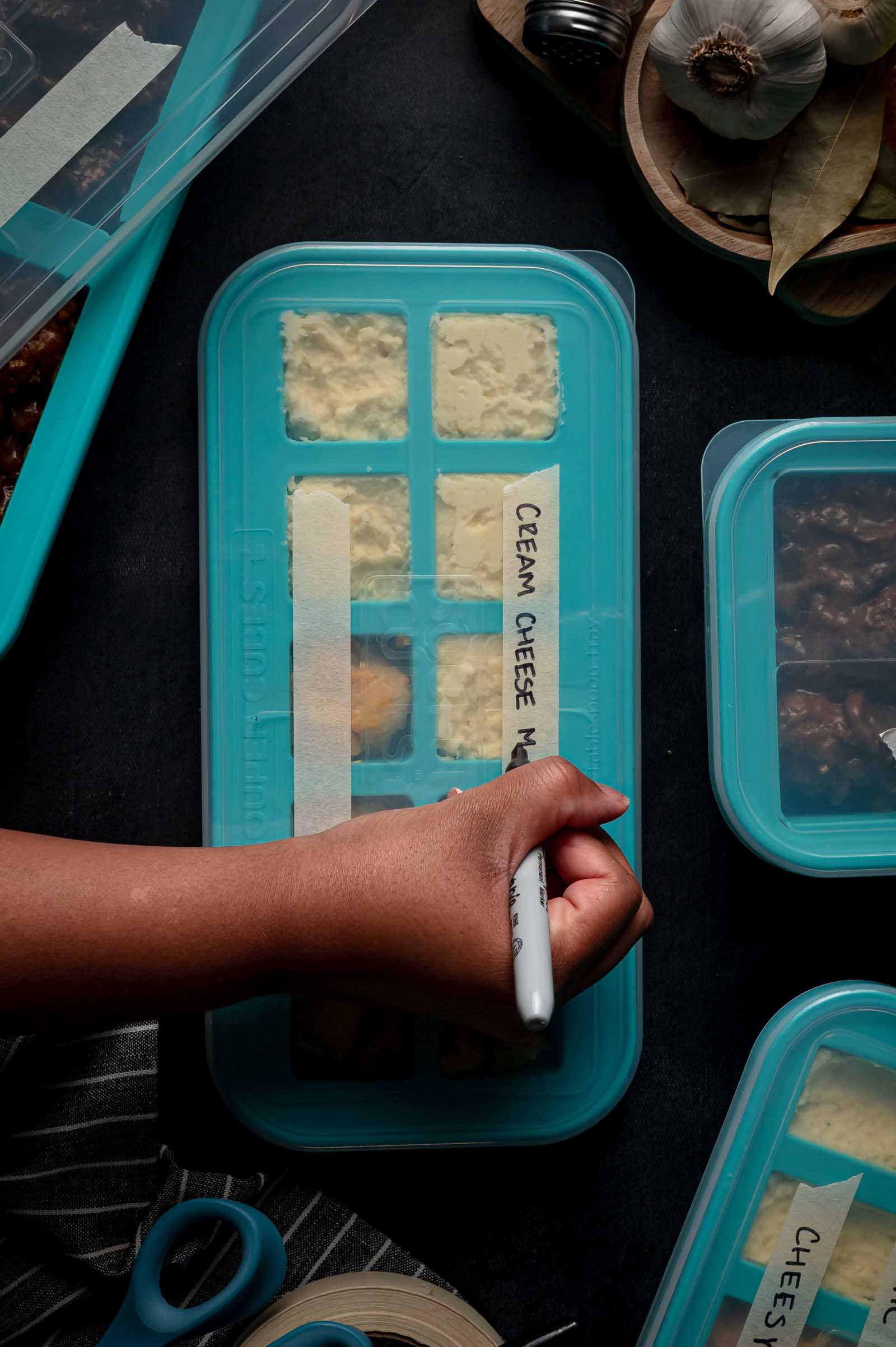
Portioning and Meal Prep Assembly
If you’re eating tonight, stop right here and serve these warm out of the pot. Everything from this point forward is for the freezer.
Use ½-cup silicone molds for portioning. That size reheats evenly and slots straight into a meal prep bowl next to a protein and a vegetable without you doing any math. Once the potatoes are fully chilled, spoon them into the mold cavities, fill each one level with the top, and smooth the surface with the back of a spoon or a small offset spatula. Warm potatoes going into the mold means condensation, and condensation means ice crystals, so don’t rush the chilling step to get here faster.
| Mold Size | Portions | Fill Level | Best For |
|---|---|---|---|
| ½-cupRecommended | 8 | Level with the top | Standard side dish portion, mix-and-match with a protein + veg |
Freezing Instructions
🍳
Cool20 min room temp→
🧊
ChillFridge 1 hr before portioning→
🟥
Fill MoldsLevel with the top→
🏷️
LabelDate + recipe name→
❄️
Freeze4 hours solid
- Set the filled mold on a sheet pan so the portions freeze level.
- Freeze for at least 4 hours, until the cubes are firm all the way through.
- Pop the frozen portions out of the mold.
- Transfer them to freezer-safe bags or containers, press out as much air as possible, and seal tightly.
- Label the bag or container with the recipe name, portion size, and date.
- Freeze for up to 3 months for the best texture.
- To vacuum seal, freeze the portions solid first, then lay them in a single layer before sealing so they hold their shape instead of smearing into the seal.
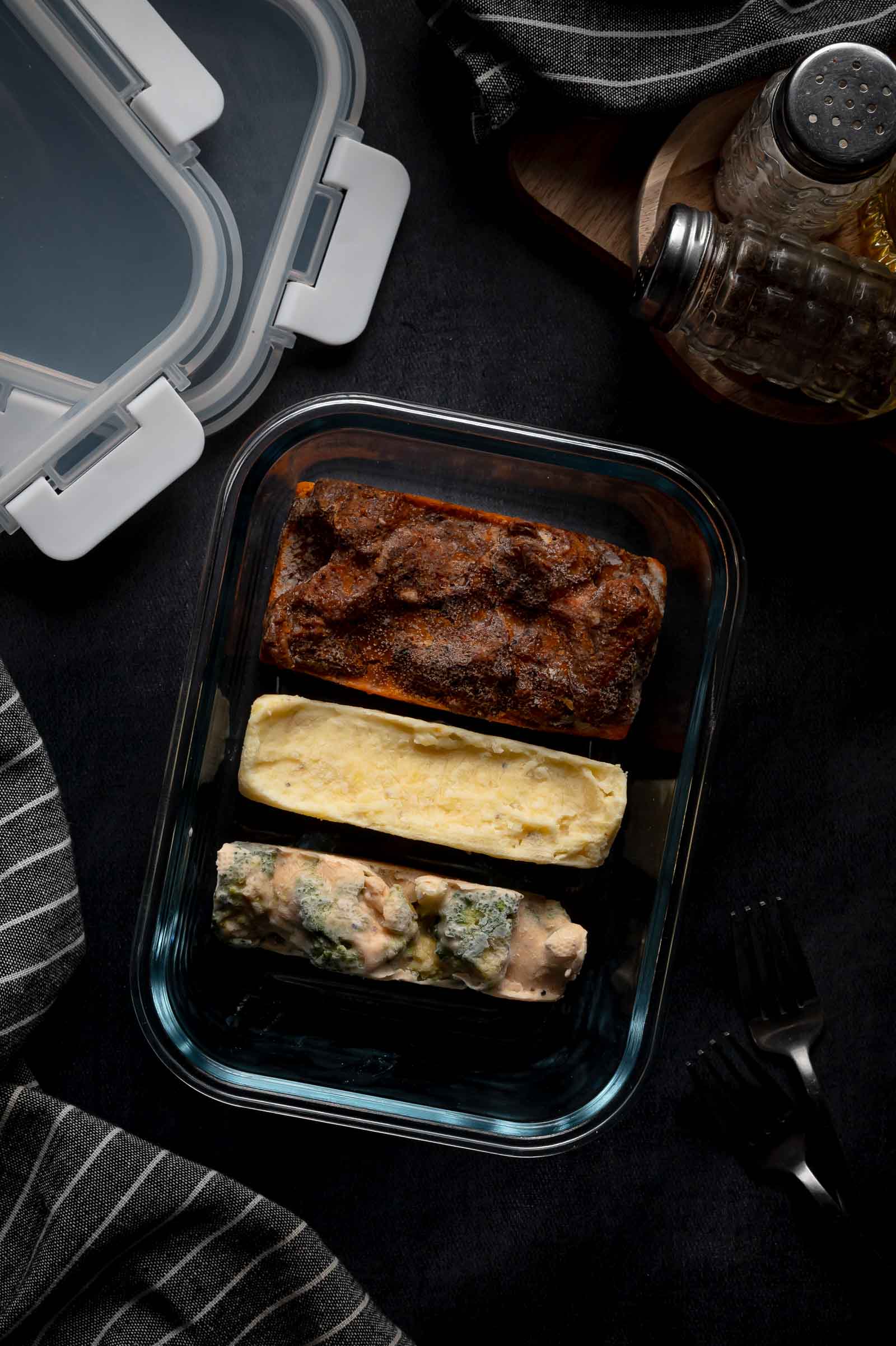
Reheating Instructions
- Cover loosely
- 50% power 2 minutes
- Stir well, then high 30-60 seconds
- Stir again until smooth and creamy
- Thaw overnight in the fridge
- Cover loosely
- Microwave, stirring once halfway through
- Thaw overnight in the fridge
- Low heat, stirring often
- Splash of half-and-half if needed
Troubleshooting
| Problem | Fix |
|---|---|
| Potatoes turn watery after reheating | Let the drained potatoes sit in the hot, empty pot a few minutes so steam escapes before mashing. |
| Potatoes turn gluey | Mash by hand and fold in the dairy gently. Skip the mixer, and stop as soon as they’re smooth. |
| Cream cheese leaves small unmelted pieces | Soften it first and let it sit in the warm dairy before folding it in. Cold cream cheese won’t fully melt into hot potatoes. |
🔄 Substitutions
- Heavy cream instead of half and half: gives a richer, slightly denser texture. Works fine in the freezer.
- Chive and onion cream cheese instead of plain: adds more flavor with zero extra steps. Stick to a full-fat version, since the lower-fat tubs turn thinner and slightly grainy after thawing.
- Boursin instead of cream cheese: this isn’t really a swap so much as a different dish. Our Boursin Mashed Potatoes are the herbier, garlic-forward cousin of this one. If that’s the flavor you’re after, go make that version instead of forcing Boursin into this recipe.
- Milk instead of half and half: doesn’t work well here. Milk is thin enough that the potatoes lose richness and reheat looser and less creamy after freezing.
💡 Meat Nerd Tips
- Full-fat cream cheese only. Lower-fat versions turn thin and slightly grainy once they’ve been frozen and thawed, which defeats the whole point of a make-ahead side.
- Warm dairy melts in, cold dairy fights you. Warming the butter and half and half before they hit the potatoes is what keeps the mash smooth instead of streaky.
- Steam is the real enemy, not just watery potatoes. Letting the drained potatoes sit, and cooling them fully before portioning, both do the same job: getting rid of moisture that turns into ice crystals in the freezer.
- Hand-mash, don’t machine-whip. A stand mixer or food processor will overwork the starches here and turn a creamy potato gluey, freezer or not.
- Fill the mold level with the top. A mounded portion won’t seal flush in a freezer bag and freezes unevenly.
The GC Freezer Meal Formula: Build Your Plate
This is one piece of a five-recipe freezer meals batch built to mix and match. Here’s how it fits.
The GC Freezer Meal System works differently. Each recipe is built as a component that freezes, reheats, and pairs well with the others.
Think of it like building a plate: Protein cube + starch cube + vegetable cube = dinner
Each build is designed around matching portions and mold sizes, so you can mix and match straight from the freezer. Make a few components on prep day, then build different dinners throughout the week without starting from scratch every night.
This build combines 5 freezer components designed to work together. Make the full build during one prep session, or choose only the pieces that fit your freezer.
Protein
Braised Beef Tips in Gravy
Starch
Cream Cheese Mashed Potatoes
Vegetable
Cheesy Broccoli
Braised Beef Tips cube + Cream Cheese Mashed Potatoes cube + Cheesy Broccoli cube = dinner from frozen in under 5 minutes. Or swap in the Salisbury Steak Meatballs or Stovetop Mac and Cheese for a different combo. Each recipe is designed to mix and match across the system.
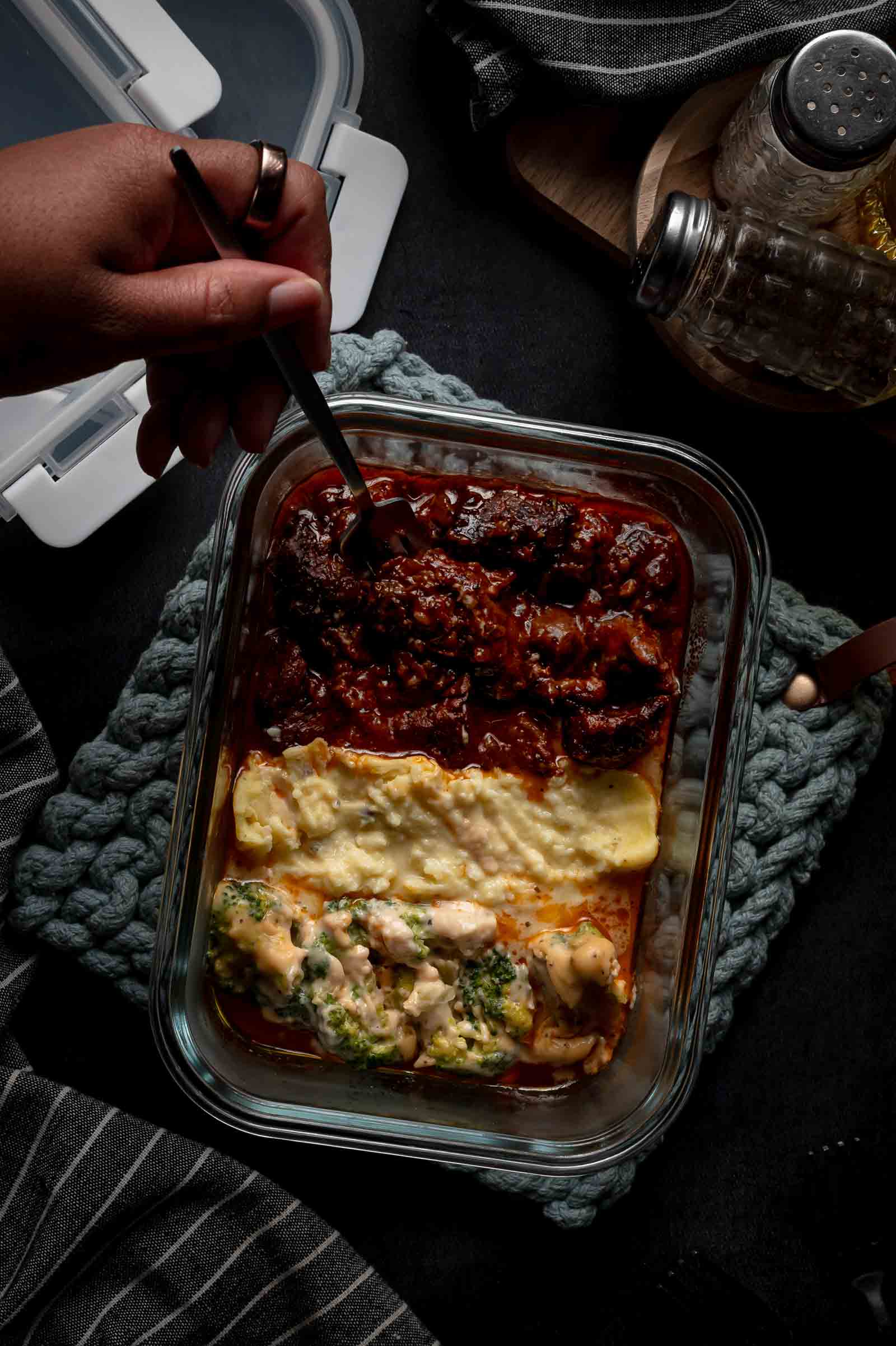
🍽️ What to Serve with Cream Cheese Mashed Potatoes
- Braised Beef Tips in Gravy: the gravy soaks right into these potatoes, and both portions reheat on the same timeline.
- Salisbury Steak Meatballs: same gravy logic. Meatballs plus a scoop of these is dinner from three freezer bags.
- Cheesy Broccoli: your vegetable and starch both come out of the freezer at once, no extra pot to wash.
- Stovetop Mac and Cheese: if you want two creamy sides on one plate, these two microwave on nearly the same schedule.
- Grilled Flank Steak Pinwheels: when you want a fresh protein instead of pulling another cube from the freezer, this one’s fast enough to keep up with potatoes that are already done.
🧊 Leftovers and Storage
4 daysRefrigeratorAirtight container.
3 monthsIn the FreezerBest texture within this window.
3-4 monthsVacuum SealedFreeze solid, single layer, then seal.
- Fridge: freshly made mashed potatoes keep for up to 4 days in a sealed container.
- Freezer: portioned cubes keep for up to 3 months, or 3 to 4 months if vacuum sealed.
- Reheat: frozen portions can go straight into the microwave, no thawing required. For the smoothest texture, thaw overnight in the fridge first.
- After reheating: stir in a small pat of butter or a splash of warm half and half if the potatoes tightened up in the freezer.
Quick Summary
Cream cheese mashed potatoes are the classic, budget-friendly answer to a freezer side that reheats creamy instead of watery. The technique that makes it work is moisture control: steam off the extra water before mashing, warm your dairy, and cool everything fully before you portion it. Get those three right and a frozen cube goes from freezer to plate in under three minutes.
Yukon Gold potatoes mashed with warm butter, half and half, and cream cheese, then portioned into half-cup cubes that microwave from frozen back to smooth and creamy.
Prevent your screen from going to sleep
Warm the Dairy
-
Warm the butter and half and half in a small saucepan over low heat until the butter melts and the half and half is hot but not bubbling. Remove from heat, add the cream cheese, and let it sit for 1 minute to soften.
Check the Texture
-
The potatoes should be a little softer than potatoes you would serve right away, but should still hold soft peaks on a spoon. Add a small splash of warm half and half only if they feel stiff or crumbly.
Bag and Label
-
Pop the frozen portions out of the mold. Transfer to freezer-safe bags or containers, press out as much air as possible, and seal tightly. Label with the recipe name and date. Freeze for up to 3 months. To vacuum seal, freeze the portions solid first, then use a gentle or pulse setting so the cubes hold their shape.
Reheat From Frozen (Microwave)
-
Place 1 frozen ½-cup portion in a microwave-safe bowl. Cover loosely and microwave at 50 percent power for 2 minutes. Stir well, then microwave on high for 30 to 60 seconds, until hot in the center. Stir again until smooth and creamy.
Reheat From Thawed (Microwave) – BEST Texture
-
Thaw overnight in the refrigerator. Place the portion in a microwave-safe bowl, cover loosely, and microwave for 1 to 2 minutes, stirring once halfway through.
Reheat From Thawed (Stovetop)
-
Thaw overnight in the refrigerator. Place the portion in a small saucepan over low heat. Warm for 4 to 6 minutes, stirring often, until hot and creamy. Add a splash of half and half as needed to bring the texture back.
- Full-fat cream cheese only. Lower-fat versions turn thin and slightly grainy after freezing.
- Warm dairy blends in smoothly, but cold dairy fights you and leaves streaks. Warm the butter and half and half before they hit the potatoes.
- Hand-mash, don’t machine-whip. A stand mixer or food processor overworks the starches and turns the potatoes gluey.
- Fill the mold level to the top and smooth flat. A mounded portion won’t seal flush in a freezer bag and freezes unevenly.
- Fridge up to 4 days in an airtight container. Freezer up to 3 months, or 3 to 4 months vacuum sealed. Frozen portions can go straight into the microwave, no thawing required.
Serving: 1serving | Calories: 217kcal | Carbohydrates: 22g | Protein: 4g | Fat: 13g | Saturated Fat: 8g | Polyunsaturated Fat: 1g | Monounsaturated Fat: 3g | Trans Fat: 0.2g | Cholesterol: 37mg | Sodium: 938mg | Potassium: 530mg | Fiber: 3g | Sugar: 2g | Vitamin A: 449IU | Vitamin C: 23mg | Calcium: 54mg | Iron: 1mg
Guides Worth Bookmarking
The Gear Behind our Lego Lunch Recipes
Every step above assumes you have got the right sealer and the right molds. See the exact FoodSaver sealer and Souper Cubes mold set GC runs this whole system on, plus the budget-friendly swap, in one place.
See the Full Equipment Guide →
❓ FAQs
No. The half-cup portions microwave fine straight from frozen. Thawing overnight in the fridge gives the smoothest texture, but a frozen portion reheated slowly and stirred a couple of times gets you most of the way there.
Half and half gives the potatoes more richness and helps them reheat creamier after freezing. Milk is too thin, and the potatoes come back looser and less creamy once they thaw.
You can, though a standard muffin tin cavity runs closer to a third of a cup than a half cup, so you’ll end up with more portions at a smaller size. Silicone is worth using here because the frozen cubes pop out clean, where a metal tin can grip the edges and tear the portion apart.
Yes, but freeze the portions solid in the mold first. Vacuum sealing potatoes before they’re frozen pulls moisture out and smears the texture, while sealing them once they’re frozen solid keeps the cube’s shape and stretches freezer life to 3 to 4 months.
Yes. Cook the potatoes in two batches if your pot isn’t large enough to hold a doubled amount without crowding. Crowded potatoes cook unevenly and take longer to reach fork-tender, so keep the pot from getting too full.