






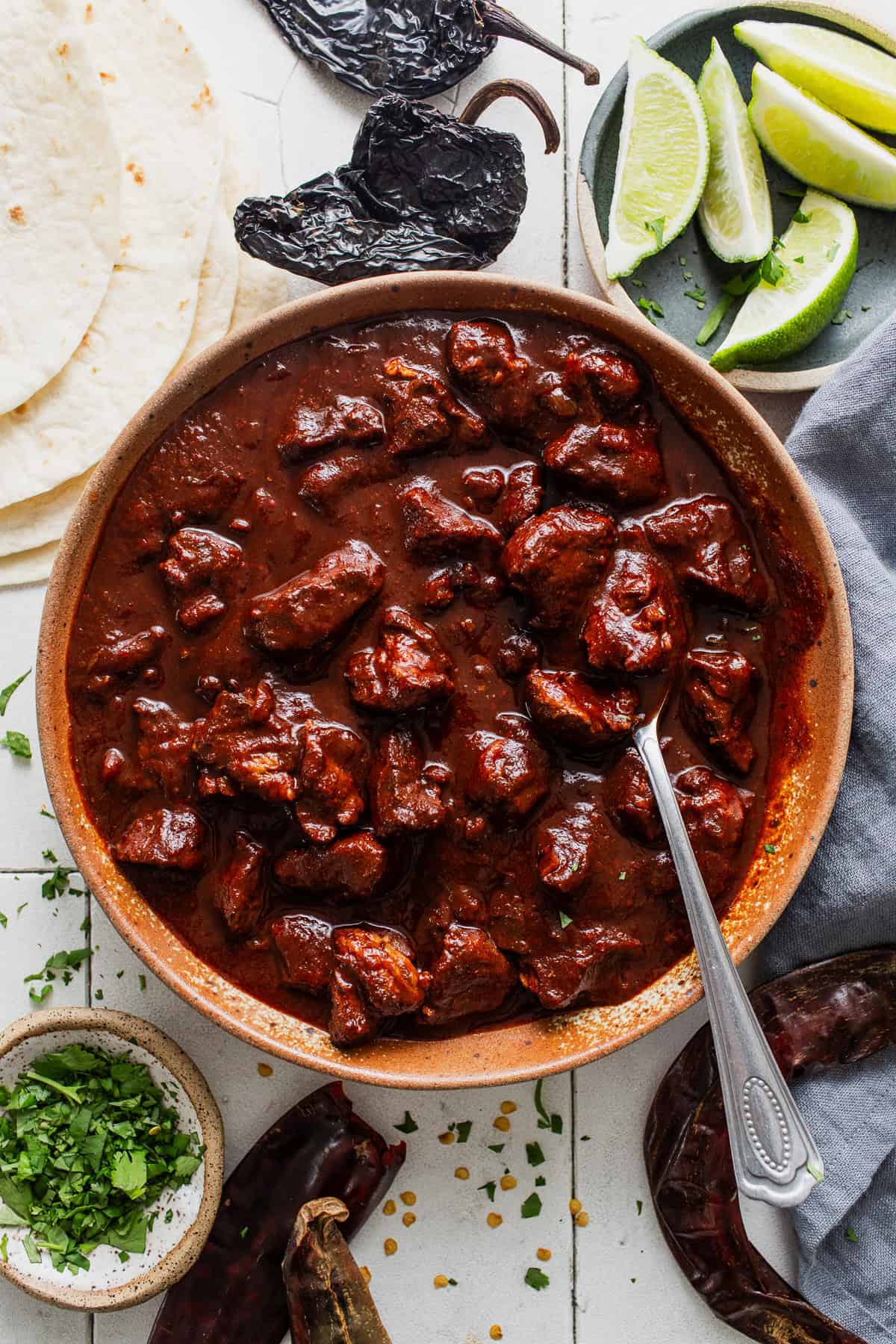
Carne adovada is New Mexico’s famous red chile pork: tender chunks of pork shoulder simmered low and slow in a deep, earthy sauce made from dried chiles. It’s made with just a handful of pantry ingredients, and the from-scratch chile sauce is easier than you’d think.
A Note from Isabel

This carne adovada recipe is one of my favorite ways to cook pork. The meat gets so tender it falls apart, and the red chile sauce it simmers in is rich, a little tangy, and so good. If you love a Mexican stew like chile colorado, chile verde, or carne guisada, this one belongs on your list.
I’ll be straight with you: I’m not from New Mexico. I grew up in Oklahoma with Mexican parents, so I came to this dish as an adult and then went down a rabbit hole making it at home. The trick is the chiles. New Mexico cooks use local red chile powder that’s hard to find elsewhere, so I built my sauce on dried ancho and guajillo chiles instead. You can grab those at almost any grocery store, and they give you that same deep, smoky flavor without the hunt.
A splash of soy sauce and vinegar plus a little sugar might sound odd in a New Mexican dish, but trust me, they round everything out and make the chiles taste even better.
What Is Carne Adovada?
Carne adovada is a New Mexico dish of pork shoulder simmered slowly in a sauce made from dried red chiles until the meat is fall-apart tender. The name comes from the Spanish word for “marinated,” and the chiles are the whole point. They do most of the heavy lifting here, so the sauce tastes deep, earthy, and a little smoky.
It’s the kind of thing you’ll find all over New Mexico, scooped over rice and beans, tucked into a tortilla, stacked into enchiladas, or piled on a plate with a fried egg on top. Once you make a batch, you’ll get why people there are so serious about it.
Is It Adovada or Adobada?
You’ll see both spellings, and they’re not the same thing.
Adovada, with a “v,” is the specific New Mexico dish: pork simmered in red chile until tender. Adobada, with a “b,” is the broader Mexican term for meat cooked in adobo sauce, which can be grilled or pan-fried, often for tacos. Same Spanish root, two different dishes. This recipe is the New Mexico version.
Choosing Your Chiles
The chiles are everything in carne adovada, so it’s worth a little thought. Traditional New Mexico cooks use local dried red chile, but unless you live out there it’s hard to find. So I build my sauce on dried ancho and guajillo chiles instead. You can grab both at most grocery stores, and together they give you that same deep, smoky, slightly fruity flavor without the hunt.
Anchos bring the rich, raisiny, almost sweet base, and guajillos add brightness and a little more heat, so I use more guajillos than anchos. Look for chiles that are still a little bendy, not so dried out they snap.
Want it milder? Use fewer guajillos and lean on the anchos. One reader new to dried chiles just halved the total amount and said it was perfect for her family.
Ingredients You’ll Need
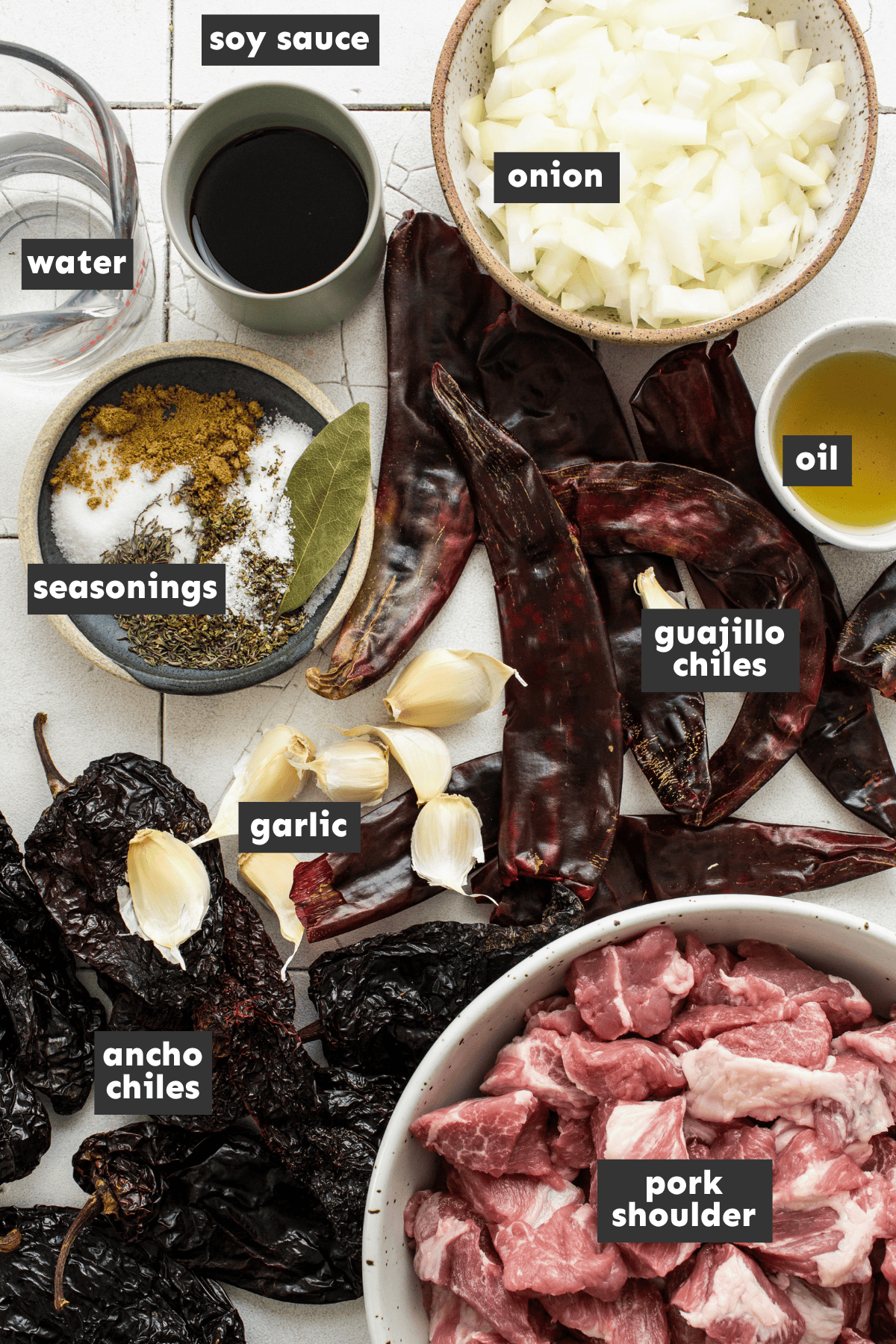
| Ingredient | Why It Works / Notes |
|---|---|
| Dried ancho and guajillo chiles | The heart of the dish. Anchos bring a rich, slightly sweet, raisiny base with mild heat. Guajillos are brighter and a little hotter. I use 8 anchos and 12 guajillos. Want it milder? Use fewer guajillos. Want to go traditional? Swap in New Mexico dried chiles for some or all. |
| Pork shoulder | Also called pork butt. It’s marbled enough to get melt-in-your-mouth tender as it simmers. Cut into 2-inch chunks so you get juicy centers with a sauce-coated outside. Leaner cuts like loin work but won’t be as tender. |
| White vinegar and soy sauce | My two little twists. Vinegar adds tang that brightens the chiles and cuts the richness of the pork. Soy sauce sounds odd in a New Mexican dish, but it adds a savory, meaty depth that makes the whole thing taste fuller. Trust me. |
| Sugar | Just a little. It softens the heat and helps the chile flavor pop. Brown sugar or a spoonful of honey works too. |
| Dried seasonings | Mexican oregano, ground cumin, dried thyme, and a bay leaf. Mexican oregano is earthier and more citrusy than regular (regular works in a pinch), and together these build the warm, earthy backbone of the sauce. |
| Onion and garlic | Staples here. The onion cooks down in the pork drippings for a sweet, savory base, and a full 8 cloves of garlic give it real depth. |
How to Make Carne Adovada
This comes together in a few simple steps: make the chile sauce, sear the pork, then let it all simmer low and slow.
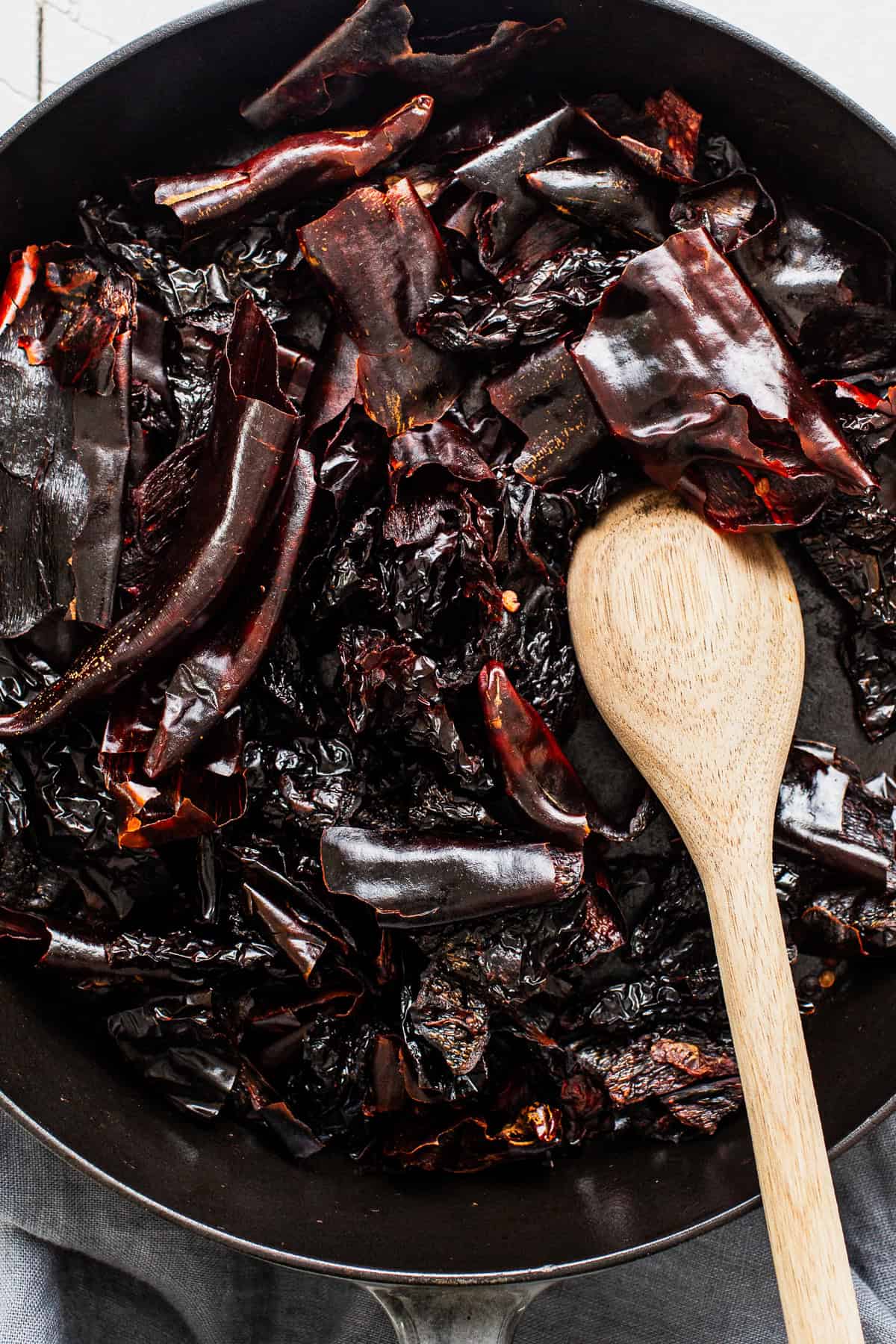
Toast and soften the chiles. Toast the chiles in a dry skillet over medium heat for 1 to 2 minutes until fragrant (no longer, or they’ll turn bitter). Move to a pot with the bay leaf, cover with water, bring to a boil, then take off the heat and soak 10 minutes until soft.
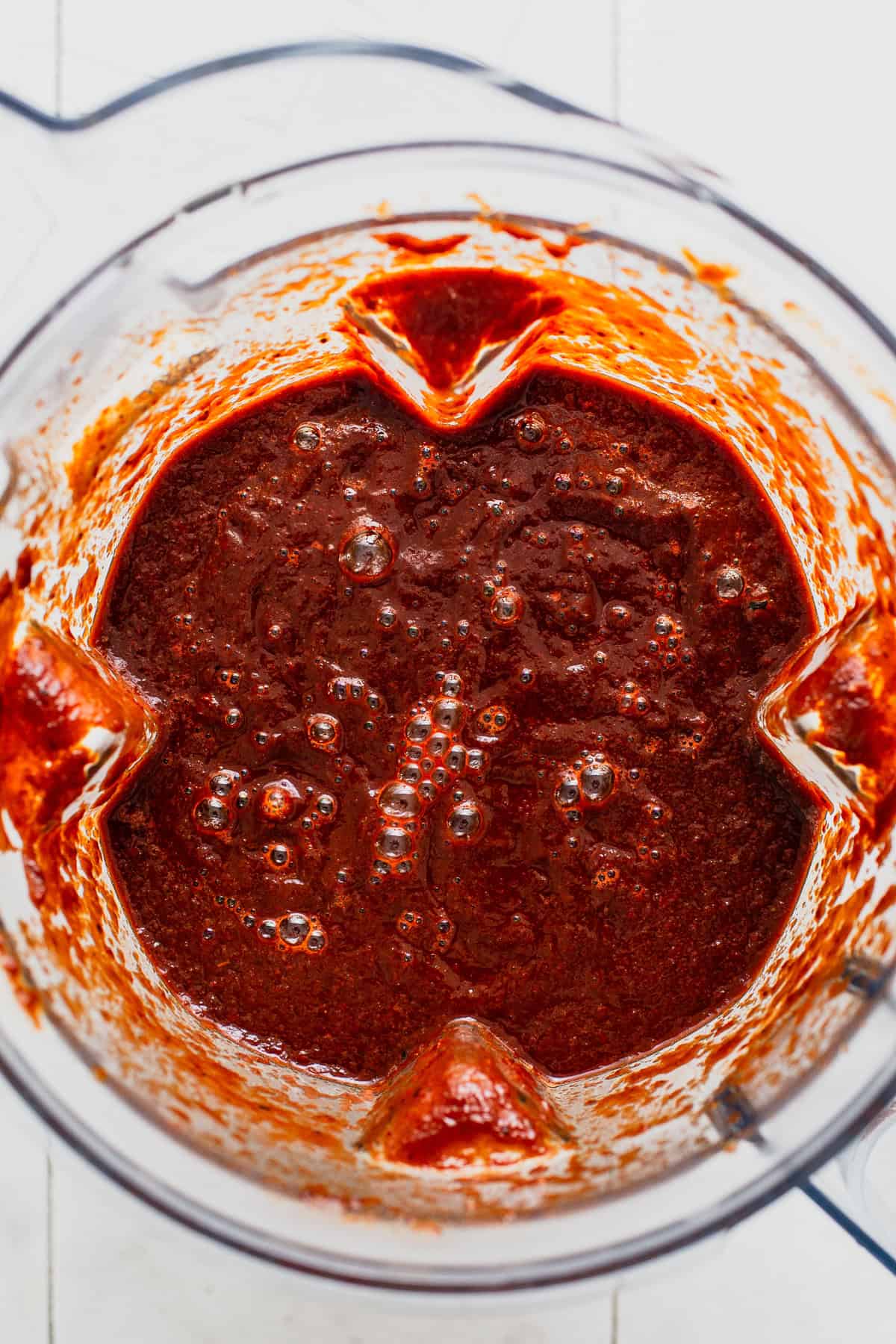
Blend the sauce. Add the softened chiles and bay leaf to a blender with 3 cups of the soaking water, garlic, vinegar, soy sauce, oregano, thyme, sugar, cumin, and salt. Blend until smooth.
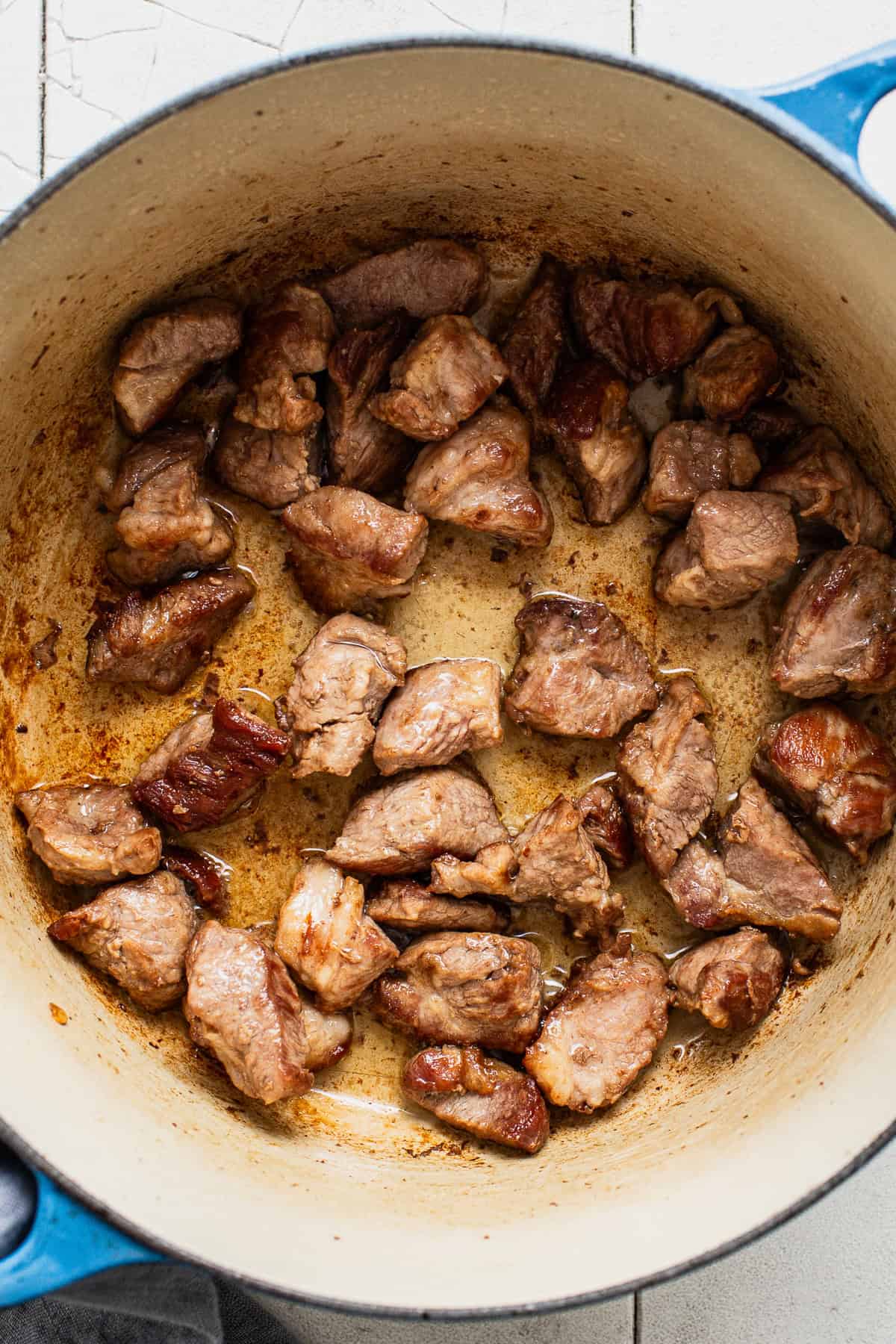
Sear the pork. Pat the pork dry, then sear it in batches in a little hot oil. For the juiciest meat, get a deep sear on just one side and leave it alone.
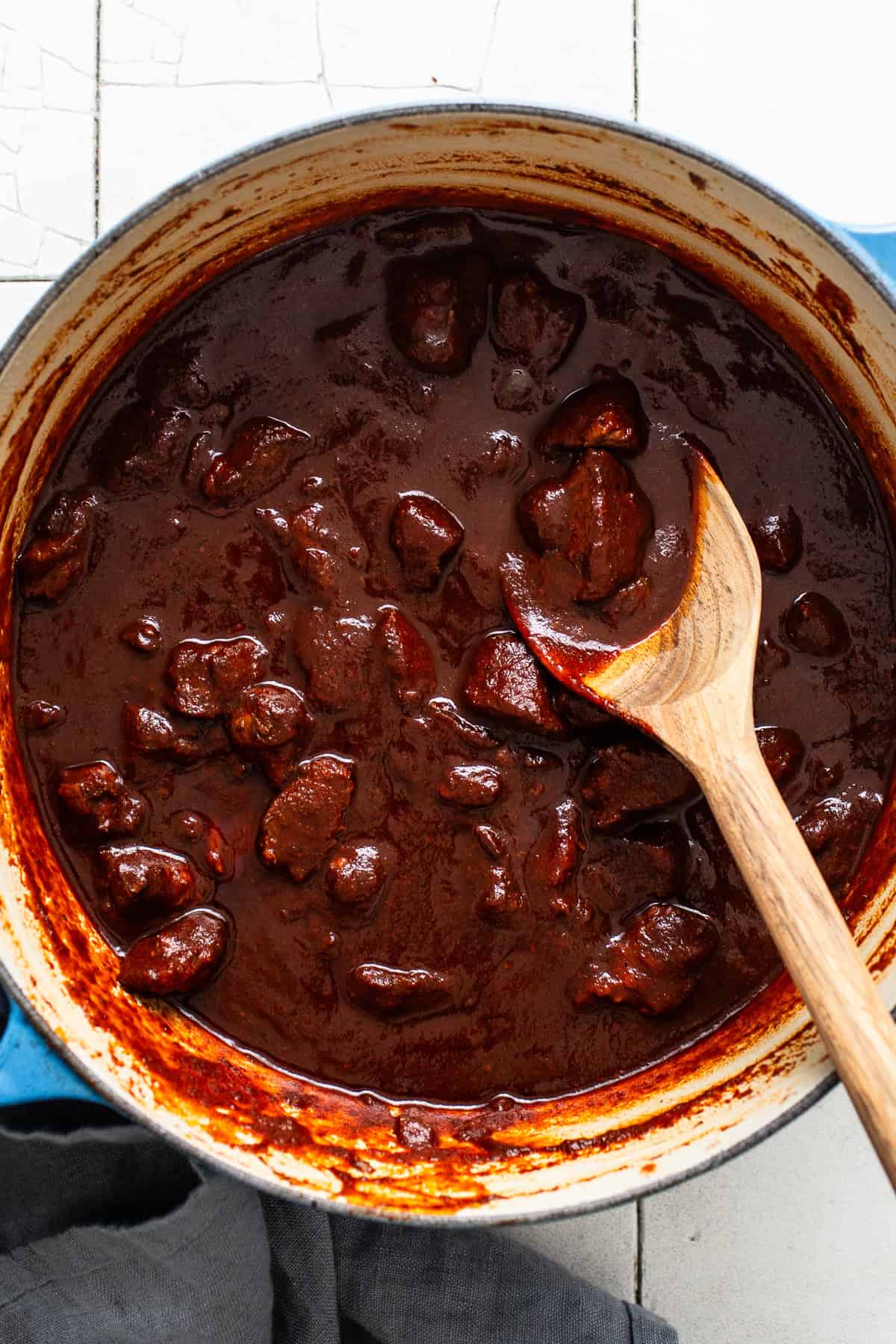
Cook the onion and simmer. Add the onion to the same pot and cook about 5 minutes, scraping up the browned bits. Add the pork back in, pour the chile sauce over it, and stir. Bring to a boil, then drop to low, cover, and cook 2 hours until the pork is fall-apart tender.
Want To Marinate?
This step is optional, but if you have time, stir the seared pork into the chile sauce, cover, and let it sit in the fridge overnight before simmering. It deepens the flavor and is the traditional New Mexico way to do it. Totally good without it though.
Helpful Tips
- Pat the pork really dry before searing. Less surface moisture means a better, faster sear.
- Don’t crowd the pan when searing. Give the pieces room so they brown instead of steam. That’s why we do it in batches.
- Taste and adjust the salt at the end. The chiles and soy sauce both bring salt, so it’s easier to dial in once everything’s simmered together.
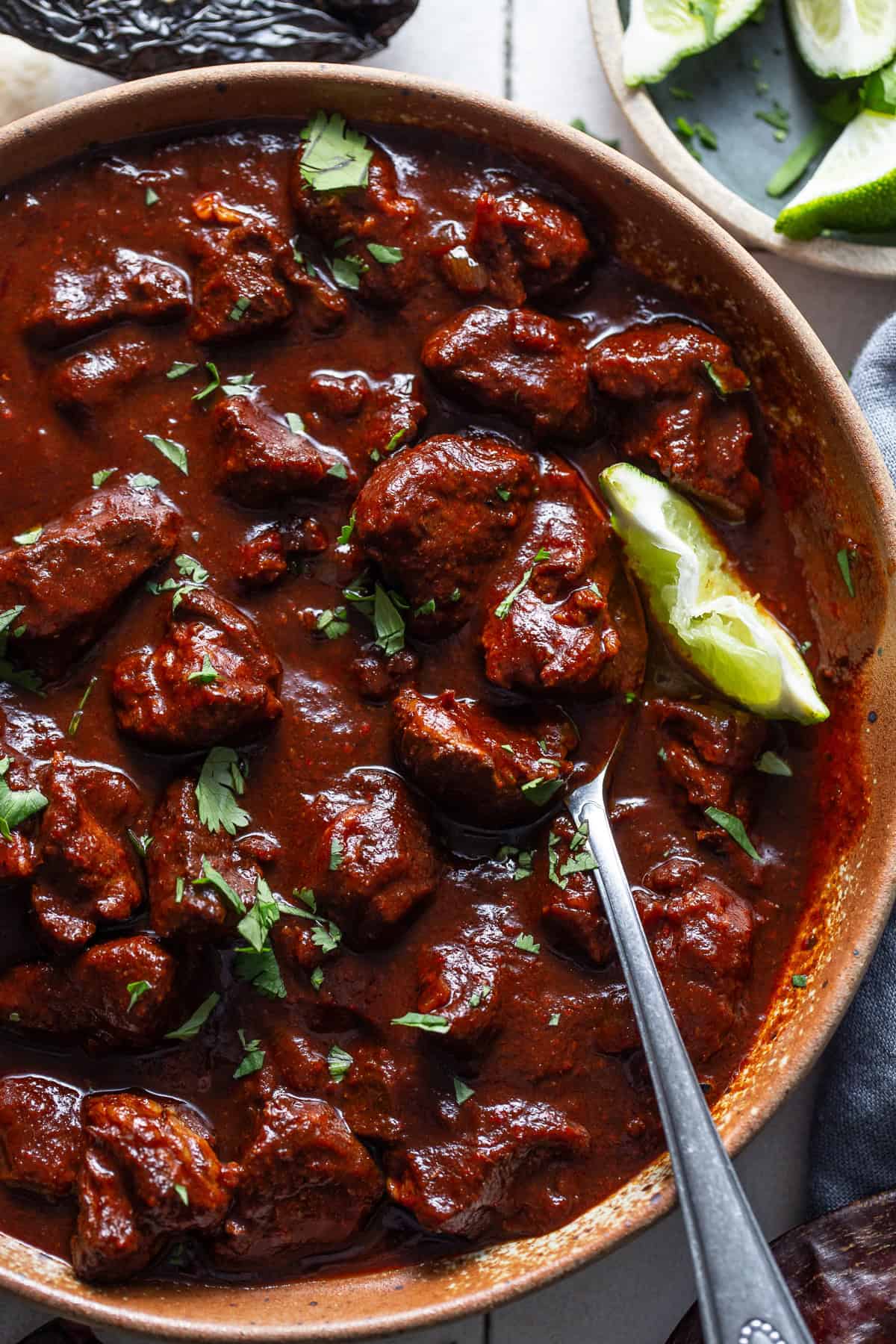
What to Serve With Carne Adovada
Carne adovada is one of those dishes you can serve a dozen ways. A few of my favorites:
Frequently Asked Questions
- What’s the best cut of pork for carne adovada?
Pork shoulder (or pork butt). It’s marbled enough to turn tender and juicy after a slow simmer. Leaner cuts like loin work but won’t get as soft. - Is carne adovada the same as chile colorado?
They’re close cousins but not the same. Carne adovada uses pork in a red chile sauce with a little sweetness and tang. Chile colorado traditionally uses beef and a simpler red chile sauce. - Can I make it in a slow cooker?
Yes! Sear the pork and make the sauce as written, then add everything to the slow cooker and cook on high for 4 to 5 hours or on low for 6 to 8 hours, until the pork is fall-apart tender. - Why is my sauce bitter?
Almost always over-toasted chiles. Keep them to 1 to 2 minutes in the pan, just until fragrant. Any longer and they turn bitter.
- 8 ancho chiles, rinsed, stemmed, seeded, and torn into pieces
- 12 guajillo chiles, rinsed, stemmed, seeded, and torn into pieces
- 1 bay leaf
- Water, as needed
- 8 cloves garlic
- ½ cup distilled white vinegar
- ¼ cup soy sauce
- 1 ½ teaspoons dried Mexican oregano
- ¾ teaspoon dried thyme
- 2 teaspoons granulated sugar
- 1 ½ teaspoon ground cumin
- 1 ½ tablespoons kosher salt
- 3 tablespoons oil, divided
- 3 pounds pork shoulder, cut into bite-sized chunks
- 1 medium onion, diced
- For serving: chopped cilantro, lime wedges, warm tortillas
-
Heat a large skillet over medium heat. Add the chiles and toast until fragrant, stirring frequently for about 1-2 minutes.
-
Transfer the chiles to a medium pot. Add the bay leaf and fill the pot with water until the chiles are completely covered.
-
Bring the water to a boil over high heat, then remove from heat, cover, and let the chiles soak for 10 minutes.
-
Transfer the softened chiles and the bay leaf to a large blender using a slotted spoon.
-
Add 3 cups of the chile-soaked water, the garlic, vinegar, soy sauce, oregano, thyme, sugar, cumin, and salt. Blend until smooth and set aside.
-
Heat 1 tablespoon of oil in a large pot or Dutch oven over medium-high heat. Add ½ of the pork shoulder and sear on all sides until browned, then transfer to a bowl or large plate.
-
Add 1 more tablespoon of oil to the pot and the remaining pork. Sear on all sides until browned, then transfer to the same bowl or plate.
-
Add the remaining 1 tablespoon of oil to the pot along with the onion. Cook for 5 minutes, scraping any brown bits that have stuck to the bottom of the pan.
-
Add the seared pork back into the pot and pour the blended chile sauce on top. Mix together to combine.
-
Bring to a boil, reduce heat to low, cover, and cook for 2 hours.
-
Serve in a bowl garnished with chopped cilantro, lime wedges, and a side of warm flour tortillas and/or rice.
Prevent your screen from going dark
- Storage. Keep leftovers in an airtight container in the fridge for up to 1 week, or freeze (cooled completely) for up to 3 months. Reheat in a pot over medium heat or in the microwave until hot. It tastes even better the next day.
- Toasting the dried chiles. Make sure to only toast the dried chiles for 1-2 minutes. The chiles will start to puff up and become fragrant. Don’t toast for longer than 2 minutes or they will burn and become bitter.
- Use a slow cooker. You can also make this recipe in a slow cooker. Prepare the chile sauce and brown the pork and onions as directed. Transfer all the ingredients into a slow cooker and cook on high for 4-5 hours or low for 6-8 hours.
Serving: 1serving | Calories: 468kcal | Carbohydrates: 57g | Protein: 29g | Fat: 17g | Saturated Fat: 4g | Polyunsaturated Fat: 5g | Monounsaturated Fat: 7g | Trans Fat: 0.02g | Cholesterol: 70mg | Sodium: 1863mg | Potassium: 1821mg | Fiber: 22g | Sugar: 33g | Vitamin A: 19954IU | Vitamin C: 27mg | Calcium: 72mg | Iron: 7mg
Nutrition information is automatically calculated, so should only be used as an approximation.
Photography by Ashley McLaughlin.
This post was originally posted in June 2022 and has been updated with new photos, a better overall recipe, and more helpful tips.