



In February, I was invited on an unforgettable trip to experience five of Bangkok’s best restaurants. It was my second time visiting this city, and the food was off-the-charts delicious. You can eat well in Bangkok at every level, from street food vendors to Michelin-starred restaurants run by some of the world’s most talked-about chefs. Even the food courts in the major shopping malls serve exceptional food. It was wonderful to get a real taste of what the city’s top dining rooms are all about and to truly understand why Bangkok is considered one of the greatest food cities in the world. Condé Nast Traveller readers recently voted it their favourite city for food, and I cannot wait to go back and explore more.
These are five exceptional restaurants I visited.
Set in a beautiful garden house in Bangkok, Sühring feels intimate from the moment you arrive. It’s elegant without being intimidating, and the warmth of the place puts you at ease immediately.
Run by identical twin chefs Thomas and Mathias Sühring, the menu is rooted in modern German cuisine, something you rarely encounter at this level. Their cooking draws on childhood memories and traditional dishes, presented with refinement and a strong sense of place. It may seem unexpected to eat German food in Bangkok, but at this level it doesn’t matter where you are. This is the kind of restaurant you plan a trip around.

What makes a restaurant truly worthy of three Michelin stars is harder to define than the food alone. It’s how the whole experience makes you feel. The service here is deeply attentive without ever being intrusive. The timing of each dish is impeccable. Nothing feels rushed, nothing overexplained. Sixteen small, beautifully composed courses arrive with just enough context to orient you, and then step back and let the food speak.
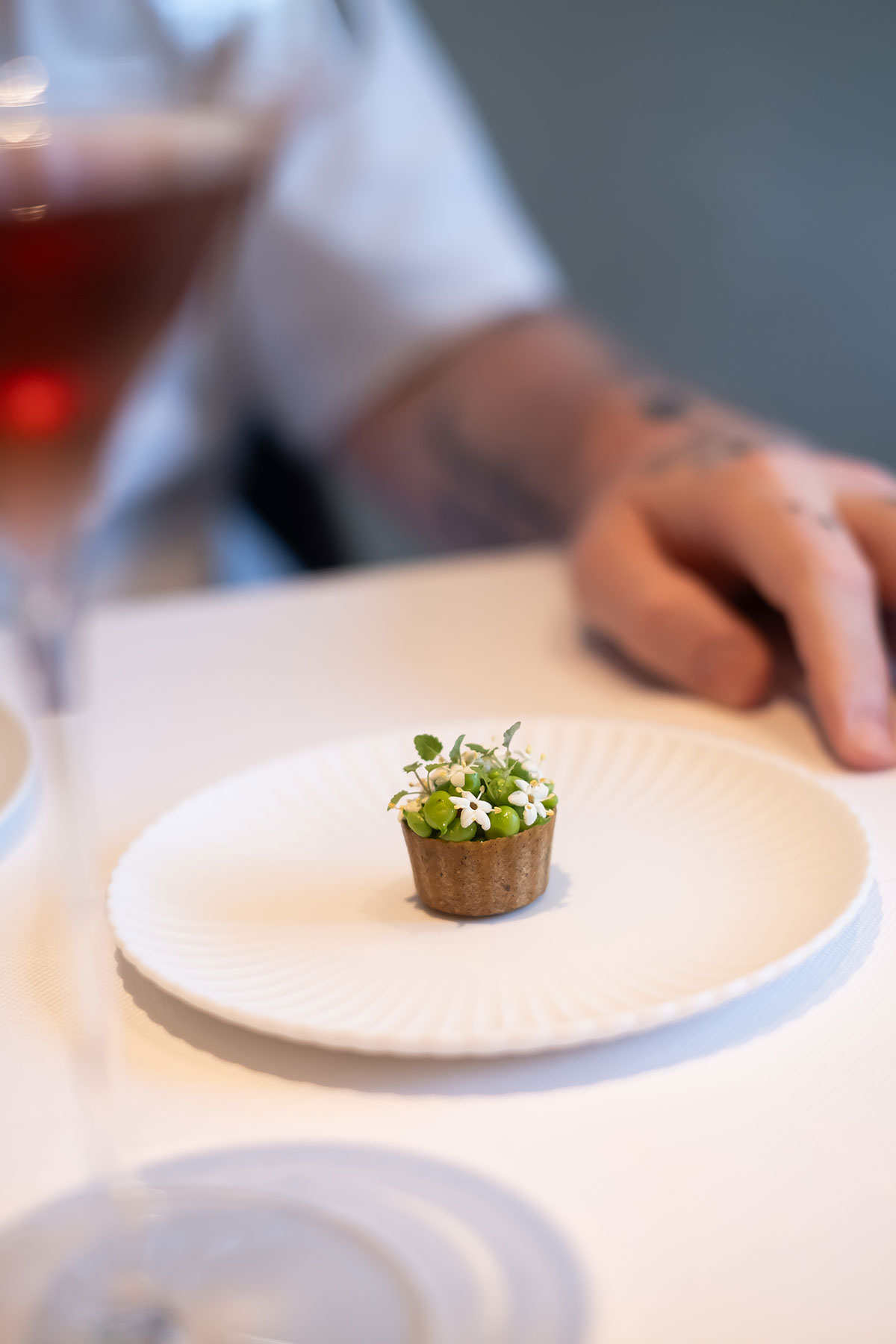
There’s real restraint in the cooking. Nothing is overworked. The focus is clarity and balance, some dishes leaning into nostalgia and classic German flavour, others feeling lighter and more contemporary. The consistency across all of it is what stays with you.
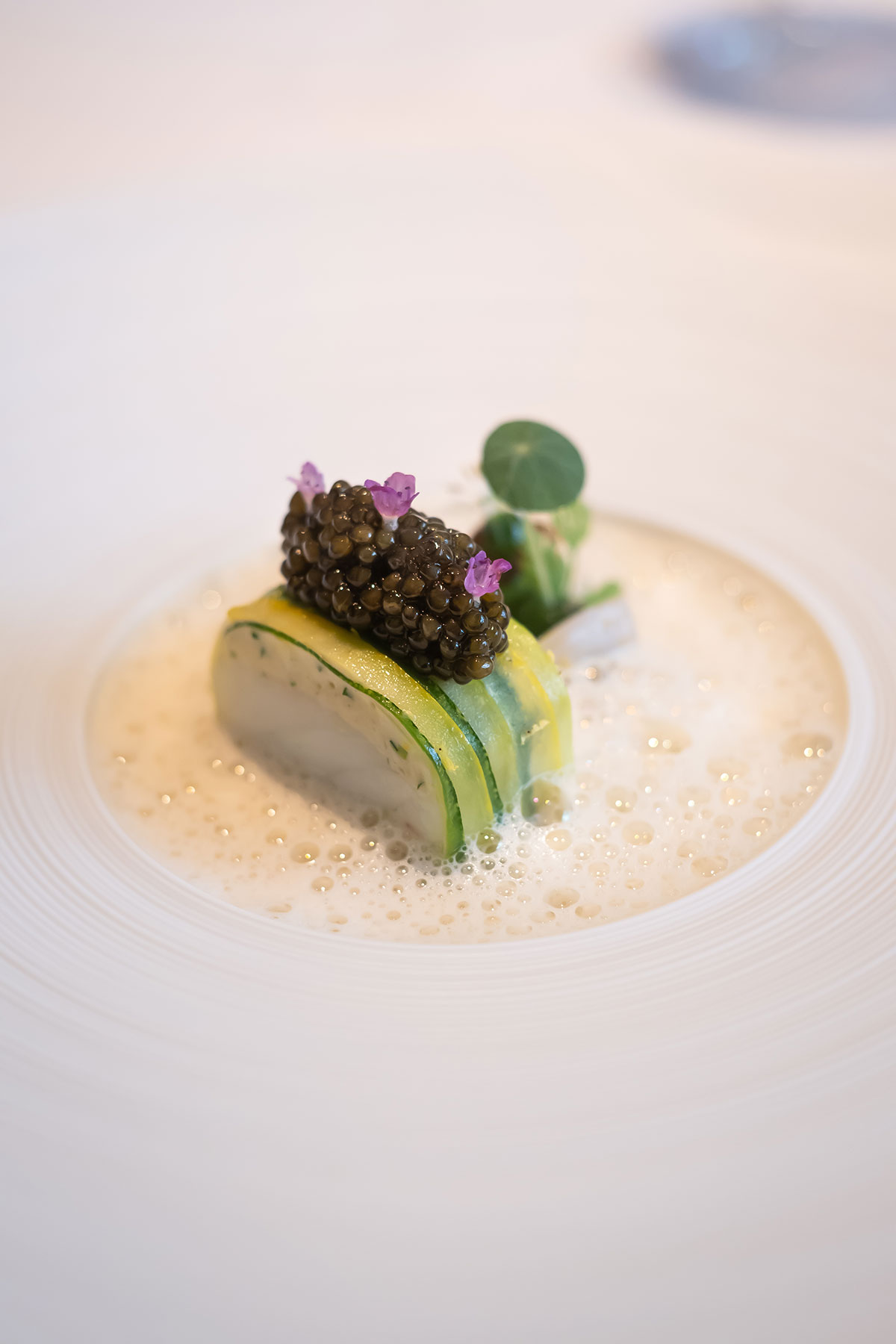
The wine pairing added an important layer. Each pour matched the dishes and was tied in from a terroir perspective, too. The selection leaned towards Germany and France, opening with a German Sekt and Riesling, then moving into Burgundy and Champagne, and finishing with structured reds from Bordeaux and Germany. The sommelier introduced each wine with ease and confidence, guiding without ever overwhelming.
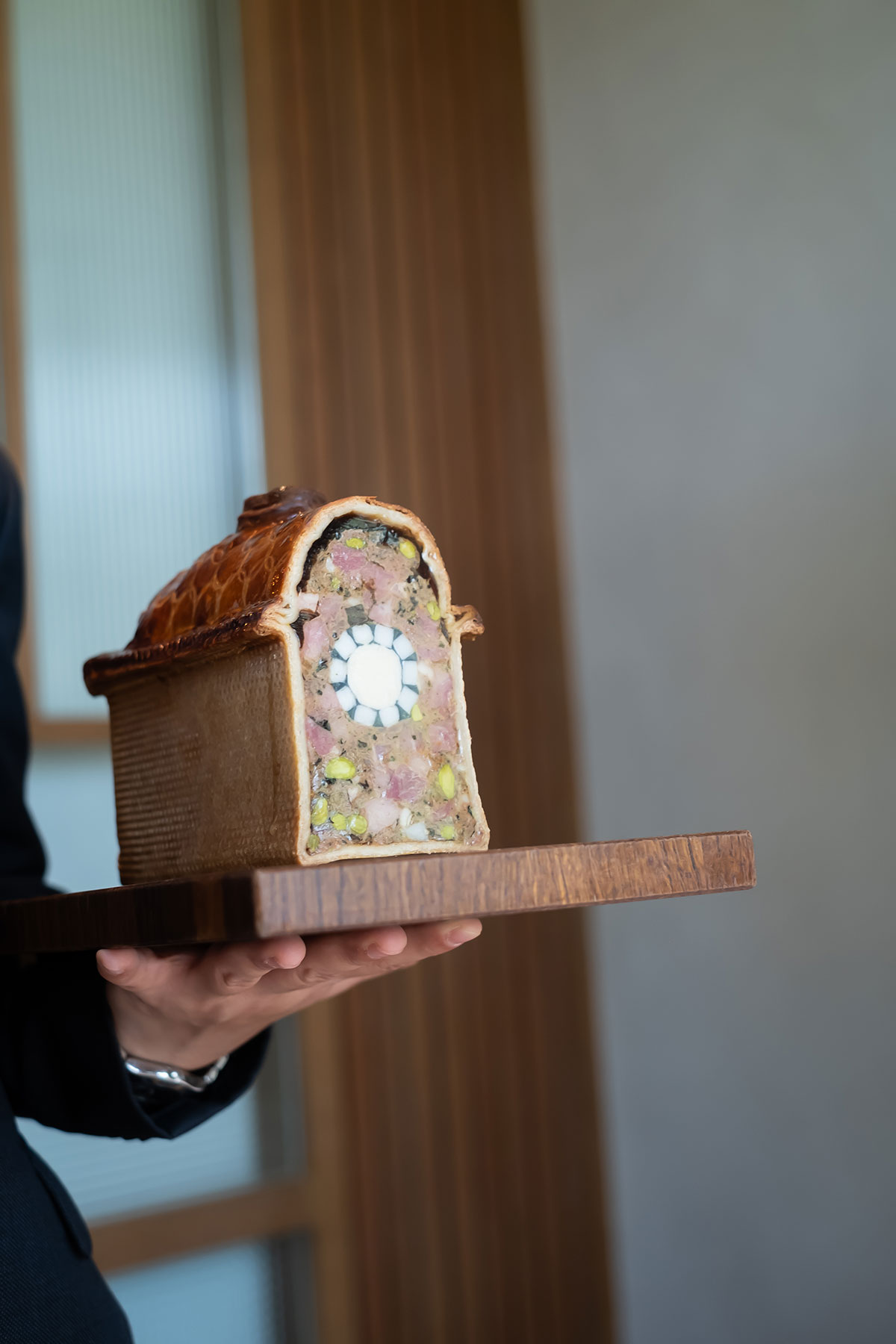
Small moments stand out, too. Being invited into the kitchen for a photo with the chefs mid-service, and them not feeling at all put out by the interruption. The chefs, and what feels like the entire service team greet you on arrival and say goodbye when you leave.

And then, with the petit fours, the chef’s grandmother’s handwritten recipe notebook was placed on the table. It was a reminder of how she inspired their cooking and how much it matters to pay homage to your roots. These things shouldn’t feel as significant as they do, but they’re what tip a great meal into something that moves you. I found myself unexpectedly emotional, simply witnessing how a truly flawless restaurant experience is executed.
Sühring has been open for 10 years and is ranked No. 22 on The World’s 50 Best Restaurants 2025 list. It’s also No. 11 in Asia’s 50 Best Restaurants 2025 and has three Michelin stars.

My Sühring Reel on Instagram
Gaggan is unlike any restaurant experience I’ve had, or likely will have again. It leans into his Indian roots, draws on Thai influences, and uses modern European technique, but the result is something entirely its own.
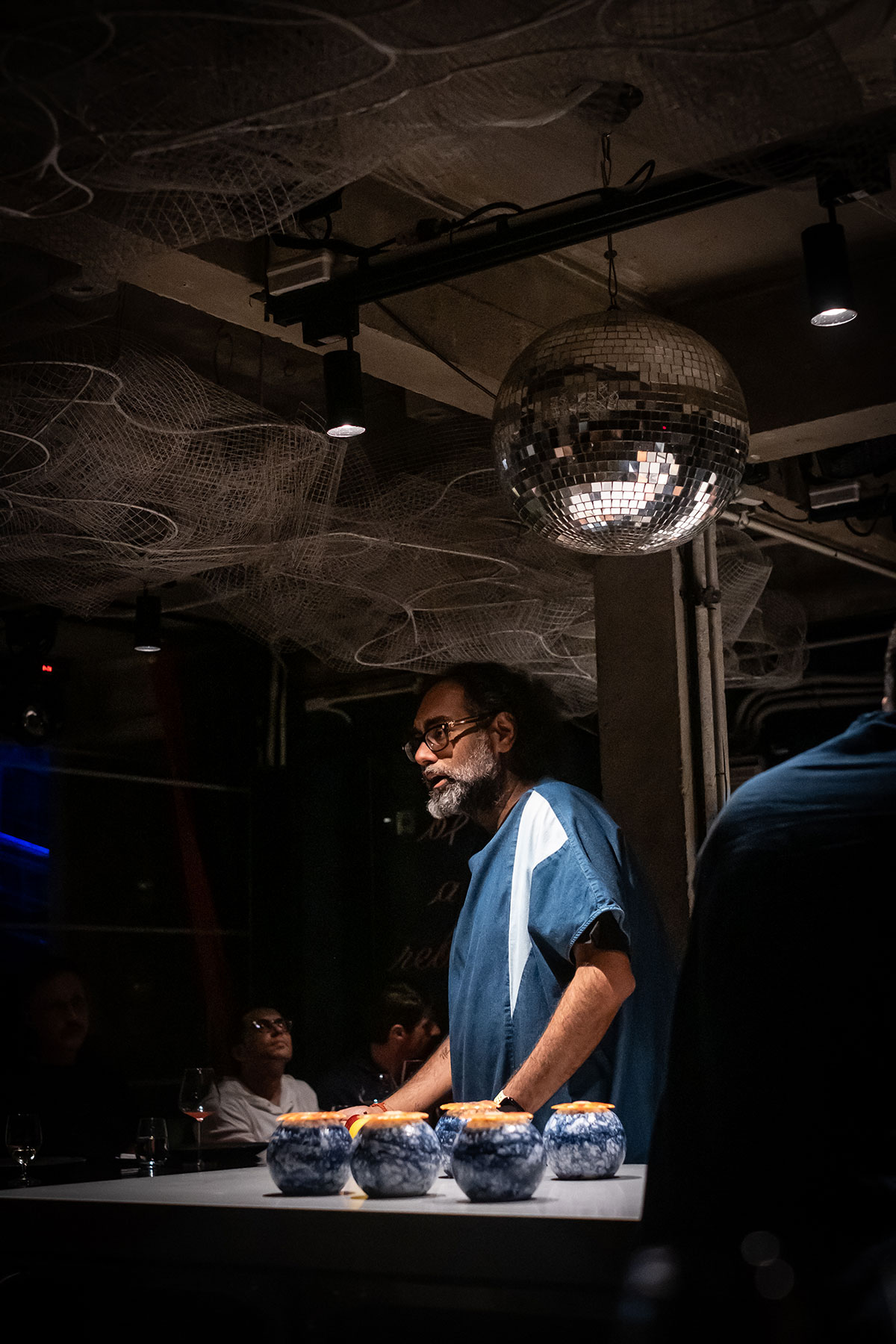
There is no traditional menu. Instead, each dish forms part of a story. Loud music, sudden silence, and shifting light shape how you experience the food. It feels closer to a performance than a conventional restaurant, and you are told upfront that it may feel uncomfortable at times.

Gaggan Anand first opened in Bangkok in 2010 and quickly became one of Asia’s most talked about restaurants. After closing the original in 2019, he returned with this current iteration, which continues to push boundaries and redefine how Indian cuisine can be presented.
You sit in a row around a counter facing the kitchen. It feels almost solitary, even though you’re surrounded by others. The focus narrows to the chefs, the process, and then the bite in front of you. It’s quite extraordinary.
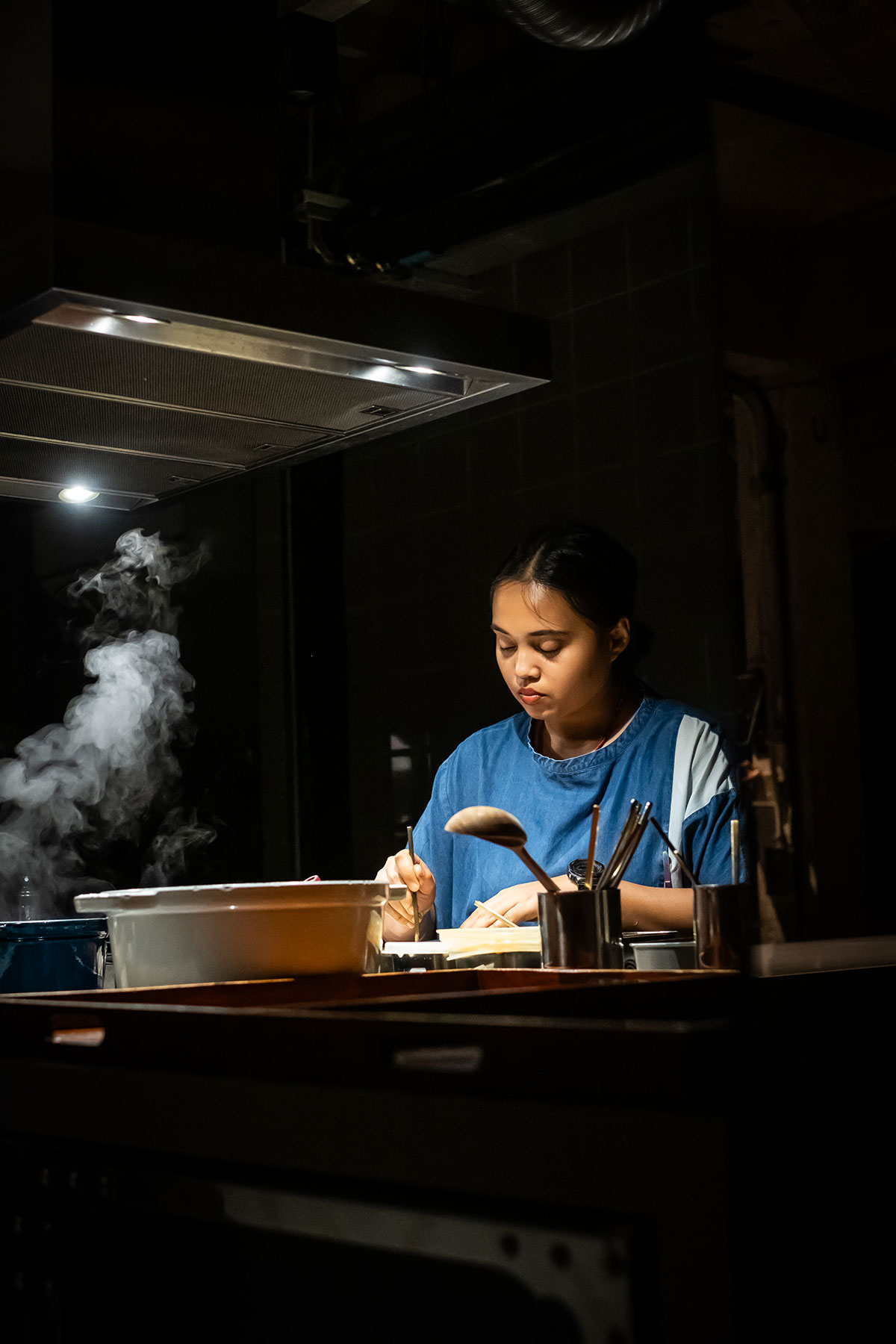
The wine programme, led by Vladimir Kojic, adds another layer. There is no list. He curates pairings specifically for the menu, often using natural, organic, and unexpected bottles. It’s thoughtful and slightly unconventional, much like the restaurant itself.
With so much theatre, it would be easy for the food to be overshadowed. It isn’t. The dishes are inventive and precise, and several were deliciously memorable.
The menu
The meal is structured like a play, divided into five acts. You’re given a beautiful signed menu, but each dish is listed in its original language and reduced to a single word. Your name only appears at the end under infrared light. It keeps you present, focused on what’s in front of you rather than what’s coming next.
Each dish is inspired by a flavour or a familiar reference, then reimagined in a way that often feels slightly surreal. A raw shrimp and apple carpaccio, presented as a delicate flower and eaten like a slice of pizza, was a standout for me. It was precise and unexpected, and immediately transported me to Japan. The final bite of each act is a dessert, which adds a nice rhythm to the progression.
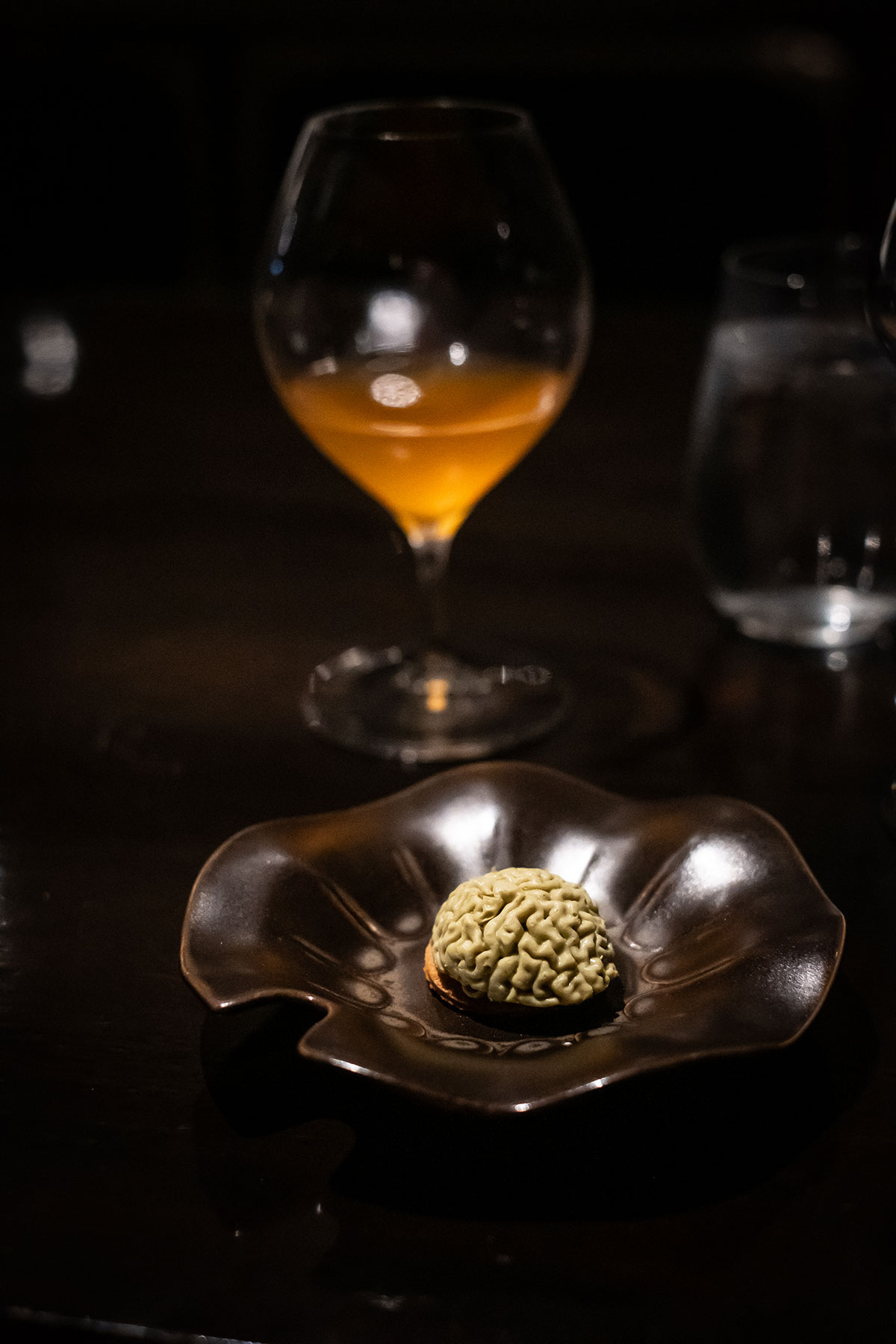
The Thai curry, presented as a monitor lizard’s brain, is something I won’t forget in a hurry. It’s playful, slightly shocking, and very much in keeping with the tone of the meal. The fourth act shifts focus to technique, with dishes defined by how they are cooked, steamed, grilled, fried, or baked, rather than by origin.
Act 1 – India
Dahi Papdi, Papad Chutney, Aloo Gobi, Dakshini Bharatiya Curry, Mushroom Chettinad, Shahi Tukda.
Act 2 – Japan
Green Almond, Fuji Salmon, Crab Rice, Gunkan, Ebi Furikake, Fruit Cheesecake.
Act 3 – Thailand
Tom Kha, Tom Yum Gai, Nam Prik, Green Curry, Grilled Fish, Bua Loy.
Act 4 – Communal Cooking
Steamed, grilled, fried, baked, boiled.
Act 5 – Grand Finale
Leaves and flowers.
The mood shifts constantly across the evening, building and softening in waves. Everything feels carefully choreographed. It’s emotional, entertaining, completely original, and hard to forget.

My Gaggan Reel & carousel on Instagram
Nusara, Bangkok: A love letter dressed up as a restaurant
Tucked into a beautifully renovated shophouse on Maha Rat Road in Bangkok’s historic Ta Tien neighbourhood, this is a place built entirely on love. Love for a grandmother, love for a country’s food, and love for a city that refuses to let its history be forgotten.

Our dinner here was the first in a whirlwind tour of Bangkok’s best restaurants.
Chef Thitid “Ton” Tassanakajohn and his brother Chaisiri “Tam” opened Nusara in 2023, naming it after their grandmother, who passed away in 2020. She raised them both and nurtured their understanding of Thai food. When she died, they did the only thing that made sense: they built her a restaurant.
The building itself was a 50-year-old hostel in the Ta Tien area before it closed during Covid and was renovated into what it is today. The location is no accident. Ta Tien is one of Bangkok’s most historically layered neighbourhoods, sitting right next to the Grand Palace and the legendary Wat Pho temple.
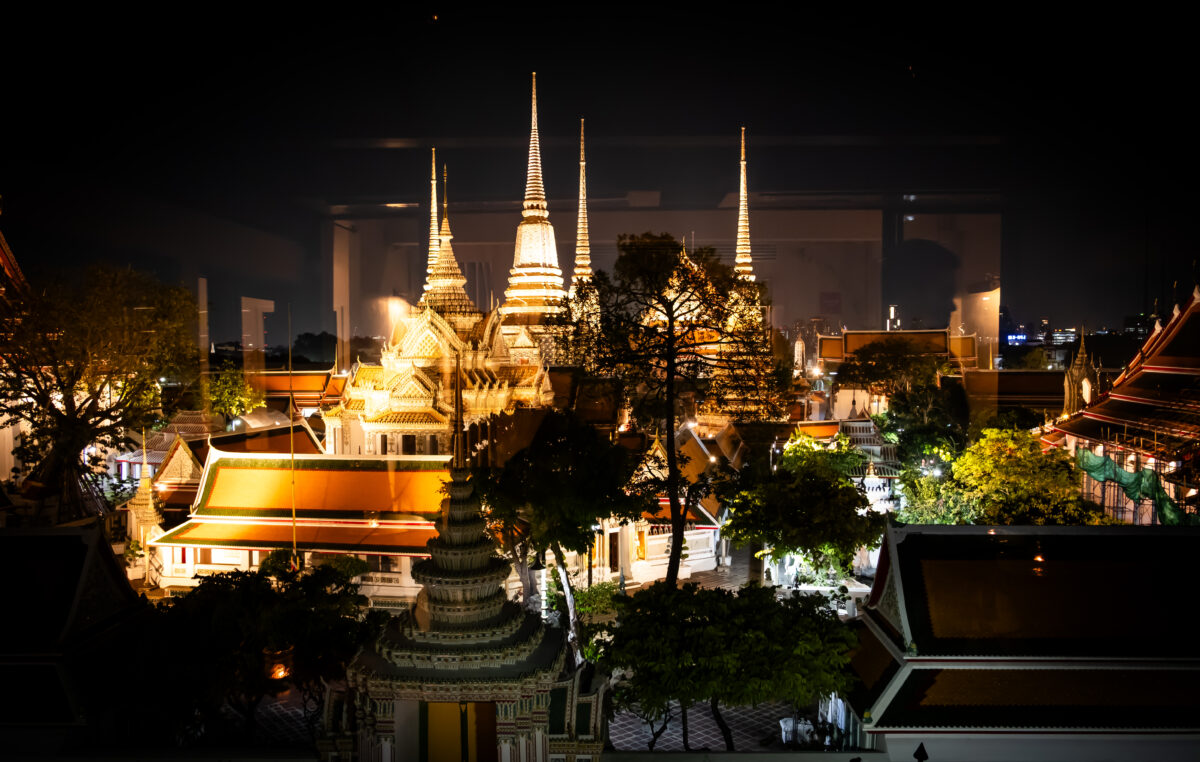
The area, like a lot of Bangkok, is a juxtaposition of the old and the new. Walk around here and you’ll find street food vendors, traditional Thai massage shops, and local convenience stores that look like they haven’t changed since the 1970s. Modernity and history do not compete here; they simply coexist, which is exactly the philosophy behind the food.
Nusara was a skilled tailor with her own shirt-making shop, and her story shapes every corner of the space. Her actual sewing machines are displayed on the walls. The fabrics, textures, and stitching motifs she loved are woven into the design at every turn. It is the kind of interior that tells you something before the food ever arrives.

Before dinner, you begin downstairs at Nuss Bar, and it is a showstopper. Drenched in floor-to-ceiling layers of red and gold tones, with velvet seats, glittering lamps, and colourful floor tiles, it is a lively drinking destination. The sort of bar you could happily spend an entire evening in, and many people do just that.

Nusara holds one Michelin star in the 2026 MICHELIN Guide Thailand. The restaurant was ranked No. 35 on the World’s 50 Best Restaurants 2025 and No. 5 on Asia’s 50 Best Restaurants 2025.
The dining area on the second and third floors, directly opposite Wat Pho, is intimate and cosy. The temple dates back to the 16th century and houses the famous Reclining Buddha. At night, it is illuminated, making it one of Bangkok’s most spectacular old-town vistas.

The top-floor terrace is where we enjoyed the second phase of our dining journey. With a glass of champagne and a delicious bite adorned with caviar. It’s where we also got to see all the fresh produce that went into our meal on display.
Chef Ton calls the food at Nusara “Colourful Thai Cuisine.” It is neither traditional nor modern but something unique that has never been done before. He wants the food to represent his grandmother’s character: old but joyful.
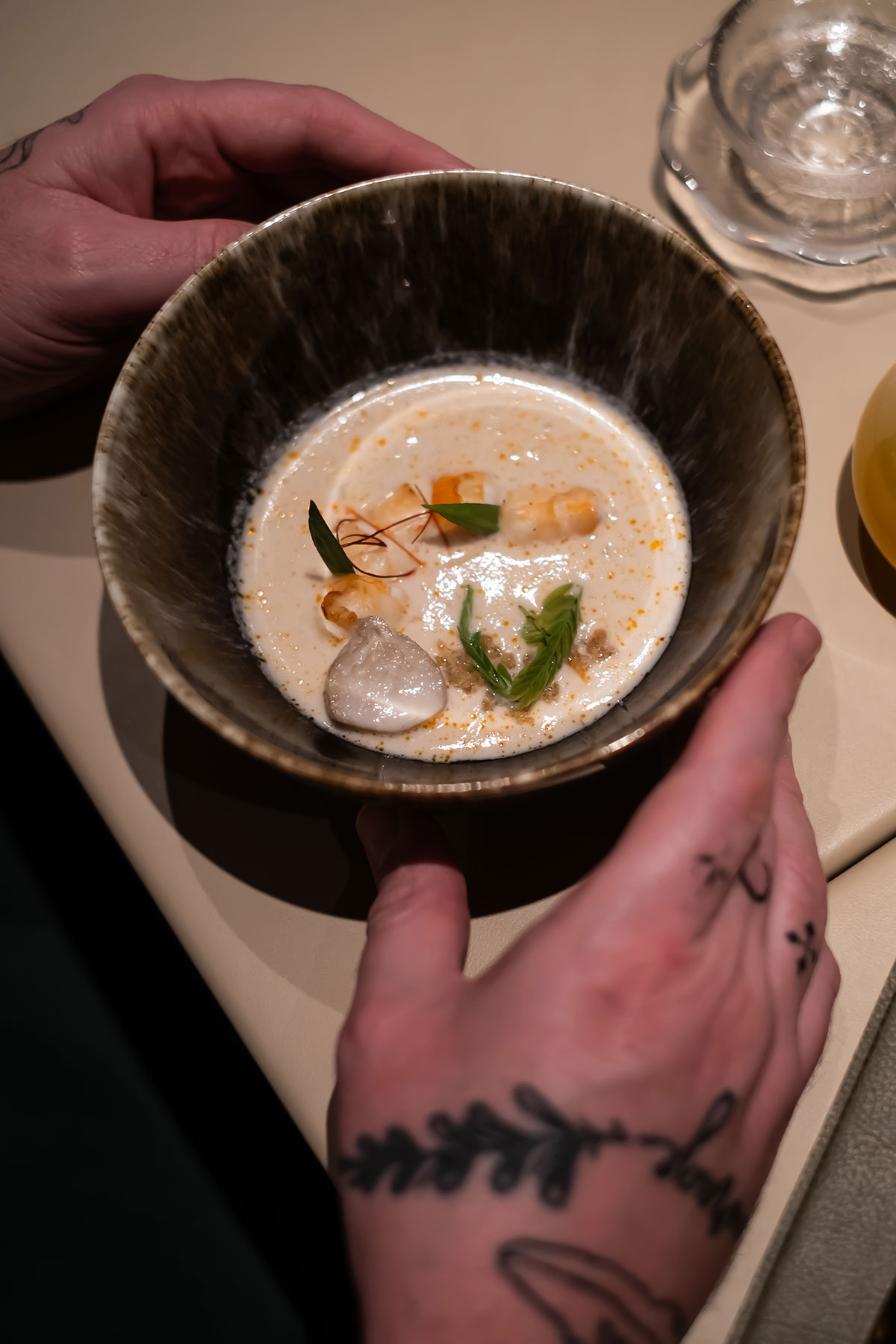
The tasting menu is 12 courses, and the dining journey starts with a few playful bites in the kitchen, then moves to the rooftop and finally into the dining room. The main courses are served family-style, honouring traditional Thai dining culture within a fine-dining format.
My Nusara Reel on Instagram

Potong sits in the heart of Bangkok’s Chinatown, in a narrow five-storey building that has belonged to Chef Pam’s family for over a century. It was once a Chinese herbal medicine house. You feel that history the moment you walk in. The building has been carefully restored rather than replaced, and the original fixtures, the worn surfaces, the weight of the place, are all still there. It sets the tone for everything that follows.

Chef Pichaya “Pam” Soontornyanakij is one of the most decorated chefs working in Asia right now. World’s Best Female Chef 2025, Asia’s Best Female Chef 2024, Michelin star, No. 13 on Asia’s 50 Best Restaurants 2025. The accolades are significant. What is more significant is that none of it has softened the ambition or the point of view.
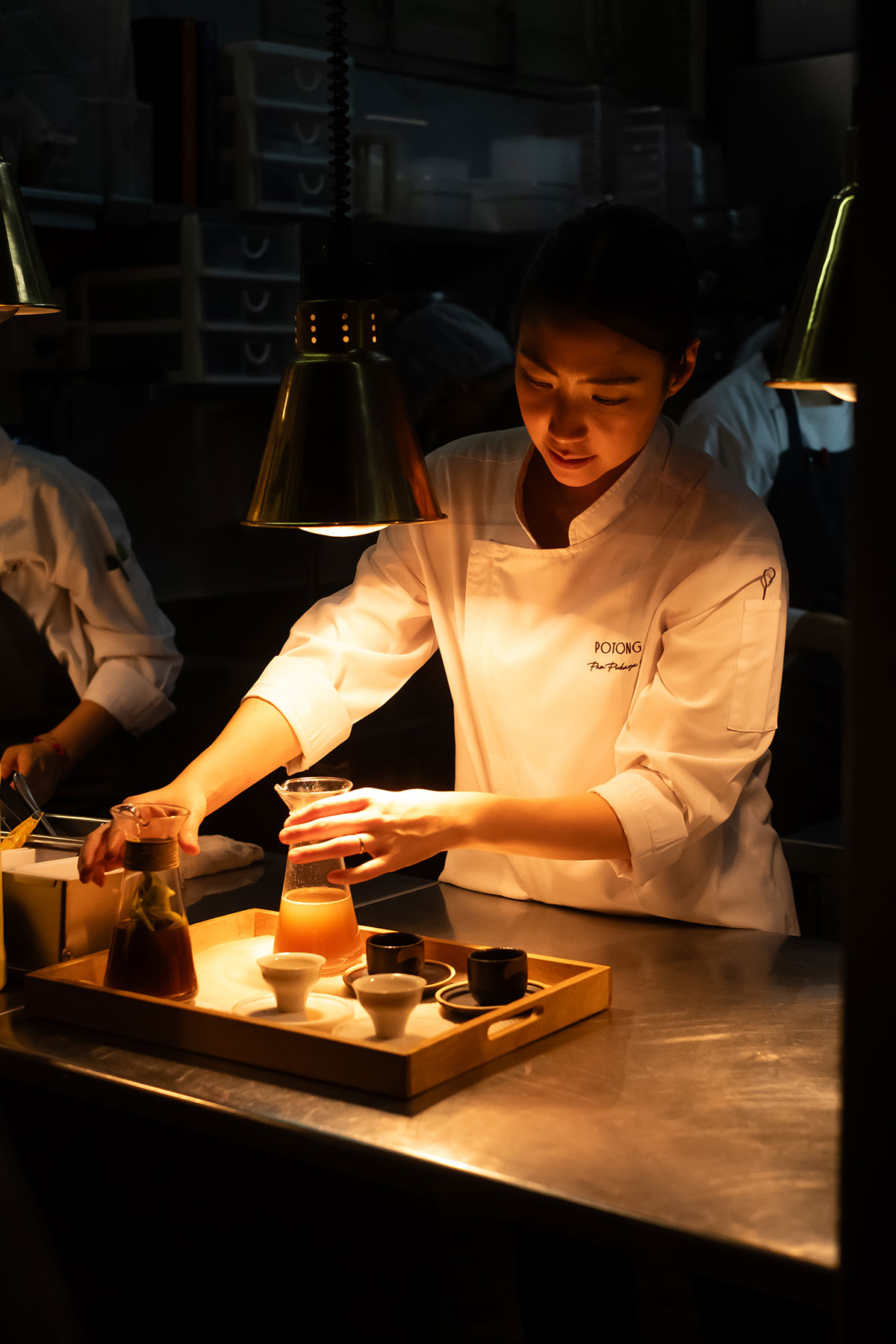
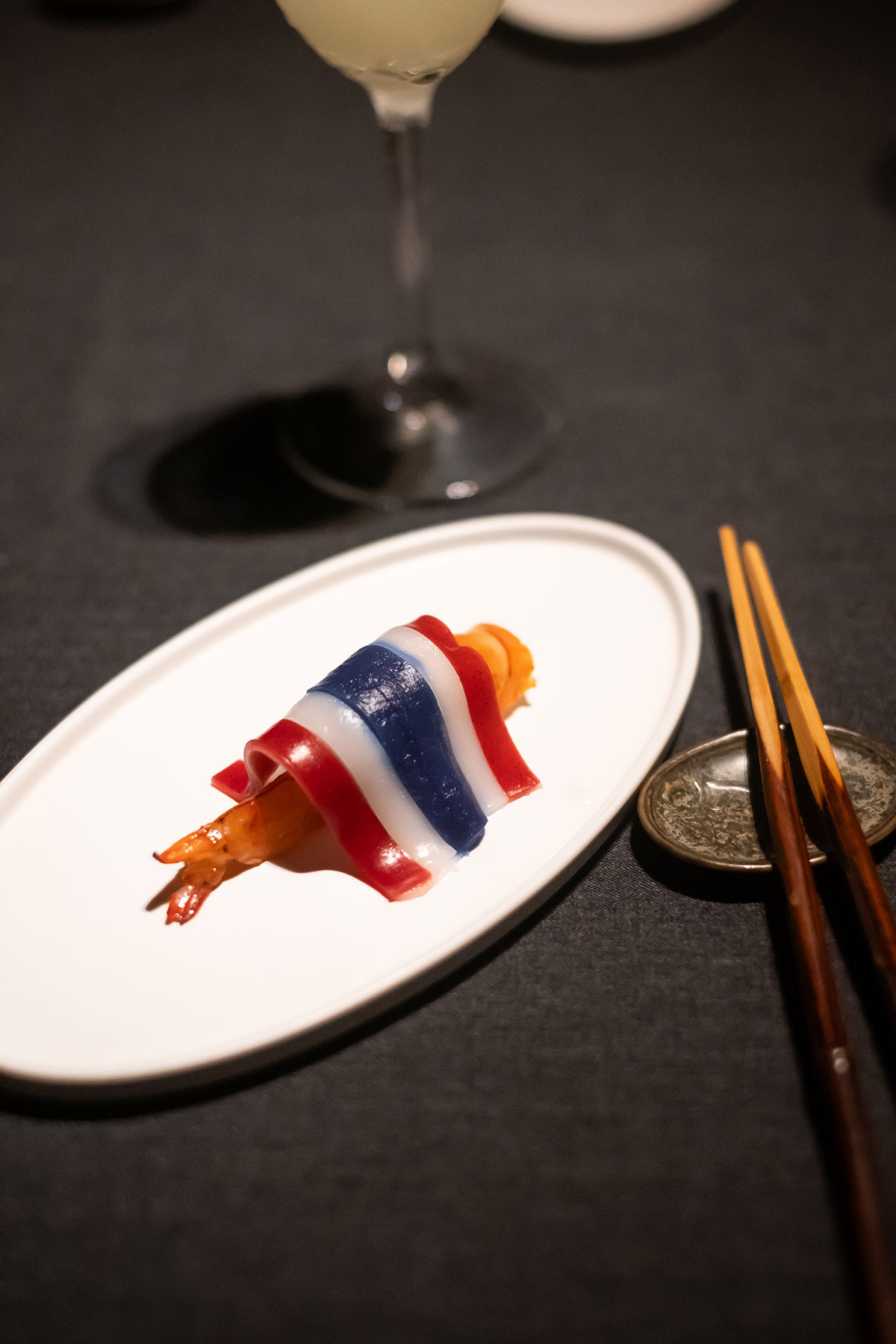
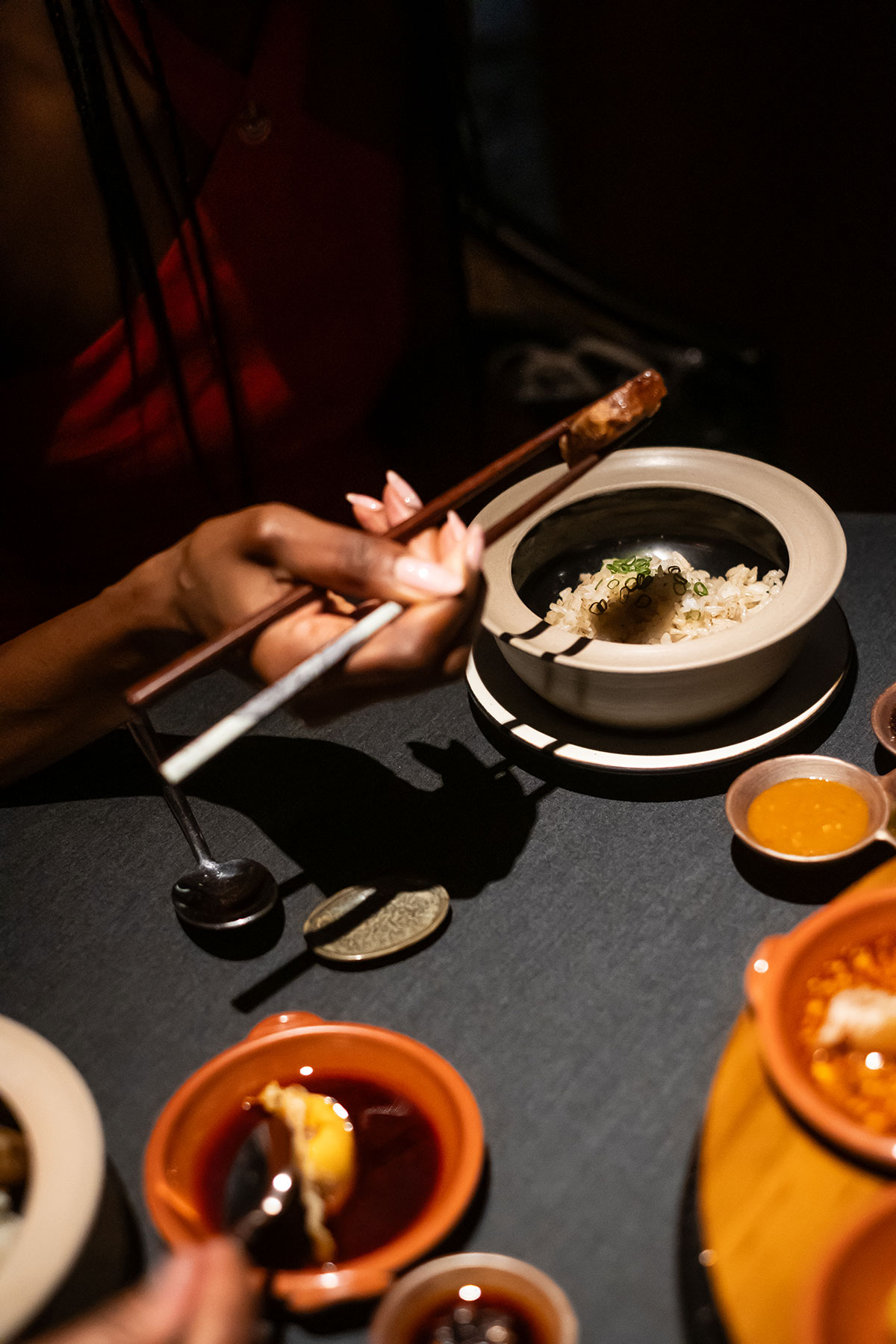
The cooking is progressive Thai-Chinese, built around Pam’s philosophy of five elements: salt, acid, spice, texture, and the Maillard reaction. Every dish is anchored in her family’s history and her own culinary memories, from her upbringing in Bangkok’s Chinese community to her years training in New York at Jean-Georges. The result is food that is technically precise but never cold. You feel a person behind every course.
My Potong Reel & Carousel on Instagram

Le Du sits in an unassuming alleyway in the Bang Rak district with almost no exterior signage. You could walk straight past it without knowing. Inside, the space surprises you. No table linen, no formality, just a ceiling installation of 20,000 glass test tubes that catch the light and give the room a modern edge. One wall is floor-to-ceiling glass looking out onto a tropical garden. The dense layered foliage softens the sleek interior and makes the space feel cooler and more alive. The open kitchen sits at the other end, visible and calm.

The name translates loosely as “season” from Thai, and that word governs everything here. Chef Thitid “Ton” Tassanakajohn changes the menu multiple times a year based on what is in season across Thailand’s regions, and the sourcing is serious. He trained at the Culinary Institute of America, staged at Eleven Madison Park and Jean-Georges in New York, and came home with a clear purpose: to present Thai ingredients at the level they deserve.
Le Du currently sits at number 30 on the World’s 50 Best Restaurants list and holds a Michelin star, which it has kept since 2019.

The tasting menu, available in four or six courses, moves through dishes that look contemporary but taste recognisably Thai. Familiar flavours land in unfamiliar forms.
The service matches the food: attentive, knowledgeable, and warm without being formal.

It was particularly special to meet Chef Ton, who is something of a rock star in Thailand’s culinary world, yet remarkably humble and easy to talk to. After dinner, we were taken to Le Du Kaan, another of his establishments, perched on the 56th floor of The Empire in the Sathorn district. The views over Bangkok are jaw-dropping, a sweeping panorama of the city skyline and the Chao Phraya River below, best experienced at sunset with a well-made cocktail in hand. You can go for drinks or stay for dinner; I would recommend either without hesitation.

My Le Du Reel & Caroussel on Instagram
In addition to eating at these five lovely restaurants, I attended the incredible Salsify pop-up at Ms Maria & Mr Singh, Gaggan’s second, more casual dining restaurant above Gaggan. Gaggan visited Salsify last October to host a series of dinners with the Salsify team, and I was lucky to attend. Chef Ryan Cole and Nina knocked it out at the park with a delicious and inspired 9-course tasting menu featuring a few local South African and Thai ingredients. I shared all my pics and more details about the dinner in my FREE Substack Newsletter.
Tips for Booking Bangkok’s Best Restaurants
Book as far ahead as you can. Gaggan operates with just 14 counter seats and fills up months in advance. Nusara and Potong are equally difficult to get into, so aim to book at least six to eight weeks ahead, longer if you are travelling during peak season. Most of these restaurants use online booking forms or email rather than phone reservations, so check their websites directly. Reservations at this level are typically prepaid in full at the time of booking, and refunds are rare, so make sure your dates are locked in before you commit.
The dress code across all five restaurants is smart casual. No flip-flops or tank tops. You do not need to dress formally, but make an effort. Bangkok is hot and humid, so lightweight linen or a smart shirt will keep you comfortable and appropriate. If you are offered a counter seat, take it. Watching the chefs work from a front-row position adds another dimension to the experience, and at Gaggan, the counter is the only seating option.
Allow plenty of time to get to the restaurant. Bangkok traffic is notoriously unpredictable, and a journey of three kilometres can easily take 45 minutes. Use Grab rather than flagging down a taxi, and give yourself a generous buffer. Most restaurants will only hold your table for 15 to 20 minutes before releasing it.
BUY MY eBOOK COMFORT
Find me on Instagram & Pinterest