



Ginataang Bangus is fried milkfish cooked in coconut milk with shrimp paste, ginger, garlic, and Thai chili. I make this Ginataang Bangus recipe often because it is quick to put together and the flavors are exactly what I want on a busy weeknight. Ginataang Bangus is part of the ginataan family of dishes that Filipinos cook regularly, and this version stands out because the fish is fried first before it goes into the sauce. The coconut milk picks up all the flavor from the shrimp paste and aromatics, and the fried bangus stays firm through the entire simmer. I cook a lot of ginataan dishes with different types of fish, but Ginataang Bangus is the one my family asks for the most.
I started frying the bangus before simmering it years ago after noticing that raw fish tends to break apart in coconut milk. That one change made a huge difference. The flour coating gives each piece a light crust that holds up in the sauce, and it also thickens the coconut milk slightly as it simmers. If you have tried my Bangus Bicol Express, you will notice the same technique here. It works every time.
This Ginataang Bangus recipe gives you golden fish pieces in a coconut sauce that is savory, lightly spicy, and goes straight over rice. The shrimp paste makes all the difference in this dish. It is what separates a good ginataan from a great one.
What is Ginataang Bangus?
Ginataang Bangus is a traditional Filipino dish made with bangus (milkfish) cooked in coconut milk, or gata. The word “ginataan” means “cooked in coconut milk,” and bangus is the Tagalog term for milkfish. This cooking style is common in the Visayas and Bicol regions where coconut trees grow in large numbers. Coconut milk has been a staple in Filipino cooking for generations, and fish cooked in gata is one of the oldest preparations across the islands.
There are different versions of this dish throughout the Philippines. Some recipes simmer raw fish directly in coconut milk, while others fry the fish first. This fried version is sometimes called ginataang pritong bangus. Bangus is the national fish of the Philippines and has been commercially farmed in the country for over a hundred years, making it one of the most common and affordable fish for home cooking.
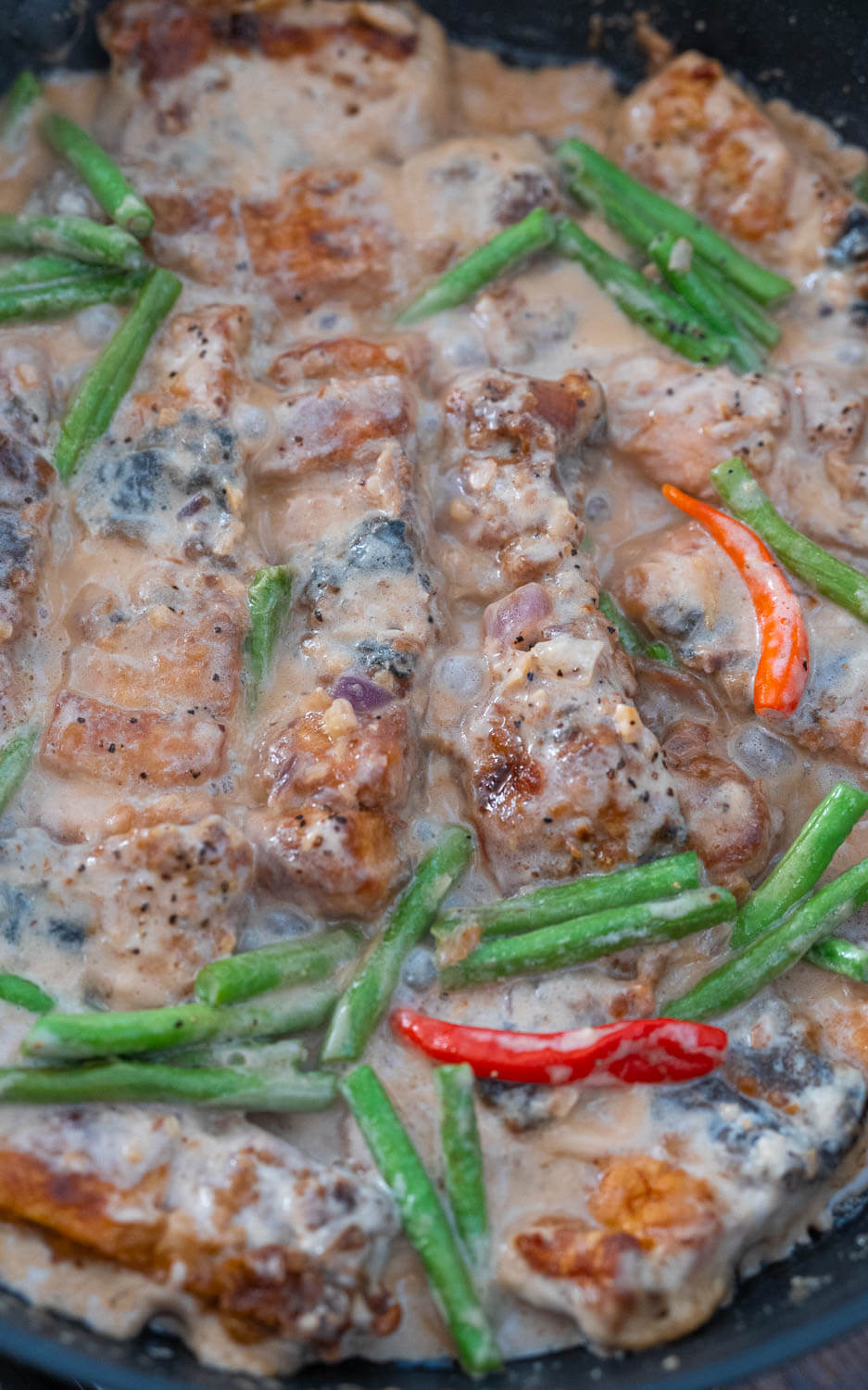
Ginataang Bangus is typically served as a main dish with steamed white rice. It is a weekday staple in many Filipino households, and it is also popular during the rainy season when a warm, creamy bowl of ginataan feels right for the weather.
Why This Ginataang Bangus Recipe Works
This Ginataang Bangus recipe works well because of a few techniques that affect the final result.
- Frying the bangus before simmering – The flour coating creates a thin barrier that keeps the fish from falling apart in the coconut milk. It also gives each piece a light golden texture that contrasts with the creamy sauce.
- Cooking the shrimp paste with the aromatics – Shrimp paste cooked in oil loses its raw sharpness and develops a deeper umami flavor that spreads through the entire sauce.
- Stir frying the string beans separately – Cooking the string beans on their own keeps them firm and green. They would turn soft and dull if simmered too long in the coconut milk.
- Reusing the frying oil for the sauce – The oil left from frying the fish carries toasted garlic and fish flavor directly into the coconut sauce, giving it more depth without extra steps.
- Keeping the heat low during the simmer – Coconut milk separates when boiled hard. A gentle simmer keeps the sauce smooth and creamy from start to finish.
Ingredients
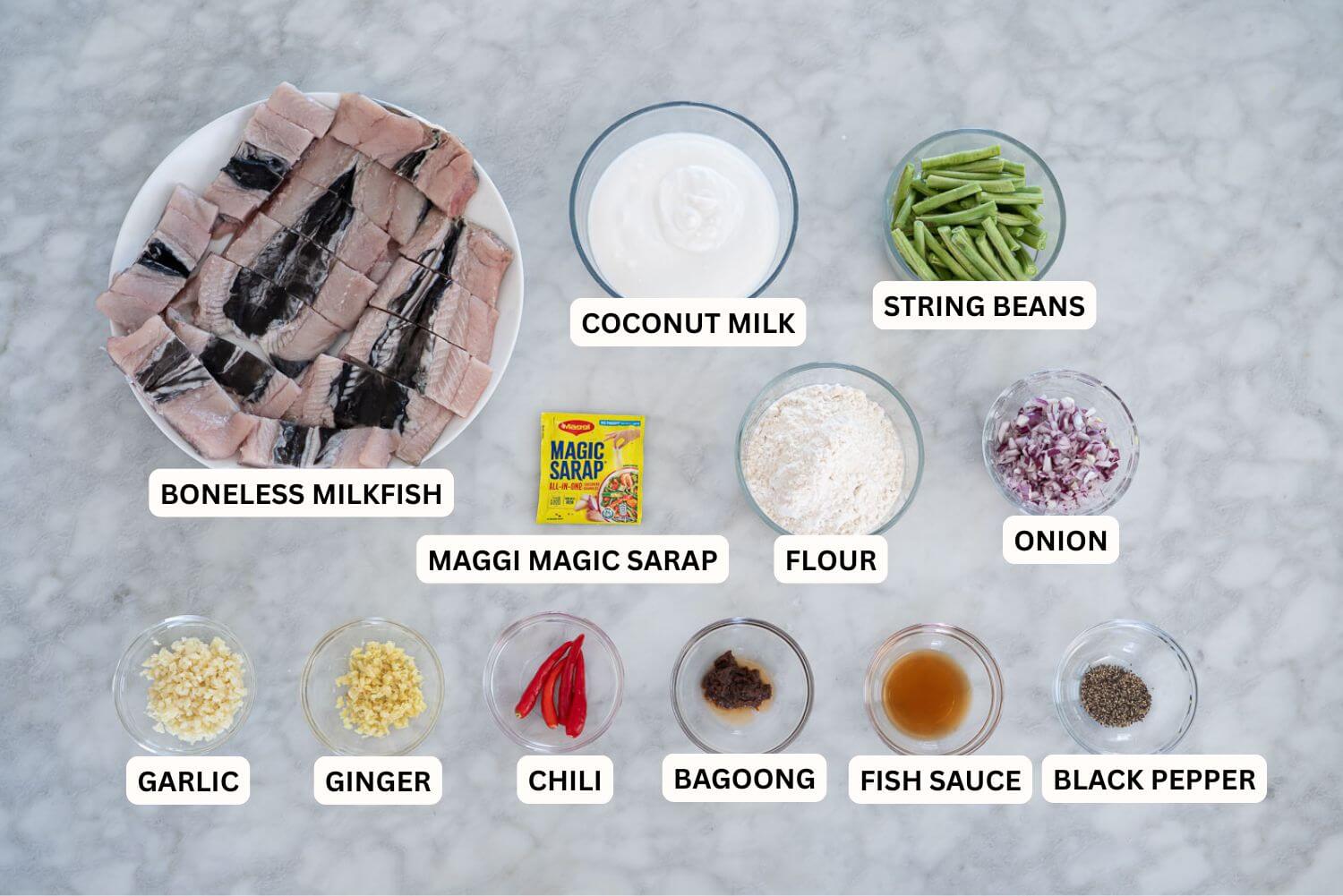
- Bangus (boneless) – Milkfish is the main protein in this dish, and boneless cuts make preparation and eating easier
- Maggi Magic Sarap – An all purpose seasoning that enhances the natural flavor of the fish before frying
- All purpose flour – Creates a thin coating on the fish that holds up in the sauce
- Coconut milk – The rich, creamy base of the sauce
- String beans – Cut into short lengths and stir fried for a fresh, crunchy contrast
- Thai chili peppers – Bring a gentle heat that complements the coconut milk
- Onion – The sweet base of the aromatics
- Ginger – Gives warmth and helps cut through the richness of the coconut milk
- Garlic – The aromatic foundation of the sauce
- Shrimp paste – The source of deep, salty umami in this dish
- Cooking oil – Used for frying the fish and sauteing the aromatics
- Fish sauce – For final seasoning
- Ground black pepper – A finishing touch for subtle warmth
Vanjo’s Advice
- Use boneless bangus belly – I find that boneless cuts make this dish much more enjoyable, especially for kids. Most Filipino grocery stores carry boneless bangus belly, and it saves a lot of prep time.
- Buy bangus belly with the skin on – I prefer keeping the skin because it crisps up when fried and holds the piece together in the sauce. Skinless fillets tend to curl and break more easily during cooking.
- Pour the coconut milk slowly – I like to pour it in a steady stream while the aromatics are still hot. This helps everything blend together smoothly and avoids sudden temperature changes that could cause the sauce to split.
- Taste before you add fish sauce – Shrimp paste is already salty. I always taste the sauce first before adding fish sauce at the end. You may need less than you think.
- Let it rest for a minute off the heat – I have found that giving the dish a minute or two off the burner lets the sauce thicken slightly and cling better to the fish.
How to Cook Ginataang Bangus
Making Ginataang Bangus at home is straightforward. Take it one step at a time and you will have a creamy, satisfying dish ready for your family.
Season and Fry the Bangus
- Season the boneless bangus pieces with Maggi Magic Sarap and set aside for a few minutes.
- Dredge each piece of fish in all purpose flour, making sure it is evenly coated on all sides.
- Heat the cooking oil in a pan over medium heat and fry the bangus until both sides turn light to medium brown.
- Remove the fried fish from the pan and set aside on a plate.
Fry in batches so each piece has enough space to brown evenly. Crowding the pan will steam the fish instead of frying it.
Stir Fry the String Beans
- Using about 2 tablespoons of the oil left in the pan, stir fry the string beans for about 90 seconds.
- Remove from the pan and set aside.
The string beans should still have a snap to them. They will continue cooking briefly once they go into the sauce.
Saute the Aromatics and Build the Sauce
- Add another 2 tablespoons of oil to the same pan and saute the garlic until it starts to brown.
- Add the onion and ginger, then continue cooking until the onion softens.
- Stir in the shrimp paste and Thai chili peppers, and saute for about 30 seconds.
- Pour in the coconut milk and bring everything to a gentle boil.
- Gently place the fried bangus and stir fried string beans into the coconut milk sauce.
- Lower the heat and simmer for about 5 minutes, allowing the fish to absorb the flavors of the sauce.
- Season with fish sauce and ground black pepper to taste.
- Transfer to a serving plate and serve hot with steamed white rice.
Pro Tips
- Pat the bangus dry before dredging – Removing excess moisture helps the flour stick and creates a better crust when frying.
- Use full fat coconut milk – Light coconut milk will make a thin, watery sauce. Full fat is what gives this dish its rich, creamy texture.
- Do not stir too much once the fish is in the sauce – Use a gentle hand when stirring to keep the pieces from breaking apart
- Add a splash of vinegar for a Bicolano twist – Some regions include a tablespoon of vinegar in the sauce. It gives the dish a slight tang that balances the richness of the coconut milk.
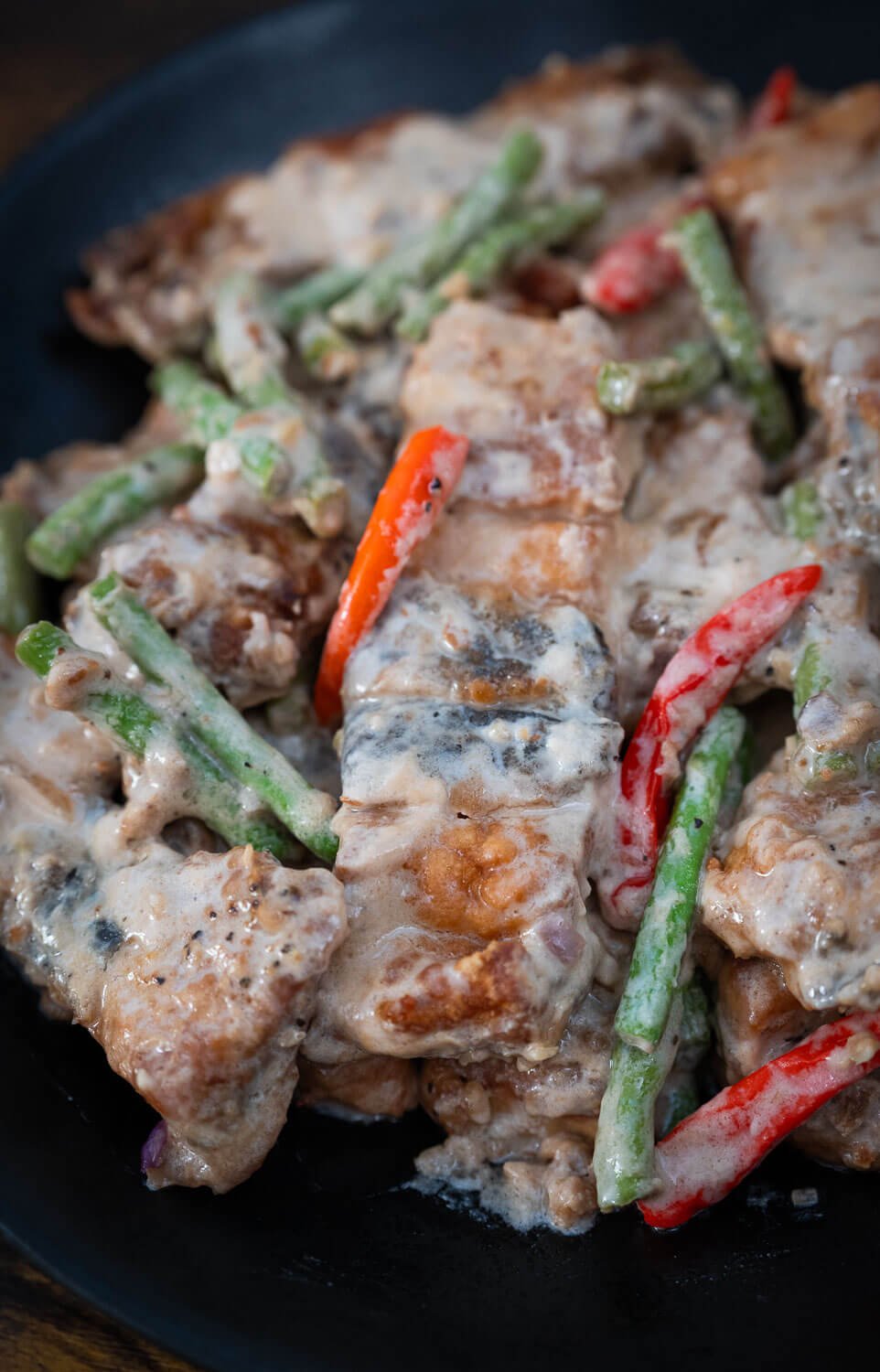
What to Serve with Ginataang Bangus
- Steamed white rice – The natural companion that soaks up every drop of the coconut sauce
- Steamed eggplant and okra – A tasty side that cuts through the richness of the coconut milk
- Ensaladang talong – Smoky grilled eggplant salad that pairs well with creamy dishes
- Ginataang Hipon – A shrimp version of ginataan for a full coconut milk feast
- Melon juice – A refreshing drink that balances the richness of the meal
Storage
- Refrigerator: Store in an airtight container for up to 2 days. The coconut sauce will thicken when cold, and that is completely normal.
- Freezer: Ginataang Bangus can be frozen for up to 1 month. Store the fish and sauce together in a freezer safe container. The texture of the fried fish will soften after freezing.
- Reheating: Reheat gently in a saucepan over low heat. Add a splash of coconut milk or water if the sauce has thickened too much. Avoid using high heat to prevent the sauce from separating.
More Filipino Seafood Recipes
- Paksiw na Bangus – Milkfish stewed in vinegar with garlic and ginger for a tangy alternative
- Ginataang Tilapia – Fried tilapia in coconut milk with spinach and long green chili
- Inihaw na Bangus – Grilled milkfish stuffed with tomatoes, onions, and ginger
- Tinolang Bangus – A clear ginger soup with milkfish and fresh vegetables
- Bangus Sisig – A sizzling plate of flaked fried bangus seasoned with calamansi and chili
- Ginataang Isda – Fish stew in coconut milk with eggplant and bok choy
- Boneless bangus – Tilapia fillets or galunggong (round scad) work well as alternatives. Adjust frying time based on thickness.
- Shrimp paste – Fish sauce can be used for saltiness, though the flavor profile will be different without the fermented depth of shrimp paste.
- String beans – Sitaw (yardlong beans) or pechay (bok choy) can be used instead for a leafy variation.
- Thai chili peppers – Long green peppers (siling pansigang) will give a milder heat. Leave them out entirely for a version without spice.
- Coconut milk – Coconut cream can be used for a richer sauce. Thin it with a small amount of water if it gets too thick.
Frequently Asked Questions
Can I use a different fish for Ginataang Bangus?
Yes. Tilapia, galunggong, and tanigue all work well. Cooking time may vary depending on the thickness of the fish. Bangus has a naturally mild, sweet flavor that pairs especially well with coconut milk, but any firm white fish will give you good results.
Do I need to fry the bangus before simmering it in coconut milk?
Frying the fish first is what keeps it from falling apart in the sauce. It also gives the bangus a golden color and a light texture that contrasts with the creamy coconut milk. You can sear the fish briefly in a hot pan if you prefer not to deep fry.
How do I keep the coconut milk from curdling or separating?
Keep the heat low once you add the coconut milk. A gentle simmer is all you need. Boiling it too hard will cause the fat to separate, and the sauce will look oily instead of smooth. Stirring gently also helps.
Can I add other vegetables to Ginataang Bangus?
Kalabasa (squash), pechay (bok choy), eggplant, and malunggay leaves all work well in this dish. Add heartier vegetables earlier in the simmering process and leafy greens during the last minute so they do not overcook.
How spicy is Ginataang Bangus?
This recipe uses Thai chili peppers, which bring moderate heat. You can reduce the number of peppers or remove the seeds before adding them. For a completely mild version, leave the chili out. The dish is just as good without it.
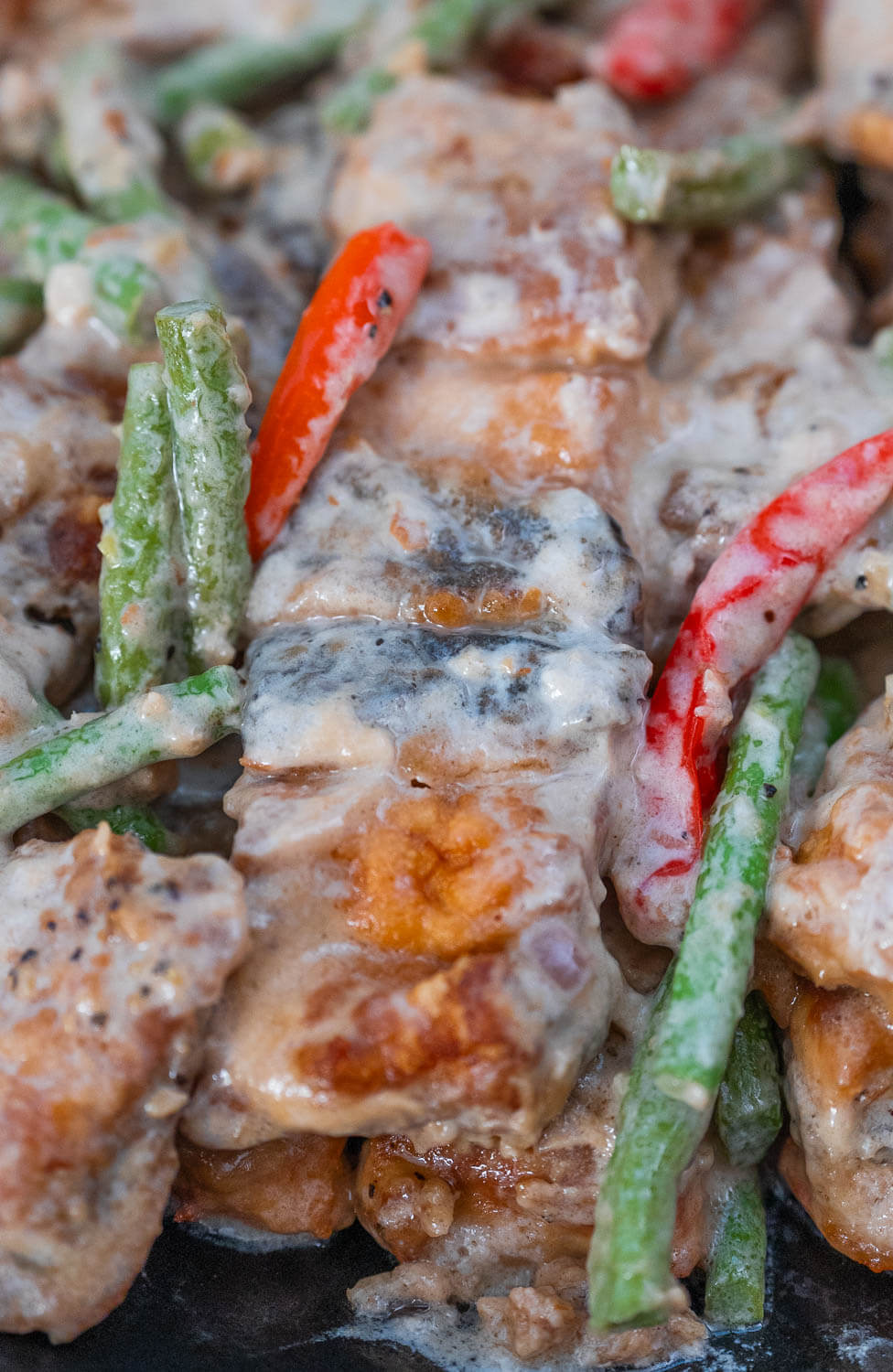
Ginataang Bangus is a dish I keep going back to because it is simple, satisfying, and full of flavor. I hope you try this Ginataang Bangus recipe at home and enjoy it with your family over a warm plate of rice. Let me know how it turns out.
Did you make this? If you snap a photo, please be sure tag us on Instagram at @panlasangpinoy or hashtag #panlasangpinoy so we can see your creations!
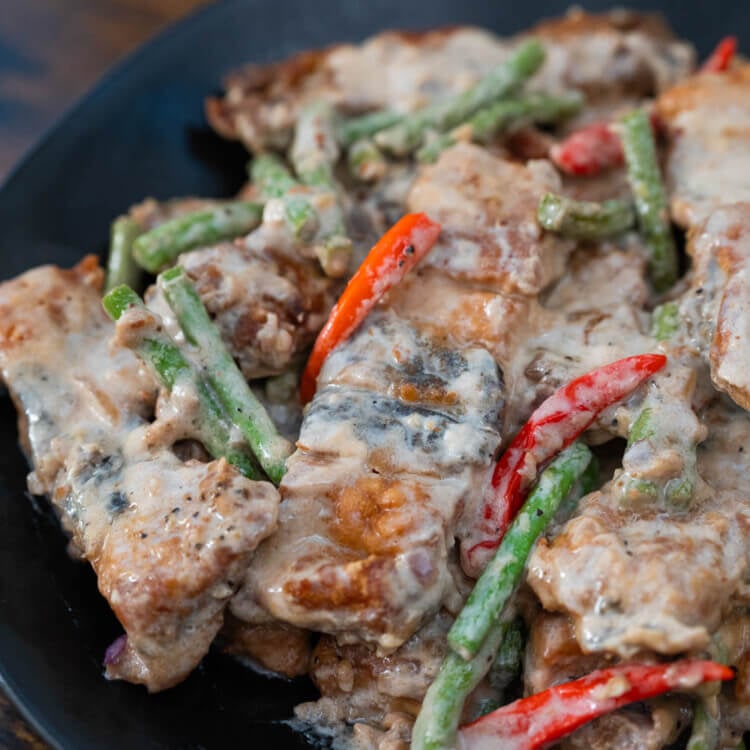
Ginataang Bangus
Ginataang Bangus is a classic Filipino dish featuring crispy pan-fried milkfish simmered in rich coconut milk with string beans, Thai chili peppers, and shrimp paste. This savory and creamy recipe comes together quickly and pairs perfectly with steamed white rice.
Instructions
Season the bangus with Maggi Magic Sarap.
1 lbs bangus, 8 grams Maggi Magic Sarap
Dredge the fish in all-purpose flour, making sure it is evenly coated. Set aside.
3/4 cups all-purpose flour
Heat the cooking oil in a pan. Fry the bangus until both sides turn light to medium brown. Remove from the pan and set aside.
3/4 cups cooking oil
Using 2 tablespoons of the oil from frying the fish, stir-fry the string beans for about 90 seconds. Remove and set aside.
8 pieces string beans
Add another 2 tablespoons of oil to the pan. Sauté the garlic until it starts to brown, then add the onion and ginger. Continue cooking until the onion softens.
5 cloves garlic, 1 pieces onion, 1 thumbs ginger
Add the shrimp paste and Thai chili peppers. Sauté for 30 seconds.
1 tablespoons shrimp paste, 3 pieces Thai chili pepper
Pour in the coconut milk and let it come to a boil.
2 cups coconut milk
Add the fried bangus and string beans. Lower the heat and simmer for 5 minutes.
Season with fish sauce and ground black pepper to taste.
fish sauce and ground black pepper
Transfer to a serving plate and serve with rice.
Share and enjoy!
Notes
Nutrition Information
Calories: 900kcal (45%) Carbohydrates: 36g (12%) Protein: 34g (68%) Fat: 72g (111%) Saturated Fat: 26g (130%) Polyunsaturated Fat: 14g Monounsaturated Fat: 30g Trans Fat: 0.2g Cholesterol: 110mg (37%) Sodium: 228mg (10%) Potassium: 1137mg (32%) Fiber: 6g (24%) Sugar: 7g (8%) Vitamin A: 1841IU (37%) Vitamin C: 29mg (35%) Calcium: 128mg (13%) Iron: 8mg (44%)